
Tibetan Sweet Tea – the Glass That Runs the Town
甜茶一盏暖三冬,茶馆晨昏话短长 Tiánchá yī zhǎn nuǎn sān dōng, cháguǎn chénhūn huà duǎn cháng – One glass of sweet tea warms three winters; in the teahouse, morning to dusk, talk runs long and short
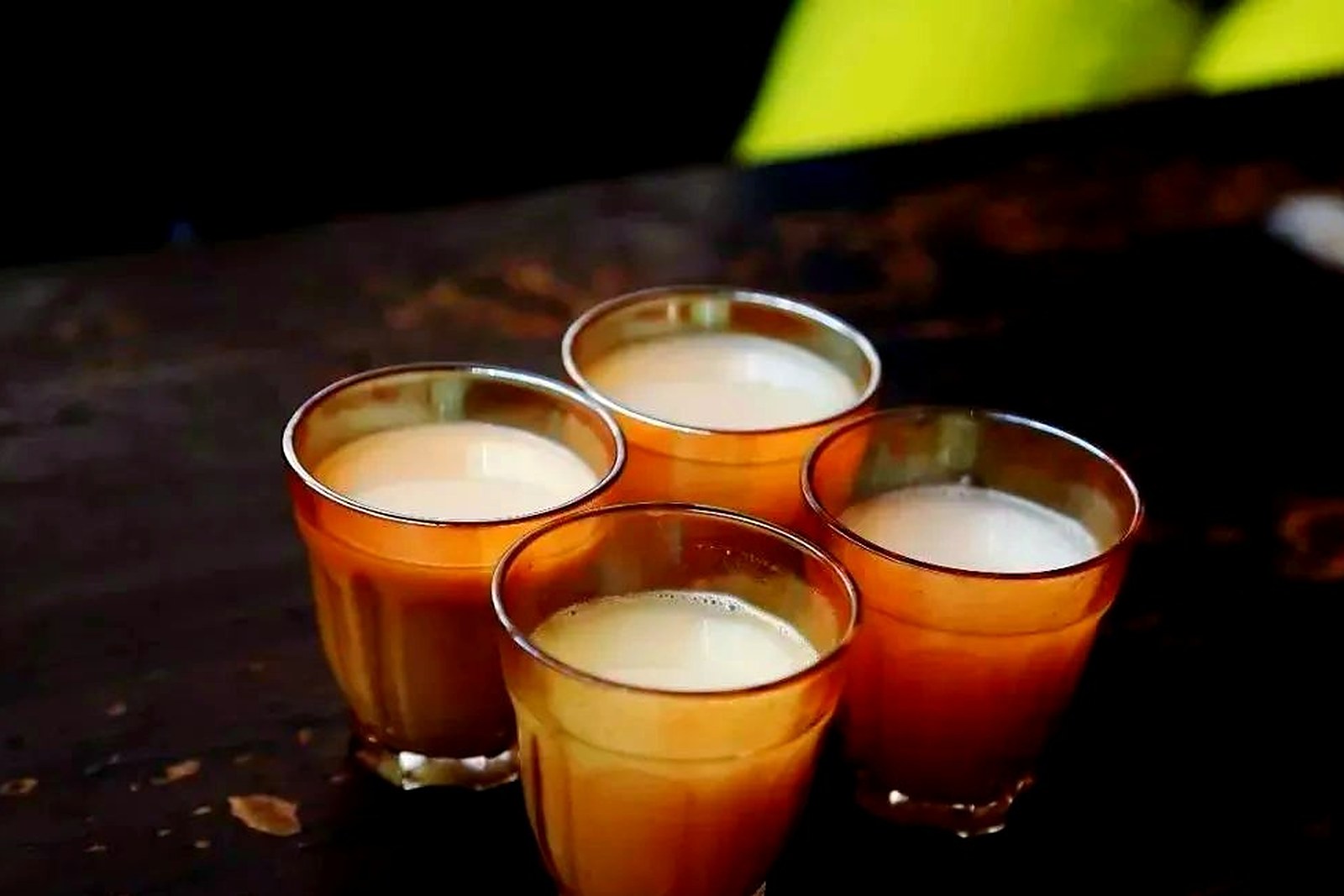
藏式甜茶 Zàngshì tiánchá Tibetan sweet tea is the drink the towns run on: strong black tea brewed with milk and sugar in great kettles, poured scalding into small glasses, drunk all day by everyone – drivers between loads, grandfathers over newspapers, students sharing a thermos after class. In Nagqu’s teahouses the churns stay hot from open to close, and the glass is famously the local unit of cheapness.
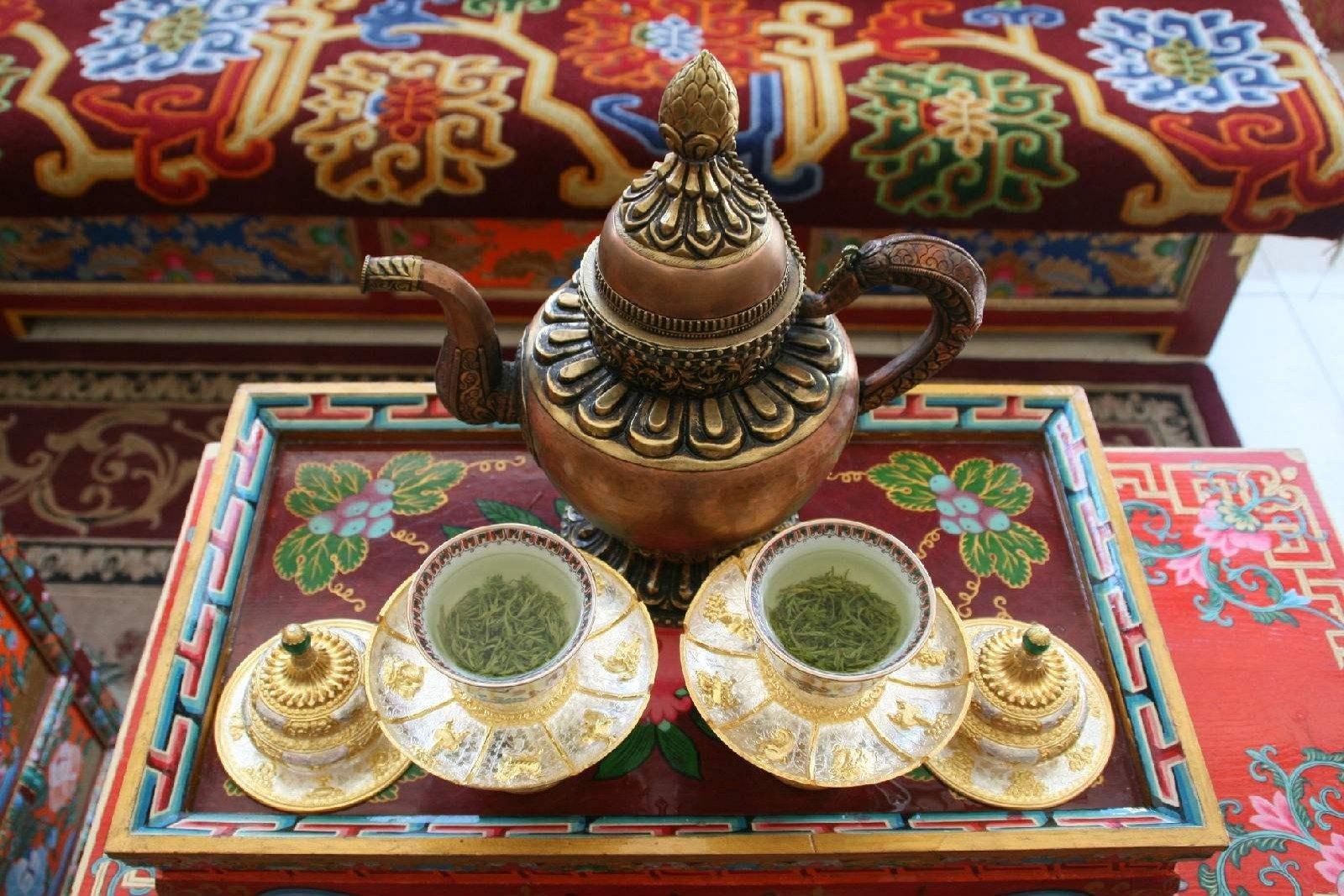
The taste is simple and exact: black tea with enough body to stand up to milk, sweetness that comforts rather than coats, served at a temperature that forces you to slow down. Sweet tea is the town’s drink in contrast to the herder kitchen’s salty, buttery brew – one belongs to the road and the pasture, the other to the bench by the window – and travelers find the pair explains half the plateau’s social geography.
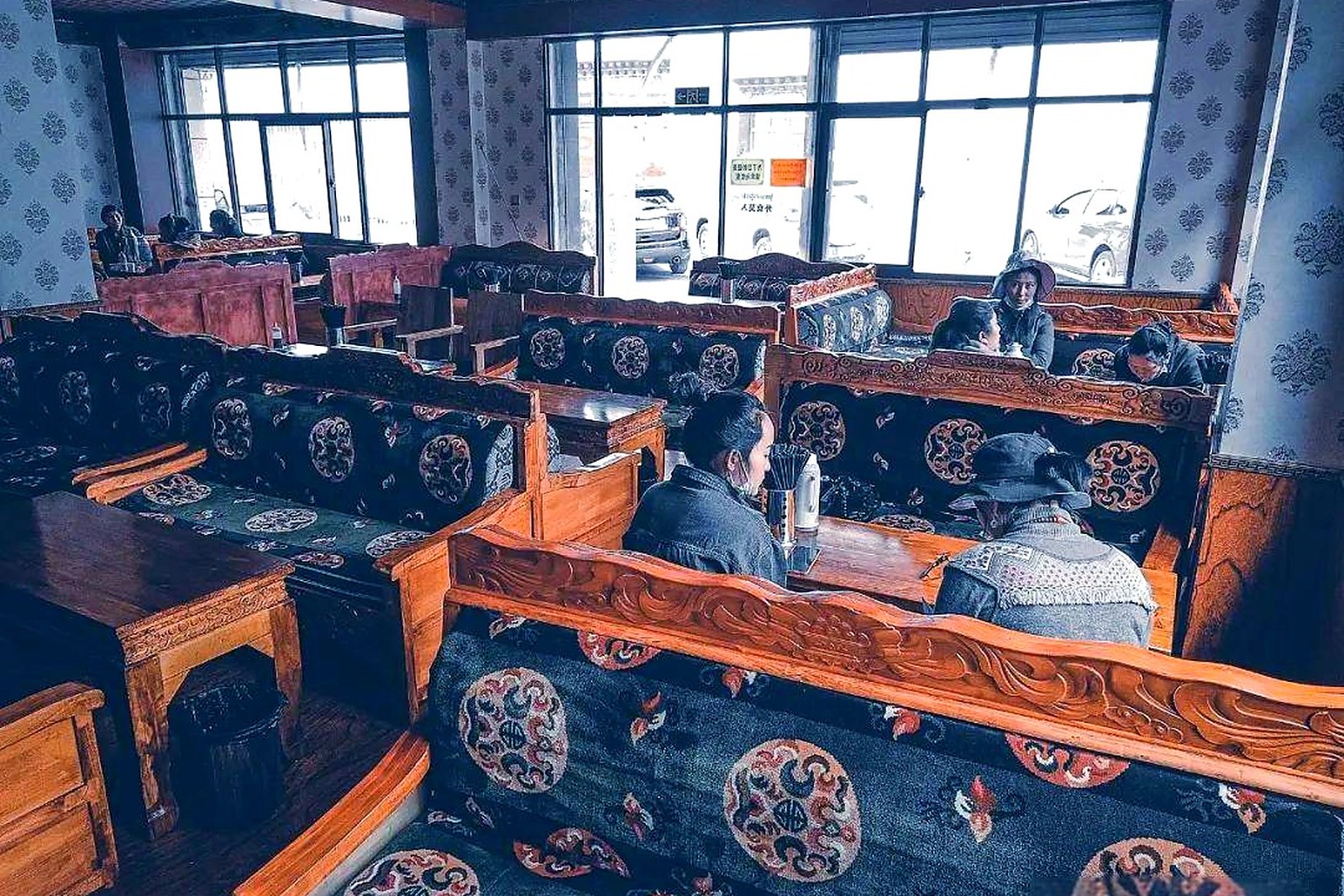
The teahouse is the institution. Benches run the length of the room; regulars claim the corners; the serving thermoses patrol between tables; and the kitchen turns out noodles and tsampa for anyone who stays past the second glass. Pay by the glass or by the flask – a raised hand brings a refill – and settle on the way out, the way the regulars do, without anyone keeping a ledger.
For visitors the ritual is the education: pick a busy local teahouse around the market streets, sit where the crowd sits, order a glass and a bowl of noodles, and stay an hour watching the town come and go. By the third glass the refills arrive unasked, the regulars nod, and the tea has done what tea does – made a stranger into a customer, and a customer almost into a neighbor.
Words and Names
藏式甜茶 Zàngshì tiánchá Tibetan sweet tea, the milk-and-sugar brew of the town teahouses; 甜茶馆 tiáncháguǎn the sweet-tea house, the town’s social living room; 酥油茶 sūyóuchá butter tea, the salty churn of the herder kitchen; 暖瓶 nuǎnpíng the thermos flask that serves the table; 添茶 tiānchá the raised-hand refill, the teahouse’s signal language. The same 那曲市 Nàqū Shì Nagqu holds more flavors worth chasing: 那曲冬虫夏草 Nàqū dōngchóng xiàcǎo the high-slope cordyceps, 羌塘羊肉 Qiāngtáng yángròu the clean sweet mutton, 蕨麻米饭 juémá mǐfàn the sweet rice of honor, or 牦牛酥油 máoniú sūyóu the butter behind the other tea – four more doors into the same Nagqu table.
What the Locals Know
Locals judge a teahouse by the churn: tea poured from a churn that has just been topped up is brighter than any kept warm too long, so the busy room is the right room. And there is no seat too small for a guest – squeeze in, lift the glass with both hands when someone toasts you, and stay as long as the bench allows. All checked November 2026.
flowcloud would say sweet tea is the town’s bloodstream – one pump at the market corner, refilling the whole day for pocket change.
Where to find it: Teahouse rows around the market streets of Nagqu town pour all day, with the fullest rooms at breakfast and late afternoon; every county town on the plateau keeps its own version of the bench-and-glass ritual. All checked November 2026.