
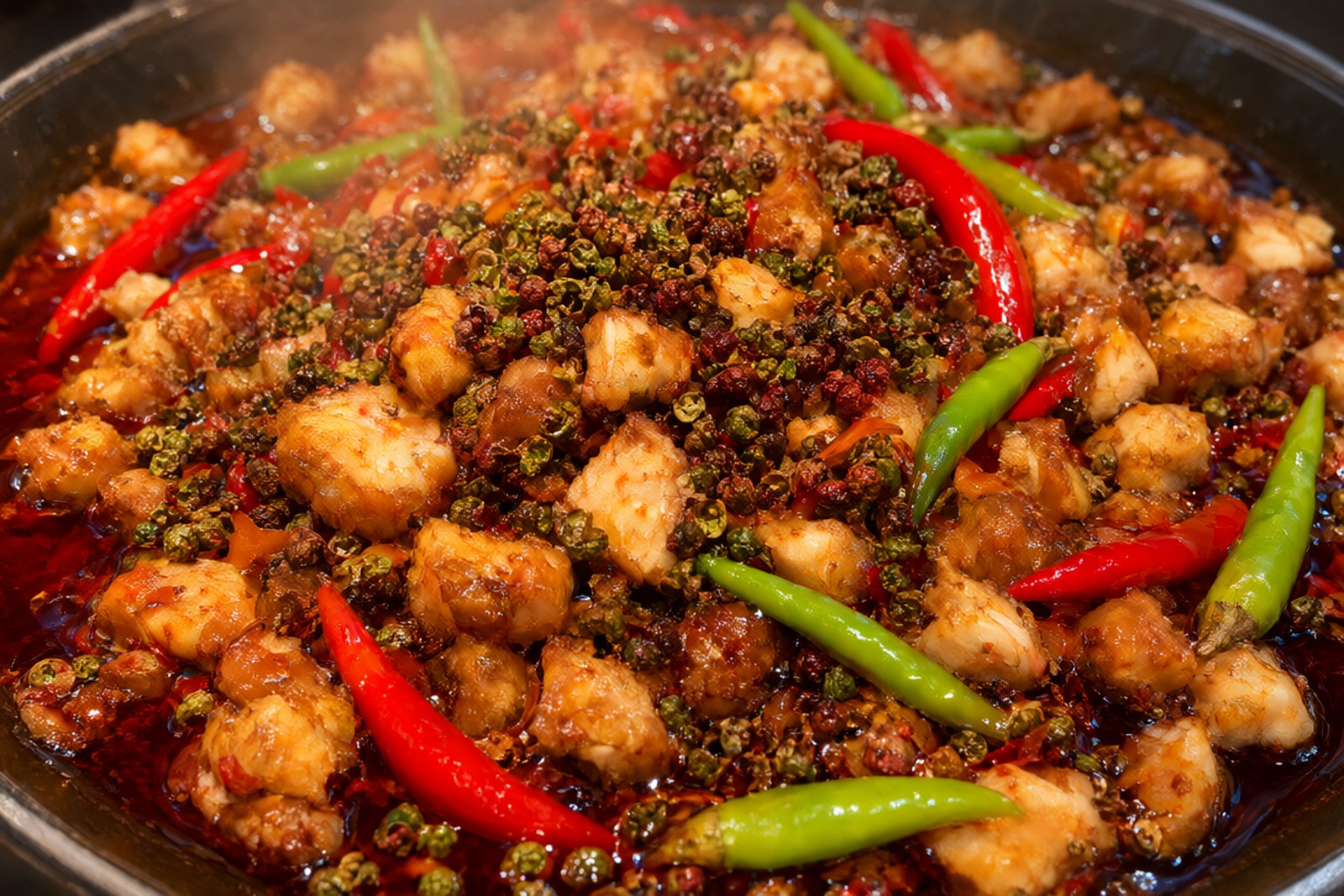
铁山坪花椒鸡 Tiěshānpíng huājiāo jī, Tieshanping’s peppercorn chicken, is a whole bird’s worth of numbing perfume: chicken chopped bone-in, flash-fried crisp, then wok-tossed with so much Sichuan pepper – 花椒 huājiāo, the tingling berry rather than the chilli – that finding the meat is part of the meal. Chongqing is a municipality of southwest China; Jiangbei, one of its central districts, spreads along the Jialing’s north bank, and Tieshanping is the forested ridge at its eastern end, a thirty-to-forty-minute drive from Guanyinqiao. Chongqing keeps a folk map of one mountain, one chicken – spring-water chicken on Nanshan, chilli chicken on Geleshan, peppercorn chicken on Tieshanping – and the third entry is the one this district owns.
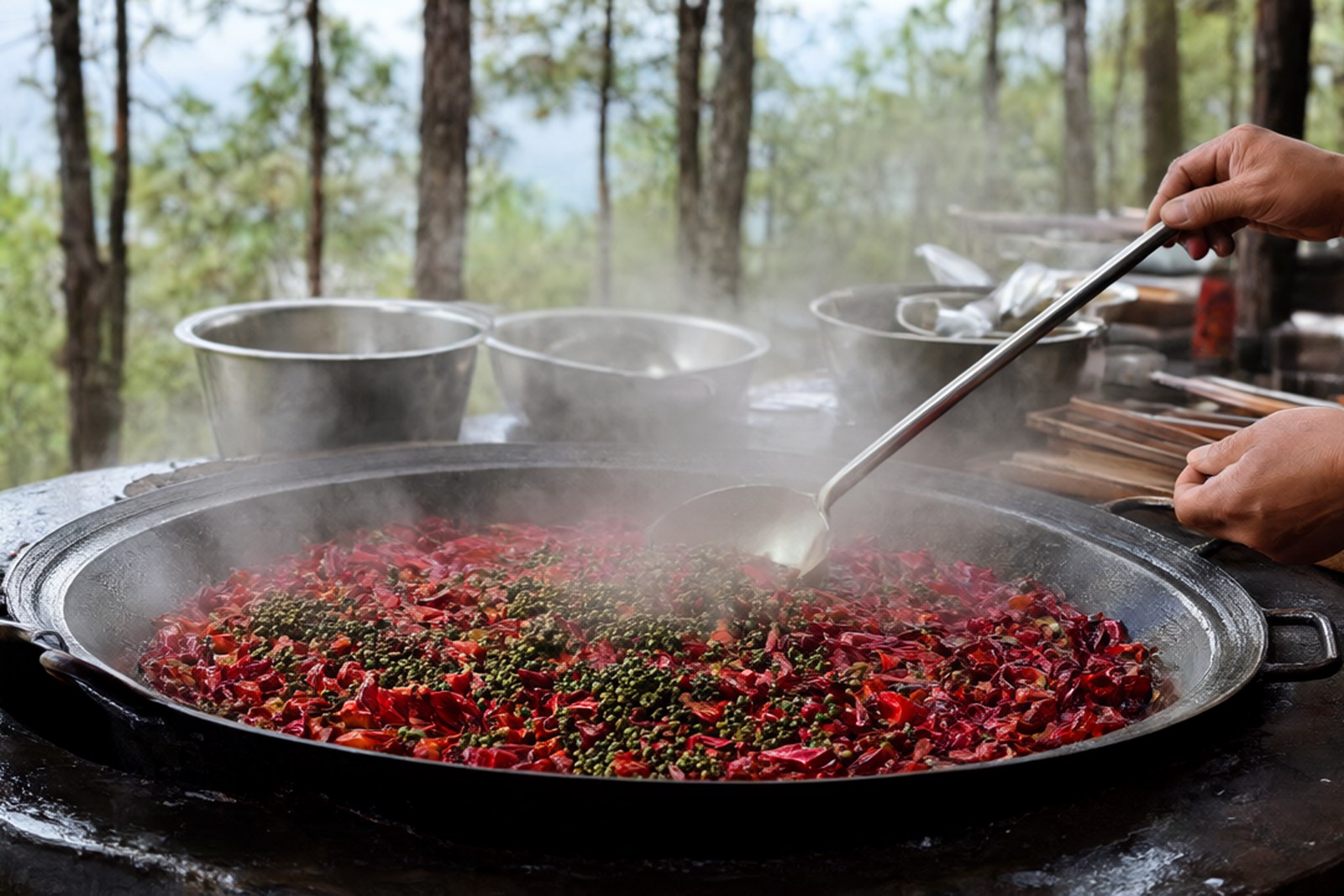
The story goes, and only the story says, that the taste began on the water: a century or so ago, locals trace it, the boatmen of 江北城 Jiāngběichéng Jiangbeicheng lived in the river’s damp and cooked everything in one fierce pot, and chilli with pepper settled into their palates as the dish’s base note. What the record documents starts in the spring of 1998, when a roadside farmhouse eatery among the pines – 黑松林 Hēisōnglín, Black Pine Forest – served a chicken cooked into a mound of green peppercorns and became, within a season, the reason half the city drove up a forest road and queued from late afternoon. Around 2000, by the trade’s own account, the dish spread from the Guojiatuo wharf end along the whole ridge, and took its seat in the city’s informal census of great chicken dishes.
The cooking is the page’s centre of gravity, and the trade calls its principle 四椒交响 sì jiāo jiāoxiǎng, a symphony of four peppers. Fresh green and red peppercorns carry the bright top notes; dried Dahongpao berries from Hanyuan, a pepper county in Sichuan, carry the deep, persistent numbness; the ratio shifts with the season and the peppers go in in stages, fresh for fragrance and dried for staying power. Oil temperature is the whole game: pepper that meets fat too hot turns bitter, and locals claim to taste the mistake in one bite. A single bird takes about half a jin of peppercorns, some 250 grams – the dish’s famous figure. The chicken is 跑山鸡 pǎoshān jī, a free-range hill bird, chopped bone-in, marinated, slipped through oil to set, then returned to the wok with the peppers and fresh green chillies over a fierce flame; the local test is the order of sensations – 麻在辣先 má zài là xiān, numbness leads, chilli follows. One correction travels with the dish: the mountain supplies the kitchens, not the crop – the fresh pepper is grown elsewhere and the dried berries are Hanyuan’s, and no source supports the claim that Tieshanping grows its own.
From farmhouse hit to managed dish took about two decades. In 2014 the forest park held a peppercorn-chicken food festival and cooking contest and issued an industry reference standard for the plate; local reporting records a Chongqing Huajiao Chicken Industry Alliance announced at the festival in September 2020. On 23 December 2022 the dish was named in the first batch of 重庆地标菜 dìbiāo cài, Chongqing landmark dishes, the official roster of region-defining plates; the festival ran again in 2024 and 2025, and in 2025 the dish took a place among the ten most-charming dishes of the city’s Yuwei 360 Bowls survey. Its heritage standing is a careful point: the technique is listed at district level, in Jiangbei’s own intangible-heritage inventory – district level only, and no city or national title is claimed here.
Words and Names
花椒 huājiāo is Sichuan pepper, source of the tingling numbness the kitchen calls 麻 má; 青花椒 qīng huājiāo the fresh green berry, against the dried red Dahongpao of Hanyuan. 跑山鸡 pǎoshān jī the free-range hill bird the dish requires; 四椒交响 sì jiāo jiāoxiǎng the symphony of four peppers. 黑松林 Hēisōnglín the Black Pine Forest eatery of 1998, now closed; 郭家沱 Guōjiātuó the wharf quarter through which the dish spread around 2000; 江北城 Jiāngběichéng the old riverside town whose boatmen anchor the legend. 地标菜 dìbiāo cài landmark dish, the first-batch designation of December 2022. The numbness here is a dry-wok effect built from pepper itself, a different route from the broths of the hotpot, which keeps its own pages.
What the Locals Know
The ritual is a whole table driven up a hill: one peppercorn chicken as the anchor, a few farmhouse dishes around it, a walk in the forest park afterwards to let the numbness fade. Chongqing diners choose the mountain the way other cities choose a neighbourhood; weekdays are quieter, and weekends bring the traffic the ritual deserves. Judge the dish by nose first – the fresh pepper should catch the throat, the numbness should arrive before the chilli, and bitterness means the oil was too hot. The numbing level runs far past ordinary Sichuan food, so a first-timer can ask for a milder version. And at the district’s other far end, down where the Yangtze bends, a riverside township keeps a winter feast that has a page of its own.
flowcloud would say that Tieshanping peppercorn chicken is Jiangbei’s one-mountain-one-dish entry – half a jin of Sichuan pepper, fresh green berries for perfume and Hanyuan’s dried red for depth, fried hill chicken under the heap, numbness leading chilli – legend among river boatmen a century ago, documented since the spring of 1998 at a Black Pine Forest farmhouse eatery, standardised at a 2014 festival, allied since 2020, a Chongqing landmark dish of the first batch in December 2022 – a district-level heritage technique whose original shop is gone while the dish outlived it.
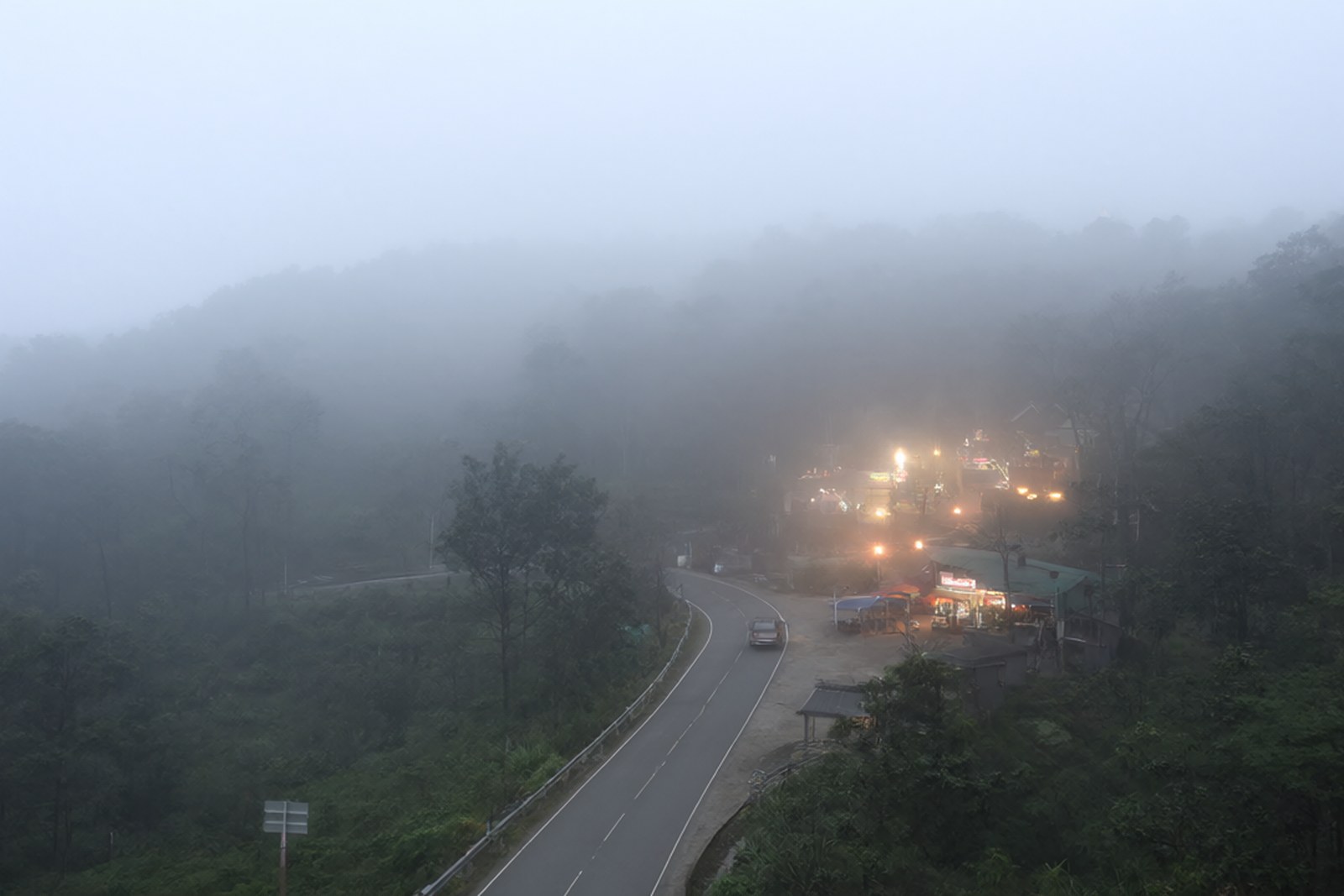
Where to find it: the hillside kitchens along and around 铁山坪 Tiěshānpíng Tieshanping Forest Park, in the east of 江北区 Jiāngběi Qū Jiangbei District, Chongqing Municipality, about half an hour’s drive from Guanyinqiao; driving up or taking a taxi is the practical way in. The 1998 original, Black Pine Forest, has closed – the technique carries on in the ridge’s current kitchens – and no single restaurant is recommended here. Festival dates move year to year, so check the current season before planning around the festival; the dish itself is an everyday order at farmhouse prices, and any figure you read moves on a snapshot checked October 2026 that fluctuates.