
Red Cargo for the World: the Processing-Tomato Harvest at Tiemenguan
车上红果堆成塔,戈壁番茄天下知 Chē shàng hóngguǒ duī chéng tǎ, gēbì fānqié tiānxià zhī – Red fruit stacks like a pagoda on the trucks; tomatoes of the gobi are known to the world
正文:番茄采收 Fānqié Cǎishōu the processing-tomato harvest is the most industrial flavor of the Yanqi Basin fields around 铁门关市 Tiěménguān Shì Tiemenguan City – square kilometers of determinate vines ripening all at once in the desert sun, then taken whole by machine and hauled by the truckload to the paste factories that make Xinjiang one of the world’s great tomato regions. Much of the tomato paste in a distant pantry passed through fields exactly like these: flat irrigation country, huge skies, and fruit bred for sugar solids rather than looks.
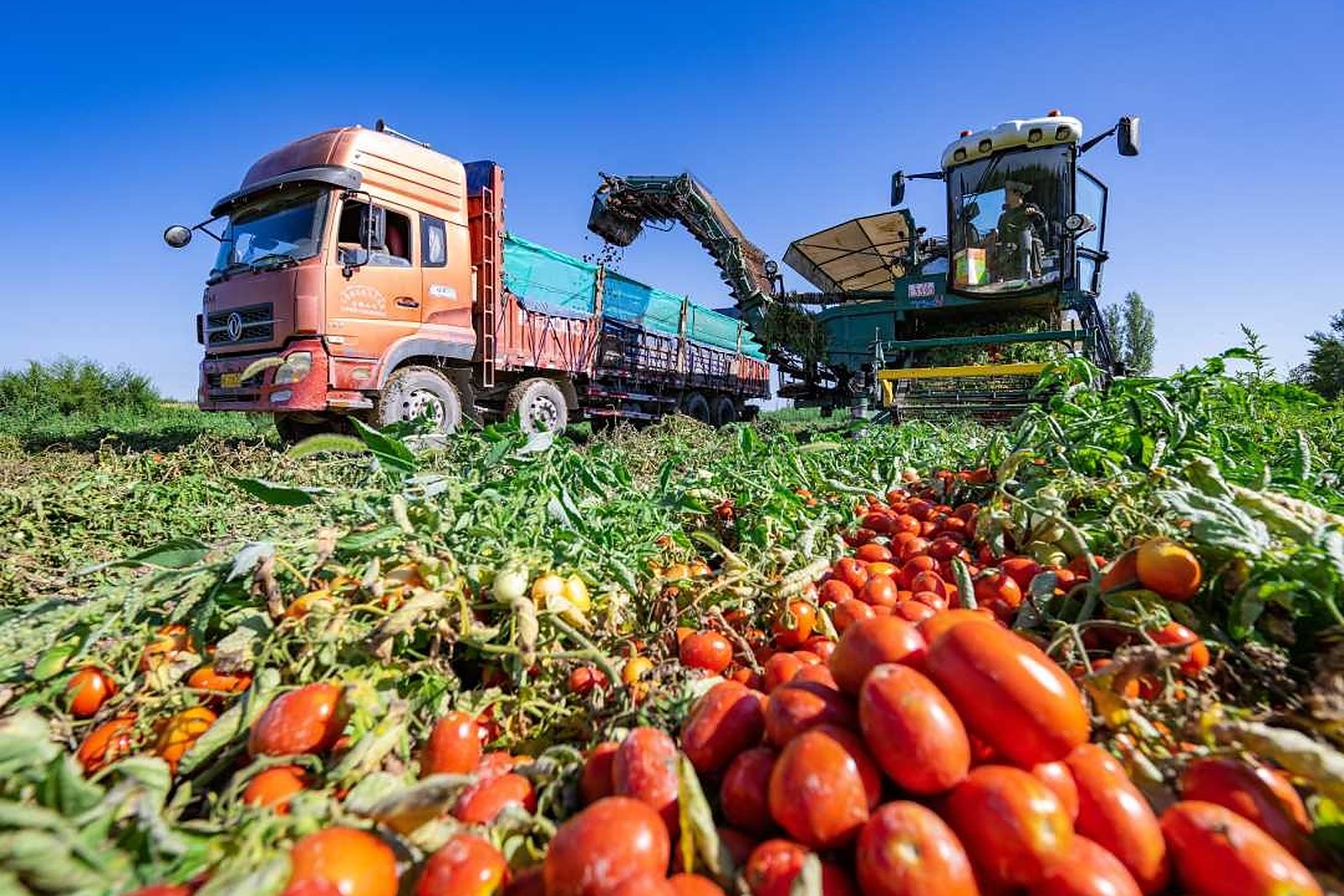
The machines are the show. Self-propelled harvesters crawl the rows lifting the whole vine, shaking the fruit free and augering it into the trailer running alongside – a red river pouring into a blue cargo bed while dust hangs gold in the light. One rig does the work of a village; the crews ride the machines around the clock in peak season, and the field roads carry tomato traffic day and night through late August.
The scale is the story the numbers only sketch. The basin’s light, heat and controlled irrigation push the fruit to brix levels coastal growers envy, and the paste plants around the oasis run September like a fleet operation – trailer queues, steam plumes, and the sweet-acid smell of cooking tomatoes carrying for kilometers. Travelers see none of the factory and all of the field: pull off any service road in harvest weeks and the red cargo rolls past close enough to wave at the drivers.
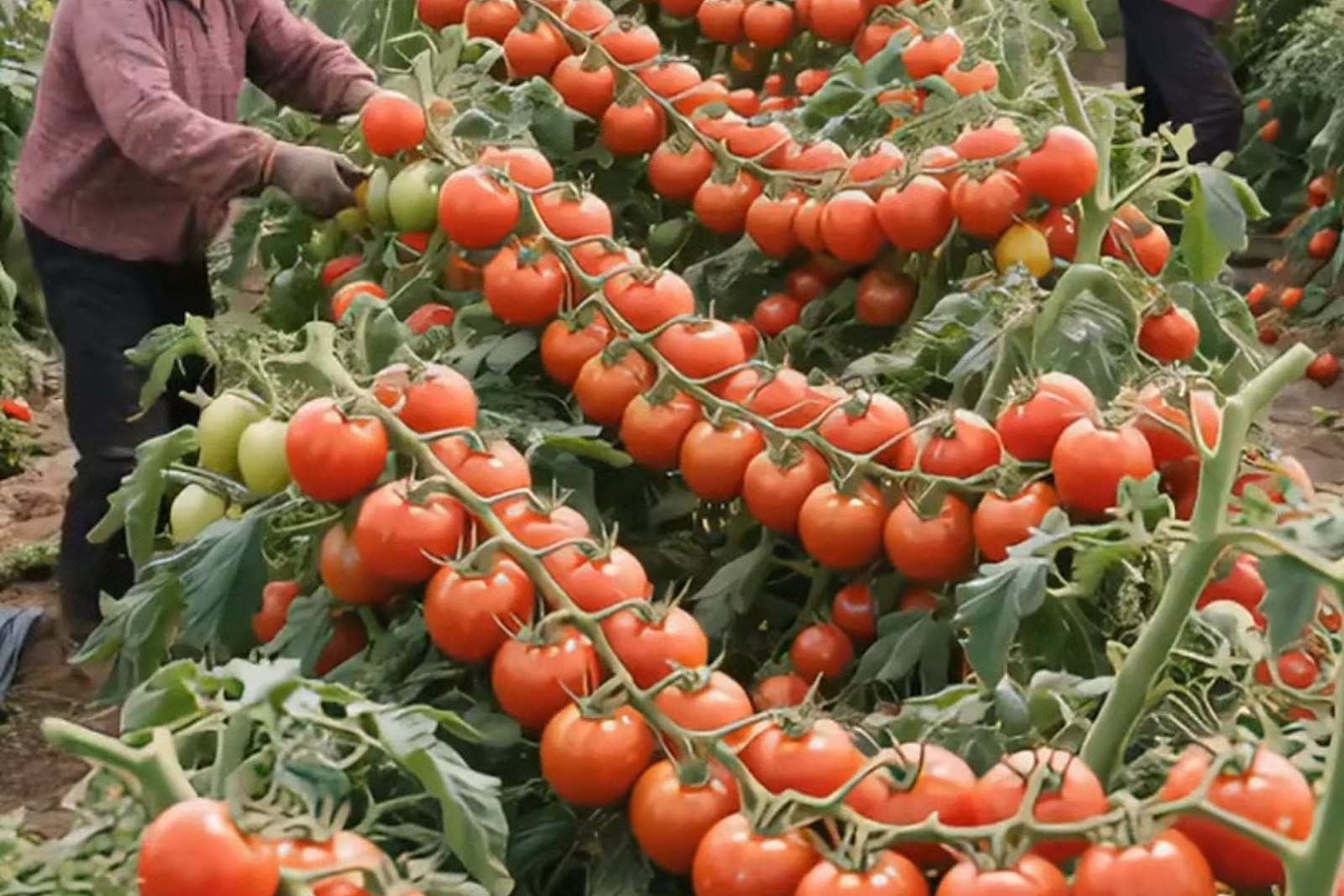
Eat the local fruit too. The fresh-market tomatoes in the bazaars – irregular, heavy, split-sweet – are the same desert sun in a softer package, and the diners serve them the local way: sliced with a pinch of sugar, stewed into the lamb braise, or chopped raw over cold noodles where their acid does the work vinegar usually does. A tomato season here recalibrates what the fruit is supposed to taste like.
The same district holds more flavors worth chasing: 辣皮子 Làpízi lazipi for the dried-chili foundation, 架子肉 Jiàzi Ròu jiazi rou for the pit-roasted racks, 新疆凉皮 Xīnjiāng Liángpí Xinjiang liangpi for the cold refresher, or 胡辣羊蹄 Húlà Yángtí hu-la yang-ti for the night-market cauldrons – four more doors into the same 铁门关市 Tiěménguān Shì Tiemenguan City table.
Words and Names
What the Locals Know
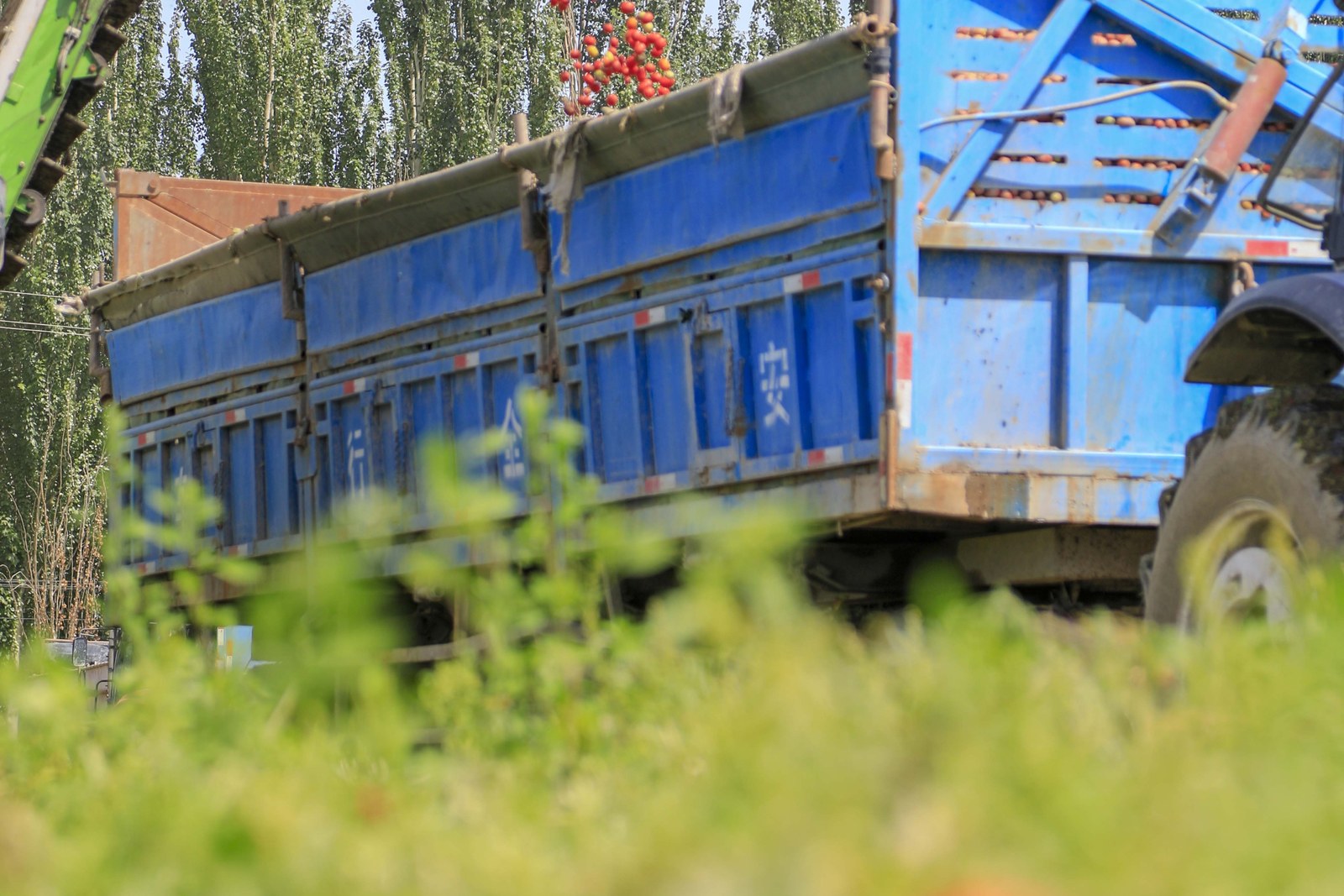
flowcloud would say the processing-tomato harvest is desert agriculture at highway scale: rows to the horizon, machines eating fields in the afternoon, and a red cargo that ends up flavoring kitchens on every continent – the gobi quietly canning its own sunshine. All checked November 2026.
Where to find it: The harvest runs through August and September on the basin fields around 铁门关市 Tiěménguān Shì Tiemenguan City – watch from the service roads, and buy the bazaar fruit for the fresh taste of the same sun. All checked November 2026.