
Up in the 同乐 Tónglè highlands, in the hill country away from the river, the winter dish is served one small bowl at a time. 碗碗羊肉 wǎnwǎn yángròu, bowl lamb, is the mountain-town classic of Tongle: tender pieces of black goat in a clear, spice-fragrant broth, a scatter of scallion on top, and nothing else between the eater and the meat. The bowl is small by design. It keeps the broth hot to the last spoonful, it lets a table order lightly and then keep going, and it turns the meal into a running count – a pile of empty bowls growing in the middle of the table is the measure of both the kitchen and the appetite.
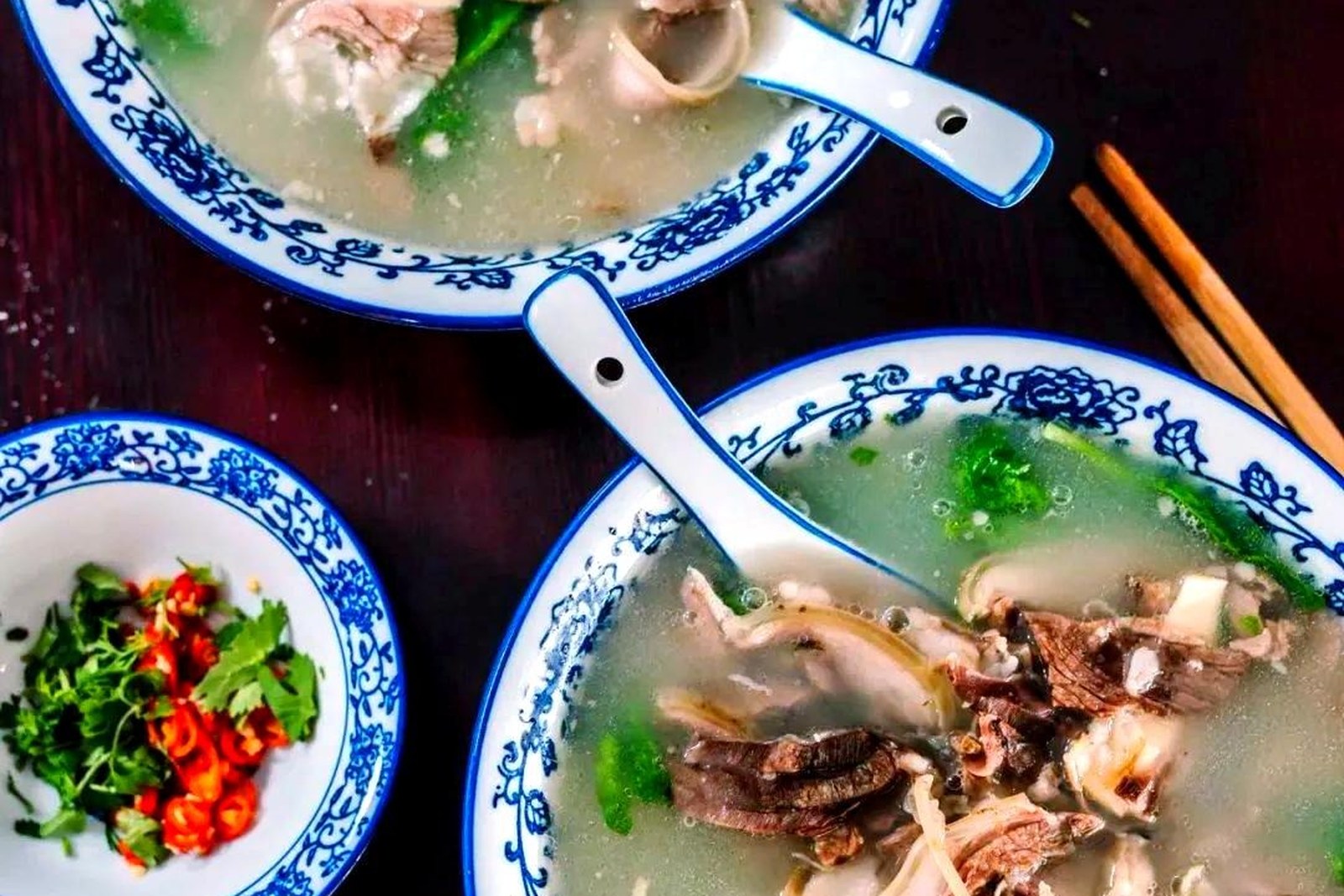
The dish’s pedigree is part of its flavour. By the account on record it dates to 1714 – the fifty-third year of the Kangxi reign – which makes it older than most of the towns below the hills, and its standing has been formalised in our own time: the making was entered on Chongqing’s municipal intangible heritage list in 2019, the dish joined the 渝味360碗 Yúwèi sānbǎi liùshí wǎn, the Yuwei 360 bowls, in 2024, and in 2025 it was honoured on that list for cultural value. A mountain smallholding dish has outlived every fashion that passed through the lowlands on its way elsewhere.
The meat is the town’s own: black goat from the Tongle highlands, a hill breed whose flesh runs finer and less goaty than the lowland kind. The breed matters because the dish does not hide behind heavy spice – the broth is clear, and everything a good animal lacks shows in a clear broth. The goats range the slopes eating what the slopes offer, and the winter trade follows the season, since the dish belongs to the cold months the way cold nights belong to the hills.
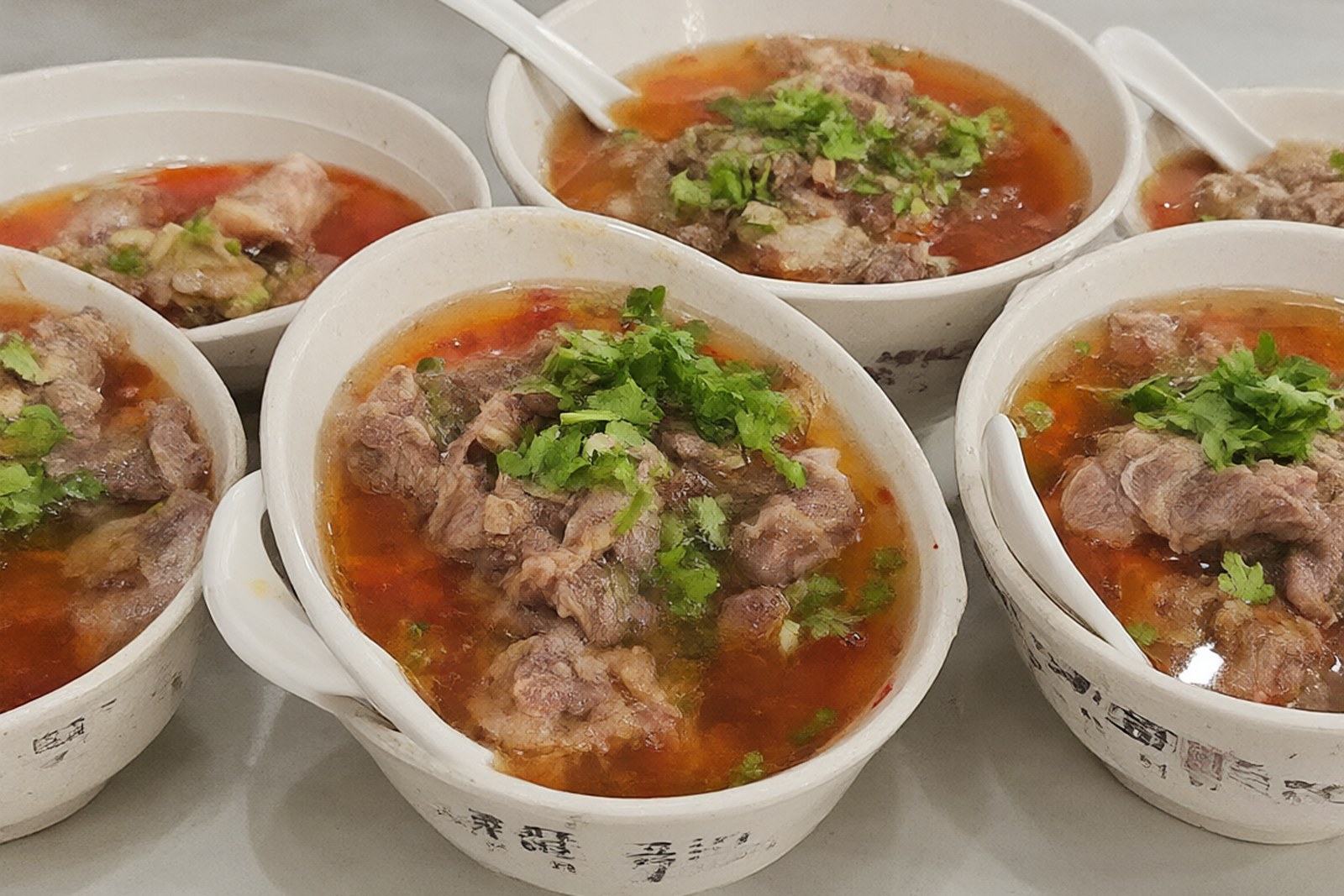
The craft passed down runs in sequence – smoking, blanching, stir-frying and stewing – each step setting up the next. Smoking drives the wildness out and depth in; the blanch cleans the meat for the broth; the stir-fry builds the spice base into the flesh itself; the long stew finishes the tenderness. Only then is the small bowl filled: meat that comes apart without effort, a broth that is clear enough to read through but carries a slow, warm spice, scallion cut fine on top. It is patient work for a quick meal, which is the quiet joke at the bottom of every stack of empty bowls.
The discipline of this page is worth stating plainly. The record consulted names the 1714 date, the black goat breed, the four-step craft, the bowl-by-bowl service, the 2019 heritage listing and the 2024 and 2025 Yuwei 360 honours; it does not name a founding shop, a posted price, a season’s fixed dates or any single address, and none is invented here. The honest page describes a mountain-town tradition rather than one celebrated kitchen, and lets whichever stack of bowls you join be the recommendation.
Words and Names
碗碗羊肉 Wǎnwǎn yángròu, bowl lamb, the Tongle classic: black goat served bowl by bowl in a clear, spice-fragrant broth topped with scallion, eaten until the pile of empty bowls says stop. 同乐 Tónglè, the highland town where the dish belongs. 黑山羊 hēi shānyáng, the black goat of the Tongle highlands, a hill breed whose flesh runs finer and less goaty than the lowland kind. 熏 xūn, smoking; 焯 chāo, blanching; 炒 chǎo, stir-frying; 炖 dùn, stewing – the four steps of the craft in order. 渝味360碗 Yúwèi sānbǎi liùshí wǎn, the Yuwei 360 bowls, Chongqing’s list of signature dishes on which the dish sits. The record names no founding shop or figure price, and none is invented here.
What the Locals Know
The first thing locals know is the season and the hour. Bowl lamb is a cold-weather dish, and in the highlands the shops do their trade when the mist comes down – midday and evening, with the morning market deciding what gets stewed. A regular reads the kitchen before sitting: the pot should be visibly working, the broth replenished from the stew, and a shop whose broth has gone cloudy from topping-up too fast loses the locals before the first bowl arrives.
The second thing locals know is the test of a clear broth. Clarity is not decoration – it is the proof of the blanch and the patience of the stew – and it lets the goat’s quality show through, since a fine hill breed needs only a slow, warm spice while a poorer animal hides behind chili. Locals count bowls openly, the count being half the meal’s pleasure, and they know the finishing order of a good kitchen: broth hot to the last bowl, meat tender to the last piece, scallion cut fresh rather than held in water.
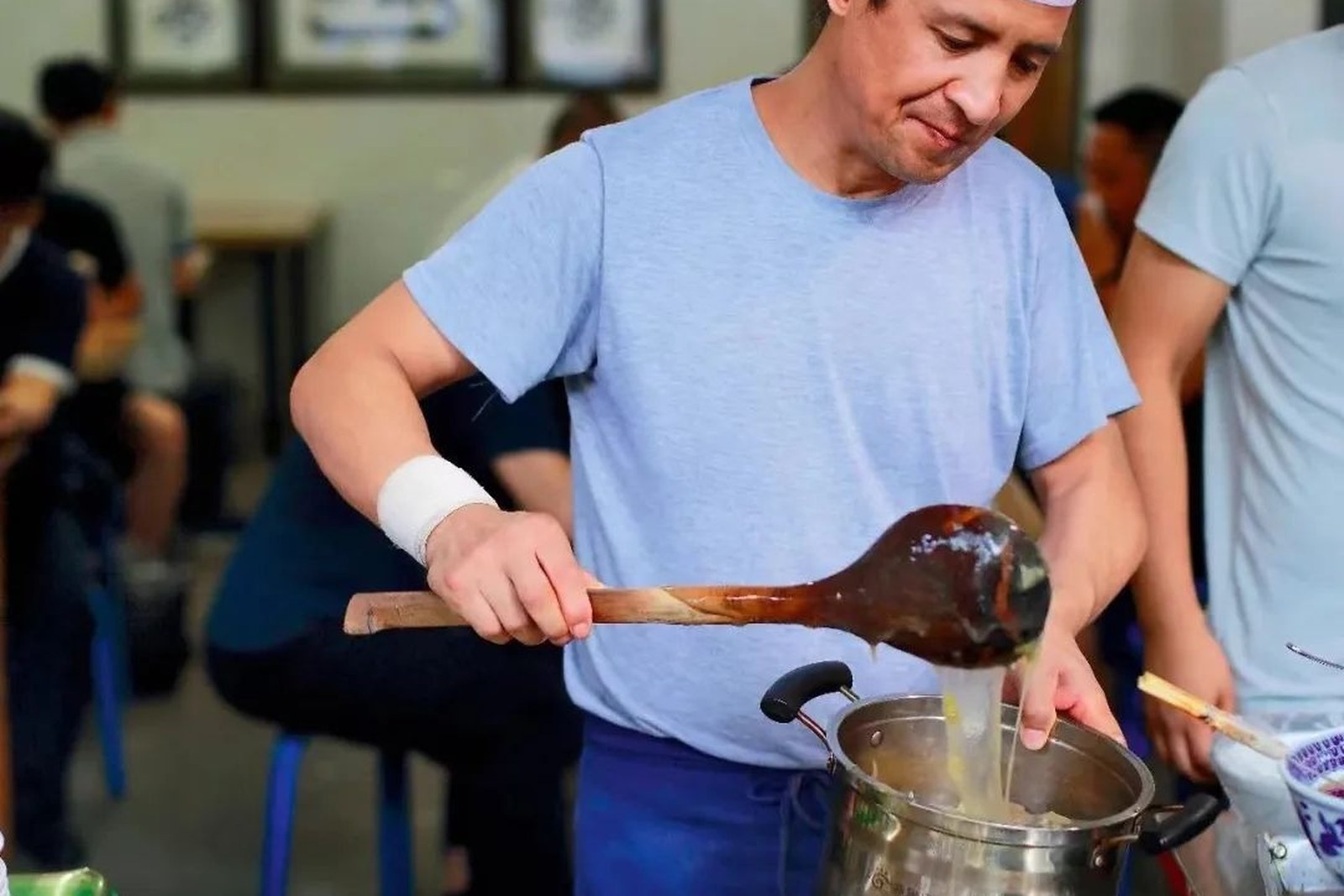
flowcloud would say that Tongle bowl lamb is a mountain smallholding dish that outlived every fashion – highland black goat taken through smoking, blanching, stir-frying and stewing in sequence, served bowl by small bowl in a clear spice-fragrant broth under a scatter of scallion, the table’s pile of empties the only bill that matters – a craft on record since 1714, a Chongqing intangible heritage since 2019 and a Yuwei 360 selection honoured for cultural value in 2025, with no founding shop or figure price on the record and none invented. All checked October 2026.
Where to find it: the dish belongs to the Tongle highlands in the hill country of 涪陵区 Fúlíng Qū, Fuling District, whose seat stands at the confluence of the Wujiang and the Yangtze downstream of Chongqing – eaten in small family eateries of the mountain town and its surrounding hamlets, with the season running through the cold months, and served too by mountain-cuisine restaurants in the district seat for those without the hill road. Reach the district seat by frequent rail and road connections from Chongqing, then take the mountain road into the Tongle high country; the woodsmoke and the stacks of bowls mark the kitchens. No specific shop, address or posted price is named on the public record consulted. All checked October 2026.