
铜梁板鸭 Tóngliáng Bǎnyā, the Tongliang pressed duck, is the district’s best-known cured meat and the gift Chongqing travellers carry home from the riverside country east of the city. The craft is old and plain: whole ducks are cleaned, salted, then pressed flat between boards so the body loses its roundness and the flesh firms into a thin, amber slab that air-dries into something dense and long-keeping. Tongliang (铜梁区) sits out along the Fu River (涪江) where the climate lets the meat dry slowly without spoiling, and the finished duck keeps for weeks without refrigeration, which is exactly why it became a festival food and a present rather than a fresh-market cut. Locals name it first among the district’s foods, ahead of the river fish and the pomelo, because it travels and because it tastes of patience more than of spice.
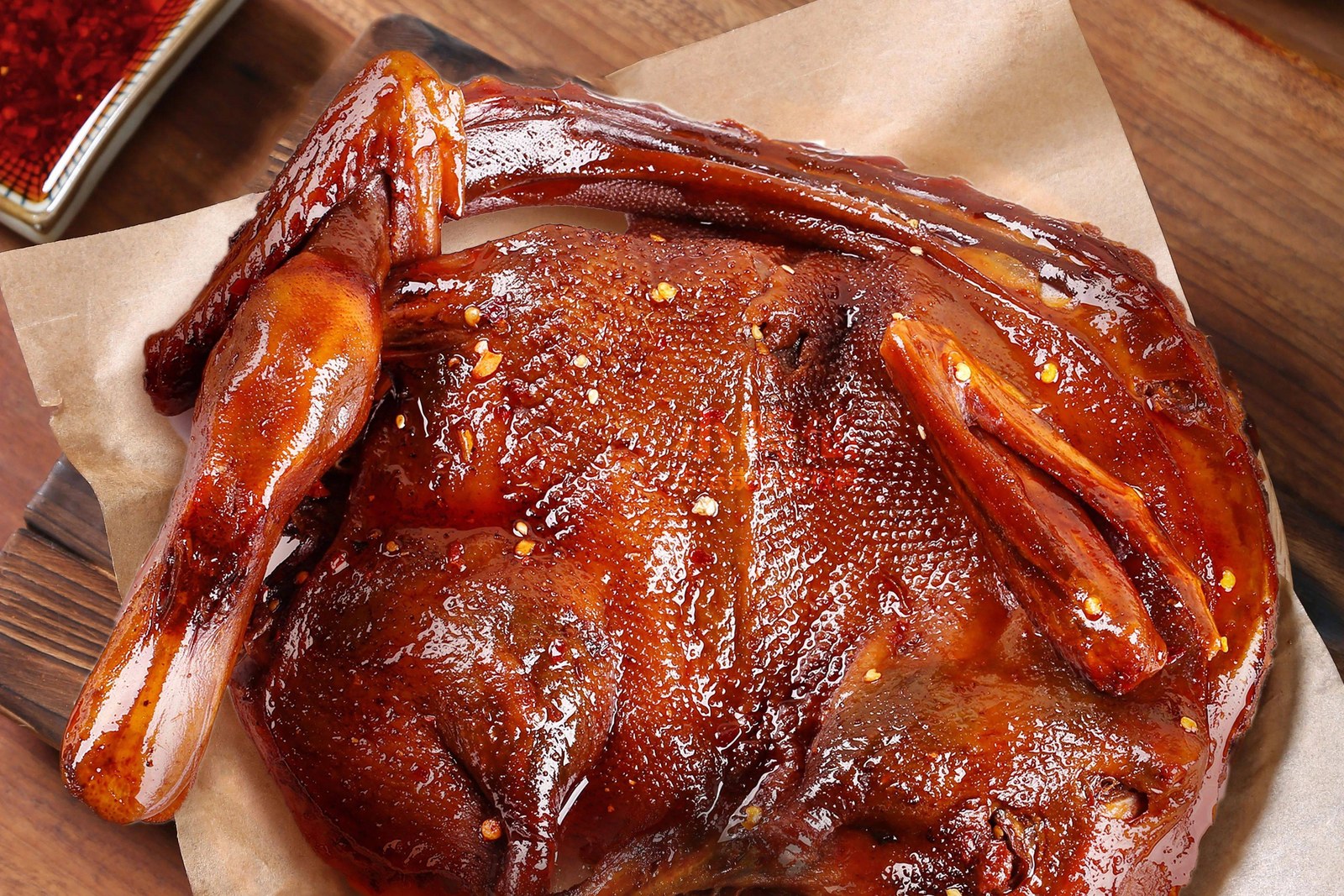
The pressing is the point. Once salted and boarded, the duck loses its water and its shape, so the meat tightens into a chewy, deeply savoury sheet rather than the soft roast most people expect from duck. At the table it is almost never eaten raw; the slab is steamed until the flesh softens and the salt blooms into a gentle sweetness, or braised with ginger and a little wine so the fat renders and the skin turns supple. Either way the dish is a holiday one, set out at New Year and at family gatherings where a single duck is carved and shared, and a second is wrapped to take away. Because it keeps, it moved easily along the river as a trade good, and that is how it became the thing visitors remember and box up.
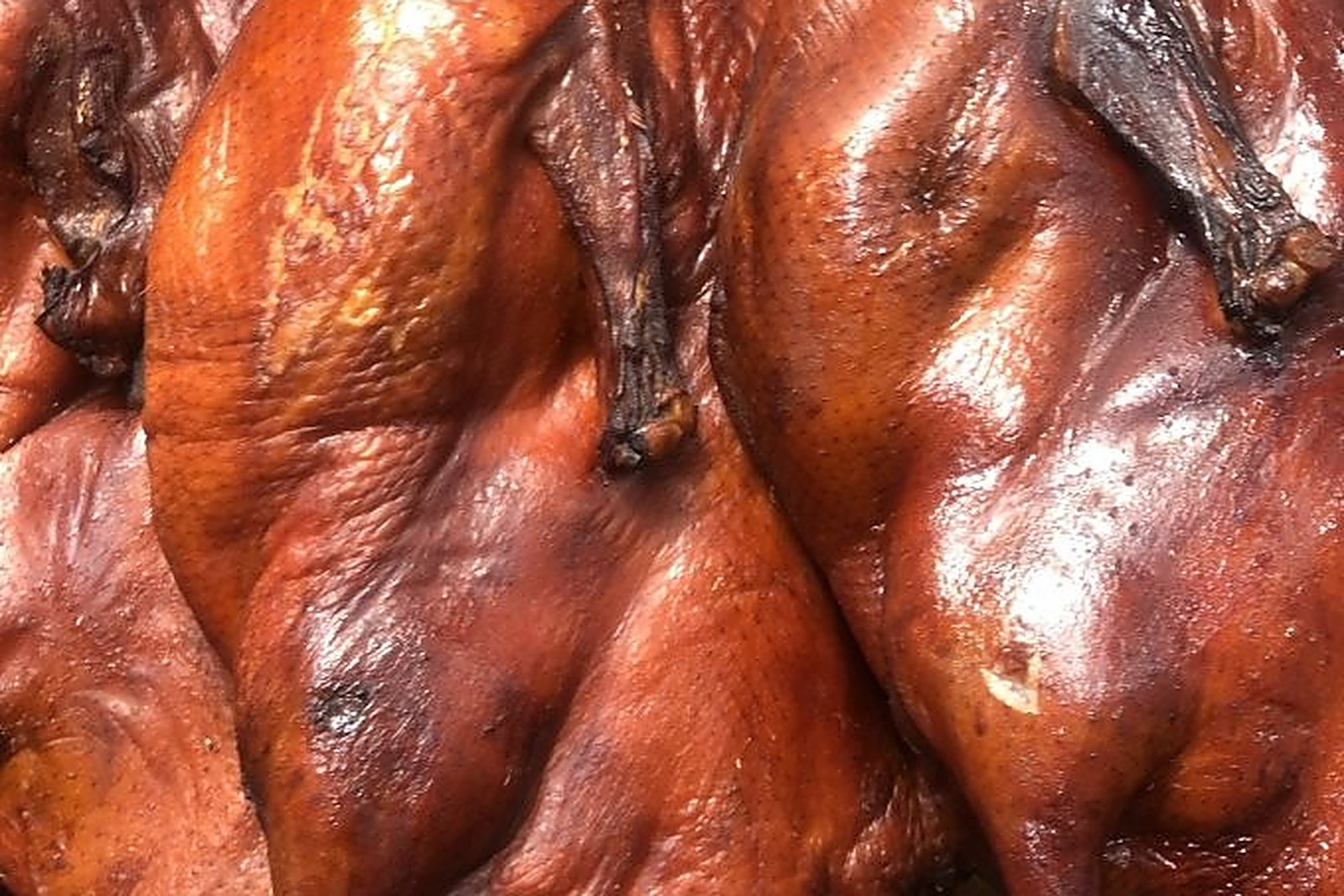
What the salt gives, the drying holds. A good Tongliang duck should be firm to the touch, evenly amber rather than blotched, and salty but not harsh, with a clean meat smell and none of the sourness that comes from a hurried cure. The best are made in the cooler months when the air dries the slabs slowly, and the meat firms without fly or mould. Eaten with plain steamed rice it is a country meal; eaten as a gift it is a piece of the district’s river-and-market history that fits in a parcel. The dish is humble in ingredients and long in method, which is the honest reason it has outlasted fashion in a part of Chongqing better known for its dragon dance than for its table.
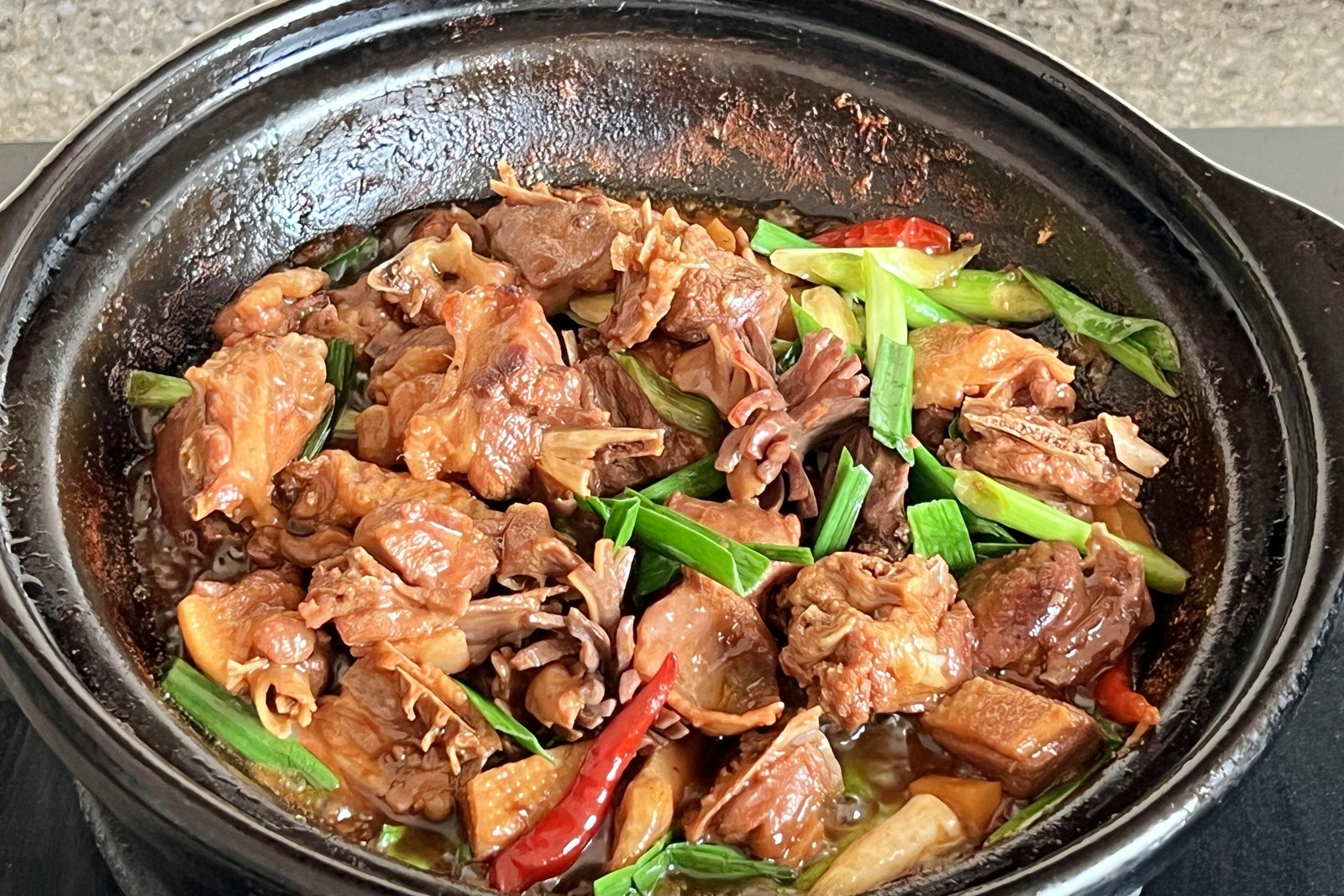
The duck rewards a patient kitchen. Steam it rather than boil it to keep the flavour in the meat, braise it if you want the skin to soften, and slice it thin against the grain so the dense flesh eats tender. The salt should season the rice more than it stings the tongue, which is the honest test of a cure done right.
Words and Names
铜梁板鸭 Tóngliáng Bǎnyā is the Tongliang pressed duck, the district’s best-known cured meat, whole ducks salted, pressed flat and air-dried. 铜梁区 Tóngliáng Qū is Tongliang District in Chongqing Municipality, on the Fu River. 涪江 Fú Jiāng is the Fu River that runs past the district and shapes its food ways. 板鸭 bǎnyā means pressed duck, the flattened, slab-shaped cured bird. 蒸 zhēng is steaming and 红烧 hóngshāo braising, the two common ways the cured duck reaches the table.
What the Locals Know
Pressed duck is a cured, salted product, not a fresh roast, so judge it by firmness and an even amber colour rather than by a glossy raw look. It is best made and bought in the cooler months when slow air-drying gives a clean cure without off smells. The dish is a holiday and gift food across Tongliang rather than an everyday restaurant order, and it is steamed or braised at home before eating. One honest caveat: because it is long-cured and salty, it is eaten in slices with rice, not as a large piece, and a duck that is soft, sour or blotched was hurried or stored badly. No specific shop, address, price or founding family is stated here.
flowcloud would say that Tongliang pressed duck is the district’s best-known cured meat, whole ducks salted, pressed flat between boards and air-dried into a firm amber slab that keeps for weeks, then steamed or braised for festivals and carried from Chongqing as a gift. All checked October 2026.
Where to find it: the pressed duck is a district specialty of 铜梁区 Tóngliáng Qū Tongliang District, Chongqing, along the 涪江 Fú Jiāng Fu River and at the markets and food shops of the district seat and 安居古城 Ānjū Gǔchéng Anju Ancient Town, where cured meats are sold as autumn and New Year gifts. No specific shop, address or price is invented here; the duck is a general district specialty rather than the property of one named house. All checked October 2026.