
潼南萝卜 Tóngnán Luóbo, the Tongnan radish, is the quiet backbone of the district’s table, the vegetable that turns up in more forms than most visitors expect. Tongnan (潼南区) sits in the north-west of Chongqing where the Fu River (涪江) and Qiong River (琼江) have built wide, fertile flats, and the district is known across the upper Yangtze as a vegetable base, the kind of place whose fields feed markets far downstream. The radishes grown here are fat and sweet rather than sharp and woody, the loose soil and river water giving them a clean crunch and a mildness that makes them as good raw as cooked. They are the patient crop of a district that farms seriously, and the thing that proves Tongnan’s strength is the field, not only the river.
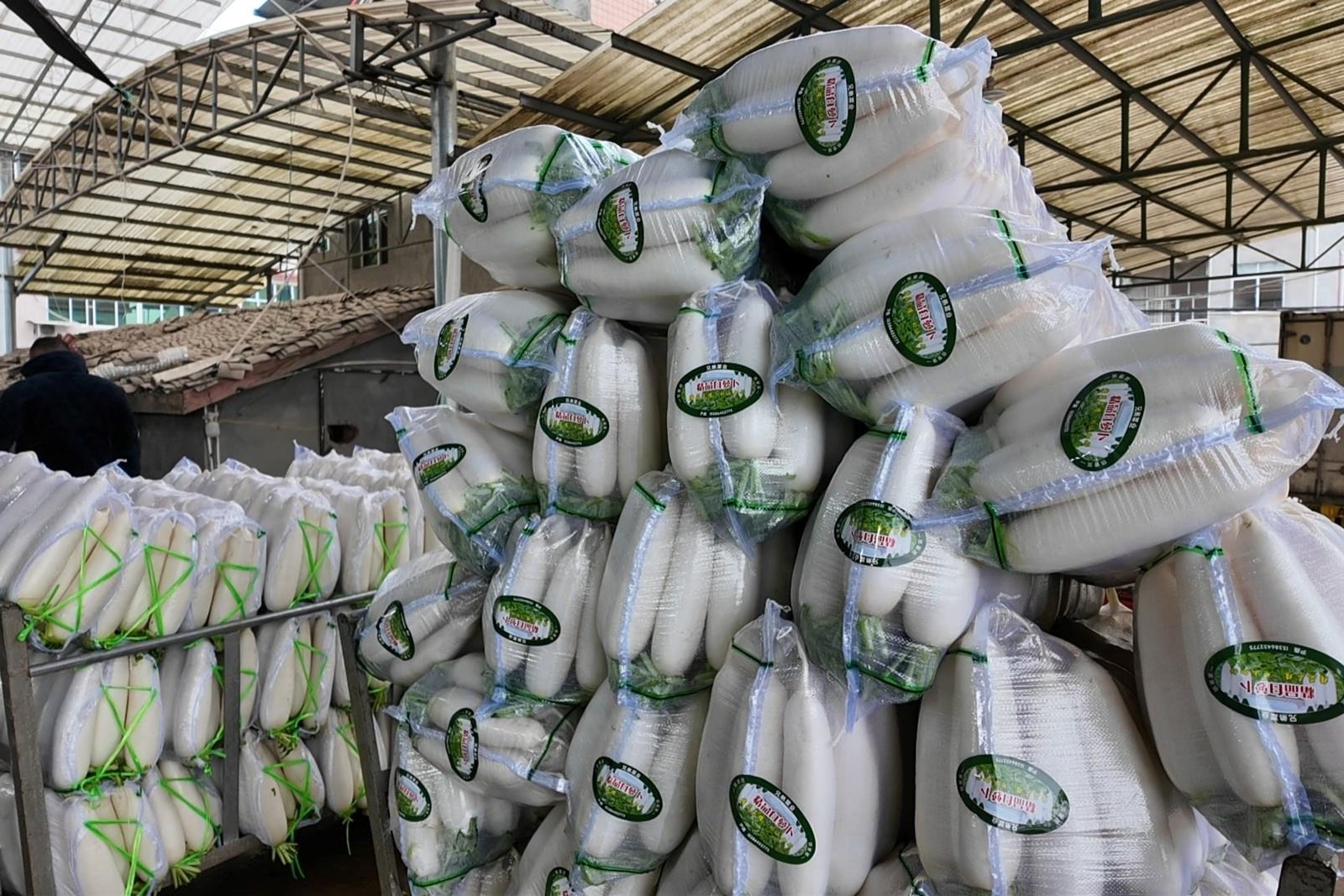
The radish is eaten three honest ways, and each suits the vegetable. Eaten fresh, it is peeled and bitten raw or sliced into salads, sweet and juicy with none of the bite that puts people off radish, a clean crunch that the river flats seem to draw out of the root. The second way is pickling, 泡菜 pàocài, where the radish is salted and fermented into a crunchy kraut that keeps through the lean months and turns up alongside nearly every meal in the district as a sharp, refreshing side. The third is drying, 萝卜干 luóbo gān, the radish cut and sun-dried until it turns chewy and concentrated, a preserved staple that travels and stores without trouble. Because the crop is abundant, Tongnan splits it between the fresh market, the pickle jar and the drying rack, and little of a good harvest is wasted.
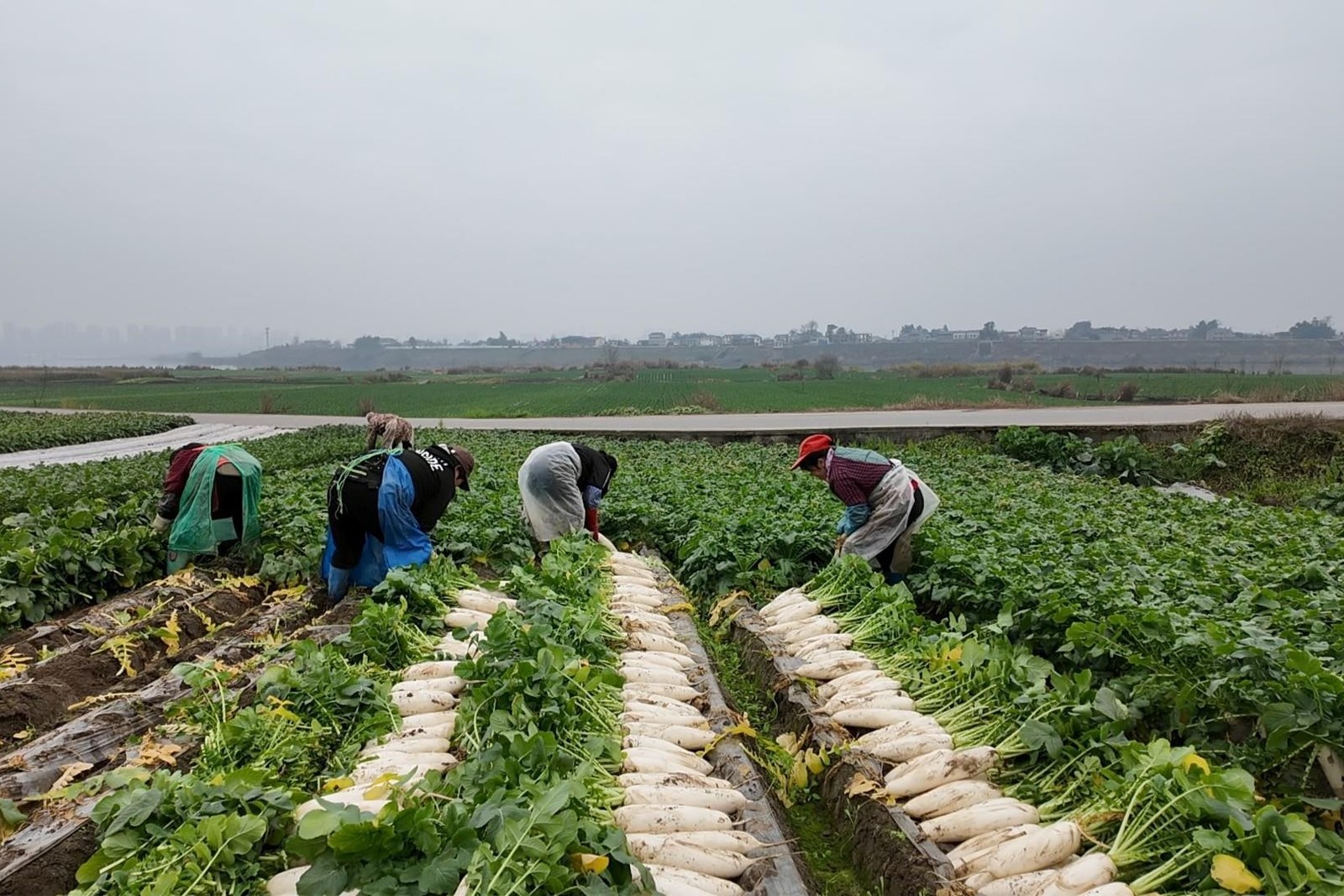
What makes the radish worth a mention is the district behind it. Tongnan’s standing as an upper-Yangtze vegetable base means the root is grown at scale and eaten at every level, from the roadside stall to the home kitchen, and the sweet fat radish is the clearest proof of the soil’s work. Locals treat the fresh radish as the everyday vegetable and the pickle and dried versions as the way to carry the season, and a visitor who eats across the district meets the radish in all three states without trying. The rivers lay the flats that grow it, and the radish is the plain, dependable thing they give back.
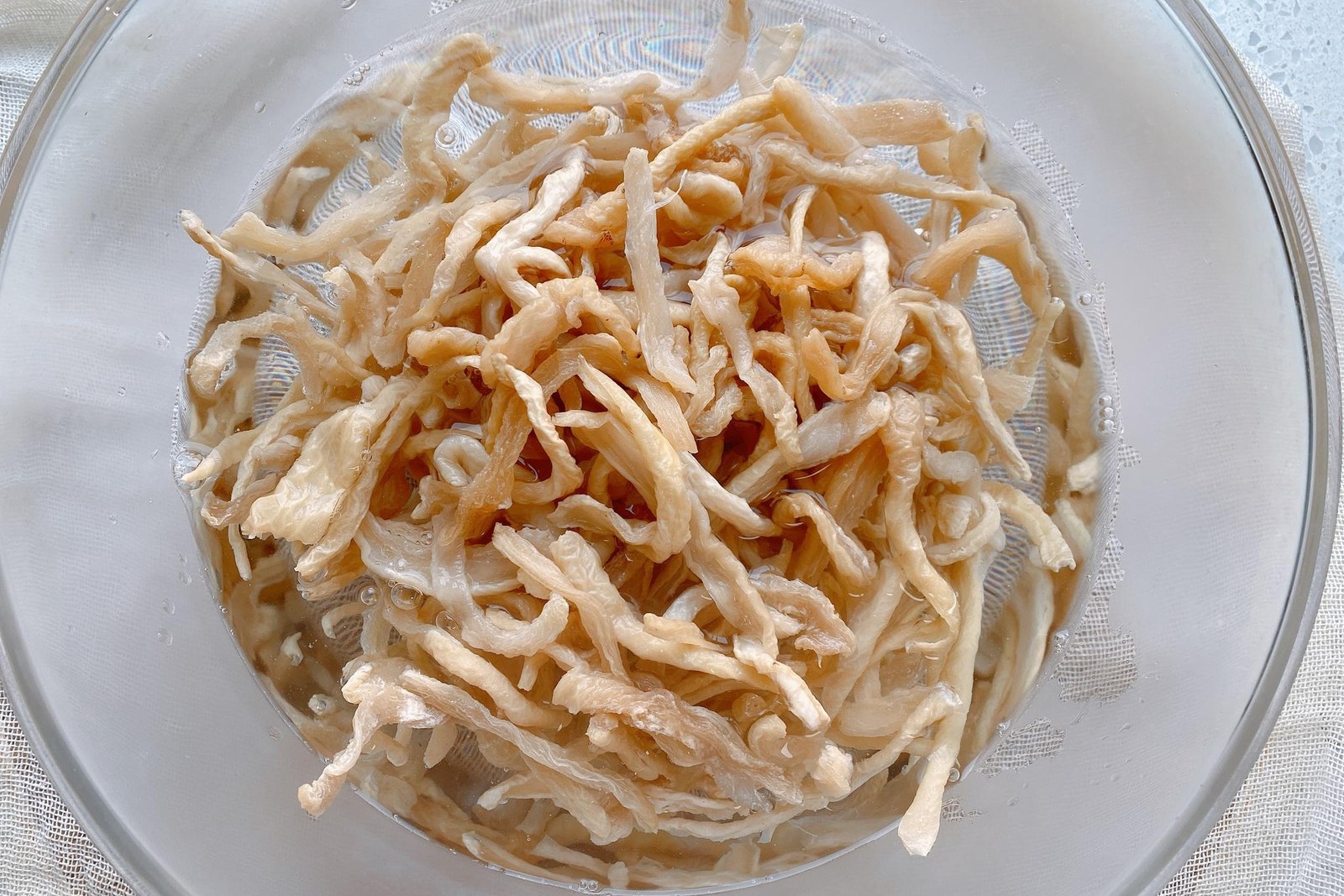
The radish rewards the everyday table. Buy it fresh in the cooler months when the roots are at their sweetest and crispest, look for firm heavy roots without splits, and try it raw, pickled and dried to taste the district’s three answers to one vegetable. The fresh root should be sweet not sharp, which is the honest test of Tongnan soil doing its work.
Words and Names
潼南萝卜 Tóngnán Luóbo is the Tongnan radish, the fat sweet root of the district’s upper-Yangtze vegetable base. 泡菜 pàocài is the pickled ferment that turns the radish into a crunchy kraut side. 萝卜干 luóbo gān is the sun-dried radish, cut and preserved until chewy and concentrated. 涪江 Fú Jiāng is the Fu River and 琼江 Qióng Jiāng the Qiong River, whose flats grow the crop. 潼南区 Tóngnán Qū is Tongnan District in north-west Chongqing.
What the Locals Know
The fresh radish is a cooler-month crop at its sweetest and crispest, while the pickle and dried forms are the honest way to carry it through the year. Judge a fresh root by firmness and weight: heavy, un-split and crisp means good soil work, light or woody means past its time. The vegetable is grown across the district’s fields and markets rather than at one celebrated farm, so there is no single famous patch to seek. One honest caveat: as a commodity crop, prices and size vary with season and weather, and no specific farm, address, award or founding family is stated here.
flowcloud would say that Tongnan radish is the fat sweet root of the district’s upper-Yangtze vegetable base, grown on the Fu and Qiong river flats and eaten fresh, pickled into crunchy kraut, or sun-dried into chewy strips. All checked October 2026.
Where to find it: the radish is grown and sold across 潼南区 Tóngnán Qū Tongnan District, Chongqing, with the strongest sense of place in the 涪江 Fú Jiāng Fu River and 琼江 Qióng Jiāng Qiong River fertile flats and at the district’s vegetable markets and roadside stalls year round. No specific farm, address or price is invented here; the radish is a general district staple rather than the property of one named grower. All checked October 2026.