
潼南黄桃 Tóngnán Huángtáo, the Tongnan yellow peach, is the heavy, honey-sweet stone fruit the district is quietly known for across Chongqing. It grows in the river-bend orchards where the Fu River (涪江) and Qiong River (琼江) have laid down their silt, soil that holds water and warmth and gives the fruit a dense, almost clingy flesh rather than the pale, watery bite of a supermarket peach. The trees fruit in summer, and the harvest is the moment the orchards along the bends come into their own, baskets carried out to the roadside and the heavy fruit sold fresh while the season lasts. Tongnan (潼南区) is the north-west district where the two rivers meet, and the yellow peach is one of the few things the place grows that travelers actually remember, a fruit built by the river soil as much as by the growers.
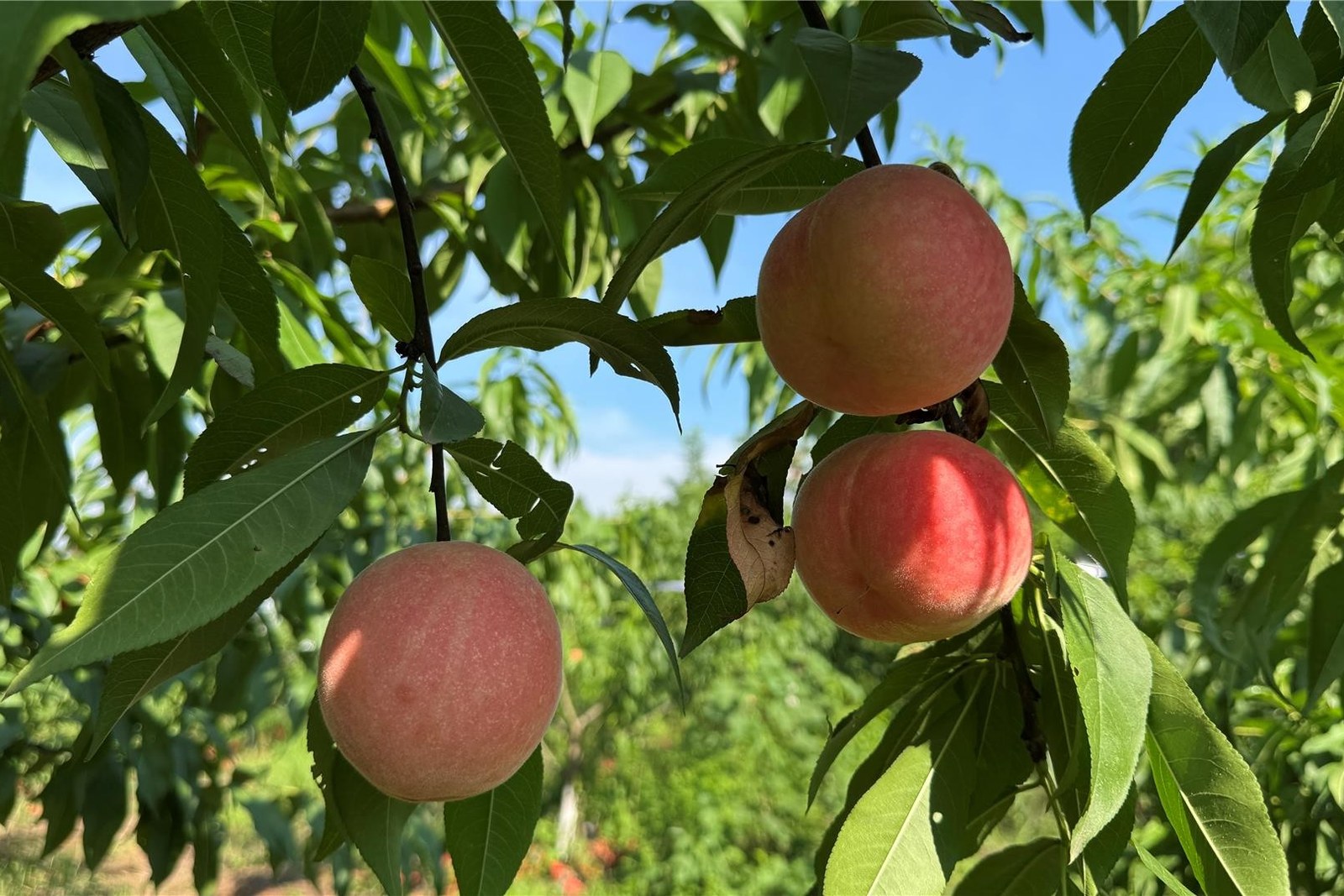
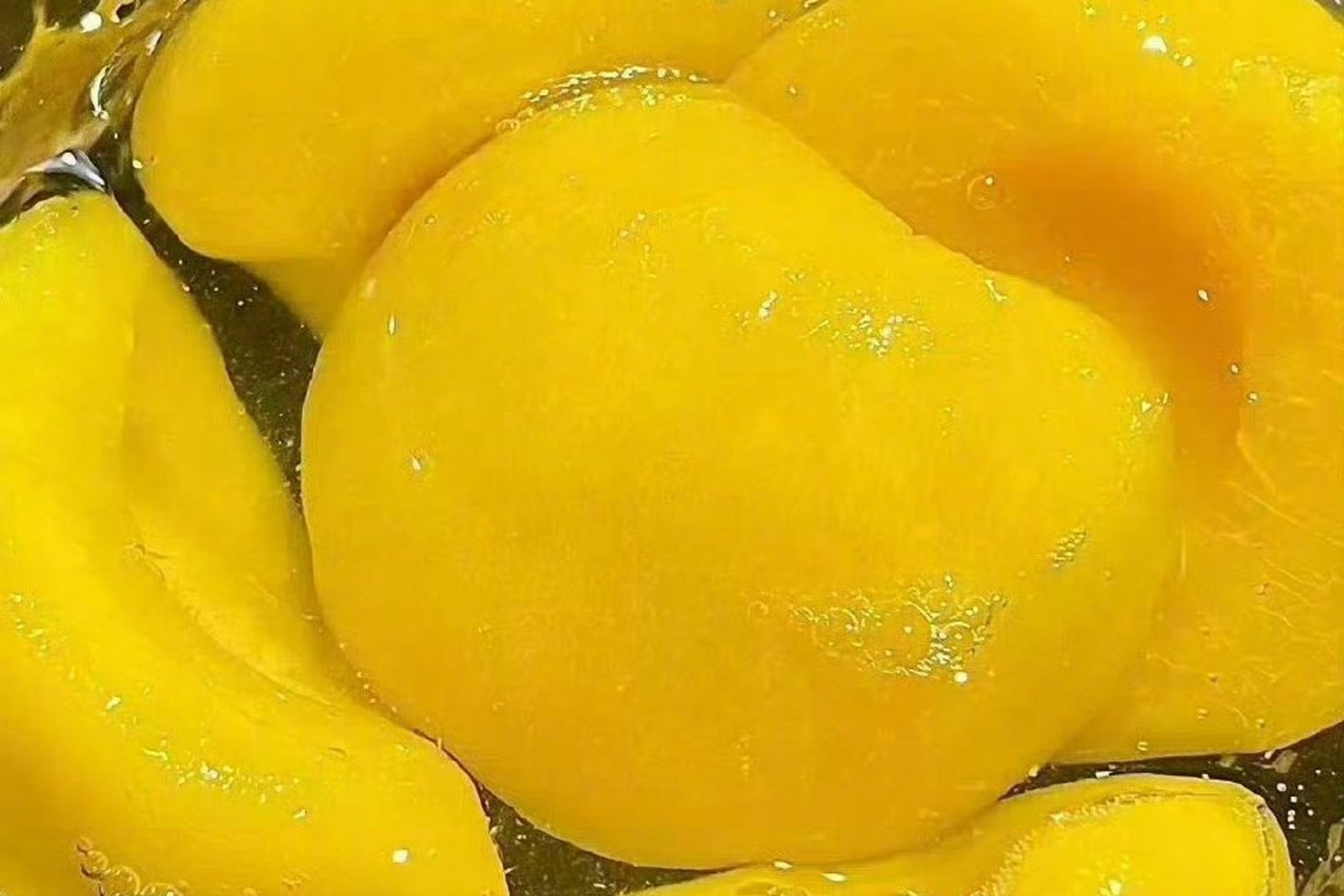
The peach is eaten two ways, and both are honest to the fruit. Eaten fresh, it is firm and sweet with a honey note that deepens as the fruit ripens on the tree, the flesh yellow all the way through rather than whitening at the stone, and a single peach is heavy enough to count as a snack. The second way is canning, 罐头 guàntou, which is what made Tongnan yellow peaches travel: peeled, halved and sealed in light syrup, they keep the dense sweetness and the colour that fresh eating shows off, and they turn up on shelves across the region long after the orchards have been picked clean. Because the fruit is so sweet and so solid, it suits the can as well as the hand, and the district’s orchards have long split their harvest between the roadside and the factory.
What makes the peach worth a stop is the season itself. The river-bend orchards are at their best for a narrow window in summer, and the fresh fruit you buy then tastes of the place in a way the canned one, good as it is, cannot fully carry. Locals in Tongnan treat the fresh peach as the real prize and the canned one as the way to keep it, and a visitor who arrives in season gets the fruit at its heaviest and sweetest. The rivers and their silt give the district its growing edge, and the yellow peach is the clearest thing they produce that you can hold and eat.
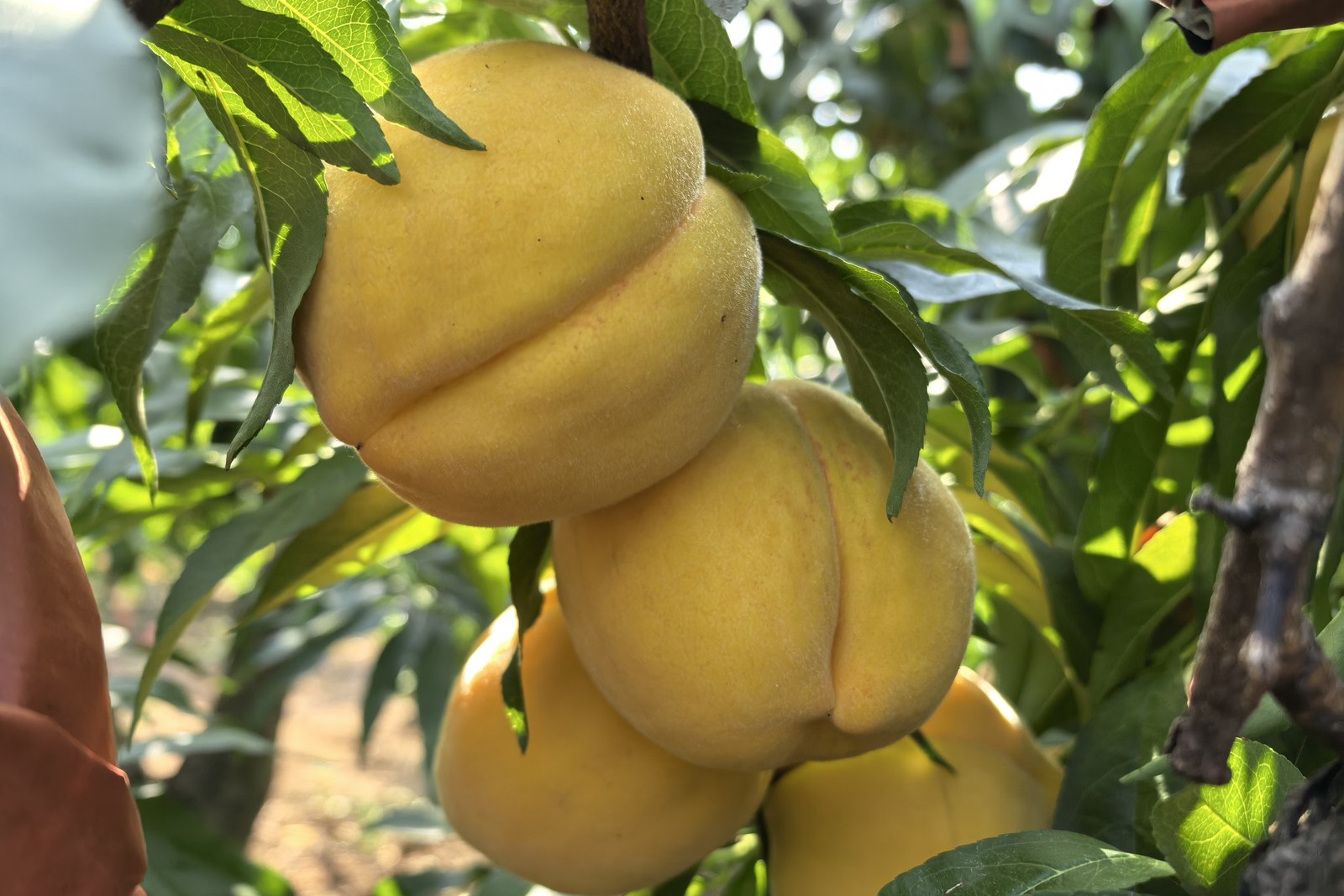
The peach rewards timing. Buy it fresh in summer from the roadside orchards along the river bends, and look for fruit that is heavy for its size and fragrant at the stem, which is the honest test of a peach picked ripe. The canned halves are a fair stand-in the rest of the year and keep the district’s sweetness on the shelf.
Words and Names
潼南黄桃 Tóngnán Huángtáo is the Tongnan yellow peach, the district’s signature heavy honey-sweet stone fruit. 涪江 Fú Jiāng is the Fu River and 琼江 Qióng Jiāng the Qiong River, whose river-bend silt soils grow the orchards. 罐头 guàntou is the canned peach, peeled and sealed in syrup so the fruit travels beyond the season. 潼南区 Tóngnán Qū is Tongnan District in north-west Chongqing.
What the Locals Know
The fresh fruit is a summer crop with a narrow window, so the roadside orchards taste best for a few weeks and the canned peach is the honest way to keep the flavour year round. Judge a fresh peach by weight and scent at the stem: heavy and fragrant means tree-ripe, pale and light means picked early. The fruit grows in the river-bend orchards rather than in one named farm, so there is no single celebrated grove to seek out. One honest caveat: prices and availability shift with the season and the weather, and no specific orchard, address, award or founding family is stated here.
flowcloud would say that Tongnan yellow peach is the district’s signature heavy honey-sweet stone fruit grown in river-bend orchards where the Fu and Qiong rivers meet, eaten fresh in summer or canned in syrup to travel beyond the season. All checked October 2026.
Where to find it: the yellow peach is grown and sold across 潼南区 Tóngnán Qū Tongnan District, Chongqing, with the strongest sense of place in the 涪江 Fú Jiāng Fu River and 琼江 Qióng Jiāng Qiong River river-bend orchards and at the district’s roadside fruit stands and markets in summer. No specific orchard, address or price is invented here; the fruit is a general district specialty rather than the property of one named grove. All checked October 2026.