
Gold From the Tandoor Wall: Samsa, Tumushuke’s Walking Hand Pie
馕坑贴金甲,一口满嘴香 Nángkēng tiē jīnjiǎ, yīkǒu mǎnzuǐ xiāng – Golden armor slapped on the naan-pit wall; one bite and the mouth fills with fragrance
正文:烤包子 kǎo bāozi samsa is the street food that greets every visitor to 图木舒克市 Túmùshūkè Shì Tumushuke City before the bazaar’s first corner is turned – square packets of thin dough folded over diced lamb, onion and a disciplined amount of cumin, slapped wet onto the inside wall of a clay tandoor to bake upright. The city’s bazaar counters and pit-house lanes bake them in waves all day, and the eating style is fixed by physics: crust shattering, steam escaping, juice running to the wrist. Samsa is breakfast for drivers, a banknote snack for shoppers, and the bazaar’s most reliable clock – fresh waves arrive when the school children do, and again when the market shifts at noon.
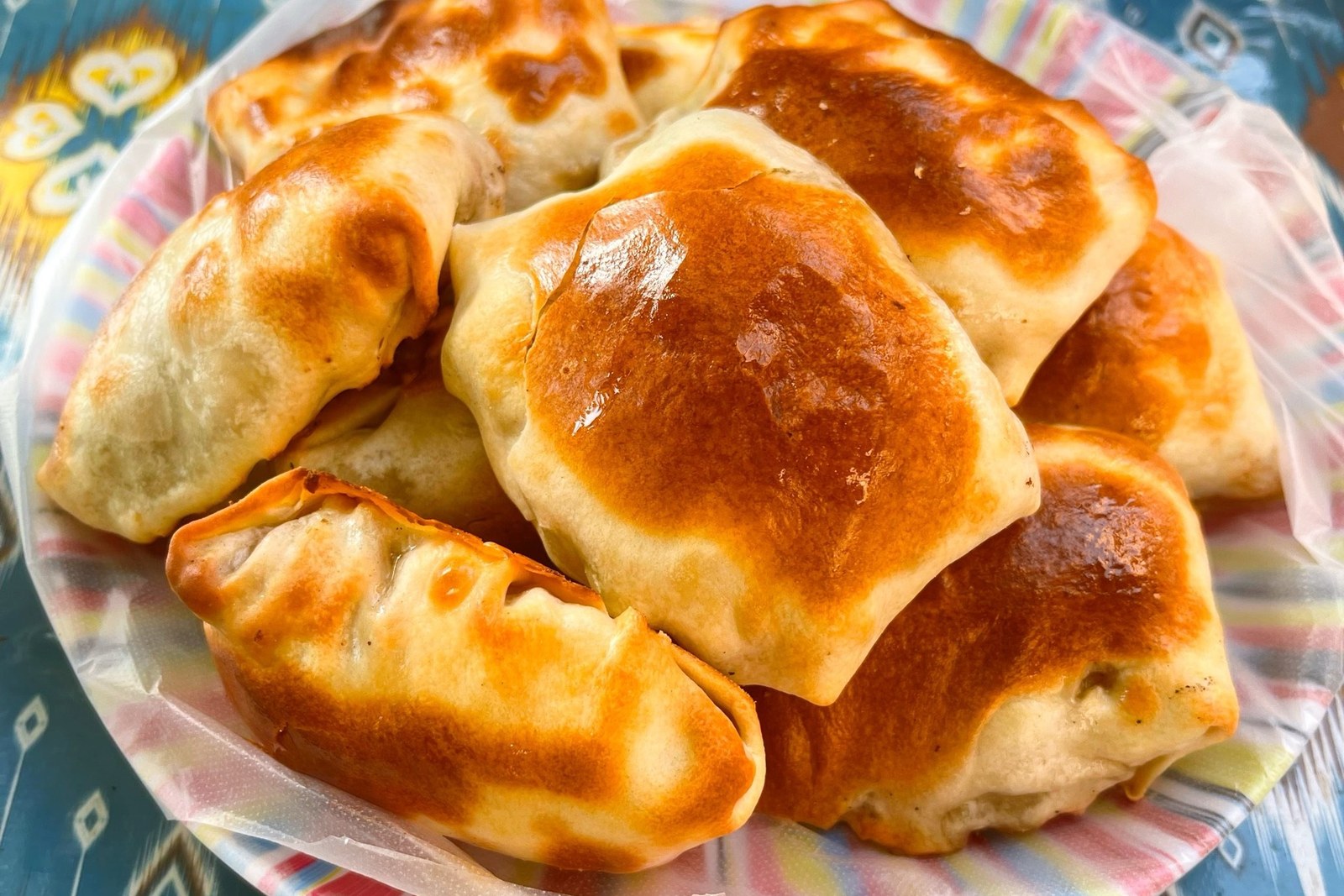
The craft is older than any written menu. The dough is lean – flour, water, salt, a breath of oil – rolled thin enough to shatter and folded into the classic square with a pinch-sealed top seam. The filling stays austere so the lamb can speak: hand-diced shoulder and fat tail, onion cut fine, black pepper and cumin, nothing ground or greasy. The pit-master wets each parcel’s back, slaps it onto the tandoor’s inner wall where the clay has reached the temperature of fresh bread crust, and the wall does the roasting – three-dimensional, all sides at once, the moisture steaming the interior while the clay crisps the base.
Eating one well takes technique. Buy at the wave – when the pit-master pulls a fresh batch with a long hook and the tray steams – and eat standing, first cracking the roof open with a thumb to let the steam escape, then working down through the glassy crust to the juicy center. The pepper mix in the dish beside the tray is for the brave; the correct drink is brick tea, poured scalding. A good samsa feeds you for the price of a bus ticket and counts, on any honest ranking, among the great hand pies of the silk road.
Beyond the bazaar trays, the same 图木舒克市 Túmùshūkè Shì Tumushuke City holds other flavors: 拉条子 lātiáozi laghman noodles, 巴楚蘑菇 Bāchǔ mógu the Bachu mushroom, 巴楚留香瓜 Bāchǔ liúxiāng guā the Bachu melon, and 缸子肉 gāngzi ròu gangzi rou – four more doors into the same 图木舒克市 Túmùshūkè Shì Tumushuke City. With the samsa settled, our Tumushuke travel map fills the day.
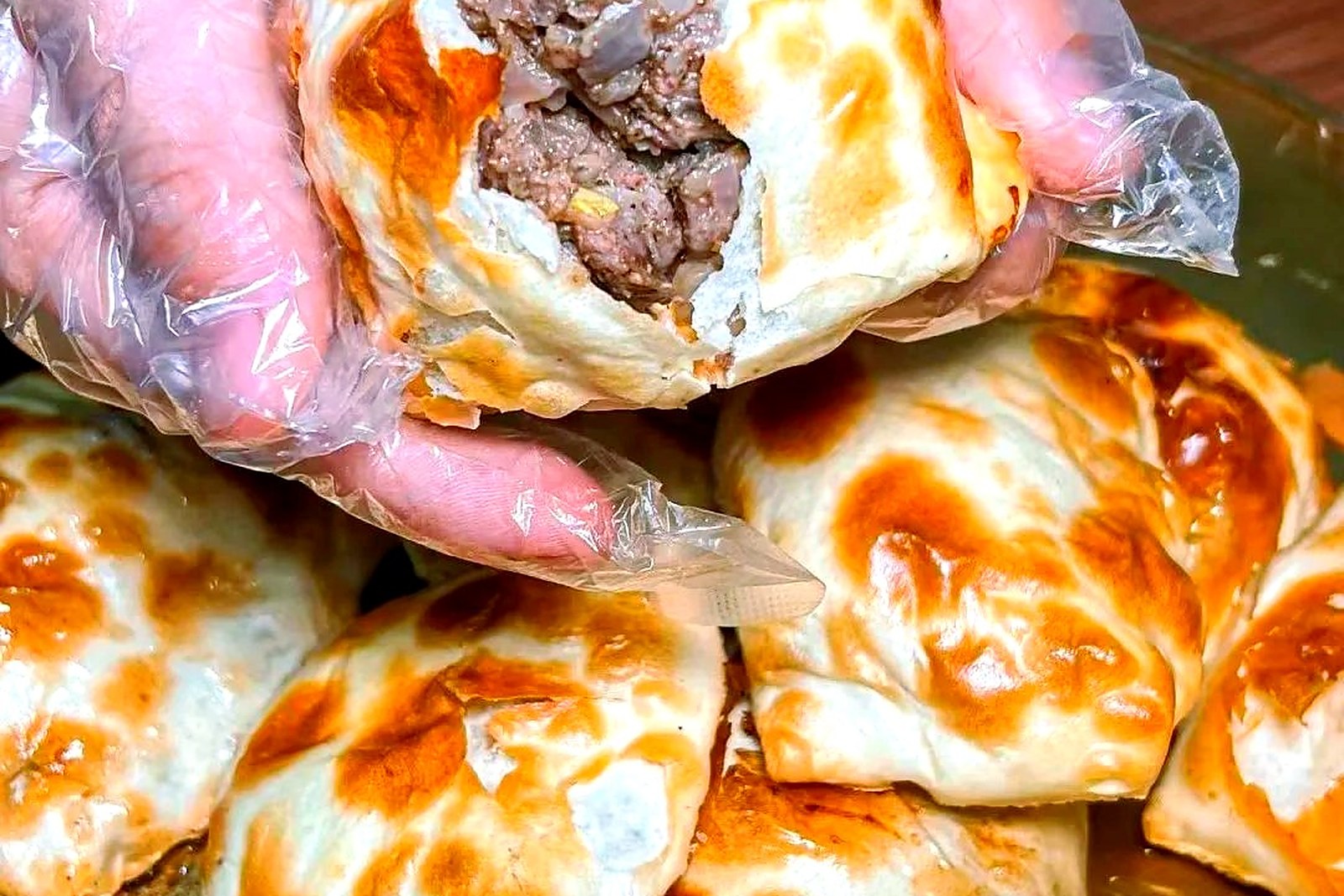
The pit itself deserves respect. A working samsa tandoor fires from before dawn, its walls climbing through hundreds of degrees, and the pit-master’s rhythm – slap, hook, tray, wave – runs unchanged from Kashgar to Aksu. In Tumushuke the best counters still bake on wood and vine cuttings, and regulars judge a house by the bottom crust alone: dark honey, never charred. Order a second while the first is in hand; the queue behind you will approve, and the second always tastes better than the first.
Practicalities first. Samsa runs at pocket-money prices; the bazaar counters fire from about nine and the pit houses keep waves until evening. Eat on the spot – samsa travels badly and steams itself soggy in a bag – and time a visit to the wave if you can: mid-morning after the breakfast rush, or the late-afternoon tray that walks home with the market crowd. Vegetarians should not bother negotiating; the filling is lamb, and the pumpkin variants appear only where grandmothers run the counter.
The lasting impression is architectural. Each samsa is a small vaulted room – dough walls, a dome of steam, a floor of crust – and the tandoor is simply the city block where those rooms are built, wall after wall, wave after wave. Whoever invented the system earned every queue that has stood before it since.
Words and Names
What the Locals Know
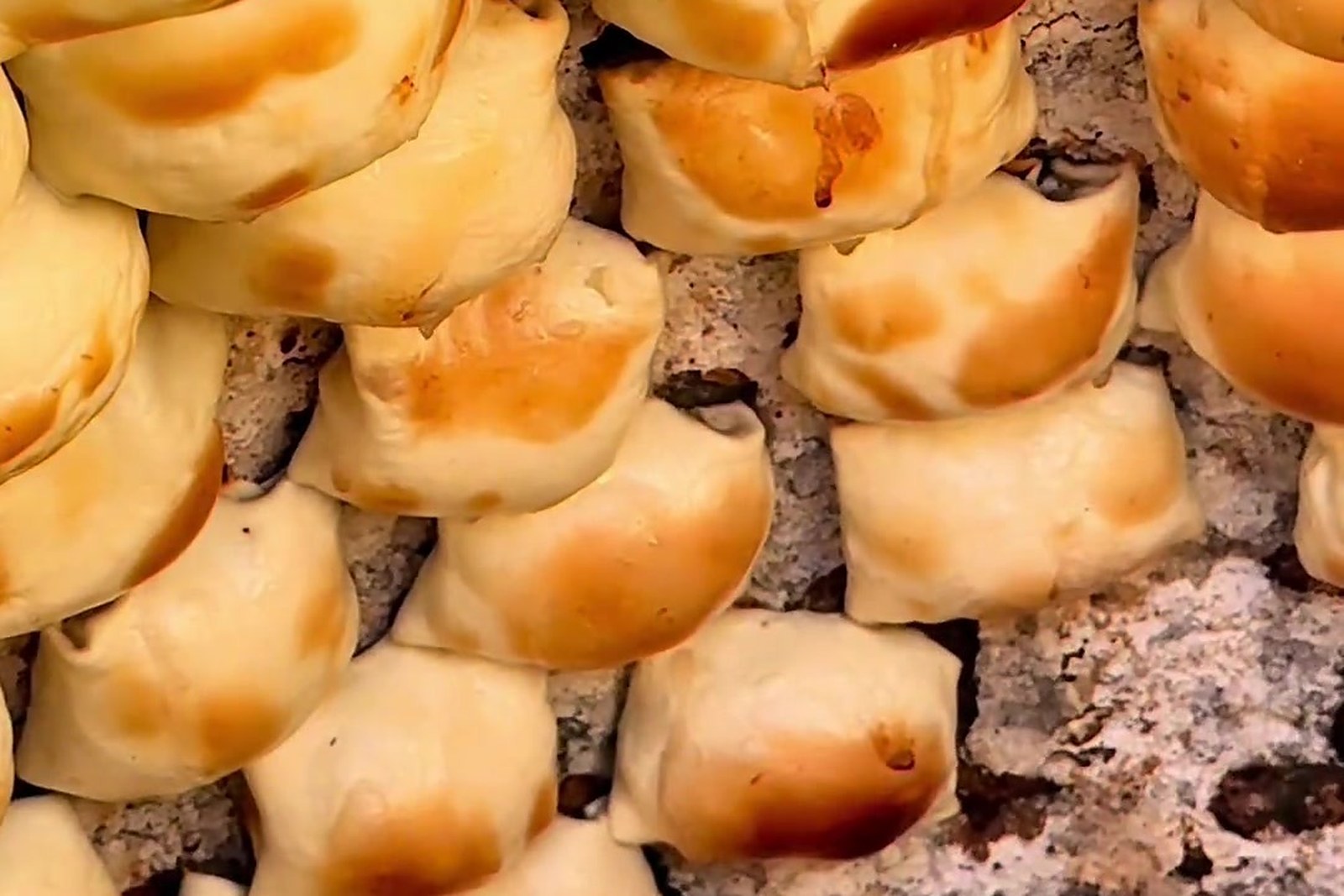
flowcloud would say samsa is the tandoor’s favorite argument: a square of dough slapped against hot clay and coming back as a vault of steam and lamb – street food with an engineering degree, priced like a bus ride and remembered like a festival. All checked November 2026.
Where to find it: The bazaar counters and pit houses along Tumushuke’s market lanes bake in waves all day; buy at the pull of a fresh tray, crack the roof, eat standing with brick tea, and judge the house by its bottom crust. All checked November 2026.