
屯昌阉鸡 Túnchāng yānjī is a chicken that has been surgically gelded, and the county now sells it under the official name 屯昌香鸡 Túnchāng xiāngjī, Tunchang fragrant chicken, with 屯昌黄鸡 Túnchāng huángjī, Tunchang yellow chicken, as the older and more descriptive alias; a fourth spelling, 屯昌腌鸡, appears in print because 腌 and 阉 sound alike. 屯昌县 Túnchāng xiàn is an inland county in the north-central part of Hainan Island, one of the few here that has no coastline, and its cooking grows out of eight inland towns rather than out of a harbour. The county raises about a million capons a year. A capon, the English word for the same operation, is a cockerel whose testes were removed at about a month old, and the bird that results is a different animal from the one it would have been: longer in the body, fatter under a thinner skin, and almost silent.
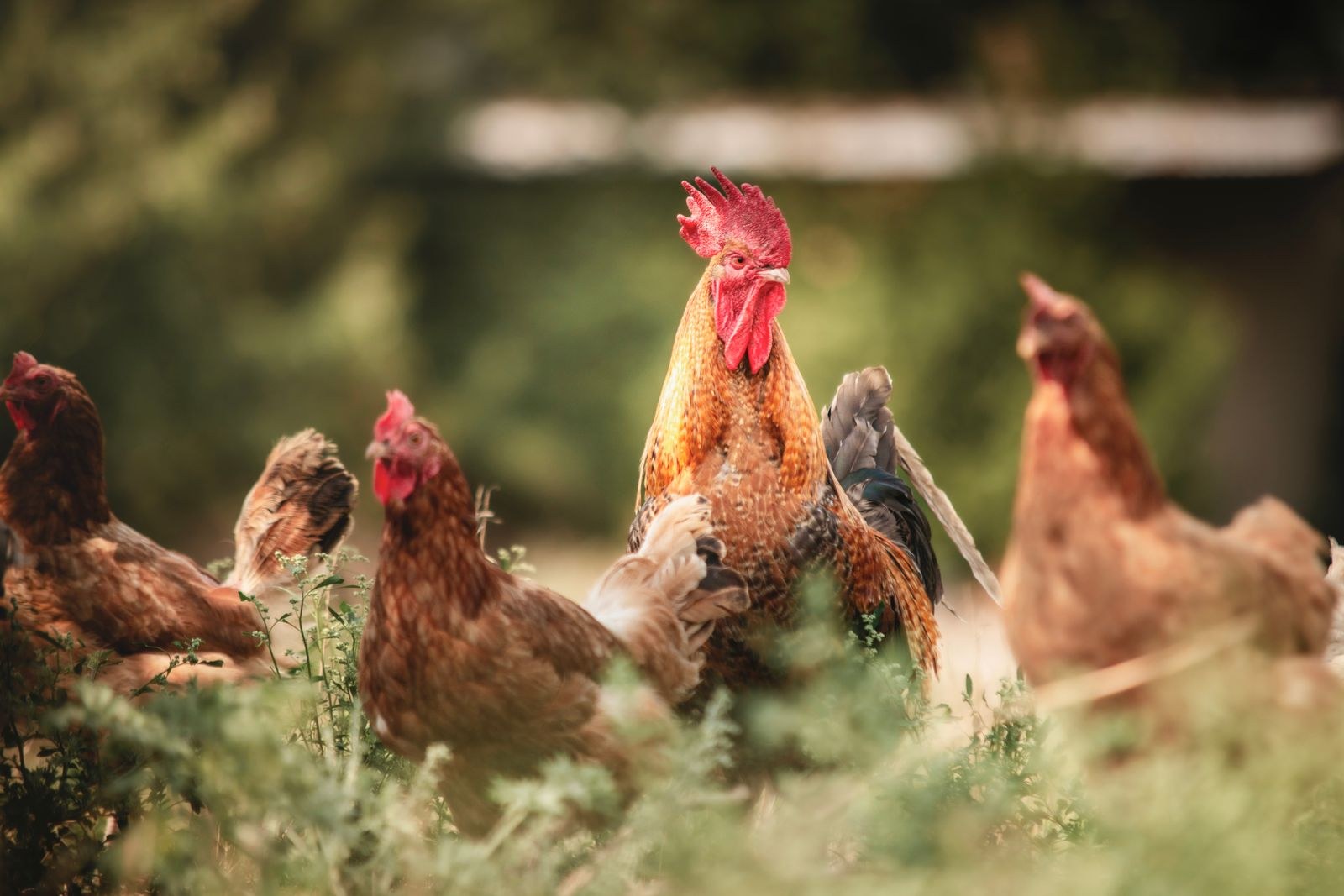
The birds begin as chicks of the local 麻花公鸡 máhuā gōngjī, a speckled farmyard cockerel – one account calls the chicks a cross between a local hen and a Wenchang cockerel – and at about thirty days the operation is done. From then on they are ranged outdoors, in orchards, in rubber plantations and in the grass of the lower hills, on paddy, rice bran and yellow maize. Some farms add coconut; the 营园鸡 yíngyuán jī of 坡心镇 are fed coconut powder and shredded coconut, and none of these farms uses additives. A capon takes six to twelve months to finish, and the 营园 birds run about 250 days. The published standards are exact: slaughter at 150 days or later, cockerels 1.1 to 1.2 kilograms, hens 0.9 to 1.1, a stocking rate of 800 to 1,500 birds a hectare, fat in the dressed carcass no more than 3.0 per cent and crude protein at least 22.0 per cent.
What a farmer notices first is the quiet. A capon’s comb fades from a cockerel’s fiery red to a washed half-pink, the crow disappears altogether, and the sound the bird makes is the hen’s 咕咕咕. Hainan is fond of listing its oddities and one of them is 公鸡不如屯昌养得怪, nowhere keeps a rooster as strangely as Tunchang, which is how a CCTV farming programme introduced the county in 2014. The reporter noted that you can live beside a farm of more than ten thousand of these birds and never be woken by crowing or by laying calls, which makes them unusually easy neighbours. The meat is why the operation is performed at all: 皮黄澄光亮 pí huáng chéng guāng liàng, skin a clear glossy yellow; 皮薄色黄、脂肪金黄色, thin skin and golden fat; 肉爽滑香甜, flesh smooth and sweet; 骨酥皮脆, tender bones and crisp skin.
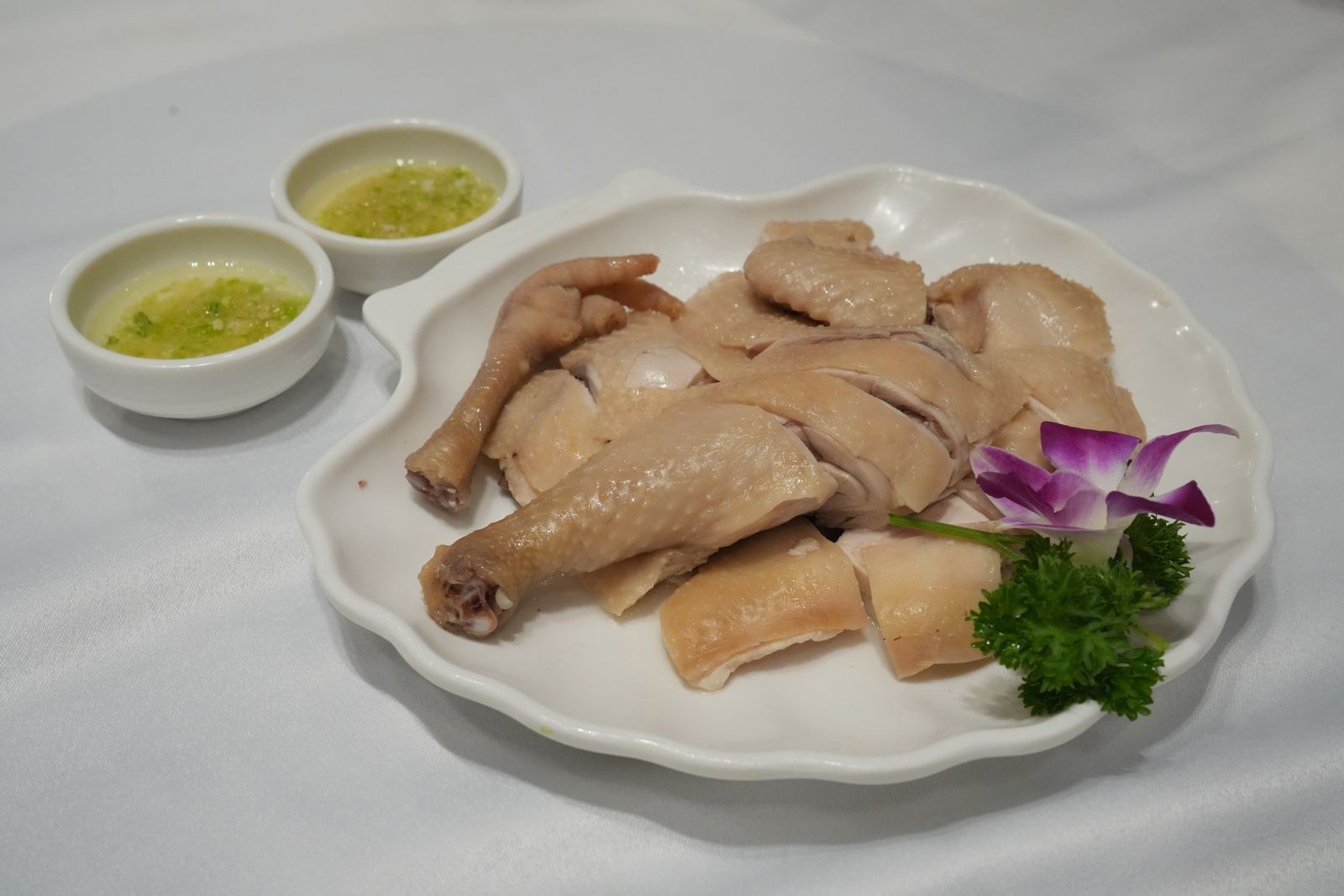
The default treatment is 白斩 báizhǎn: the bird poached whole, cooled, chopped through the bone and rebuilt on the plate in its original shape, so that the pieces arrive skin up, yellow over pale. The dip does the rest, and the county is insistent about it – pounded garlic, a little chopped ginger, light soy, and the juice of a 酸桔子 suānjúzi, the small sour citrus that Hainan squeezes where the mainland reaches for vinegar, since local cooking dislikes vinegar and treats the sour orange as its own condiment. A second treatment is 打边炉 dǎ biān lú, the Hainanese hotpot built on fresh coconut water rather than on stock, sold by some farms as 生态黄皮椰子鸡, in which the broth ends up tasting of coconut and the chicken of both. The third, and the county’s own favourite, is the capon stewed with southern herbs to make 益智功夫鸡 yìzhì gōngfu jī, first on its 2023 list of ten great dishes, with a reishi chicken soup, 灵芝香鸡汤, as its companion.
The habit is old and local. Households here have long kept 山鸡 and pigs, and the county record notes the longstanding custom of gelding young cockerels to change their meat, choosing the strongest and most adaptable birds out of the local flock and rearing the results for the table. The name came from the look: 屯昌黄鸡 was the county’s prize chicken, golden-feathered with thin yellow skin and golden fat, so people simply called it 黄鸡, the yellow chicken, and 阉鸡, the capon, became the everyday word for it. One date needs care. A 2014 television feature said the county’s capons went back to the Qing dynasty and more than four hundred years, which is a single spoken source with no county gazetteer text behind it and does not add up, since the Qing began in 1644. Quote it as a television claim and nothing more. What is newer and better documented is the paperwork: a geographical indication, a place in the county’s 屯长香 brand, and a proposal to have the rearing and the cooking technique listed as provincial intangible cultural heritage.
Words and Names
阉鸡 yānjī is a capon, a gelded cockerel, and 腌鸡 is the same word written by sound; 熟鸡 shújī and 扇鸡 shànjī are two southern names for the same bird. 屯昌黄鸡 is the yellow-feathered local chicken the capons are bred from, and 屯昌香鸡 Túnchāng xiāngjī is the name the geographical indication protects. 麻花公鸡 is the speckled local cockerel used as parent stock, and 海南红色原鸡 Hǎinán hóngsè yuánjī, the Hainan red junglefowl, is the wild ancestor that the GI rules accept as breeding material. 白斩 or 白切 means poached whole and chopped; 打边炉 is the Hainanese hotpot; 酸桔子 suānjúzi is the sour calamansi that makes the dip; 益智 yìzhì is the southern herb in the county’s signature capon dish. 屯长香 Túnchāng xiāng is the county’s public agricultural brand, 咕咕妞 Gūgūniū is its cartoon chicken, and 无鸡不成宴 wú jī bù chéng yàn, no banquet without chicken, is the rule that governs every table in the province.
What the Locals Know
In Hainanese, 鸡 jī sounds like 吉 jí, good fortune, and the arithmetic of the Spring Festival follows from that. 无鸡不成宴 is not a suggestion here but the shape of the meal, and the bird the county prefers for it is a large capon with a red comb and red feathers, 红冠子、红羽毛的大阉鸡, because a red New Year is the one people want. In the weeks before the festival a village household will have a dozen or more of them in bamboo cages in the yard, kept for two jobs: 拜神, the offerings to the gods, and the reception of the relatives who arrive over the days that follow. On New Year’s Eve the birds are killed and poached, and the whole capon goes to the ancestral offering – Hainanese worship their ancestors as 公 gōng – before anyone is allowed to eat. Only then is it chopped, and only then is the dip mixed, with the pounded garlic, the ginger and the squeezed sour orange that the county considers non-negotiable.
The certification of 屯昌香鸡 exists in two published versions that do not agree, and the disagreement is worth stating rather than tidying away. The documented one runs like this: on 1 April 2025 the National Intellectual Property Administration gave the name a preliminary geographical-indication determination in announcement 626, and on 2 June 2025 it was approved in announcement 637 over the whole of the county, on the basis of a 2017 county government letter defining the protected area, and the standard that goes with it requires the birds to be 海南红色原鸡 or a cross of that junglefowl with the local Tunchang chicken. The other version is a Beijing Youth Daily report that described the name as recognised around 2018 after a process opened in May 2016, and called it Hainan’s only such agricultural product. The two may describe different schemes, or one of them may simply be wrong, and nothing published so far resolves it. The industry numbers are easier to state: about a million capons leave the county each year, from 135 households finishing 2,000 birds a year and 18 finishing 5,000, all of it fronted by the 屯长香 brand and the mascot 咕咕妞.
Two farms are named whenever the county writes about this bird. At 坡心镇 Pōxīn zhèn, in 营园村 Yíngyuán cūn of the 海株村 committee area, 苏朝标 Sū Cháobiāo keeps the flock sold as 营园鸡, about twenty thousand birds a year out of a cooperative founded in April 2016 and trading under the mark 海株营园生态鸡; the birds run under rubber on the hillside and are partly fed on coconut. At 新兴镇 Xīnxīng zhèn the address to remember is 新兴功夫鸡庄园, the farm restaurant where 益智功夫鸡 is the house dish. The technique itself, 屯昌阉鸡养殖及烹调技艺, the rearing and the cooking taken together, has been put forward for provincial intangible cultural heritage status and has not yet been listed, and nothing else in the record shows a formal designation of any kind. The last public home of the capon is the 军坡 feast, the county’s largest temple festival, where the tables are laid so generously that guests are told 吃不完兜着走, wrap up whatever you cannot finish, and the poached capon is one of the two dishes that define the meal.
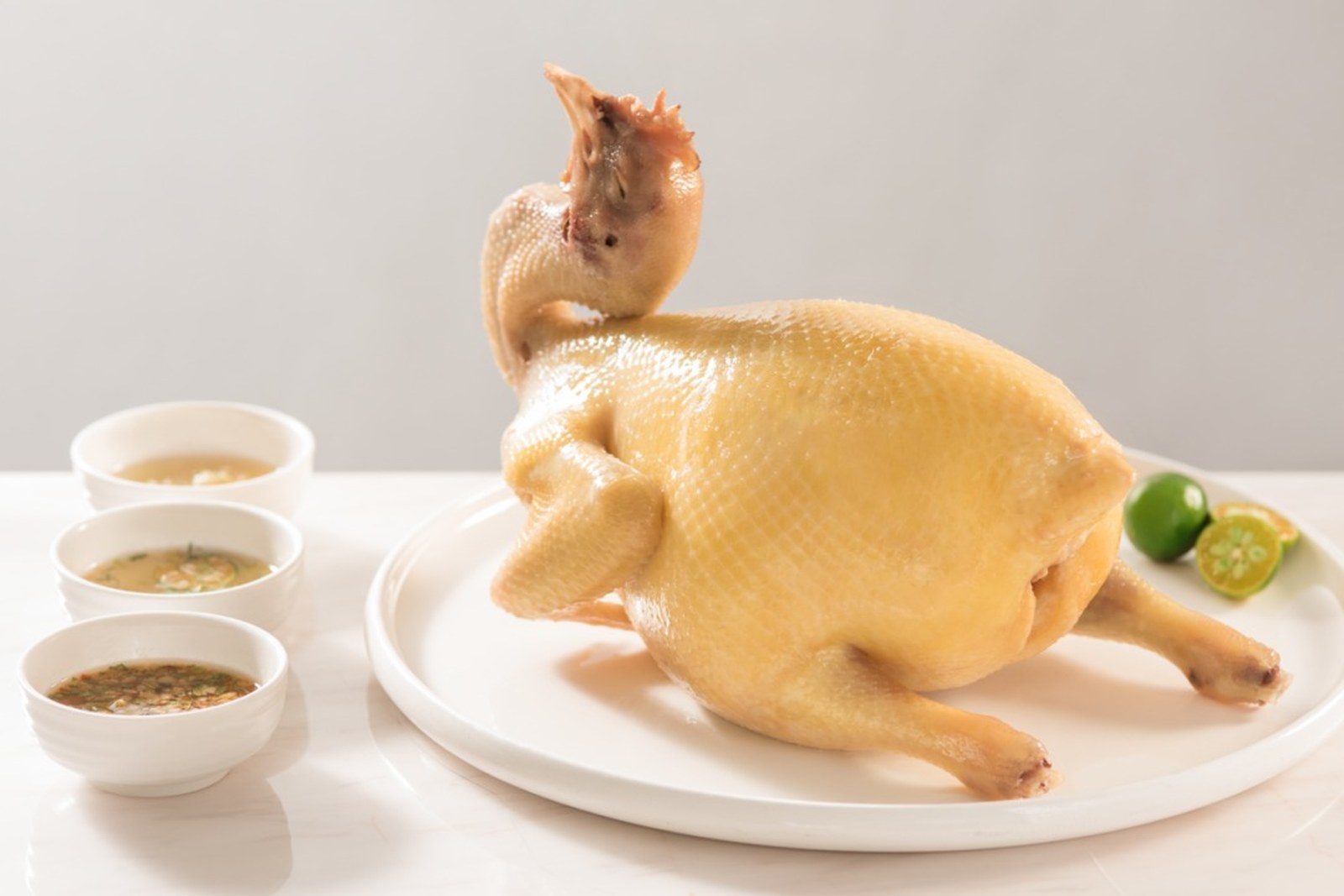
flowcloud would say that the capon is this county’s argument that an animal can be improved by taking something away – no crow at dawn, no aggression in the yard, half a year longer on maize and coconut, and a bird tender enough to be served with nothing but salt, garlic and a squeezed sour orange.
Where to find it: 白斩 capon is on nearly every restaurant table in 屯城镇 Túnchéng zhèn, the county town, and in the other seven towns of the county; the flock worth travelling for is the 营园鸡 at 营园村 Yíngyuán cūn in 坡心镇 Pōxīn zhèn, sold by the cooperative at 坡心镇营园村37号, where birds can also be bought to take away; 新兴功夫鸡庄园 in 新兴镇 Xīnxīng zhèn serves the herb-stewed 益智功夫鸡; and the markets of the county sell live capons by weight all year, with the heaviest trade in the fortnight before the Spring Festival, when the yards of the villages are full of caged birds. Order it 白斩 rather than fried if you want to know what the breed actually tastes like, ask for the dip with the sour orange in it rather than vinegar, and go in winter, when the county eats chicken for a month.