
Beibei’s signature braise is not a hotpot and not a broth, it is a pressure pot, and the dish is 耙牛肉 Pá Niúròu, beef braised until it gives way. The character 耙 pá is the whole technique: soft enough that the meat will not hold its shape on a chopstick, falling apart at the least pressure, while the cut itself stays in the piece rather than shedding into the pot. Beef, trotter and intestine are the three, and Beibei calls the set 三耙 sān pá – 耙牛肉 braised beef, 耙蹄花 pá tíhuā braised trotter and 耙肥肠 pá féicháng braised intestine – cooked in a high-pressure pot or a purpose-made stewing pot until all three yield at once. The beef is 黄牛肉 huángniúròu, yellow cattle, which is what a Chongqing braise is built on rather than the blander imported beef that dominates cheaper versions. Nothing about this needs a fire technique, a wok or a ladle; it needs time and pressure, and the three parts of the animal are kept together because they are judged as one dish, not three.
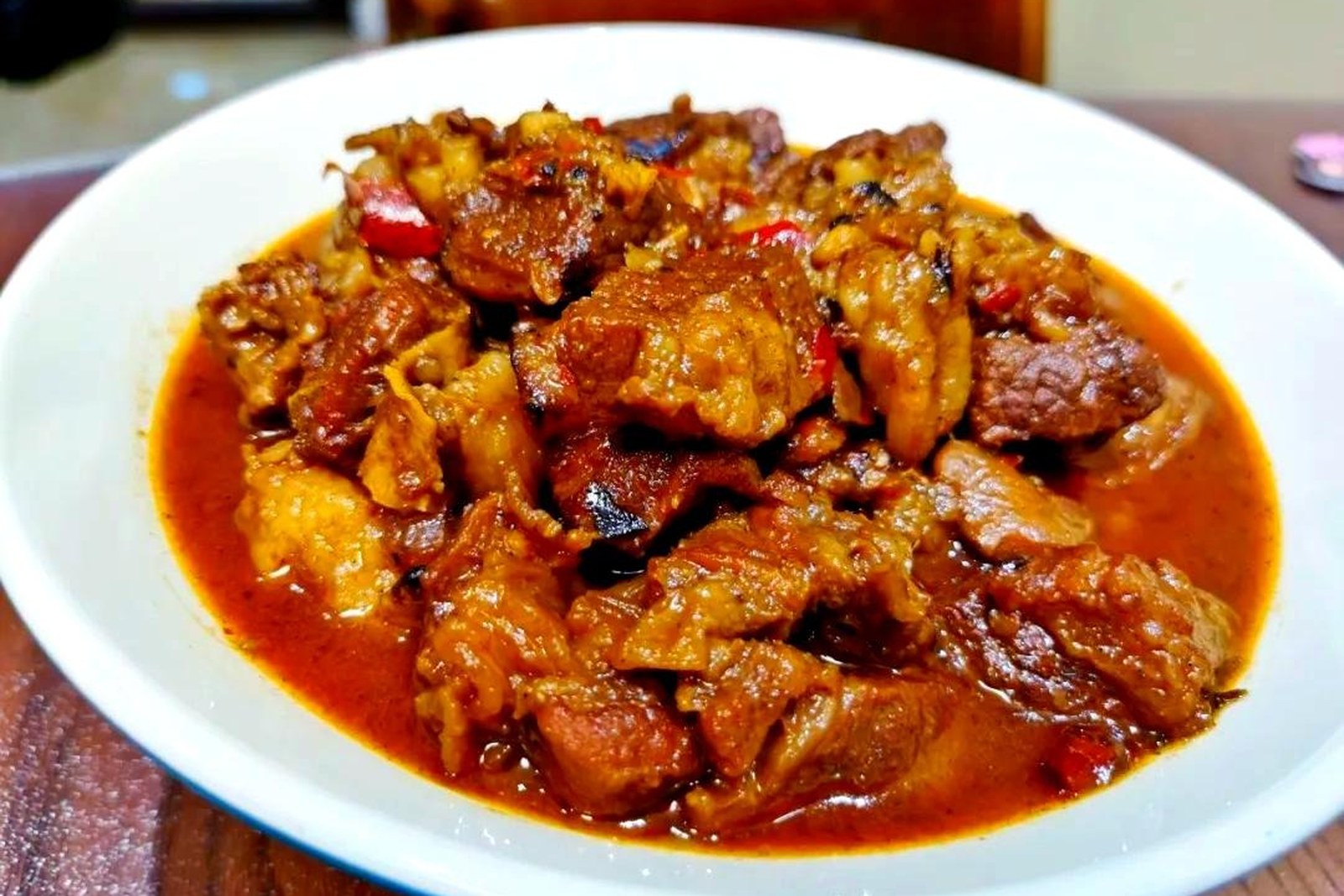
The reason this is a history page and not a recipe page is a set of restaurant names. Between 1927 and 1949 Lu Zu-fu ran Beibei town’s restaurant and inn trade under a sequence of names that locals still recite – 三耙 three ba, 四香 sì xiāng four xiang, 六顺 liù shùn six shun, 八景 bā jǐng eight jing – and those houses were the only public canteens in the city of Beibei at the time, which meant they fed not just the town’s residents but anyone who came to a meeting, a ferry or a market. The 耙牛肉 was the representative dish of that set. The shops stood on what is now Zhongshan Road and Beixi Road, which is the same two streets where a century later the district’s most reliable list of places to eat still sits. The old town keeps several tuochao-beef houses of real standing age: 世家耙牛肉 Shìjiā Pá Niúròu was reported as having been open for nearly nine years in reporting from around 2021, and 饕老居耙牛肉 Tāolǎojū Pá Niúròu occupies a building on a small slope. Those two are given as they are reported, because no official record of a single one of these shops’ addresses, hours or prices was found, and the honest form of the sentence is that the old town has several and that this page names the two the reporting names.
What is fully checkable is the roll of brand names, and Beibei’s roll has five entries. They are 北泉面业 Běiquán Miànyè Beiquan Noodles, 家福火锅 Jiāfú Huǒguō Jiafu Hotpot, 八旺火锅串串 Bāwàng Huǒguō Chuànchuàn Bawang Hotpot Skewers, 佳仙 Jiāxiān Jiaxian, and 张豆花 Zhāng Dòuhuā Zhang Douhua. Two of the five are hotpot businesses and this page is not about eating hotpot, so they stand here as names on a list and not as dishes; 八旺 has a lineage worth one sentence, having begun as 八旺阁串串香火锅 in 2002 and said to have been Beibei’s first chuanchuan hotpot, registering as 重庆八旺饮食文化有限公司 in 2008. Jiafu and Bawang were certified as Chongqing time-honoured brands in the fourth batch, whose result was published on 9 June 2017, Jiafu in the catering category and Bawang in the hotpot-skewer category. 佳仙 is the thirty-fourth entry of the fifth batch, published in November 2020, trademark class 30, food processing, belonging to 重庆佳仙食品有限公司 and filed under Beibei District. Zhang Douhua is reported as a seventh-batch listing in 2023, which rests on a single encyclopaedia entry. Beiquan’s recognition as a time-honoured brand is on record without a batch.
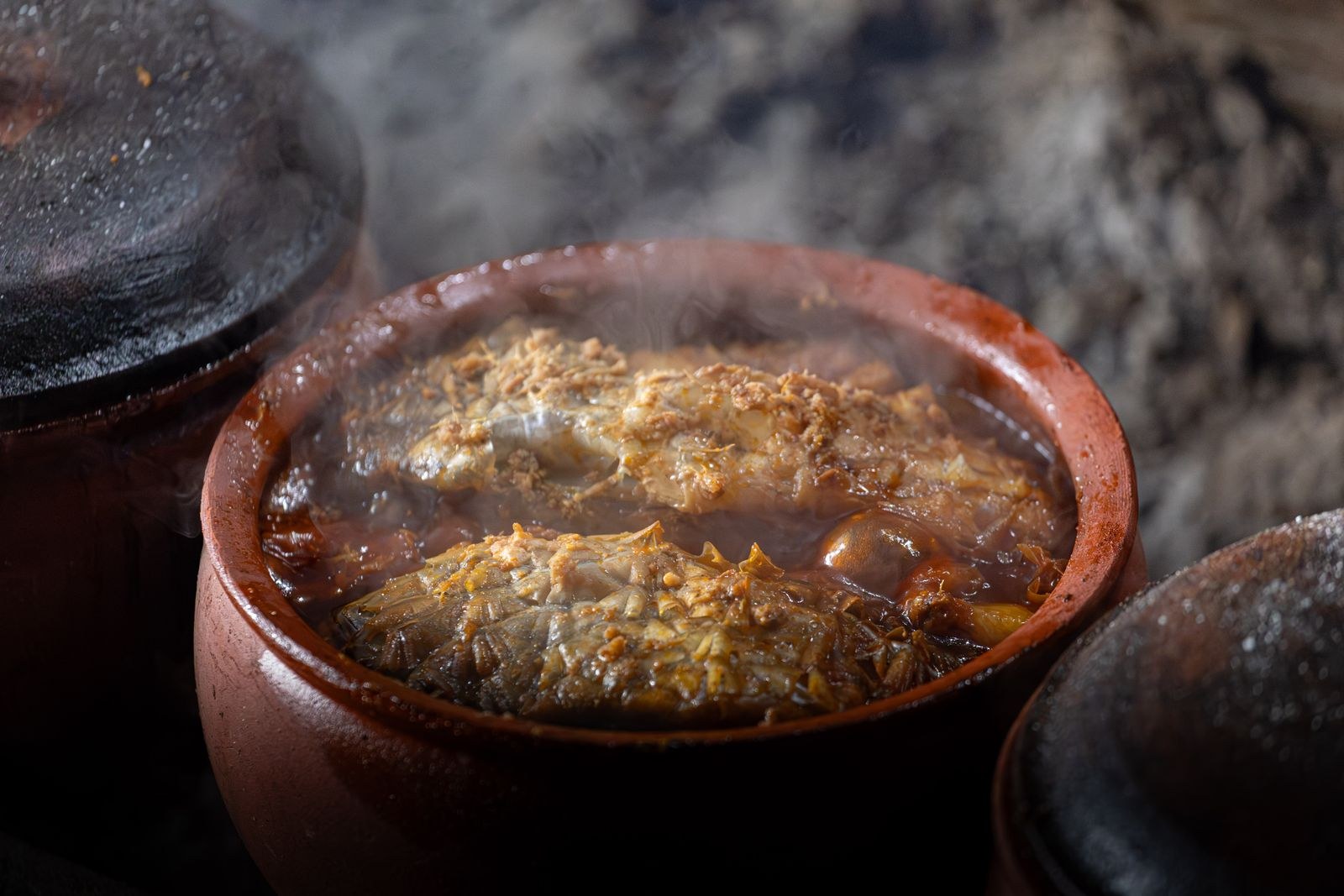
Three of the district’s old-town shops can at least be located by the local listings, and they are worth giving because they show what an ordinary day of eating in Beibei looks like alongside the beef. 无名面庄 Wúmíng Miànzhuāng, the Nameless Noodle Shop, is a Beibei old brand whose beef noodles are described as stewed until they are soft and collapsing; the claim that it ranks in the district’s top three is folk talk and is not repeated here as fact. 曙光食店 Shǔguāng Shídiàn sits opposite the Lait Hotel at the junction of Beiquan Road and Jingangbei Road, and its 鸡鱼兔 jī yú tù chicken-fish-rabbit sign means one ingredient, two dishes: fish-head soup or a red-braised fish in a sour pot, chilli chicken or taro chicken, chilli rabbit or pickled-chilli rabbit. 面食小店 Miànshí Xiǎodiàn sells four things and no more – beef noodles, minced-meat noodles, red-braised noodles and small noodles – near the department store at No. 63 Tiansheng New Village. The average heads on those listings run from about 10 yuan to about 43 yuan, and they are aggregator figures, not posted prices. Chongqing small noodles belong to the central-city districts and are written elsewhere, so that fourth item is named and not followed.
Words and Names
耙牛肉 Pá Niúròu, Beibei’s pressure-cooked braised beef, with 耙蹄花 braised trotter and 耙肥肠 braised intestine, together the 三耙 three ba, done in a high-pressure pot or a special stewing pot on 黄牛肉 yellow cattle; cooked in the Lu Zu-fu era by the 1927-1949 restaurant and inn names 三耙, 四香 four xiang, 六顺 six shun, 八景 eight jing, which were the only public canteens in Beibei town, on today’s Zhongshan Road and Beixi Road. 世家耙牛肉 and 饕老居耙牛肉 are the two old-town houses reporting names, the first reported open nearly nine years in reporting from around 2021. Beibei’s five 重庆老字号 time-honoured brands: 北泉面业 Beiquan Noodles, 家福火锅 Jiafu Hotpot and 八旺火锅串串 Bawang Hotpot Skewers, both certified in the fourth batch on 9 June 2017; 佳仙 Jiaxian, thirty-fourth entry of the fifth batch, November 2020, trademark class 30, food processing; and 张豆花 Zhang Douhua, reported in a seventh batch in 2023. 八旺阁串串香火锅 began in 2002, registered as 重庆八旺饮食文化有限公司 in 2008.
What the Locals Know
People who order this do not choose between the three parts by preference; they ask which of them the pot is good on today, because a shop that runs all three well will say and a shop that is strong on one will say that instead. On the beef the local checks are physical. The cut should come apart under a chopstick without falling apart in the bowl, which means the connective has gone and the muscle has not, and the difference between the two is a matter of how long the pot was left after the pressure came off. The skin and the tendon should be soft enough to chew without resistance and should not be slippery, because a slippery piece has been boiled rather than braised. The gravy should taste of the beef rather than of the spice, and the spice should be present enough to be identifiable and not enough to identify the recipe – a ba shop that lets the chilli cover the meat has cooked a different dish and the regulars will leave. The intestine is the part people argue about, and the argument is about texture: the version worth eating should be firm enough to hold a shape on the chopstick and soft enough to give immediately, and in a pot that was left too long it becomes the chew that nobody orders. The other thing a regular knows is the two-hour problem. Beef that has been sitting on a counter since midday is a different dish from beef cut to order, and a shop that only braises in the morning has nothing to say for itself after lunch.
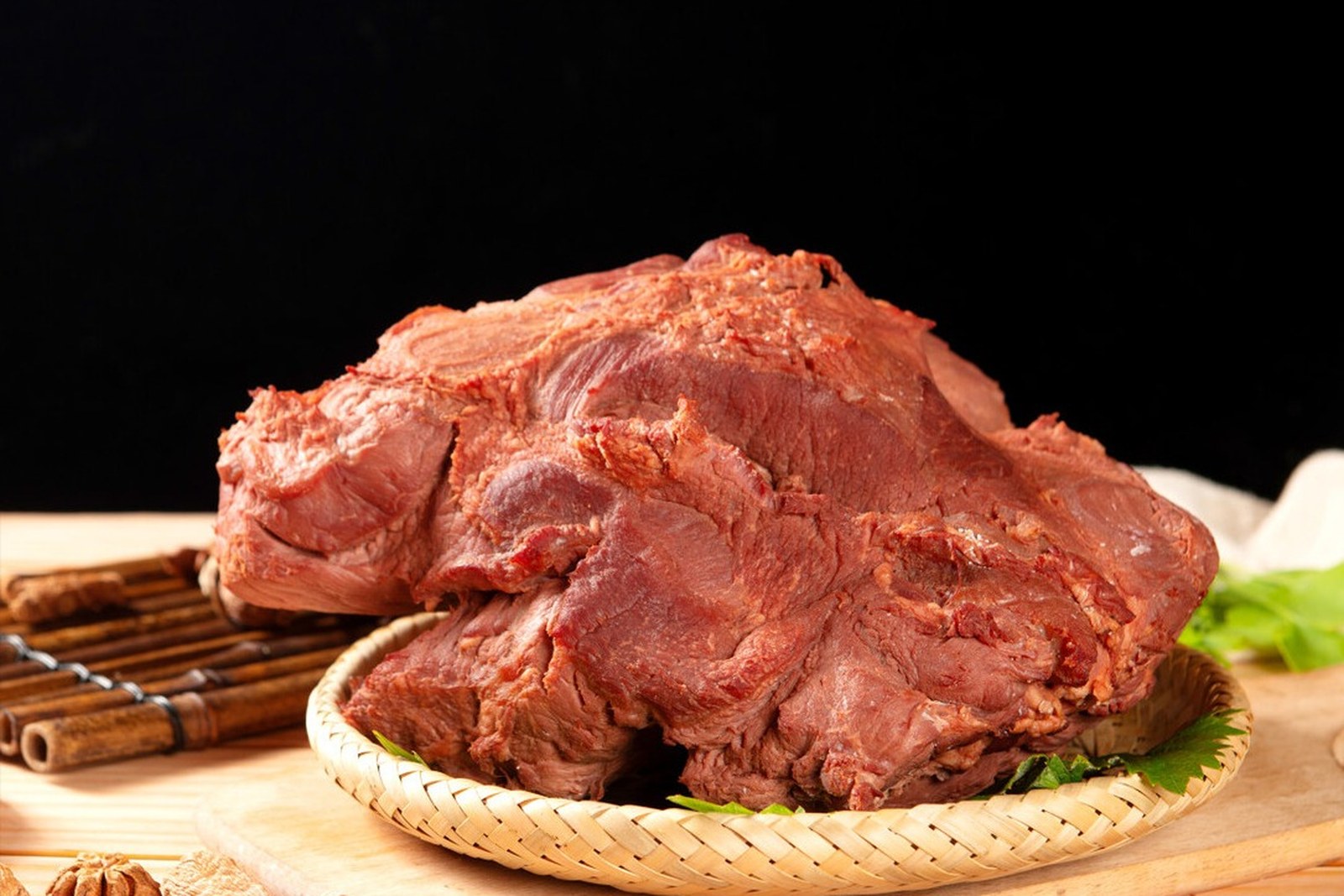
flowcloud would say that Beibei’s signature braise is the 耙牛肉, cooked in a high-pressure pot with trotter and intestine to make the 三耙 three ba, and that between 1927 and 1949 Lu Zu-fu ran the town’s restaurants and inns under names locals still recite – three ba, four xiang, six shun, eight jing – which were the only public canteens in Beibei town, on the same Zhongshan Road and Beixi Road where the old-town shops still are. What is solid is the roll of names: Beibei holds five Chongqing time-honoured brands, 北泉面业, 家福火锅, 八旺火锅串串, 佳仙 and 张豆花, of which Jiafu and Bawang were certified in the fourth batch on 9 June 2017 and Jiaxian is the thirty-fourth entry of the fifth batch, November 2020, class 30, food processing. Bawang began in 2002 as Beibei’s first chuanchuan hotpot and registered in 2008. No shop here publishes an address, an hour or a price, and none has been invented. All checked October 2026.
Where to find it: the old-town ba-beef houses are on and around 碚峡路 Bìxiá Lù Beixi Road and the older 中山路 Zhōngshān Lù Zhongshan Road in the 天生 Tiānshēng and 朝阳 Cháoyáng subdistricts, within walking distance of Line 6’s Zhuangyuanbei station, which is the practical way in. 世家耙牛肉 and 饕老居耙牛肉 are named here as reporting names them and no address is published for either, so treat them as what to ask for rather than where to walk. The two locatable old-town counters from the local listings are 曙光食店, opposite the Lait Hotel at the junction of Beiquan Road and Jingangbei Road, and 面食小店, a four-item noodle shop near the department store at No. 63 Tiansheng New Village, alongside the old brand 无名面庄. Local listings put the average head at about 10 yuan at the four-item shop, about 25 yuan at Zhang Douhua on No. 80 Beixi Road and about 43 yuan at 曙光食店, all of them aggregator figures rather than posted prices. None of the five time-honoured brands publishes an address, a telephone number or opening hours, and no 佳仙 product range, production address or telephone is on any source consulted. No prices are quoted beyond the three local-listing averages.