
Thin Shells, Pale Kernels: The Walnut Stands of the Southern Route
薄壳一捏仁自出,绿荫千顷核满园 Báoké yī niē rén zì chū, lǜyīn qiān qǐng hé mǎn yuán – One squeeze of the thin shell and the kernel comes out whole; a thousand acres of green shade, the orchard full of walnuts
正文:和田核桃 Hétián Hétáo Hetian walnuts are the thin-shelled kings of the Chinese walnut trade – fruit from the old oasis groves around 昆玉市 Kūnyù Shì Kunyu City and the Hetian belt, where trees planted generations ago still carry green-husked crops every September. The local shells crack between two fingers, and the pale kernels inside run sweet and barely bitter: eating grade for the festival trays, oil grade for the press houses, and the sack trade that fills the bazaars every autumn.
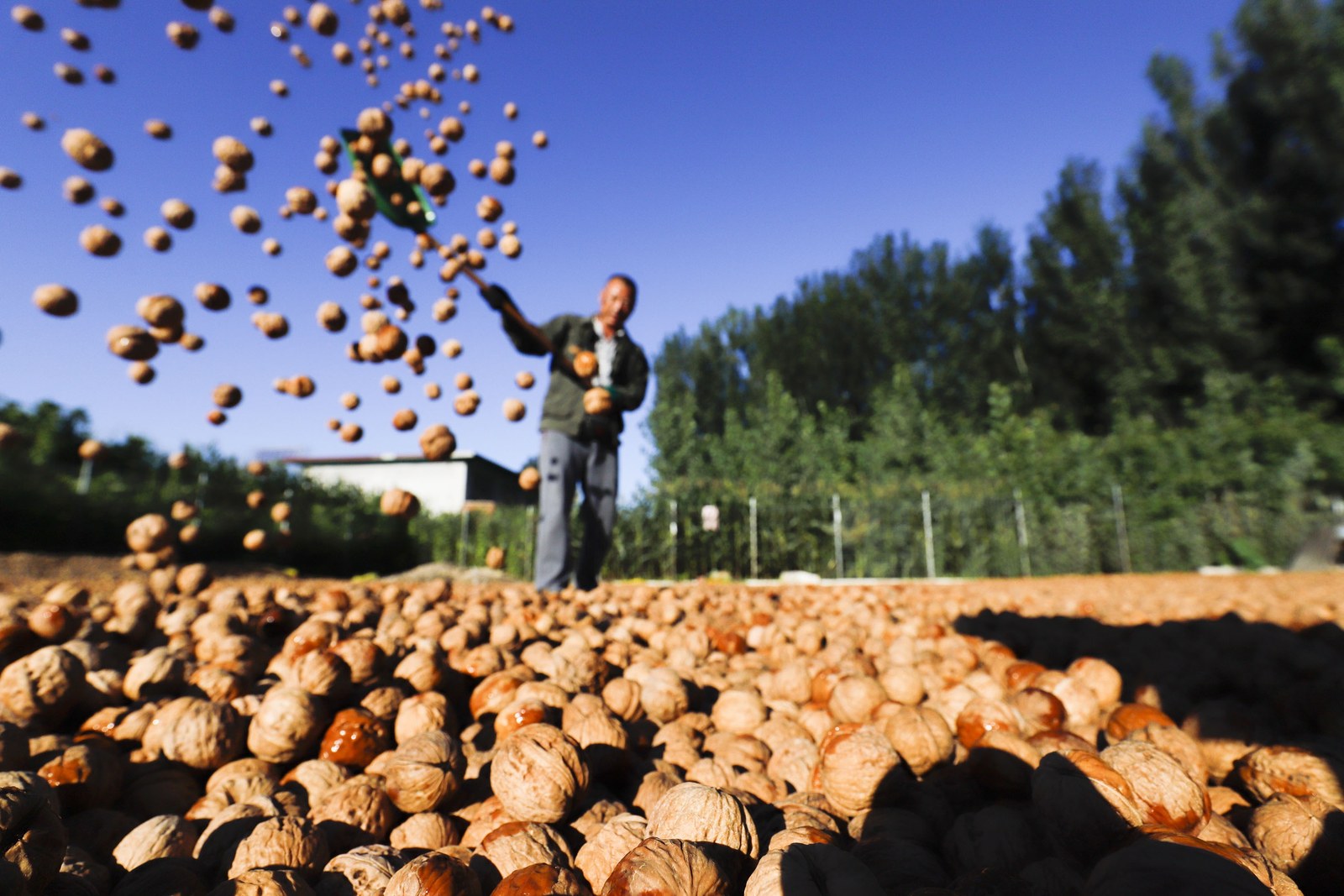
The harvest is a public event. Trucks back into the grove rows, the crews knock the trees with long poles, and the husked walnuts go straight to the drying floors – golden heaps turned daily in the sun, the wind doing the winnowing while the farmers toss the crop into the air with flat shovels. The image of the district is exactly that: a man on a heap of walnuts, tossing them skyward against a blue desert sky.
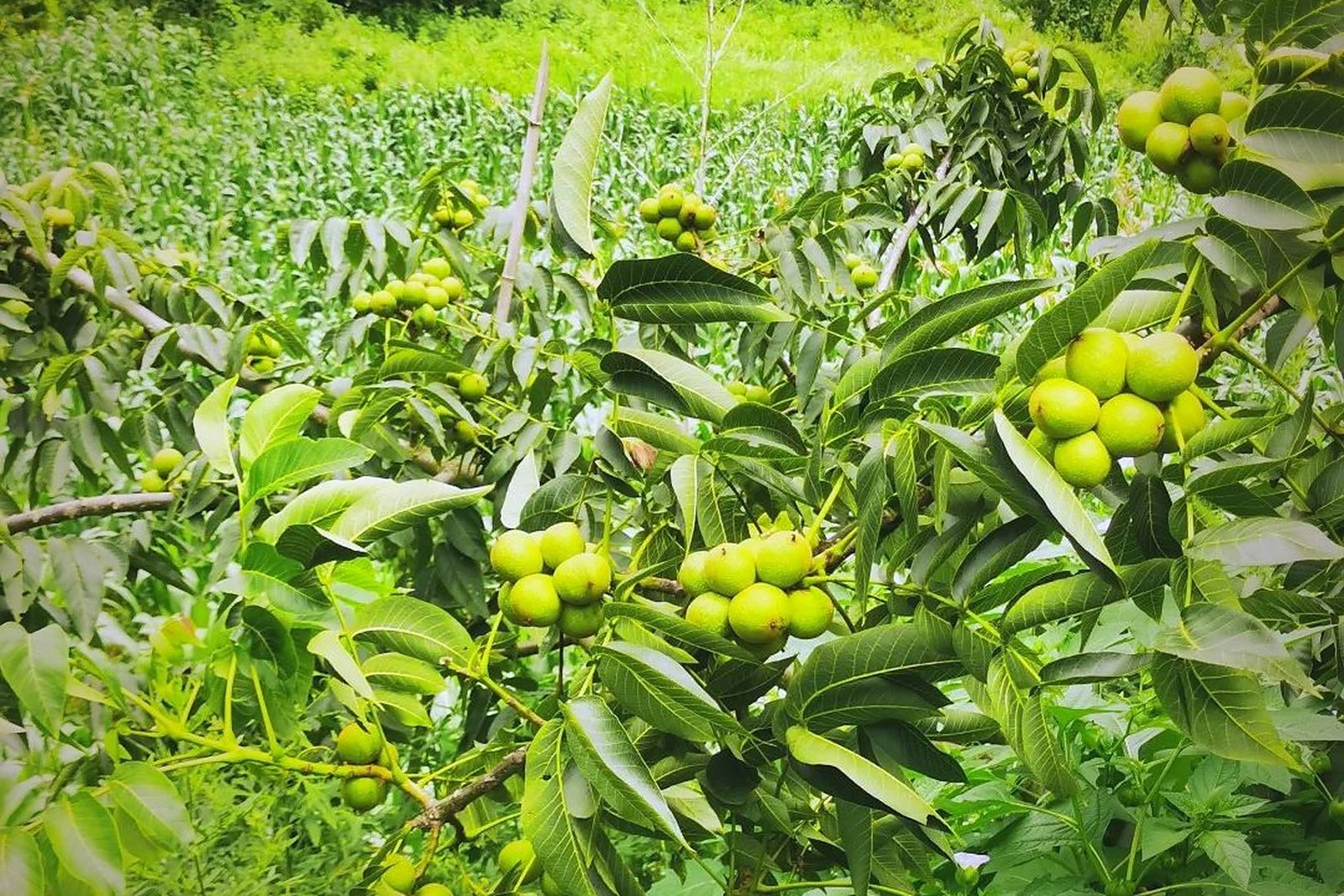
Buying them is a market skill. The kernel grade sells by the sack with a sample handful cracked open on the spot – the vendor’s twist of the wrist splits the shell clean and the whole kernel drops out, the proof of quality better than any certificate. Fresh-press walnut oil appears in small bottles at the same stalls, green-gold and faintly sweet, and the festival pastry houses buy by the crate: walnut halves go into every mooncake, every nut brittle and every holiday bread of the oasis calendar.
Beyond the walnut stands, the same oasis table keeps its other doors: 和田红枣 Hétián Hóngzǎo the red dates for the winter sweetness, 石榴园 Shíliu Yuán the pomegranate orchards for the ruby fruit, 和田烤蛋 Hétián Kǎo Dàn the roasted eggs for the night market, and 打馕 Dǎ Náng the naan craft for the bread that travels – four more doors into the same 昆玉市 Kūnyù Shì Kunyu City. With the sacks settled, our Kunyu travel map fills the days.
Words and Names
What the Locals Know
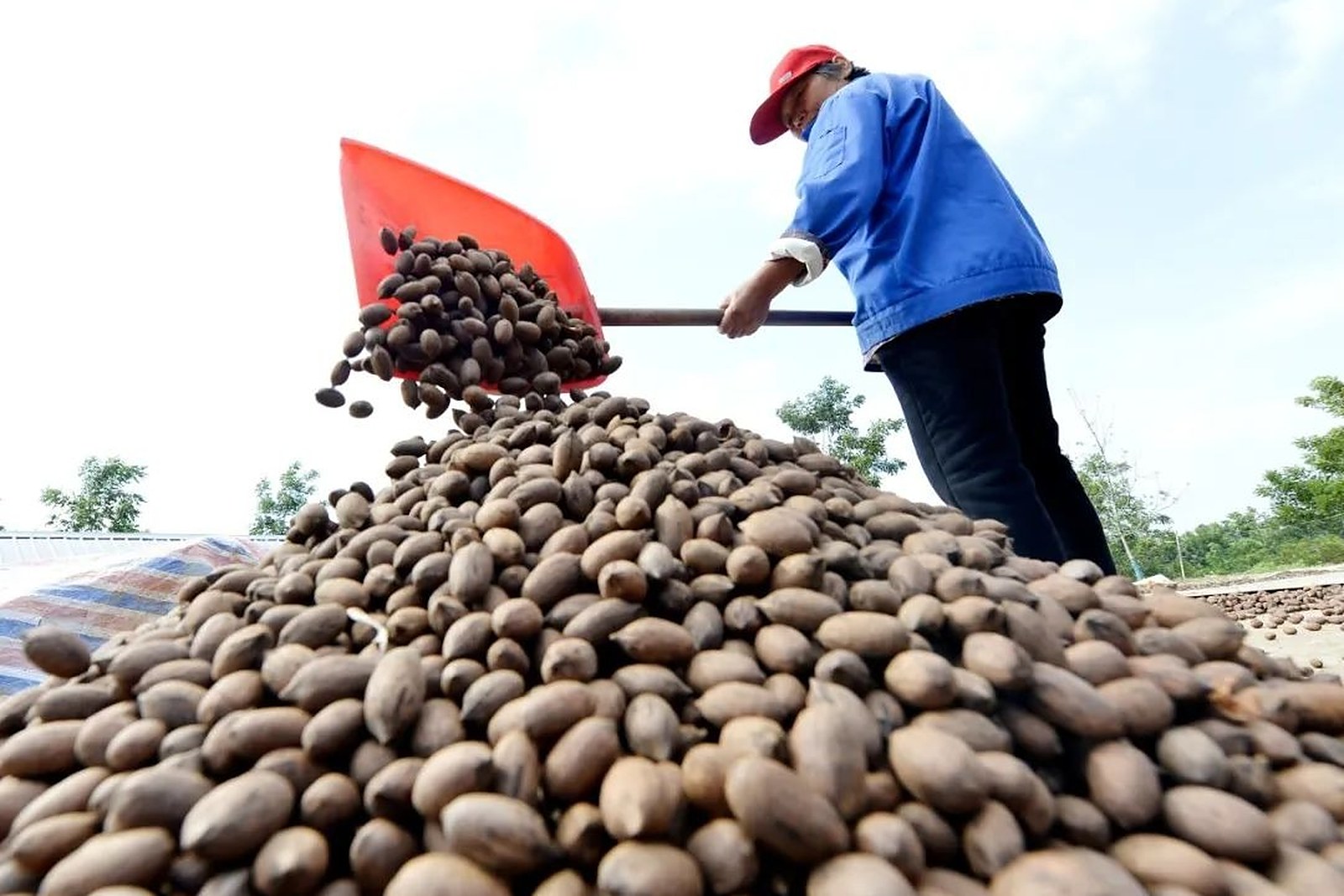
flowcloud would say the Hetian walnut is the oasis’s soft-hearted export: a shell that gives up without a fight, a kernel that tastes like the light it grew in, and an autumn economy that runs on two fingers’ worth of pressure. All checked November 2026.
Where to find it: Walnut stalls fill the regiment markets and the Hetian bazaar from late September – have the vendor crack a sample, buy the sack grade for eating and the small-bottle oil for the road. All checked November 2026.