
Wangjing Korean BBQ: The Charcoal-Grill Koreatown Rite of Chaoyang District, Beijing
望京烤肉炭火红,小菜满桌故味同。Wàngjīng kǎoròu tànhuǒ hóng, xiǎocài mǎn zhuō gùwèi tóng – Wangjing’s grill glows red over charcoal; banchan fill the table, a hometown flavour shared.
望京韩式烤肉 Wàngjīng Hánshì kǎoròu Wangjing Korean BBQ is the dish Beijing’s largest Korean community cooked into the map, and the name is a double address: 望京 Wàngjīng Wangjing, the wedge of northeast 朝阳区 Cháoyáng Qū Chaoyang District that became Beijing’s Koreatown from the early 1990s, when Korean entrepreneurs, students and embassy staff settled among the then-half-built towers and turned a commuter fringe into a self-sufficient 韩村 Háncūn Korean village. The cooking is the table-grill 炭火 tànhuǒ charcoal barbecue that anchors Korean dining everywhere – a vented 烤盘 kǎopán grill plate sunk into the centre of the table, coals or a charcoal element glowing beneath, onto which 五花肉 wǔhuāròu pork belly, 牛肋条 niúlèitiáo short rib and 鸡腿肉 jītuǐròu chicken thigh are laid to scorch and render while the diners lean in and turn the slices with metal tongs. The honest house keeps the charcoal real rather than swapping in a gas flame, because the wood-smoke edge is the whole argument: a 韩式烤肉 Hánshì kǎoròu Korean BBQ done over gas reads clean and a little joyless, while the charcoal version lacquers the fat with bitter-sweet smoke and forces the table to cook in rhythm with the fire rather than the menu. The craft most visitors miss is the marinade grammar – 烤肉 kǎoròu divides into 腌肉 yānròu the pre-seasoned (soy, 梨汁 lízhī pear juice, 蒜泥 suànní garlic, 芝麻油 zhīma yóu sesame oil) and 原味 yuánwèi the plain (salt-and-pepper only, trusting the meat) – and a serious 望京 Wàngjīng table will order both, because the marinated tests the kitchen’s recipe while the plain tests the butcher.
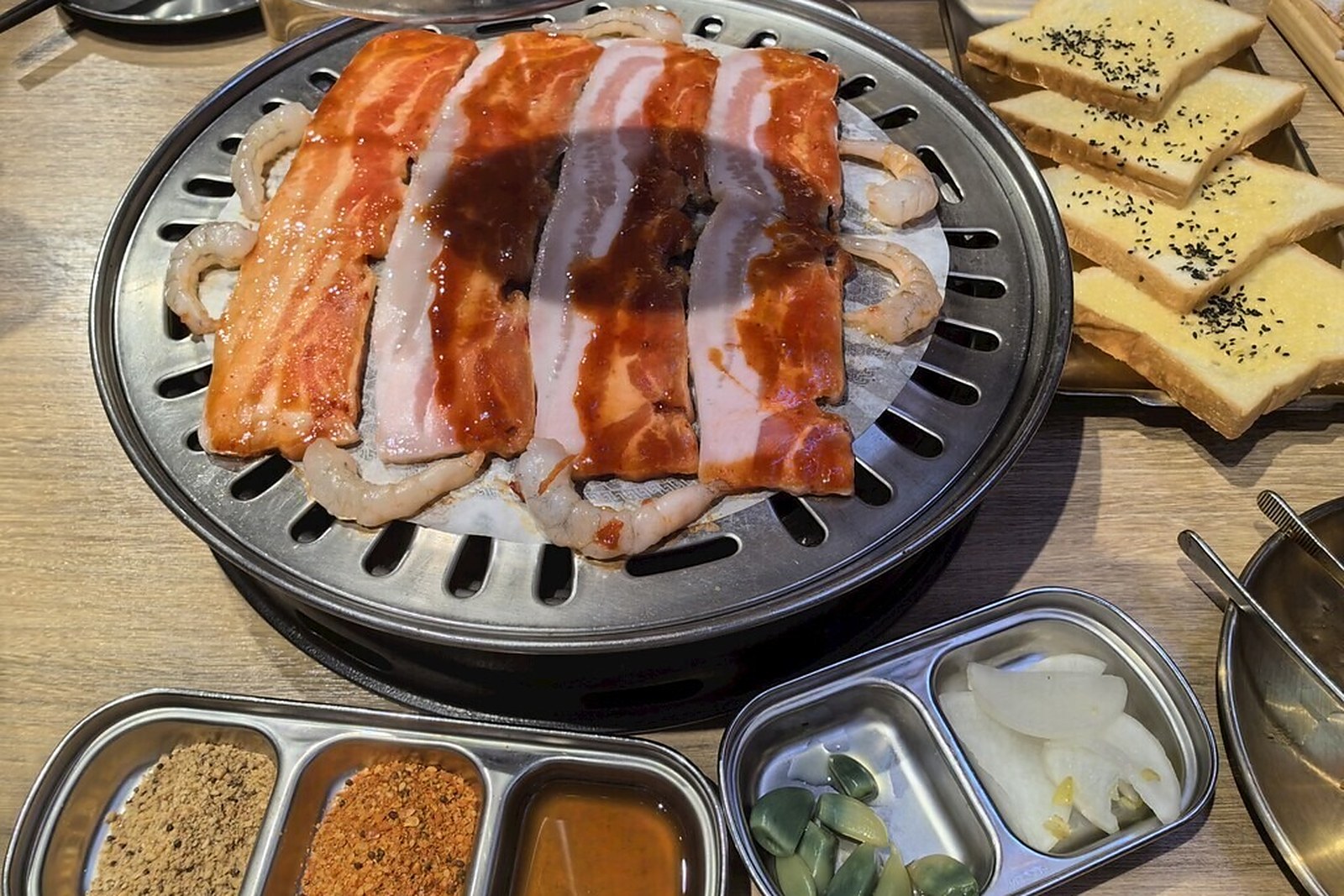
The eating is governed by the 小菜 xiǎocài banchan, the army of free side dishes that arrives before the first slice hits the 烤盘 kǎopán and is endlessly refilled, and this is where 望京韩式烤肉 Wàngjīng Hánshì kǎoròu parts company with a Chinese barbecue, where you pay for every plate of cold veg. The anchoring 小菜 xiǎocài is 泡菜 pàocài kimchi – fermented 白菜 báicài cabbage loud with 辣椒粉 làjiāofěn chili powder and 蒜 suàn garlic – but the spread runs to 拌豆芽 bàndòuyá sesame bean sprouts, 海带丝 hǎidàisī dressed kelp, 辣萝卜 làluóbo radish, 煎饼 jiānbǐng savoury pancakes and 紫菜 zǐcài seaweed, a small banquet that costs nothing and sets the pace of the meal as a long, talking, picking affair. The wrapping closes each bite: a leaf of 生菜 shēngcài lettuce or 芝麻叶 zhīma yè perilla holds the grilled meat with a dab of 辣椒酱 làjiāojiàng gochujang, a smear of 豆瓣酱 dòubànjiàng doenjang, a clove of 蒜 suàn garlic and a spoon of 米饭 mǐfàn rice, folded into a single 包饭 bāofàn mouthful that balances fat, heat and bitter in one go. The 汤 tāng soup line – 大酱汤 dàjiàngtāng doenjang stew, 泡菜汤 pàocài tāng kimchi jjigae, 海带汤 hǎidài tāng miyeok – arrives bubbling to cut the grease, and the carbohydrate tail is 冷面 lěngmiàn naengmyeon, buckwheat noodles in 冰汤 bīngtāng iced broth, or 石锅拌饭 shíguō bànfàn stone-pot rice scraped from the scorched pot – the meal ends cool and crunchy, never heavy.
The honest grade is geography plus community. In 朝阳区 Cháoyáng Qū Chaoyang District the 望京 Wàngjīng Korean belt runs along 望京街 Wàngjīng Jiē Wangjing Street and the lanes behind 望京SOHO Wàngjīng SOHO, where the restaurant doors carry 韩文 Hánwén Hangul signage and the clientele is half ethnic Korean, a mix that keeps the food honest in a way a tourist quarter never could – a 韩式烤肉 Hánshì kǎoròu house here is graded by 韩裔 Hányì Korean diners who know the difference between real 泡菜 pàocài and the sweet canned impersonation, and a kitchen that fools them fools no one. The grocery underlay is the 韩超市 Hán chāoshì Korean supermarket lanes – 望京 Wàngjīng branches of the big Korean chains stock 苦椒酱 kǔjiāojiàng gochujang by the vat, 真露 Zhēnlù Jinro soju, 拉面 lāmiàn Korean instant noodles and 海苔 hǎitái gim – which is the quiet reason the restaurants stay authentic: the suppliers, the diners and the cooks all shop the same aisle. A per-person bill runs on how many 烤盘 kǎopán rounds you call and how much 烧酒 shāojiǔ soju you pour, so call it worth confirming the details rather than a fixed number, and arrive before the weekend peak because the charcoal tables are finite and the 韩村 Háncūn regulars book early; the ritual is communal and slow, you grill your own, you wrap your own, and the table that rushes the 烤盘 kǎopán has missed the point of a cuisine built around the wait.
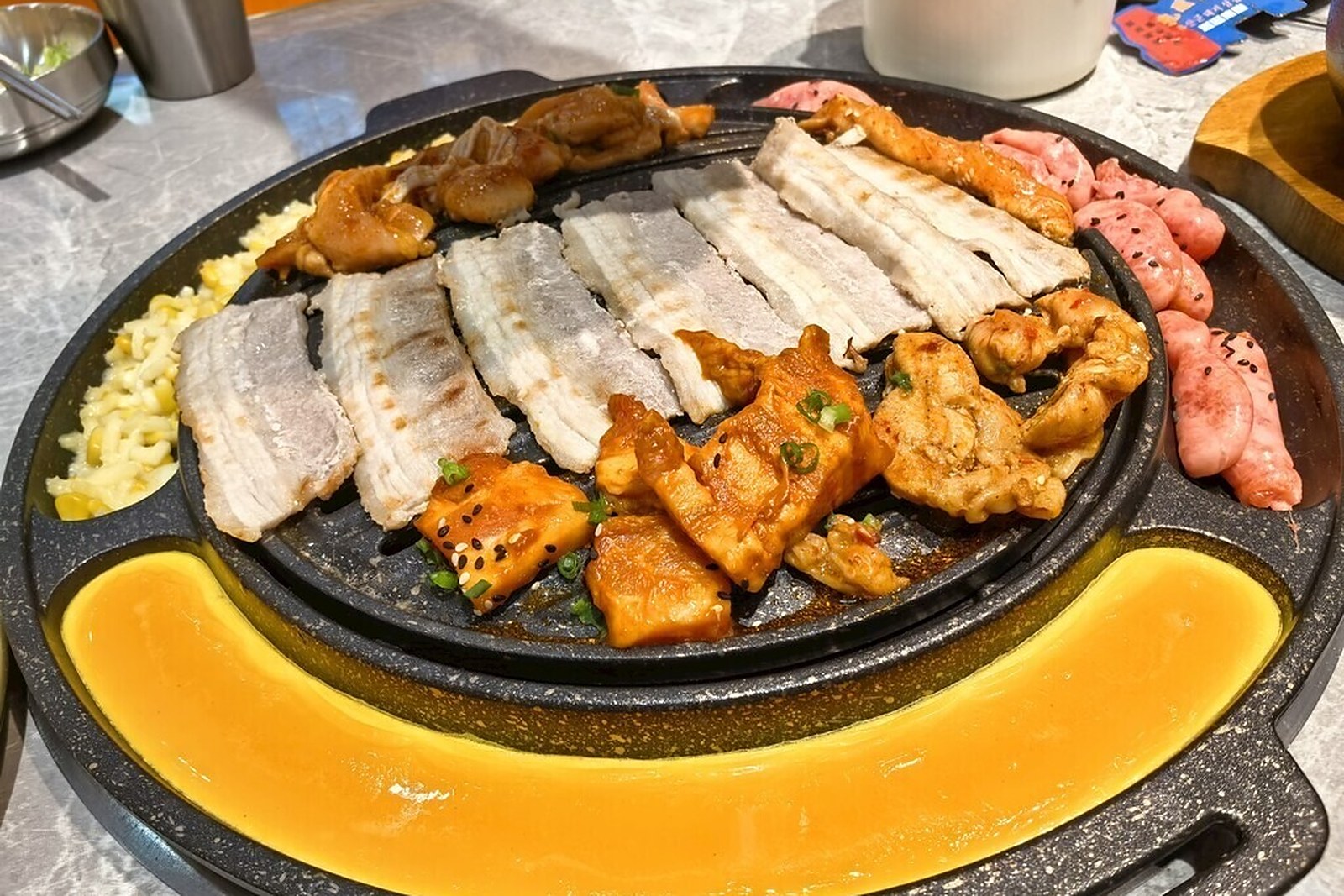
The wry truth is that 望京韩式烤肉 Wàngjīng Hánshì kǎoròu is over-rated as an expat novelty and under-rated as a community kitchen: travel lists file 望京 Wàngjīng as a quirky “little Korea” photo stop, while locals file it under home, a 朝阳区 Cháoyáng Qū Chaoyang District neighbourhood where the 小菜 xiǎocài is free, the 泡菜 pàocài is fermented in-house, and the 韩超市 Hán chāoshì aisles smell of 辣酱 làjiàng chili paste the way a real kitchen should. The real exam is the banchan spread – a table that refills the 海带丝 hǎidàisī and tops up the 拌豆芽 bàndòuyá without being asked is a house that cooks for its own, while a 韩式烤肉 Hánshì kǎoròu joint that counts the 小菜 xiǎocài plates is performing Koreatown for outsiders – worth confirming the details, because the line between a community kitchen and a theme restaurant is the refill policy. Season barely registers: this is a year-round 烤肉 kǎoròu rite, hotter in winter when the 炭火 tànhuǒ charcoal earns its glow against the cold, still welcome in July when the 冷面 lěngmiàn iced noodles close the meal.
The self-deprecating footnote: a food writer will count the 小菜 xiǎocài banchan like a museum inventory, explain the 梨汁 lízhī pear-juice marinade to a 韩裔 Hányì owner who learned it from his mother, photograph the 五花肉 wǔhuāròu sizzle at heroic angles, and finally pronounce the 炭火 tànhuǒ “commendably smoky” as if smoke were a discovery – which is the honest grade: 望京韩式烤肉 Wàngjīng Hánshì kǎoròu is a Koreatown rite where the charcoal does the talking and the writer, having explained everything, eats exactly like the 韩村 Háncūn regular at the next table, wrapping 生菜 shēngcài and reaching for more 泡菜 pàocài.
Words and Names
望京 Wàngjīng / Wangjing · Beijing’s Koreatown in northeast Chaoyang District, home to the city’s Korean community since the 1990s 韩式烤肉 Hánshì kǎoròu / Korean BBQ · table-grill charcoal barbecue of marinated and plain meats, the district’s signature 炭火 tànhuǒ / charcoal fire · the grill heat, traditional over gas for a wood-smoke edge 小菜 xiǎocài / banchan · the free, endlessly refilled Korean side dishes that open the meal 泡菜 pàocài / kimchi · fermented cabbage, the anchoring banchan and the honesty test 烤盘 kǎopán / grill plate · the table-embedded mesh or stone over the coals 韩超市 Hán chāoshì / Korean supermarket · the grocery lanes stocking gochujang, soju and gim that keep the kitchens authentic 朝阳区 Cháoyáng Qū / Chaoyang District · the Beijing district holding Wangjing’s Korean community
What the Locals Know
- The charcoal is the tell: a real 望京韩式烤肉 Wàngjīng Hánshì kǎoròu glows over 炭火 tànhuǒ coals with a wood-smoke edge; a gas flame reads clean and joyless, and no amount of 小菜 xiǎocài hides it.
- Judge the house by the banchan: free, refilled 泡菜 pàocài and 拌豆芽 bàndòuyá mean a kitchen cooking for its own; a place that counts the 小菜 xiǎocài plates is performing Koreatown for outsiders (worth confirming the details).
- Wrap, don’t just eat: every slice belongs in a 生菜 shēngcài leaf with 辣椒酱 làjiāojiàng, 蒜 suàn and rice – the 包饭 bāofàn bite is the balance the 烤盘 kǎopán is for.
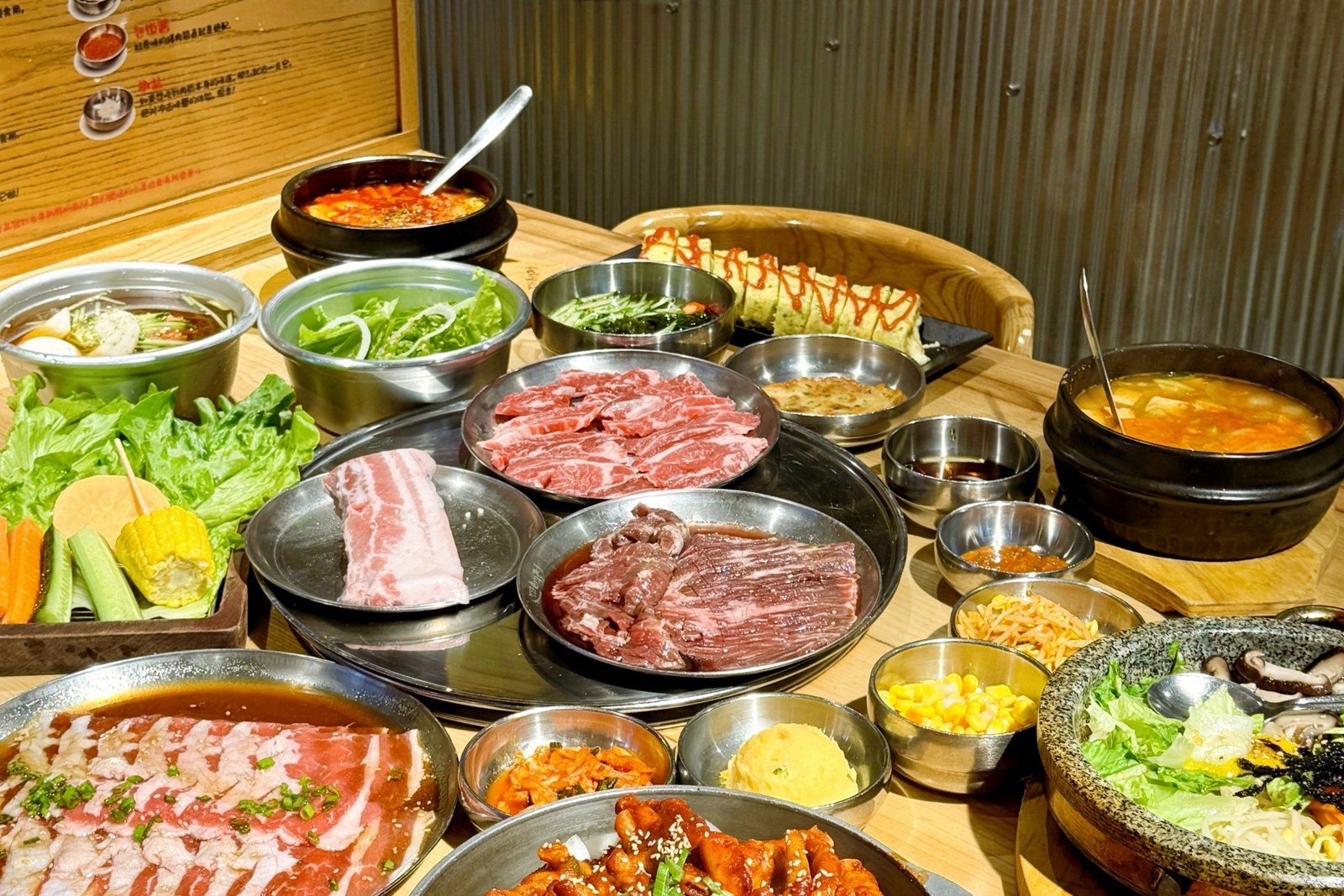
flowcloud would say that the 望京韩式烤肉 Wàngjīng Hánshì kǎoròu is the charcoal-grill rite of Chaoyang District, Beijing – a 望京 Wàngjīng Koreatown table where 五花肉 wǔhuāròu pork belly scorches over 炭火 tànhuǒ charcoal, anchored by free 小菜 xiǎocài banchan and 泡菜 pàocài kimchi, wrapped in 生菜 shēngcài and washed down near the 韩超市 Hán chāoshì aisles that keep it honest – and that the honest move is to order both marinated and plain, watch the banchan refill, and trust the 韩裔 Hányì regulars’ tables, because the charcoal is the argument and the community is the chef. All checked October 2026.
Where to find it: Chaoyang District Cháoyáng Qū – the 望京 Wàngjīng Korean belt along 望京街 Wàngjīng Jiē Wangjing Street and behind 望京SOHO Wàngjīng SOHO, where 韩文 Hánwén Hangul signage and half-Korean clientele keep the 韩式烤肉 Hánshì kǎoròu honest, plus the 韩超市 Hán chāoshì supermarket lanes stocking 辣酱 làjiàng and 烧酒 shāojiǔ (worth confirming the details – which houses still grill over real 炭火 tànhuǒ and refill 小菜 xiǎocài without counting); a per-person bill runs on the 烤盘 kǎopán rounds and the soju, so call it worth confirming the details rather than a fixed number. Wangjing Korean BBQ is the charcoal-grill Koreatown rite of Chaoyang District, Beijing, charcoal before novelty.