
湾岭电饭煲鸡 Wānlǐng diànfànbāo jī, the rice-cooker chicken of Wanling, is a whole free-range bird baked in nothing grander than an oversized electric rice cooker – local peanut oil just covering the bottom, garlic and salt late, a small iron hook turning the bird until the skin goes gold – then chopped into pieces and dressed with the hot garlicky oil. The county’s accounts promise one chicken, three tastes: the char of a roast bird, the tenderness of a white-cut one, the savouriness of a salt-baked one. Hainan is a white-cut-chicken province, poached birds with dipping sauces, and the rice-cooker bake is Wanling’s deliberate breach of the rule – a household machine doing the roasting, no sauce in sight. The town is 湾岭镇 Wānlǐng Zhèn Wanling Town, Qiongzhong’s north gate, the first proper stop on the central highway for anyone driving in from Haikou.
Wanling earns its kitchen. The town sits where the 乌那线 meets the G224, the Haikou-centre highway, and where the province’s grid of expressways crosses itself – the Tuenqiong expressway arrived in June 2014 and the Wanyang line in December 2019, and Haikou fell inside an hour. It runs 328 square kilometres and 104 natural villages; a national civilised town in 2009, one of the province’s fifty style towns in 2013, a national urbanisation pilot in 2016. Between 2012 and 2015 the town face was rebuilt in Li-Miao style, 2,480 metres of street frontage, and the fields around grow rubber, areca and rice, with bees, geese, cattle and rice-fish ponds behind.
The dish’s paper trail starts in 1989, when the founder ran a salt-baked chicken shop at Wanling and found the coarse-salt, charcoal-fired bake too slow and too small for the custom; the regulars, the account goes, suggested the rice cooker, and the house’s own experiments settled the method. The house is the 海山岛饭店 Haishan Island restaurant, opened in 1989 – thirty years on the corner by 2019 – founded by 王秋英 Wang Qiuying, known locally as 周妈妈 Zhou Mama, and now run by her daughter 周怡 Zhou Yi, called 莎姐 Sister Sha, who keeps the Haikou branch; the two sources print the family under two sets of names and the text carries both – one family, no verdict. Fame came the modern way: Haikou plates planning a hundred-kilometre detour for lunch, a television food programme’s visit.
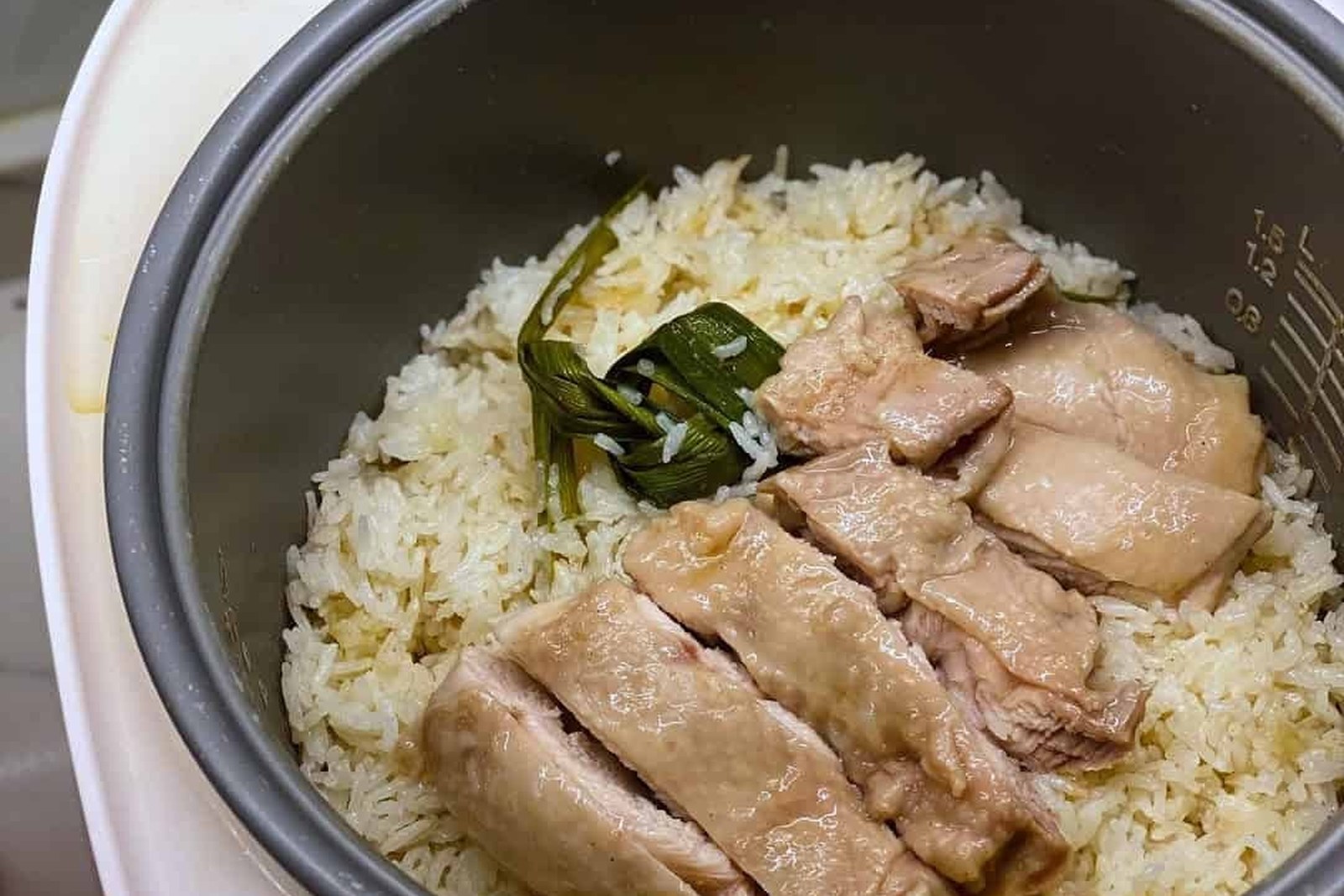
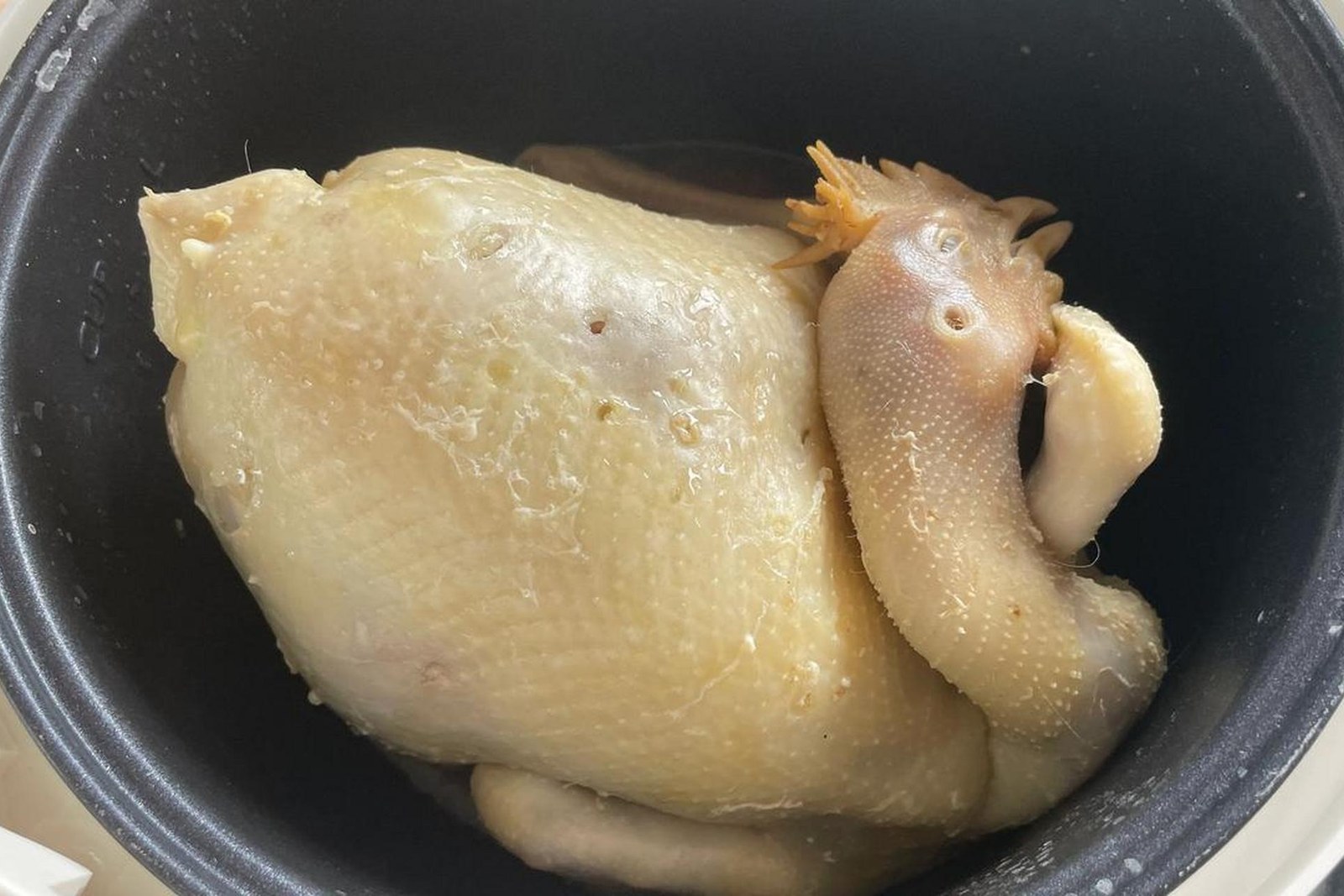
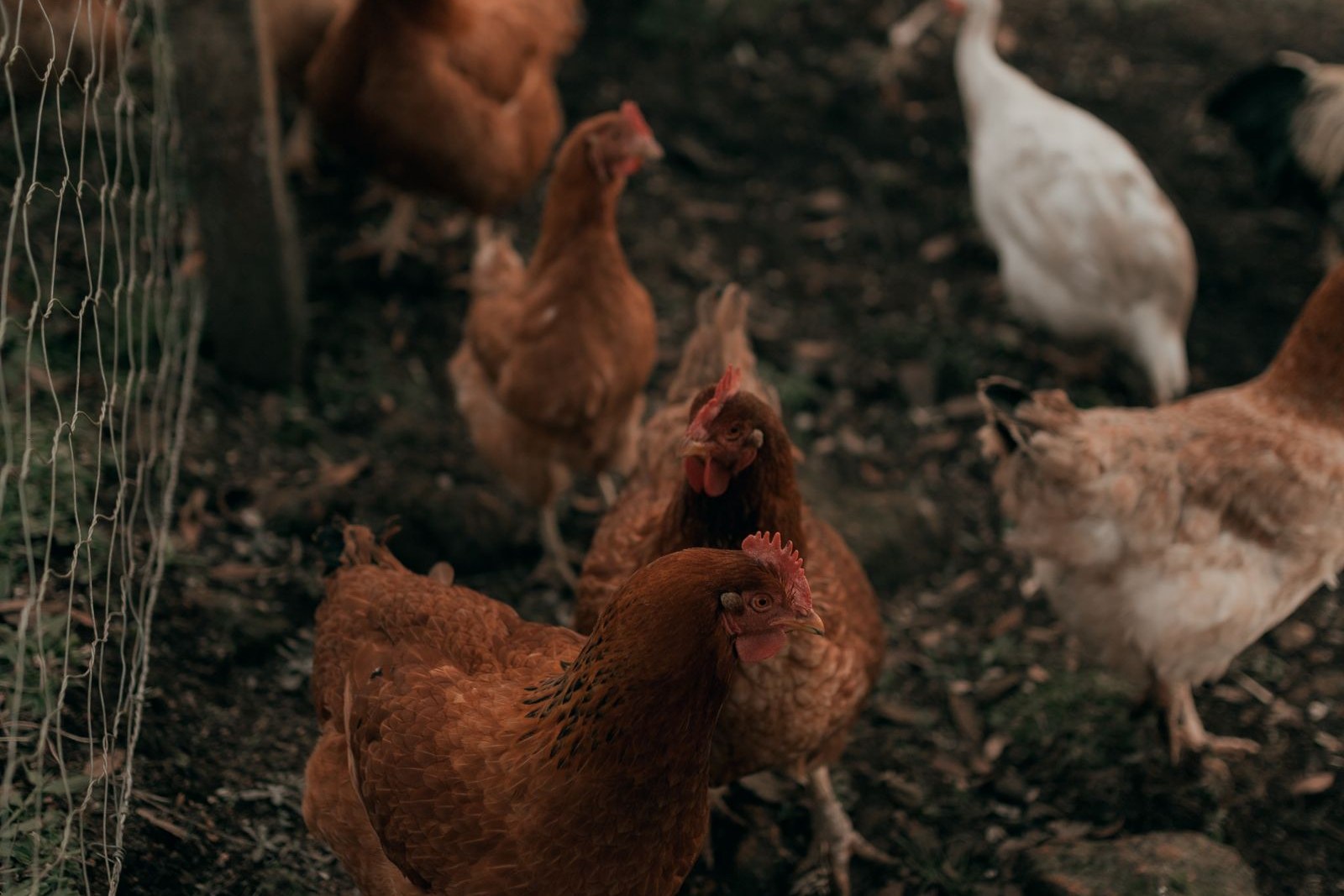
The method, as the provincial food-safety association and the feature writers print it: a local free-range bird ten to twelve months old, the kind that eats insects and rice and can fly up to a branch; peanut oil poured to just cover the cooker’s bottom; two or three birds to a pot; the small iron hook turning each bird so the oil coats evenly and nothing scorches; garlic and salt only near the end – garlic down early burns and turns bitter; about an hour in all, until the skin is gold and the garlic perfume has reached the bone. At the pass the bird is chopped into small pieces and the pot’s browned garlic and oil poured over; some tables get salt and soy packed into the cavity first, a visitor’s note rather than the house rule.
The table numbers move with the year: 168 yuan a hen as of the late-2026 snapshots – a capon can be swapped in, the hen tender, the capon firmer – with 40 to 70 yuan a head across the same season’s accounts, and the house wants a call an hour and a half to two hours ahead. The kitchen’s signature visual is the row of oversized cookers, two or three birds steeping in browned garlic oil in each. Around the bird: a complimentary lentil-herb soup to start, 勾勾菜 gōugōu cài gougou greens – a Qiongzhong wild vegetable Haikou tables rarely see – and a fridge of Qiongzhong mountain produce, centella, baihua and kumeng greens, nine-tenths of it trucked to the Haikou branch overnight. The association’s profile carries a Haikou regular who used to time her work trips to arrive at the lunch table; centella chicken-giblet soup, river shrimp and river-fish pot fill out the menu.
Words and Names
电饭煲鸡 diànfànbāo jī is the rice-cooker chicken, 电煲鸡 diànbāo jī the local shorthand, 焗 jú the bake the Cantonese side of the island names it by. 一鸡三吃 yī jī sān chī is one chicken, three tastes. 勾勾菜 gōugōu cài is the gougou green; 雷公根 Léigōnggēn is centella, the herb in the chicken-giblet soup. Two houses share the town and the dish and must not be merged: the 海山岛饭店 Haishan Island restaurant, the one the county and the provincial guide both name, and the 湾岭鸡饭店 Wanling Chicken Restaurant a hundred metres northeast of the town police station on the G224 – its own house, white-cut on the menu beside the pot birds.
What the Locals Know
The endorsements are unusually official for a roadside dish. The county government’s own food page lists the Haishan Island restaurant; the provincial tourism department’s 2021 Bengenei guide – 奔格内 Bengenei, the Li phrase for come here, the county’s rural-tourism brand – names the house’s must-orders: rice-cooker chicken, river-fish pot, centella chicken-giblet soup, mountain-bamboo-shoot stir-fry. What the dish lacks is paper rank: no heritage listing, no famous-dish register – a local celebrity dish, internet-famous, is the honest ceiling, and the text keeps it there.
Eating it well is a timing problem. Book ahead – an hour and a half minimum, two to be safe – choose hen or capon, and take the whole bird, four adults’ worth, chopped and oiled at the pass. Dip the skin pieces in the garlic oil that came off the pot, chase with the gougou greens, let the lentil soup close. If every cooker is running when you arrive, the wait is the menu: the row of pots with two or three birds each, skin going gold under their lids, is the show the food programmes came for.
What the record refuses: annual sales for the dish or the house, the branch’s turnover, any claim to have invented the method or to be the earliest of its kind, and a settled answer on the founder’s name – Zhou Mama and Wang Qiuying may be the same woman under two ways of being called, and the text prints both with their sources and no verdict.
flowcloud would say that 湾岭电饭煲鸡 is a regular’s suggestion from 1989 that was never improved – an appliance built for rice doing an hour of oil-and-garlic roasting, a daughter keeping the corner house, and a hundred kilometres of Haikou appetite timed to arrive at noon.
Where to find it: the 海山岛饭店 Haishan Island restaurant on the G224 at 湾岭墟 Wanling town – call an hour and a half to two hours ahead, hen 168 yuan as of late 2026; the 湾岭鸡饭店 Wanling Chicken Restaurant a hundred metres northeast of the police station for the same pot in a different house; and 鸭坡村 Yāpō cūn Yapocun’s tray-feast tables when the party wants the banana-leaf format instead. Come at noon on the Haikou run, order the whole bird, and take the gougou greens.