
三华李 sān huá lǐ is a plum, and it is named after the village it came from. 三华村 Sān huá cūn sits in 龙仙镇 Lóng xiān zhèn in 翁源县 Wēng yuán xiàn, in the east of 韶关市 Sháo guān shì, with hills on three sides and the 滃江 Wěng jiāng along the fourth, and the county’s account is that this village is the origin of the plum and that its name travelled with the fruit. The teaching in the county goes back to the 明嘉靖 Míng Jiā jìng years, the middle decades of the sixteenth century, which puts it at nearly five hundred years, and the record that carries the county’s claim into a national reference book is a line in the 1979 edition of 辞海 Cí hǎi, the great encyclopaedic dictionary, at page 676, under the entry for the county: 翁源县,广东省北部,南朝梁置县……特产’三华李’ Wēng yuán xiàn, Guǎng dōng shěng běi bù, Nán cháo Liáng zhì xiàn…… tè chǎn ‘Sān huá lǐ’, Wengyuan county, northern Guangdong, made a county under the Liang of the Southern Dynasties, its speciality the Sanhua plum. A county that gets its fruit into the dictionary has done something. The plum is also the reason the village is known at all outside the prefecture, and it is worth being clear at the start about what kind of fruit this is: small, hard, green or green-and-red, sour enough to make a first-time eater stop, and eaten here in considerable quantities at the point in the year when almost nothing else is ripe. It is a fruit with a village in its name and a fortnight in its year, and both of those facts are what the county has built its industry on. 三华村 sits where the hills come down to the 滃江 Wěng jiāng, which is a warm, damp, sheltered pocket of the kind that a plum tree likes, and the county’s account is that this pocket is where the variety that carries the village’s name was selected and stabilised before it went anywhere else. Whatever the merits of that claim, the plum has been grown here long enough to appear in a gazetteer compiled three reigns before the one that gave it its name, and long enough to have produced three distinct local strains that growers still distinguish and still plant. The county is also unusual in how thoroughly it has filed the fruit: it holds a geographical indication granted in 2010, a registered mark, a green-food certification and a set of named old trees, and it runs a traceability system in which individual plum trees are scanned in three dimensions and identified by name. A plum with all of that attached is not simply a plum, and the county’s problem has always been the same one: the fruit’s own character, which is hard, green and sharp, is the thing that most needs explaining to a stranger.
There are two stories about how the plum got there and how it got its name, and the county tells both. The first is a local tradition and belongs with the poets: it says that 邵谒 Shào Yè, a late-Tang poet from 翁源 who studied on the 书堂石 shū táng shí, the slab of rock in the middle of the 滃江 where he read and wrote, was given a fruit by an immortal and planted the stone of it by the lakeside at 三华村. The second story is administrative and has officers in it, which usually means it is the version that got written down. It says that in the 明崇祯 Míng Chóng zhēn years the county magistrate sent fruit from 三华村 up to his superiors, that the people who ate it found it clean and sweet without astringency, crisp and very juicy, and that the name 三华李 was fixed from that point. A variant of the same story has 翁大立 Wēng Dà lì, who was 山西布政司 Shān xī bù zhèng sī, the provincial administration commissioner of Shanxi, travelling a great distance to find the source of the fruit; the magistrate 朱景运 Zhū Jǐng yùn presented him with the local 罗江蜜李 Luó jiāng mì lǐ, the Luorjiang honey plum, and when he asked what it was he was told 三华李 and the name stayed. The two accounts sit at different levels and do not contradict each other: the plum was being widely grown by the 嘉靖 years and it was given its name a reign or two later, and the county writes them the way they are given here.
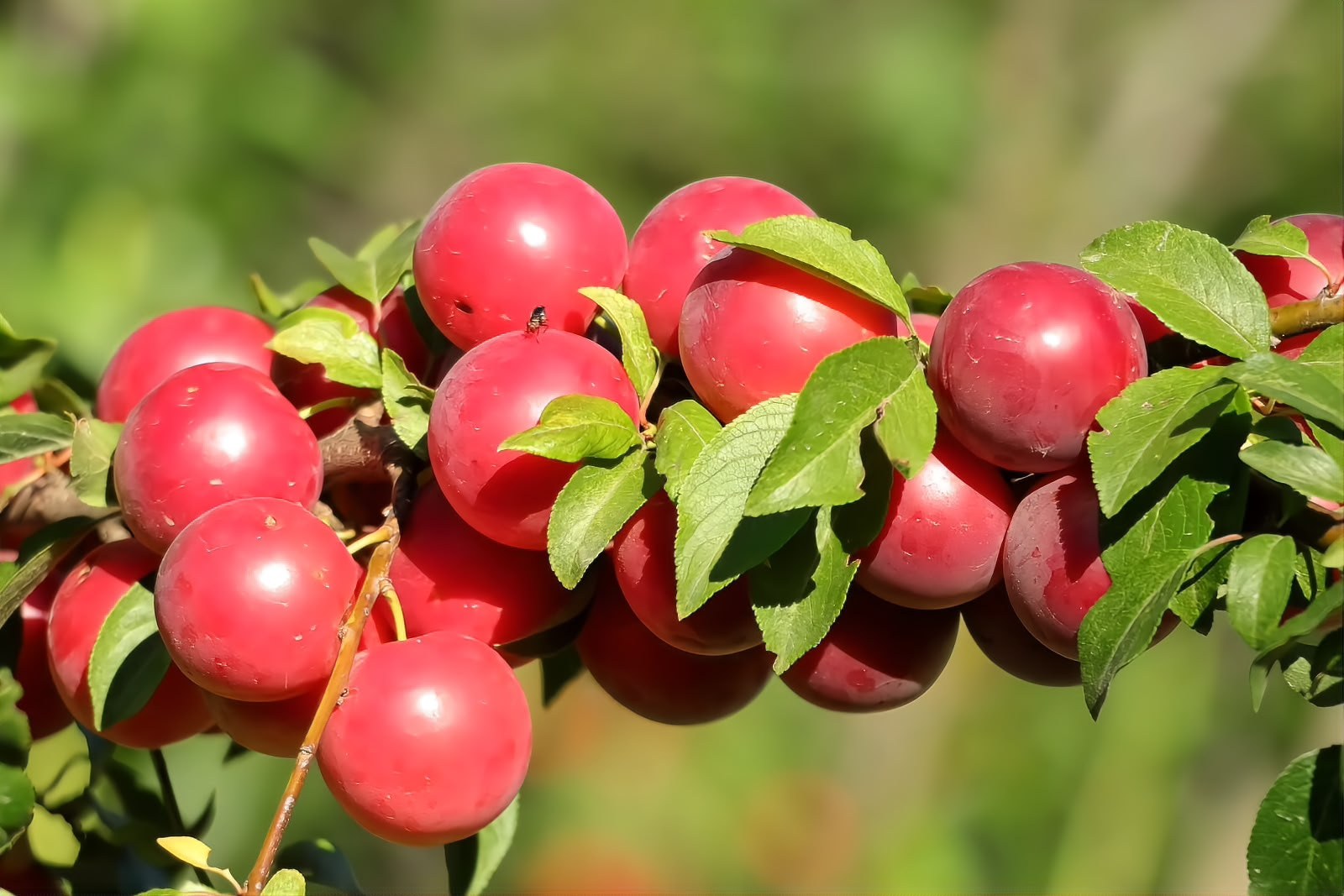
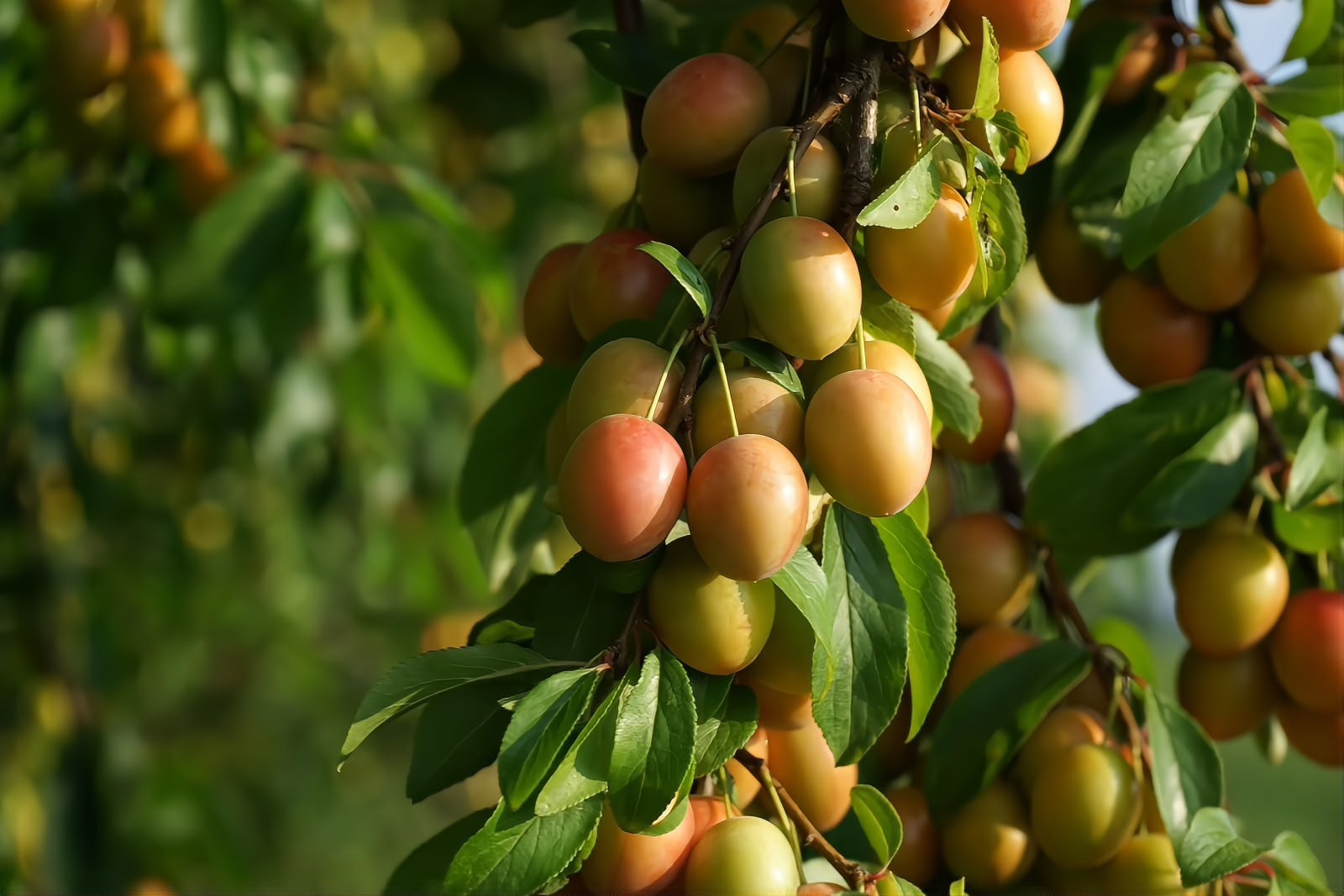
What the plum is in the mouth is where it separates itself from the ordinary fruit. The first thing is the bloom on the skin, a natural silver-white haze that the trade calls 银霜粉 yín shuāng fěn, silver-frost powder, and that a buyer should treat as a mark of a fruit that has been picked and handled with some care, because it comes off at the first touch. Under it the skin runs from purple-red to green-and-red, and the flesh is a deep red. The texture word is 爽脆 shuǎng cuì, crisp – this is a plum that snaps when it is bitten, not one that yields – and the county’s description of the flavour includes 清甘无涩 qīng gān wú sè, clean and sweet without astringency, which is the opposite of what most people expect from a fruit eaten green. The measured standards behind that are a soluble solids content of 12.5 to 14.8 per cent, a sugar-to-acid ratio of about fourteen to one, and 17.5 to 28.7 milligrams of vitamin C per hundred millilitres of juice. The individual fruit is not large: the minimum for the named product is forty grams, the ordinary fruit runs twenty-five to thirty-five, and the best selection known as 翁源大果三华李 Wēng yuán dà guǒ sān huá lǐ, the Wengyuan large-fruit Sanhua plum, gets past forty-five. There are three appearances in the same orchard, 青皮红肉 qīng pí hóng ròu, green skin with red flesh, 红皮红肉 hóng pí hóng ròu, red skin with red flesh, and a green-and-red version in between, and the mixture is what identifies fruit from this county rather than one of the places that later took the plum.
The genealogy of the plum is documented in the same way a family’s would be. The oldest of the local strains is 鸡麻李 jī má lǐ, which is what was planted at 三华村 first and what the county has sent out as parent stock since the 1970s; the others named in the 清嘉庆 Qīng Jiā qìng reconstruction of the county gazetteer, the 翁源新志 Wēng yuán xīn zhì, are 大蜜李 dà mì lǐ and 小蜜李 xiǎo mì lǐ, with a white-fleshed form of the chicken-hemp plum listed in some accounts as a fourth. The botanical name is Prunus salicina ‘Sanhua’, a Chinese early-season variety in the plum genus, and the tree behaves the way an old local variety behaves: it fruits in its third year, carries fifty to a hundred kilos of fruit at maturity, and lives thirty to forty years. The export of the strain began in 1974, when 信宜市 Xìn yí shì in western Guangdong brought the plum in from 翁源, and that is the start of the long line of places outside the county that now grow fruit under the name.
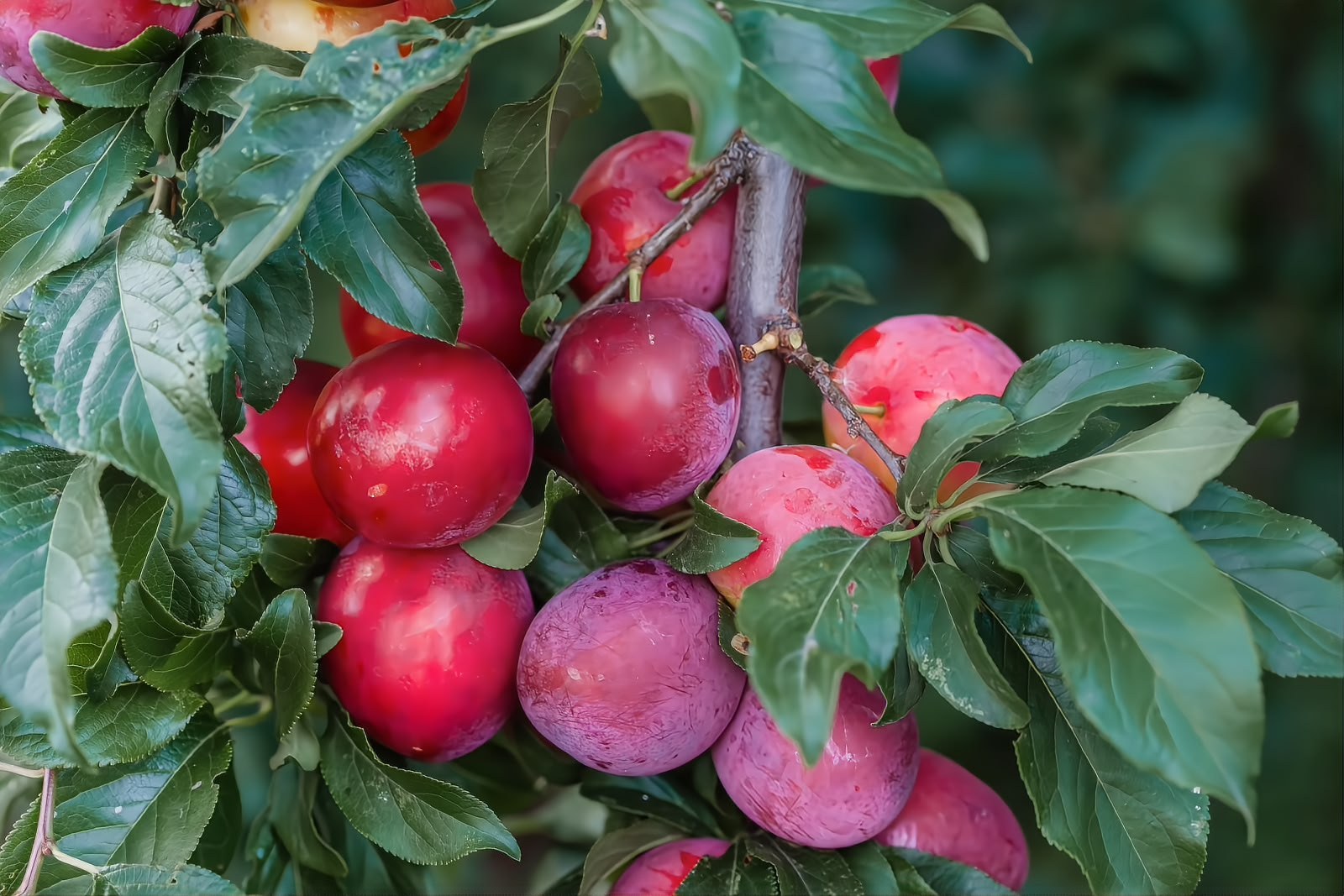
The season is the sharpest fact about the plum and the reason it is a festival rather than a grocery item. The fruit ripens between 芒种 Máng zhòng and 夏至 Xià zhì, the two solar terms that bracket the middle of June, which puts the harvest over the 端午 Duān wǔ festival; the early varieties can be picked from late March, and the best fortnight runs from about the fifteenth of June. The old name for the plum in Guangdong is 岭南夏令果王 Lǐng nán xià lìng guǒ wáng, the summer king of Lingnan, and the epithet is about timing as much as taste: this is the fruit that arrives when the lychees are finishing and the long hot months are starting. The pit is small relative to the flesh, which is part of what thirty years of selection have been for, and the fruit travels badly at full ripeness, so the practical window for eating one where it was grown is narrower than the window for buying it. People in the county eat them both ways and disagree about which is correct: hard, green, sour and dipped in salt and chilli, or left until the skin has gone dark and the flesh has softened and the sugar has come up, and the same tree supplies both ends of the argument.
The Yearly Record
The official honours have accumulated since the 1980s and read as a single long list. In 1986 the plum was named a famous and superior variety at the Guangdong fruit appraisal; in 1987 it was counted among the province’s ten rare and superior fruits; in 2004 翁源县 was given the title 中国三华李之乡 Zhōng guó Sān huá lǐ zhī xiāng, the home of the Sanhua plum in China; in 2005 the mark 翁源三华李 was registered at the national trademark office; in 2006 the county moved to standardised production and the plum was certified as a green food by the China Green Food Development Centre; in 2009 it passed provincial variety registration; and on 24 February 2010 the former national quality inspection administration granted geographical-indication protection, with the production zone limited to 翁源县 and the core origin at 三华村. That same year the plum became the first fruit in 韶关 to receive an export certification, which is the point at which a county fruit stops being a county fruit. In November 2017 it was named a famous, special and excellent new agricultural product of Guangdong’s second batch, and in November 2020 it took an AAA rating and a marketing-innovation award at the first national geographical-indication vitality index. The planted area and the crop are the figures to be careful with: the county’s own published numbers for recent years run to about thirty-six thousand 亩 under the plum with roughly thirty-two thousand of those bearing, a crop of about thirty-five thousand tonnes, an average yield of eighteen hundred kilos to the mu and a value of some seven hundred million yuan a year, and those are the figures this article uses, with the year attached, because the much larger numbers that circulate in encyclopaedias have no government source behind them and a county’s own agricultural bureau is the better authority on how much of its own fruit there is.
The modern part of the story is a set of technologies applied to an old orchard, and it is more interesting than it sounds. The county has been converting its plantings to dwarfed close-set trees under drip irrigation and fertigation, so that a plum orchard is now a thing a person can pick from standing up rather than a thing that needs ladders, and it has built a digital three-dimensional traceability system behind the fruit. In 2024 it launched a WeChat mini-program named for 三华村 that is the first in the province built around a single fruit, and what it does is let a buyer adopt one of two century-old trees, subscribe to one of twenty selected elite trees, or follow a box back to the orchard it came from through a three-dimensional scan; thirty-nine orchards in the village, twenty of its plum trees and two old kapok trees were modelled at high precision to make that possible. On the sales side the county has put the fruit into 盒马鲜生 Hémǎ, 山姆 Shānmǔ and 华润万家 Huá rùn Wàn jiā, the modern retail chains, and in June it runs the 广东翁源三华李文化旅游节 Guǎng dōng Wēng yuán Sān huá lǐ wén huà lǚ yóu jié, the plum culture and tourism festival, under slogans like 潮涌滃江·与’李’相约 cháo yǒng Wěng jiāng · yǔ ’lǐ’ xiāng yuē, which is a pun on the river, the plum and the word for a date. There is a second festival in early spring for the blossom, which brings visitors to the orchards at a point in the year when there is no fruit at all, and the county has found that a plum tree is worth showing twice.
Words and Names
三华李 sān huá lǐ is the plum, and the name is the village’s: 三华 Sān huá is 三华村 and 李 lǐ is a plum. 鸡麻李 jī má lǐ, 大蜜李 dà mì lǐ and 小蜜李 xiǎo mì lǐ are the old strains named in the 嘉庆 gazetteer, with 鸡麻李 the oldest of them and the parent stock the county has sent out since the 1970s. 银霜粉 yín shuāng fěn, silver-frost powder, is the natural bloom on the skin, and 爽脆 shuǎng cuì is the crispness that the fruit is valued for; 青皮红肉 qīng pí hóng ròu describes green skin over red flesh. 滃江 Wěng jiāng is the river the village faces, 书堂石 shū táng shí the rock in it where 邵谒 Shào Yè is said to have studied, and 龙仙镇 Lóng xiān zhèn is the township 三华村 belongs to. 芒种 Máng zhòng and 夏至 Xià zhì are the solar terms that bracket the harvest.
What the Locals Know
Judge the fruit by its bloom and by its weight, and be suspicious of a plum that has none. 银霜粉 is the natural wax the fruit makes, it comes off on the first hand that touches it, and fruit that arrives at a market with the powder intact has been picked into a basket rather than poured into a crate. It should be hard when you squeeze it – a soft 三华李 bought in June has been sitting somewhere warm – and heavy for its size, because the pit in a good one is small. Buy the green-and-red ones and the red ones in the same bag if you want to eat over a week, because the green ones will hold and the red ones are ready; the county’s own advice is that the whole point of the fruit is the crunch, so eat them while they still snap. A plum this sour eaten straight is a shock to most first-timers, and the two ways the county serves them are worth knowing: cut into a bowl with salt, sugar and chilli powder and left ten minutes until the juice draws, or eaten cold out of the fridge with nothing at all. The fruit does not keep long at full ripeness, a week in a fridge is about the limit, and it is not a plum that improves with time. If you are in the county in mid-June, go to an orchard rather than a market: the trees are dwarfed and the picking is easy and the difference between a plum that has been off the tree for two days and one that has been off it for ten minutes is the whole reason the festival exists.
flowcloud would say that a plum named after its village, entered in a dictionary, protected by a geographical indication and traced by a three-dimensional scan has had the most complete career a fruit can have, and that the only thing the county has never managed to do is convince anyone outside it that a hard sour green plum is a delicacy rather than an obstacle.
Where to find it: the orchards around 三华村 Sān huá cūn in 龙仙镇 Lóng xiān zhèn, on the 滃江 Wěng jiāng in 翁源县 Wēng yuán xiàn, and the other core producing townships of 江尾镇 Jiāng wěi zhèn, 周陂镇 Zhōu bēi zhèn and 坝仔镇 Bà zǎi zhèn; the fruit markets of 翁源县城 Wēng yuán xiàn chéng in June, and the county’s plum culture and tourism festival, which runs in the middle of the month. 翁源 is in the east of 韶关市, roughly an hour and a half by road from 韶关市区, and is reached by bus from 韶关东站 or by car on the 京港澳高速 Jīng Gǎng Ào corridor; there is no high-speed station in the county. The season is short and the good fortnight is the second half of June, the early varieties come from the end of March, and the blossom festival is in early spring. Buy from a grower who can name the strain, eat the first one within a day of picking it, and treat a box of these as something to be eaten rather than kept.