
Five-Color Glutinous Rice: The Plant-Dyed Zhuang Festival Rice of Wenshan
密蒙花染糯米黄,三月街头五色香。Mìméng huā rǎn nuòmǐ huáng, sānyuè jiētóu wǔsè xiāng – Buddleja dyes the glutinous rice yellow; at Third-Month the streets smell of five colors.
花糯饭 huānuòfàn flower glutinous rice – also called 五色糯饭 wǔsè nuòfàn five-color rice – is the festival sticky rice of the 壮族 Zhuàngzú Zhuang people across 文山州 Wénshān zhōu Wenshan Prefecture, and the entire trick is dye without pigment: every color comes from a plant. 密蒙花 mìméng huā buddleja flowers steep into the 黄 huáng yellow; 红蓝草 hónglán cǎo, the red-blue grass, gives both 红 hóng red and 紫 zǐ purple depending on the strength and length of the soak; 枫叶 fēngyè, crushed maple leaves, give the deep near-black 黑 hēi; and the fifth color is the un-dyed 白 bái white of the rice itself. 糯米 nuòmǐ glutinous rice soaks overnight in the strained infusions, then 蒸 zhēng steams in a 木甑 mù zèng wooden steamer so each color keeps its own grain and its own edge, and the five sit side by side, gleaming, smelling faintly of herb and maple rather than of sugar. The honest fact-density is that this is a 节令 jiélìng festival food first and a snack second: Zhuang households steam it for 三月三 Sānyuè Sān, the third day of the third lunar month, and for the 清明 Qīngmíng Qingming days around it, offering it to ancestors before anyone eats, and the dye plants’ own folk résumés – buddleja for the eyes, maple for the stomach – are pharmacology best reported with a smile rather than repeated as fact (worth confirming the plant-to-color mapping at the stall that actually dyes its own rice).
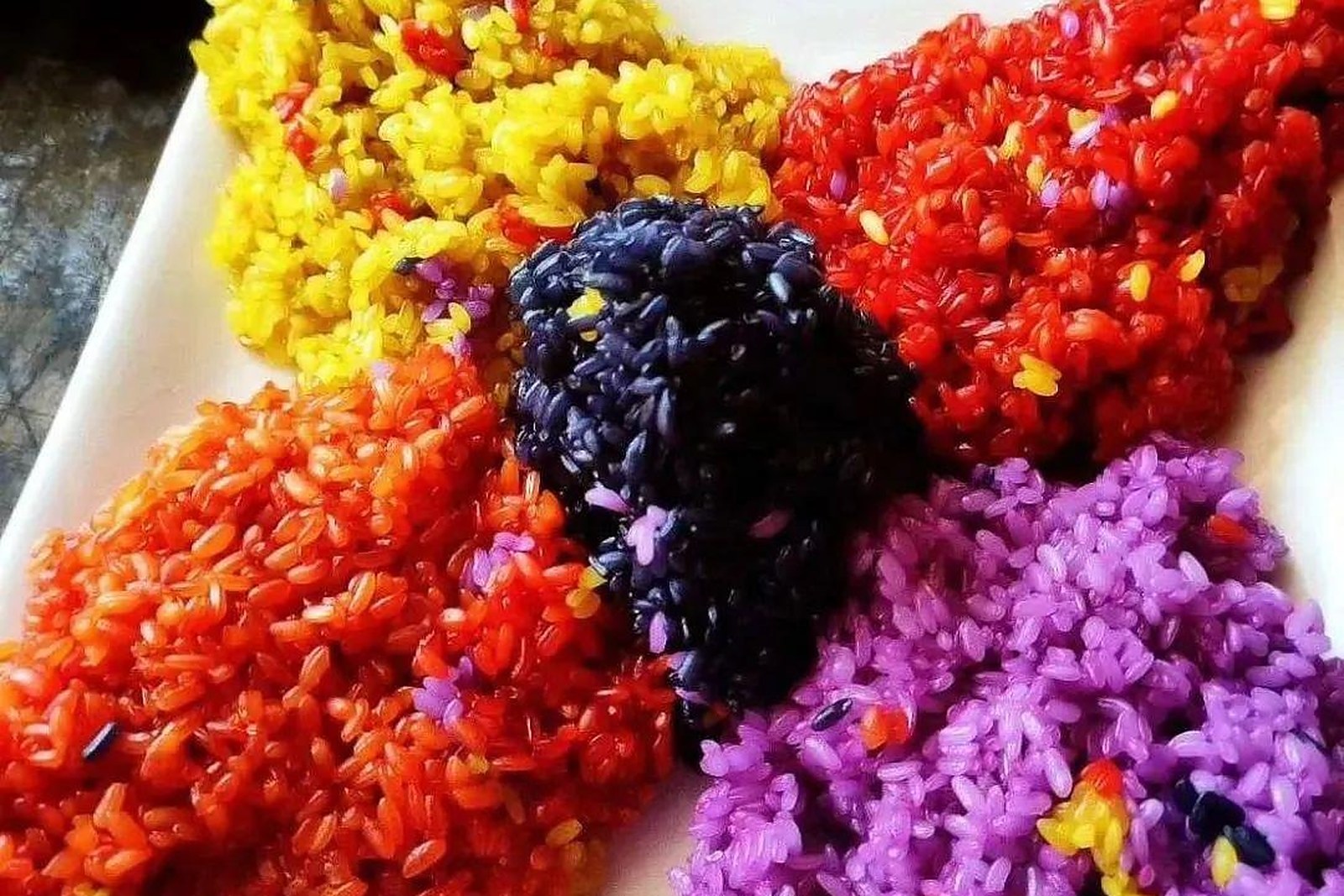
The honest grade is about timing before money. Around the festival window – 三月三 Sānyuè Sān and 清明 Qīngmíng – the market streets of 文山市 Wénshān Shì Wenshan City and the county seats such as 广南县 Guǎngnán Xiàn Guangnan and 丘北县 Qiūběi Xiàn Qiubei fill with steaming stalls, and a wedge or a pressed little block costs a few yuan, call it 3-8, eaten warm from the hand (worth confirming – prices track festival demand, and boxed gift versions multiply them). Outside the window the honest answer is that you may simply not find it: some stalls keep it going on big 赶街 gǎnjiē market days, but a five-color plate on an ordinary Tuesday in a tourist street is a red flag, because real plant dye is a day of soaking that nobody does for a slow weekday. The tells are the nose and the grain: plant-dyed rice smells faintly herbal and the colors sit soft and slightly uneven, while food-coloring versions come out neon-bright, scentless and uniform (worth confirming the dye before you praise the tradition).
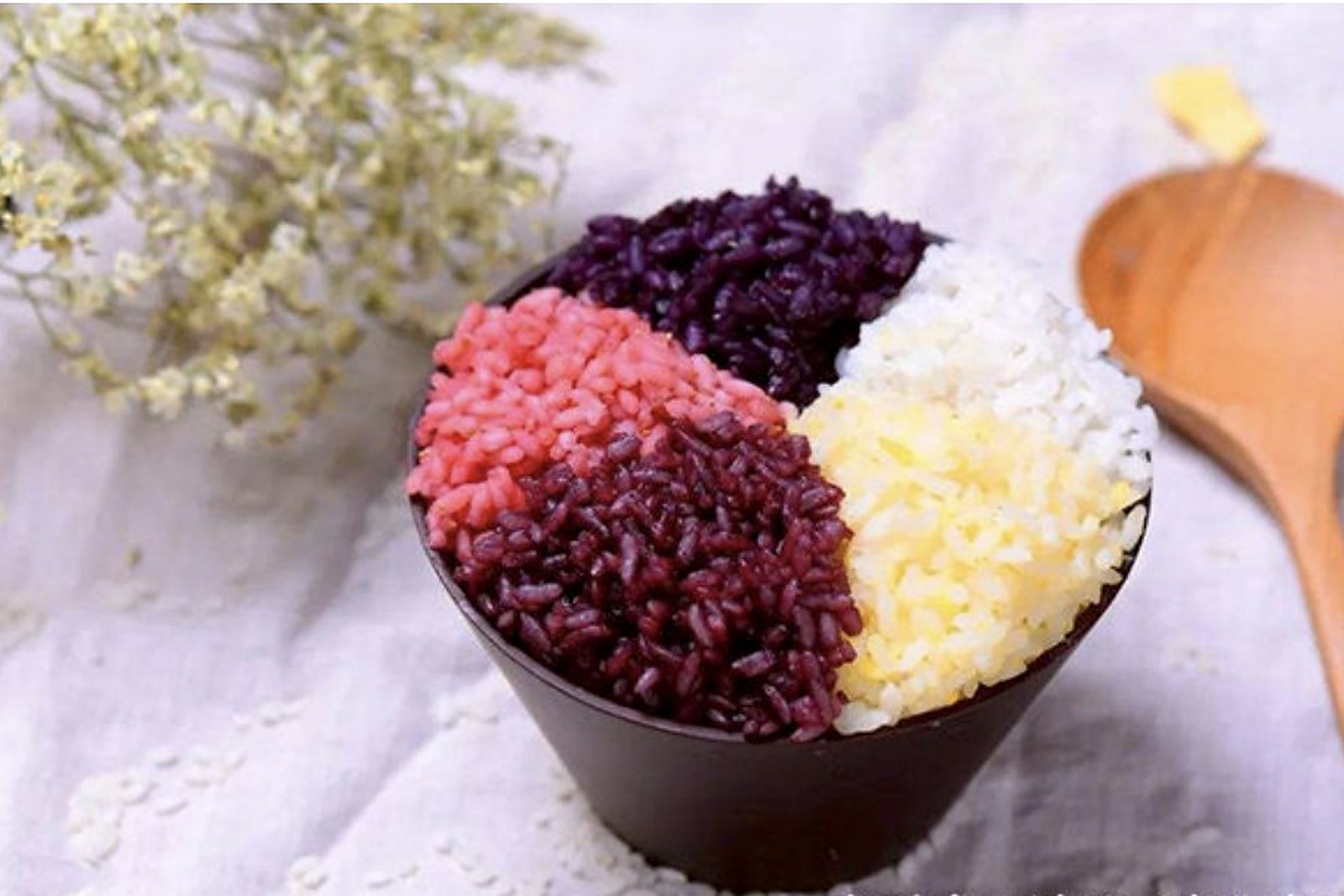
The wry truth is that 花糯饭 huānuòfàn is over-rated as a flavour and under-rated as a craft: eaten blind it is plain sticky rice, barely sweet, and anyone expecting five flavors from five colors has misread the dish – the color is the content, a map, a calendar and an offering at once. The honest pleasure is texture and timing: warm from the 甑 zèng the grains are 弹 dàn springy and separate, the maple-black one carrying a faint smoky woodiness, while a cold wedge hardens into a brick that reheats by steaming, not by hope. The season advice is blunt: plan around 三月三 Sānyuè Sān or the 清明 Qīngmíng stretch, or ask locally which township 赶街 gǎnjiē day still draws a dyeing household – everything else is theatre (worth confirming which market days still have the real thing).
The self-deprecating footnote: a food writer will photograph one wedge from five angles, describe the maple-black cube as charcoal-glazed, credit the buddleja yellow to saffron, and then eat the black one first and the purple one second and reconstruct the culture paragraph from memory – which is the honest grade: 花糯饭 huānuòfàn is a dish consumed with the camera before the mouth, and where the plants do the dyeing, the tourism does the staining.
Words and Names
花糯饭 Huānuòfàn flower glutinous rice (five-color rice) · 密蒙花 Mìméng Huā buddleja flower (yellow dye) · 红蓝草 Hónglán Cǎo red-blue grass (red and purple dye) · 枫叶 Fēngyè maple leaf (black dye) · 三月三 Sānyuè Sān Third-Month Third festival (lunar 3/3) · 木甑 Mù Zèng wooden steamer
What the Locals Know
- The nose knows the dye: plant-dyed rice smells faintly of herb and maple and the colors sit soft and uneven; neon-bright, scentless color is a bottle, not a plant (worth confirming the details).
- It runs on a festival clock: 三月三 Sānyuè Sān and 清明 Qīngmíng are the real windows – a weekday five-color plate in a tourist street is mostly theatre (worth confirming the details).
- Eat it warm from the 甑 zèng: the grains should be springy and separate – a cold, hardened wedge is yesterday’s, and the honest reheat is steam, not a microwave.
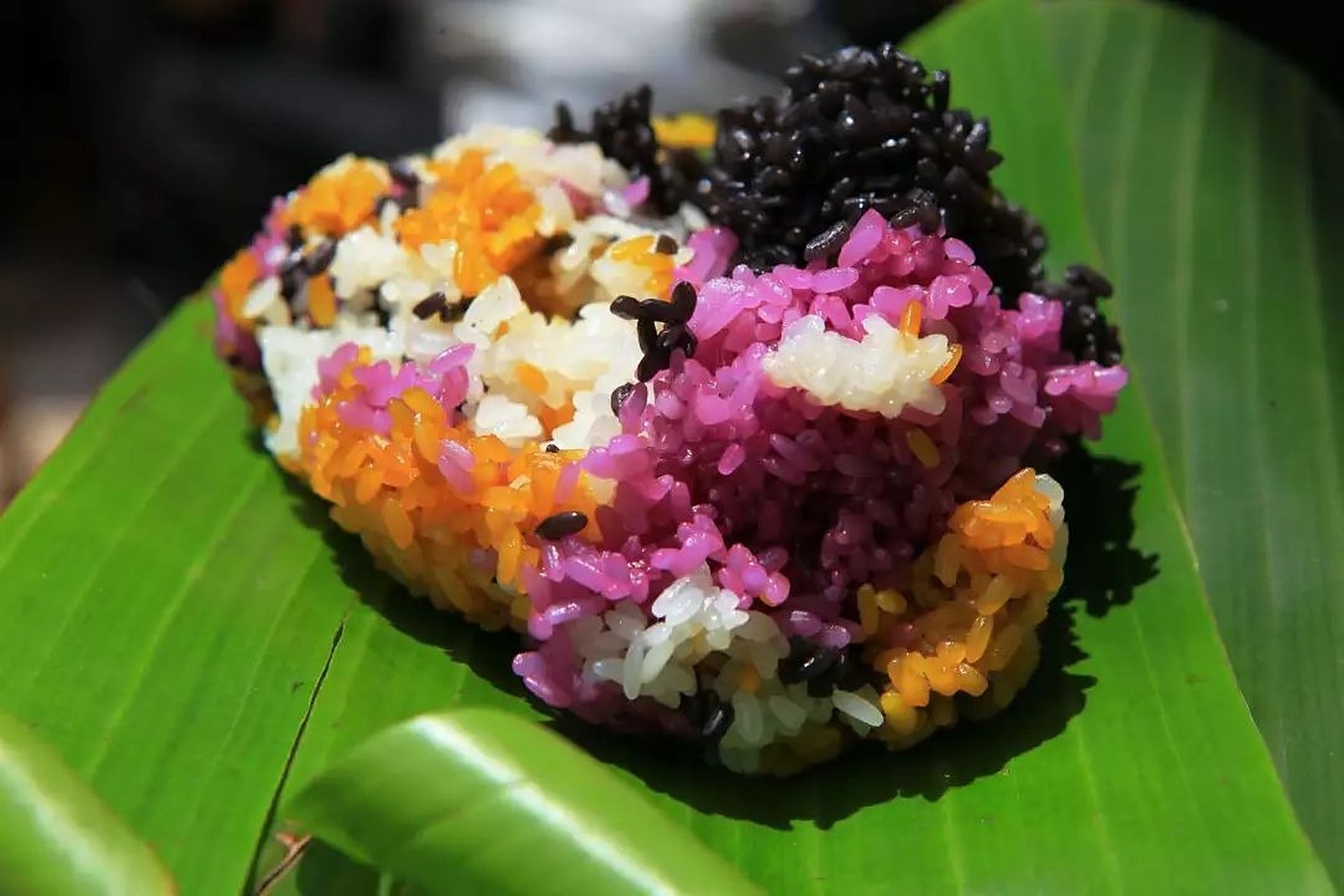
flowcloud would say that the 花糯饭 huānuòfàn is the 文山州 wénshān zhōu Zhuang festival rice – 糯米 nuòmǐ dyed yellow by 密蒙花 mìméng huā buddleja, red and purple by 红蓝草 hónglán cǎo, black by 枫叶 fēngyè maple leaves, and steamed beside its own white in a 木甑 mù zèng – and that the honest move is to plan around 三月三 sānyuè sān or 清明 qīngmíng, buy warm at a market gate, and judge the dye by smell and softness, because a neon wedge is a bottle, not a plant. All checked October 2026.
Where to find it: 文山市 Wénshān Shì and 广南县 Guǎngnán Xiàn / 丘北县 Qiūběi Xiàn market streets in the 三月三 Sānyuè Sān and 清明 Qīngmíng window – a wedge about 3-8 yuan (worth confirming the details); buy warm, smell the dye, and verify the colors are plant-grown. Five-color glutinous rice is the plant-dyed Zhuang festival rice of Wenshan, craft before flavour. All checked October 2026.