
Paper Shells by the Canal: Wensu’s Fifty-Year Walnut Groves
雪水浇根壳自薄,仁香不让旧时果 Xuěshuǐ jiāo gēn ké zì báo, rén xiāng bù ràng jiù shí guǒ – Snowmelt thins the shell and sweetens the kernel; the old groves still outdo every new orchard.
The 温宿核桃 Wēnsù Hétáo Wensu walnut is the veteran dried fruit of 阿克苏地区 Ākèsū Dìqū Aksu Prefecture: a shell thin as paper that opens under fingertip pressure, a kernel packed so full there is almost no air left inside, and a clean, sweet taste without a trace of astringency. Wensu has grown walnuts by the century – along the oasis canals stand groves more than fifty years old, fed each year by Tianshan snowmelt, and their nuts are the hard currency of any Xinjiang walnut platter.
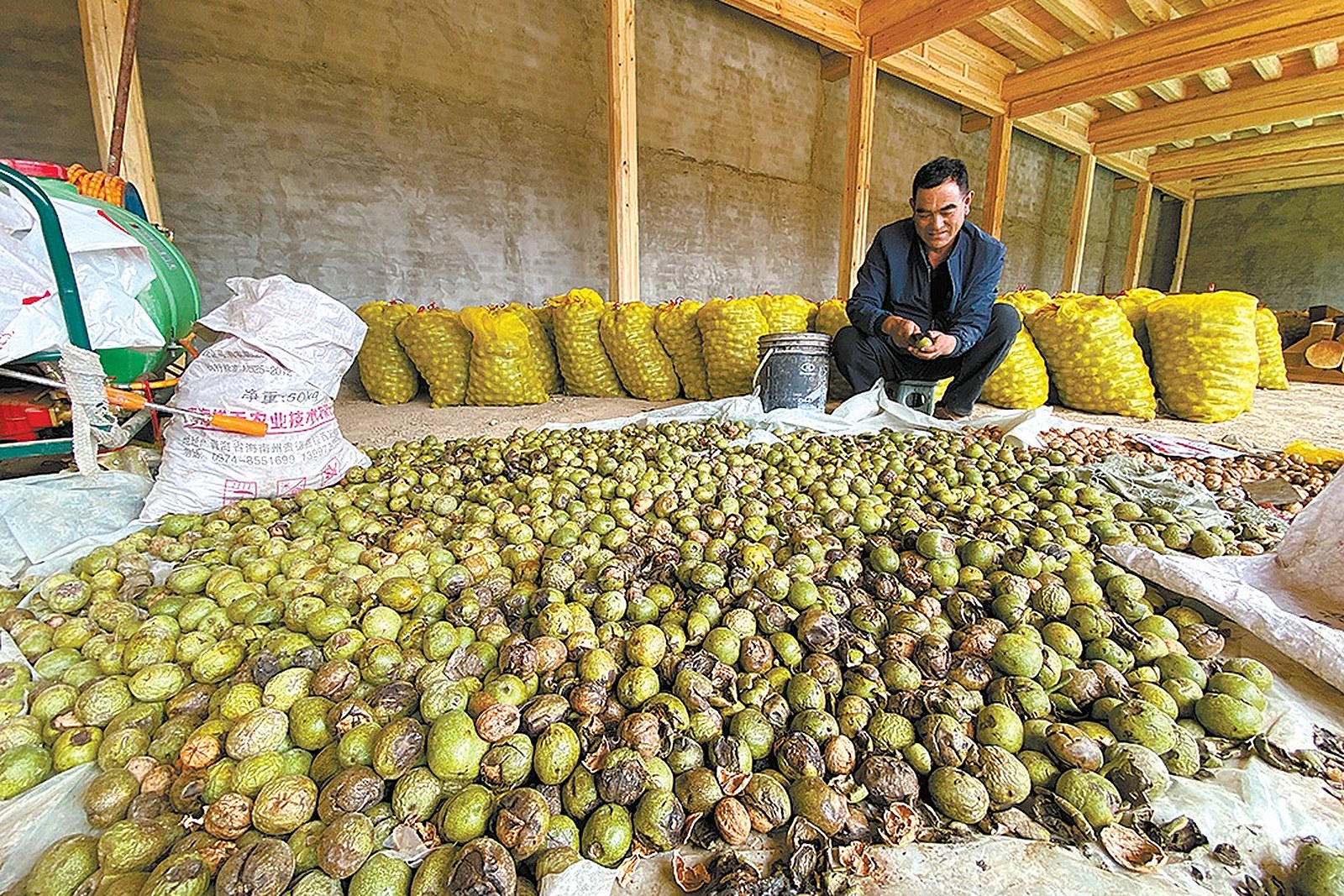
The season runs through September: green-husked fruit comes down first, piles in the drying rooms until the husk rots away, and the pale-brown shells emerge to sun for another half month. Choosing takes three checks – a suture line shut tight, no rattle when shaken, and a clean bright shell. The old growers’ test is the squeeze: thumb and finger crack the shell while the kernel stays whole, and that alone earns the name 「paper-shell walnut」.
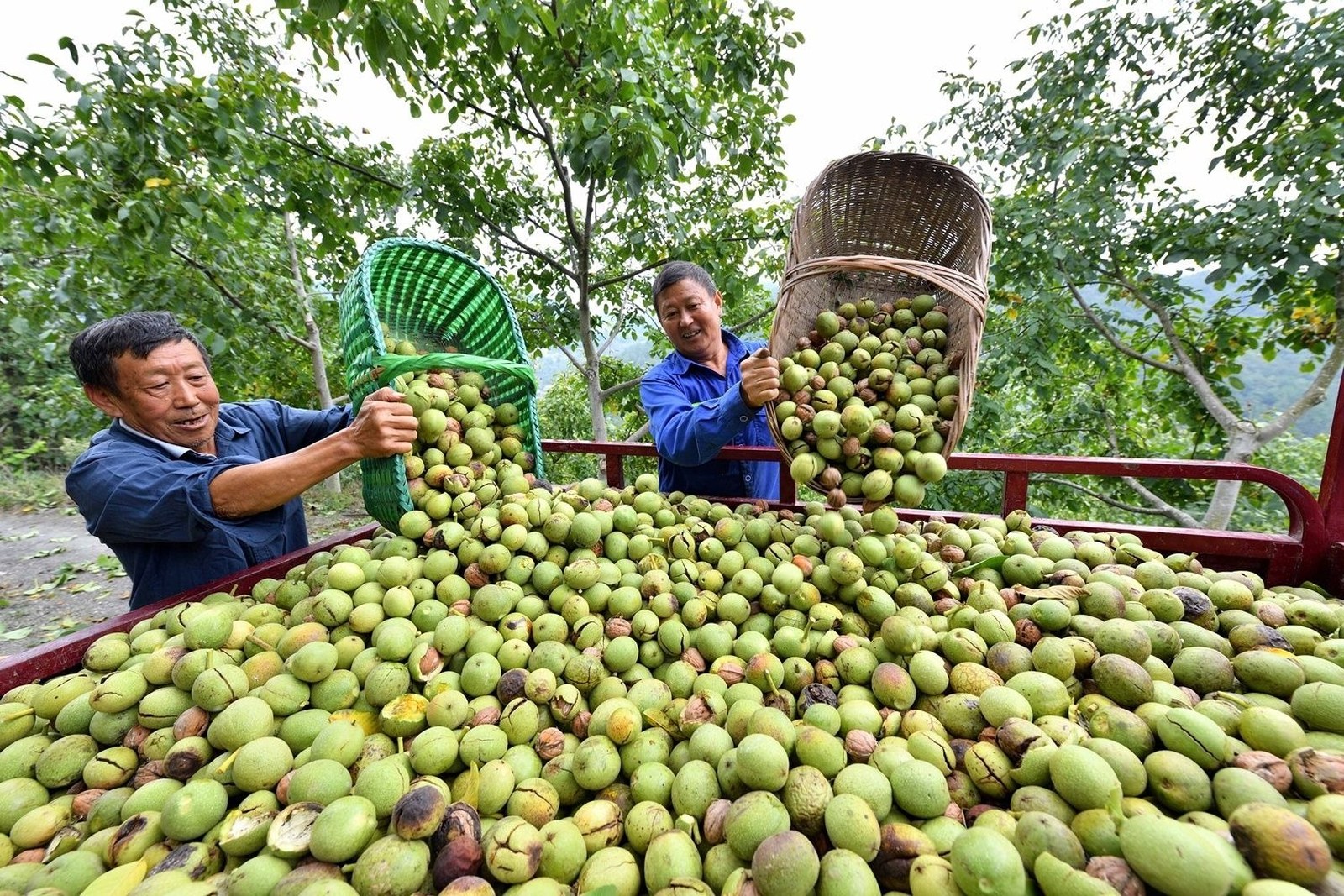
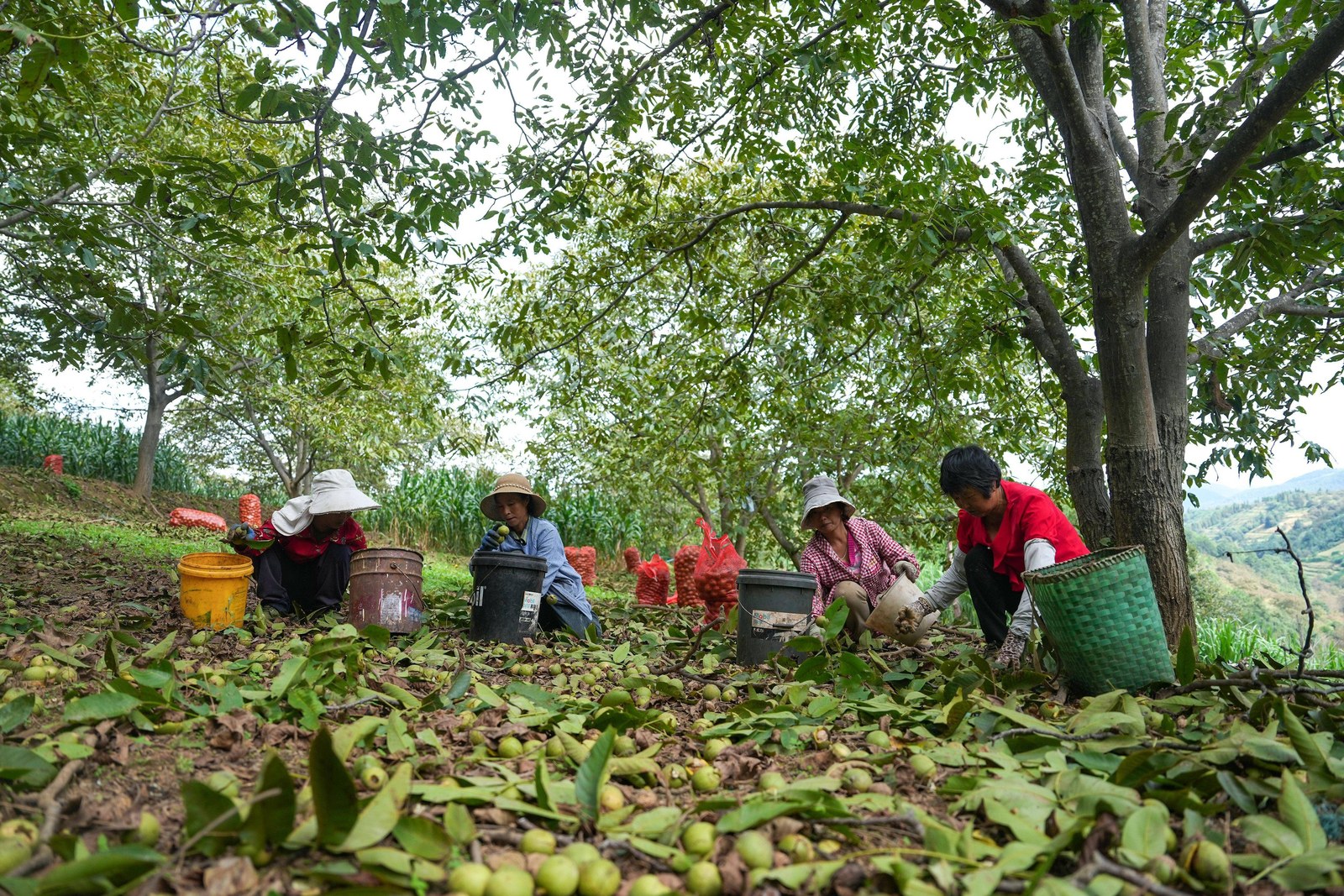
The groves cluster around the county town and Tuohula township, and late September catches the harvest in full theatre – long poles knocking the canopy, green husks raining down, the whole family picking. Owners set out the new crop for you to shell on the spot, and handing over a guest one perfectly intact kernel is the most honest advertising a farm can buy.
Wensu eats its walnuts every way it can: fresh kernels peeled of their bitter skin and eaten raw carry a plant-milk sweetness that only the season offers; dried nuts get candied into amber walnuts – syrup-dipped, fried crisp, snapping when cool. The Uyghur grandmother’s version is plainest: a round of naan broken open, a handful of kernels tucked in, tea alongside – a complete breakfast.
Carrying walnuts home is a standard Aksu souvenir run: in-shell nuts keep half a year in a ventilated bag and shrug off luggage pressure. The fussy buy in-shell 「paper shells」 to crack at home; the practical buy kernel packs in pale yellow, free of any rancid note. Buying at the orchard in season undercuts the e-commerce price and lets you watch the scale.
Beyond the walnut, the same 阿克苏地区 Ākèsū Dìqū Aksu Prefecture holds other flavors: 阿克苏苹果 Ākèsū Píngguǒ Aksu sugar-heart apple, 库车大馕 Kùchē Dà Nán Kuqa giant naan, 柯坪羊肉 Kēpíng Yángròu Keping lamb, and 慕萨莱思 Mùsàláisī musallas – four more doors into the same 阿克苏地区 Ākèsū Dìqū Aksu Prefecture. With the shells cracked, our Aksu food map fills the day.
The industry ledger shows Wensu’s weight: the county plants walnuts across tens of thousands of hectares as a national geographical-indication zone, and during buying season traders set up desks in the villages themselves. Newer thin-shell varieties keep getting bigger, but connoisseurs still swear by the old trees – deeper aroma, a finish that lingers.
Walnuts’ place at the Uyghur table shows clearest in ceremony: wedding fruit platters are laid on a base of kernels, and an elder handing a peeled kernel to a junior is a gesture of respect. Families with a student sitting exams serve walnut-kernel sugar water at dawn – 「kernel nourishes the person」, a pun the oasis has passed down uncounted generations.
The groves’ autumn color is an event of its own: in October the leaves turn gold and the old orchards glow like scattered coins at sunset. After the final harvest growers spread carpets under the trees for tea and press fresh fruit on passersby – no charge asked, only a compliment in return.
The drying-room window is the signature Wensu village view: high mud-brick windows catch the wind, and strings of walnuts hang drying on the racks. Old hands warn against hurrying – sun-scorched shells crack and leak oil, and only slow air-drying locks the aroma in; those two weeks are craft no machine has replaced.
The processing chain keeps lengthening: walnut milk, candied kernels, and walnut oil line the supermarket shelves, and the traveler’s favorite is freeze-dried fresh kernels – thaw and eat, milk scent intact. A small jar for the office beats any postcard.
Words and Names
What the Locals Know
flowcloud would say the Wensu walnut is the oasis’s pension plan: plant a grove, water it with snowmelt, and fifty years later your grandchildren still crack thin shells by the canal. All checked November 2026.
Where to find it: The county dried-fruit street and the Tuohula orchards are the first choice; check this year’s shell color and shut suture lines, insist on the 「paper-shell」 variety, and do the fingertip test on the spot – if the kernel breaks, move to the next stall. All checked November 2026.