
The Breakfast That Runs the City: Wenzhou Sticky Rice
一勺肉汁浇白玉,满城清晨此味忙 Yī sháo ròuzhī jiāo báiyù, mǎn chéng qīngchén cǐ wèi máng – One ladle of meat gravy pours over white jade; the whole city’s morning hurries after this flavor
温州糯米饭 Wēnzhōu nuòmǐfàn Wenzhou sticky rice is the dish the city wakes up for – a bowl of steamed 糯米 nuòmǐ glutinous rice drowned under 香菇肉末汤 xiānggū ròumò tāng a brothy sauce of shiitake and minced pork, finished with crumbled 油条 yóutiáo fried dough, scallions and sometimes a shake of dried shrimp. The rule is contrast: the rice stays chewy and distinct-grained, the sauce floods it savory, and the fried dough crackles on top like a lid of crunch. Every neighborhood keeps its nuomifan stall, opened by five and sold out by nine, and locals argue about their favorite the way other cities argue about football.
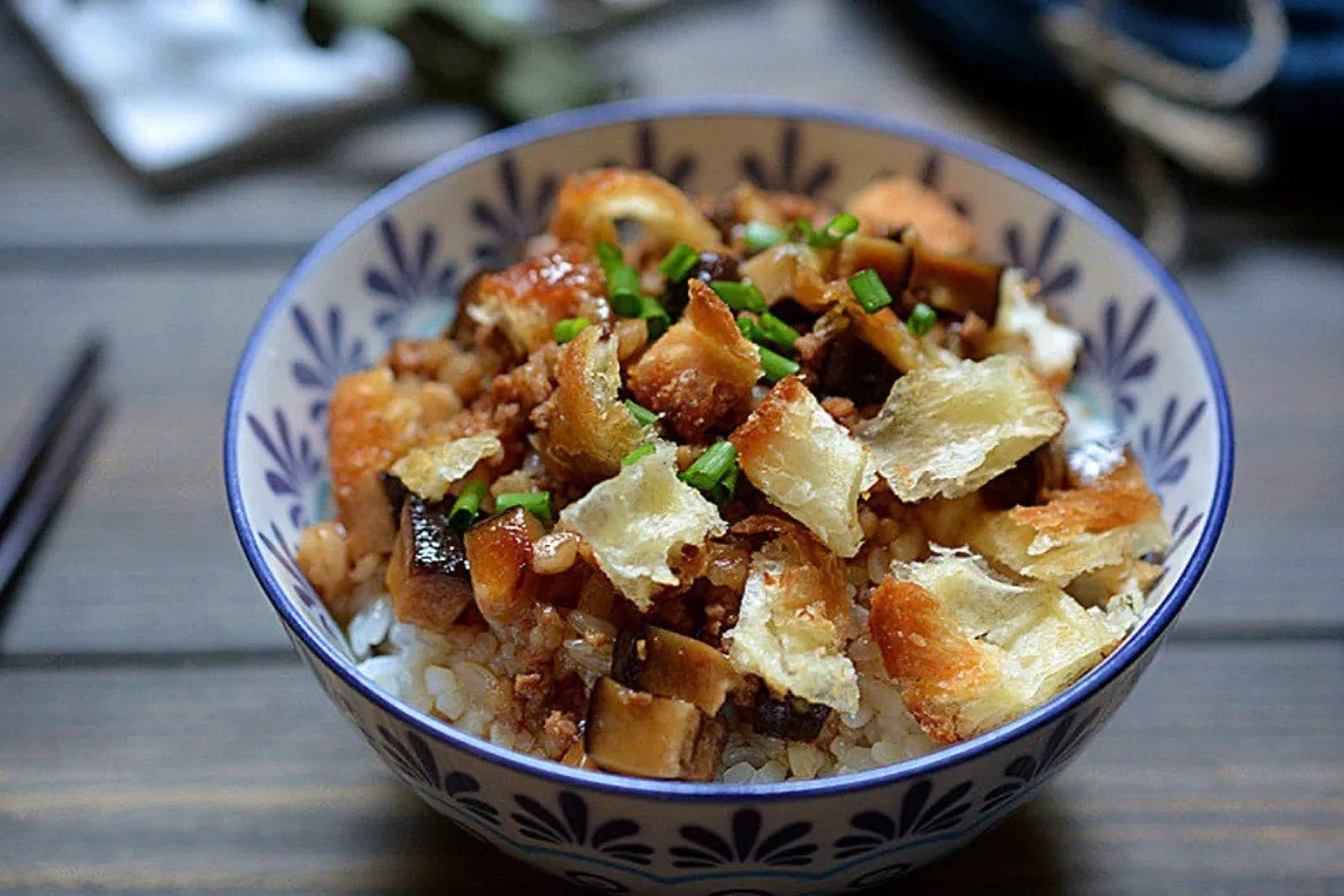
The best stalls are counter-sized and line-shaped: a wooden barrel of steaming rice, a vat of the dark mushroom-pork sauce, and a chopping board where yesterday’s youtiao gets re-crisped. Order by size, eat in or take away in a paper box – the sauce soaks in either way, which is half the point.
The dish is pure port-city pragmatism: rice that holds you to noon, sauce that uses the night-market mushroom trim, dough scraps that would otherwise be thrown away. Wenzhou merchants built a trading diaspora across Europe on breakfasts like this, and return visitors head for the same corner stalls before they check into their hotels.
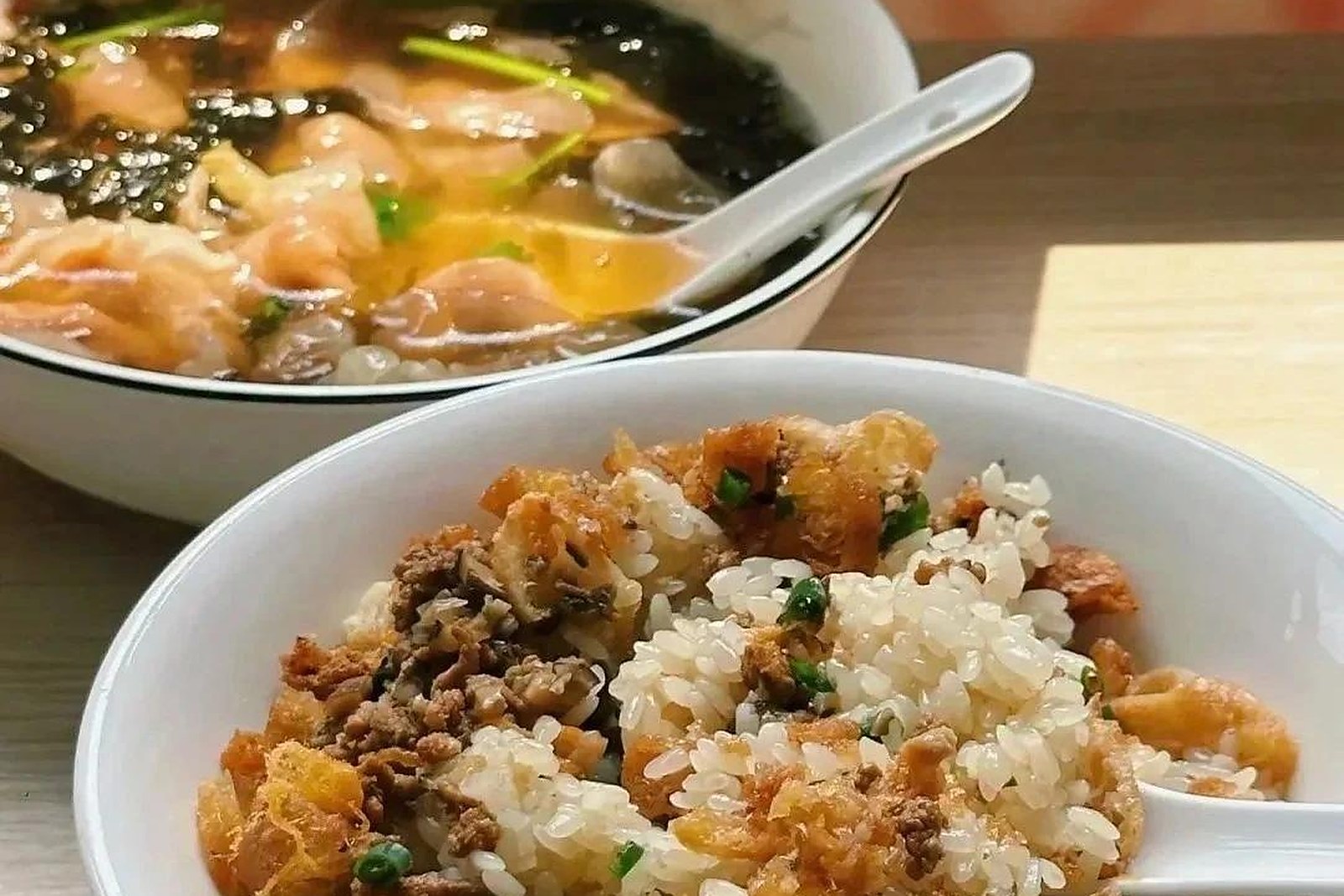
Eat it the local way: a bowl of nuomifan, a cup of soy milk on the side, standing at the counter or perched on the plastic stools. Second helpings of sauce are free at the good stalls – ask for 多浇点汤汁 duō jiāo diǎn tāngzhī and the ladle comes back heavy.
The same city holds more flavors worth chasing: 温州鱼丸 Wēnzhōu yúwán the hand-torn fish balls, 灯盏糕 dēngzhàngāo the fried lamp pastries, 猪脏粉 zhūzàngfěn the offal noodles, or 瘦肉丸 shòuròuwán the beaten pork balls – four more doors into the same 温州市 Wēnzhōu Shì Wenzhou City table.
Words and Names
糯米饭 nuòmǐfàn sticky rice with sauce; 油条 yóutiáo the fried dough cruller; 香菇肉末 xiānggū ròumò shiitake and minced pork; 五马街 Wǔmǎ Jiē Wuma Street, the old town’s food axis.
What the Locals Know
The sauce is the argument: every family stall guards its mushroom-to-pork ratio, and regulars judge a new bowl by whether the gravy pools or soaks. Go before eight on weekdays – the good barrels empty first, and the fried dough only crackles in the first hour.
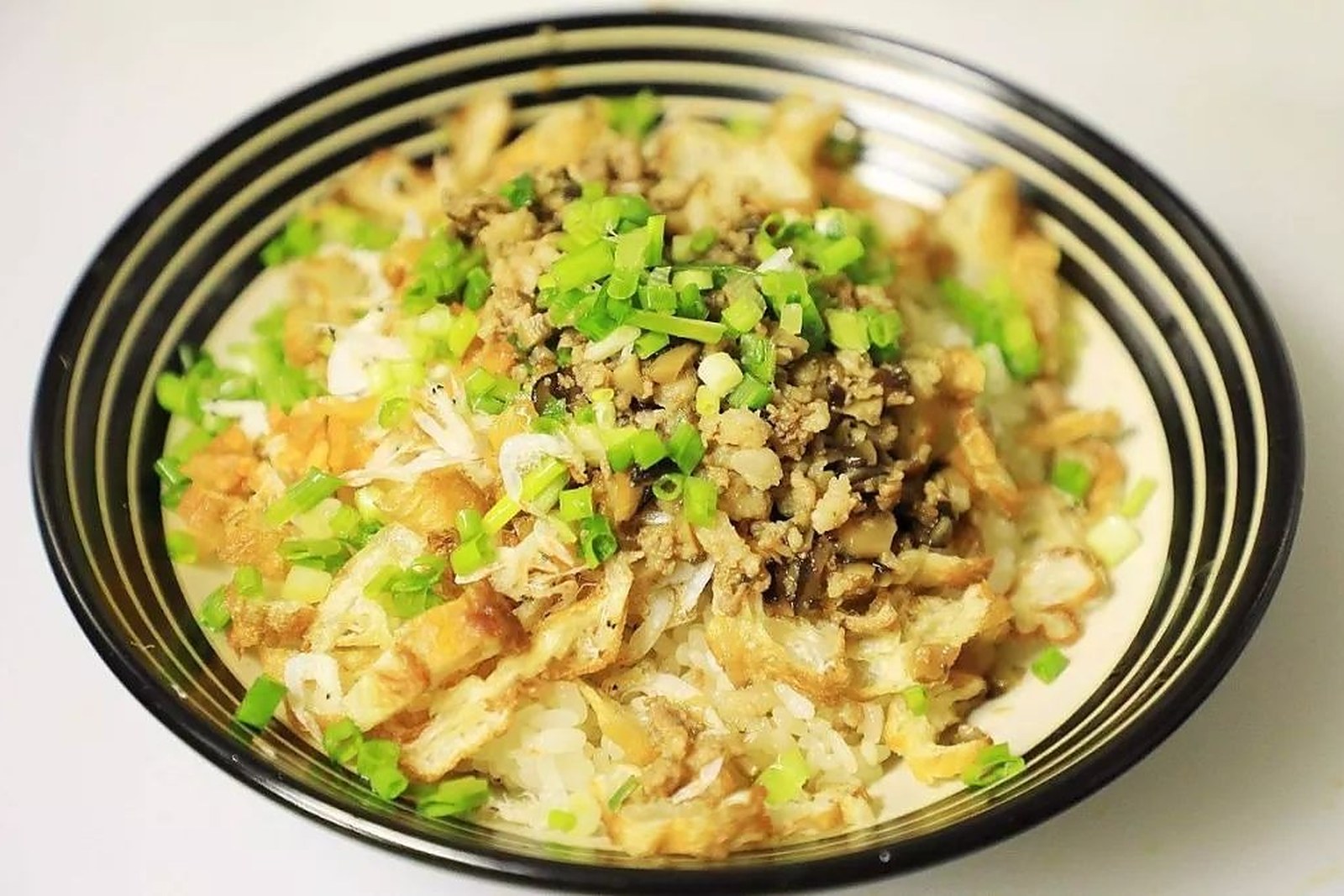
flowcloud would say Wenzhou nuomifan is a city’s alarm clock in a bowl: chewy grains under a flood of mushroom-pork gravy, a crackle of fried dough on top, and a queue that starts before the shutters finish rattling up. All checked November 2026.
Where to find it: Nuomifan stalls line the back streets around Wuma Street and every residential market from five in the morning – the pick is any barrel with a queue, a heavy mushroom-pork sauce and fried dough crumbled to order, a few yuan a bowl, sold out by mid-morning. All checked November 2026.