
White-Cut Chicken
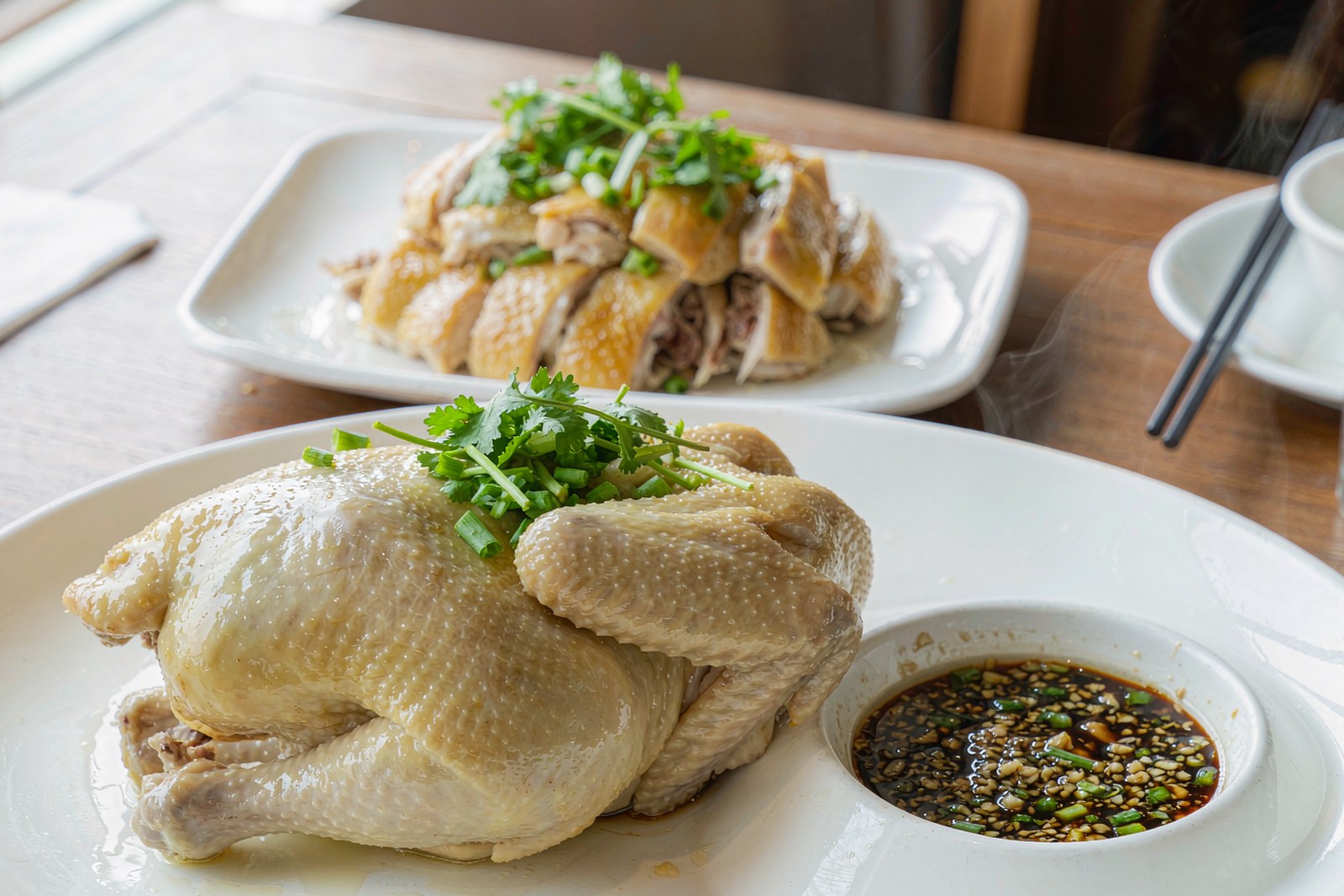
The first thing you notice is the silence. No wok fire, no sizzle, just a bowl of pale, glistening chicken set down with a small saucer of scallion-ginger oil. I lifted a piece with my chopsticks, the skin trembling, and took a bite. It was chicken as I had never tasted it before: the meat was silken and faintly sweet, the skin cool and jelly-soft, the broth of the bird rising in my mouth instead of being buried under sauce. This is the dish Cantonese cooks use to judge one another, and sitting at that little table in Guangzhou I finally understood why.
The dish is 白切鸡 báiqiējī, literally “white-cut chicken,” a name that hides an old story. Its roots reach back to the courtyards of the Lingnan region, and most locals trace the style to the farmhouses around Guangzhou and the Pearl River delta where free-ranging “walking chickens” were simply poached and cut. Unlike the roasted and braised showpieces of Cantonese cuisine, white-cut chicken refuses adornment, which is exactly why it matters here: in Guangdong the measure of a kitchen is how good its plainest thing can be. To serve it is to say, we trust our chicken.
The Craft
The craft begins long before the pot. A good 白切鸡 starts with a young, free-range hen or capon, because the texture of the meat depends on it. The bird is plunged into a rolling broth, then the heat is dropped and the chicken is poached at a bare tremble, never a boil, for roughly fifteen to twenty minutes. The goal is to cook the meat through while keeping it succulent and the skin intact.
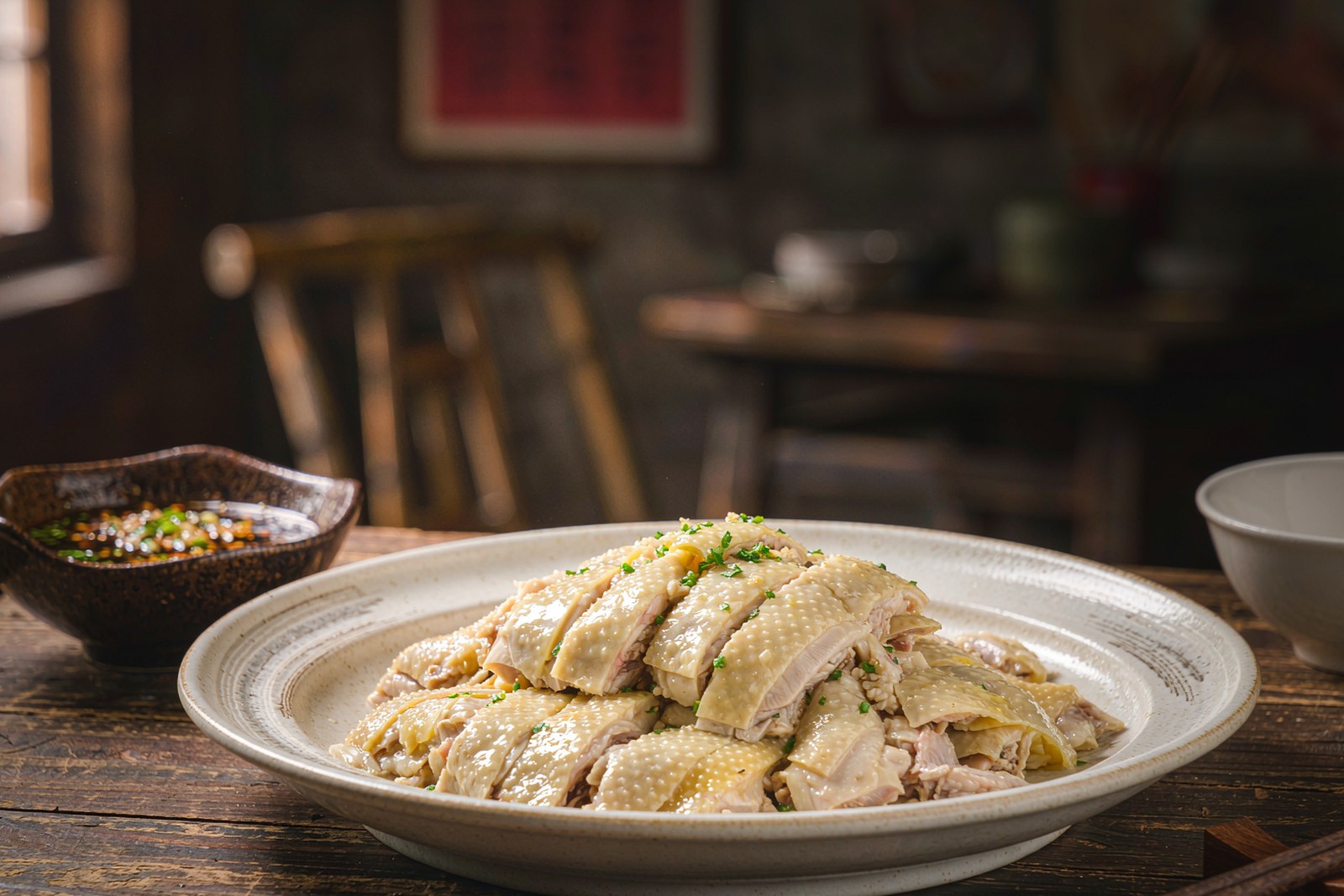
Then comes the move that defines the dish. The chicken is lifted out and plunged into an ice bath. This shocks the skin, tightening it into a clean, faintly amber jelly and stopping the cook dead so the meat stays tender rather than turning chalky. Once cooled, the bird is cut with a cleaver straight through bone and skin into neat pieces, the thigh and breast laid back in the shape of the bird. The only sauce is a emulsion of finely chopped scallion and crushed ginger warmed in a little oil and salt, sometimes with a drop of the poaching broth.
A chef will tell you the three tests: the skin should be taut and barely yellow, the meat near the bone should show the faintest blush of pink rather than grey, and the bite should release chicken essence. Get those right and the dish needs nothing else.
How to Eat It
Eat it at room temperature, not hot, because the flavor and the jelly-like skin only open up as it cools. Dip each piece lightly in the scallion-ginger oil; do not drown it. The bones are meant to be gnawed, and the gelatinous bits near the joints are the prize. You will find it everywhere in Guangzhou, from banquet halls to corner rice shops.
Words and Names
The name 白切鸡 breaks into three characters: 白 bái meaning “white” or plain, 切 qiē meaning “to cut” or slice, and 鸡 jī meaning chicken. Together 白切 means “white-cut,” describing both the unspiced poaching and the cleaver work that dresses the bird. The word 鸡 jī is the same across dialects, but in Guangdong a “good chicken” is a compliment to the farm, not just the cook.
What the Locals Know
Ask for 走地鸡 zǒudìjī (free-range chicken) if the menu offers a choice, it is noticeably better.
Look for the pink near the bone gray meat means it was overcooked or boiled hard.
Let it come to room temperature straight from the fridge it tastes of nothing.
Eat the skin the cool jelly layer is the whole point, do not leave it.
Save the carcass many shops will turn it into a complementary ginger broth.
flowcloud would say that the truest cooking is the kind that dares to leave the chicken alone.
Where to find it: White-cut chicken, 白切鸡 báiqiējī, is the default test dish of Guangdong and turns up in nearly every city, but the finest versions come from Guangzhou and the surrounding Pearl River delta. Seek it at old Cantonese restaurants in 广州 Guǎngzhōu such as the tu chang (earth-oven) houses of 荔湾 Lìwān district, or order a 清远 Qīngyuǎn free-range bird at a banquet hall. Ask for 白切鸡 with 姜葱蘸料 jiāng cōng zhànliào (ginger-scallion dip) and a bowl of 鸡油饭 jīyóu fàn (chicken-oil rice) on the side. A half bird for two runs roughly 60 to 120 yuan depending on the breed.