
Wonton Noodles
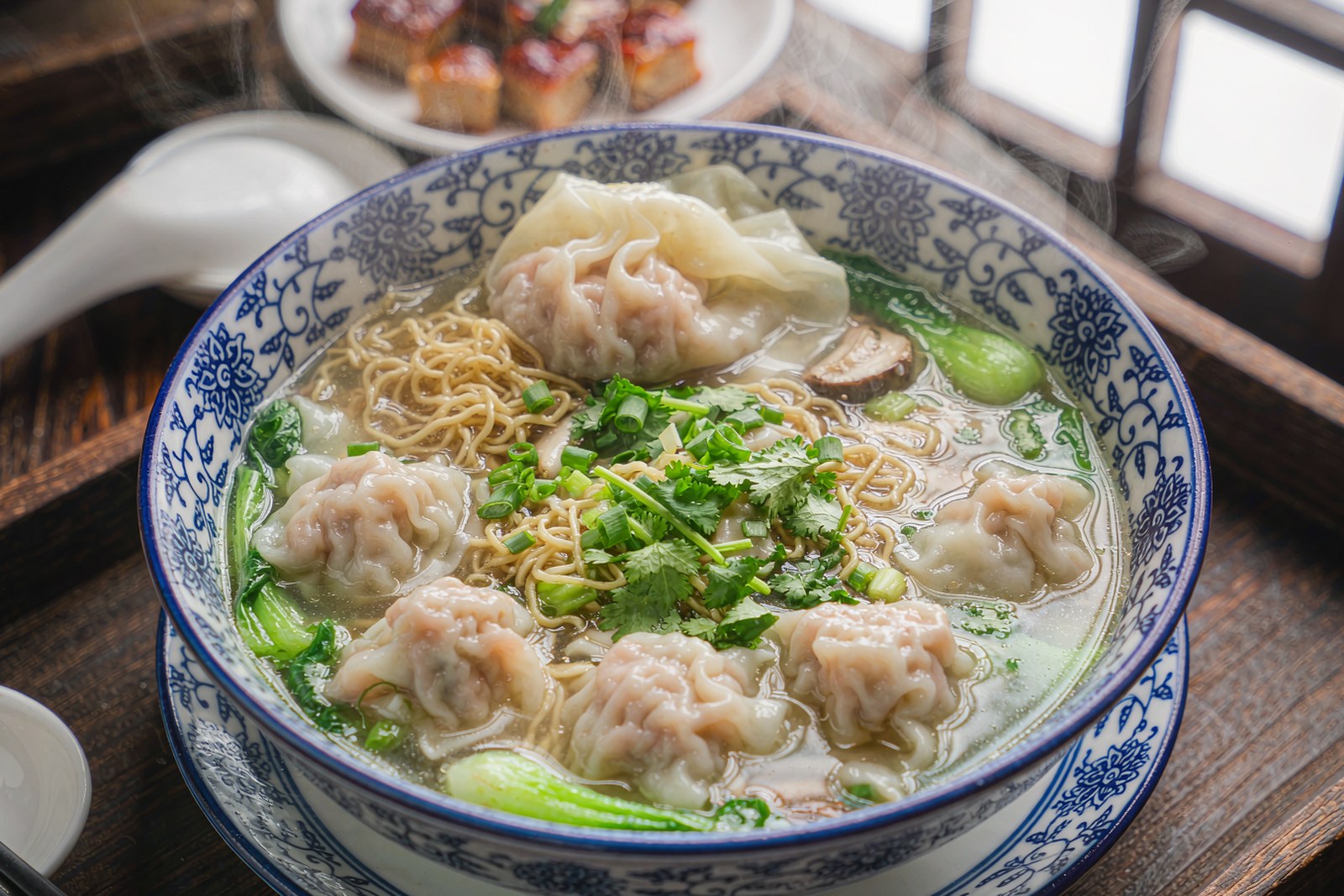
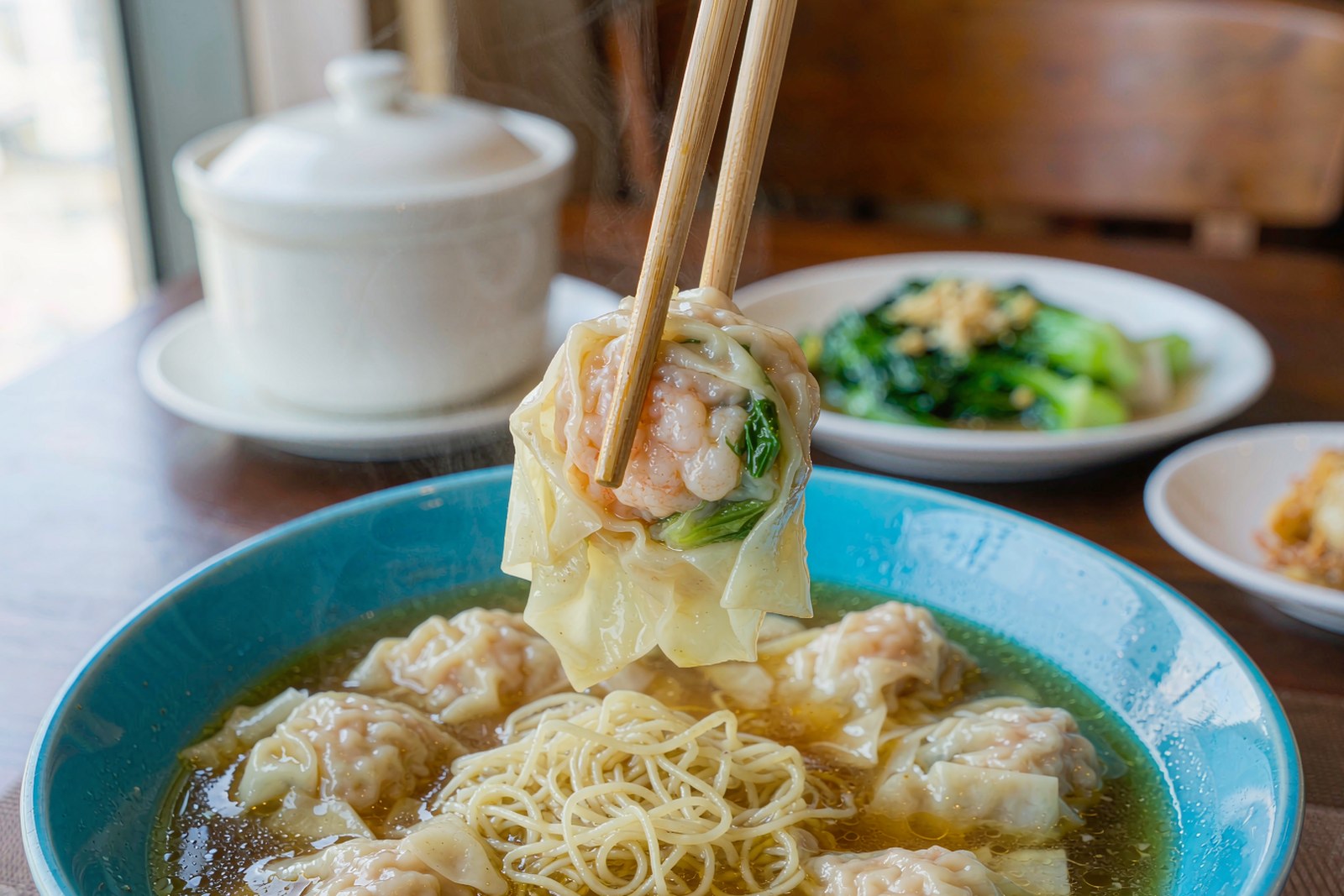
The bowl arrived with the noodles standing proud of a clear, golden broth, and three fat wontons sinking beneath them like little sealed letters. I lifted one with my chopsticks and the wrapper tore to show a whole pink shrimp wrapped in a curl of pork. The noodles were springy and alkaline, the broth clean and pork-sweet. This is 云吞面 yúntūn miàn, the bowl Guangdong reaches for when it wants comfort in under five minutes.
云吞面 yúntūn miàn means “wonton noodles,” and 云吞 yúntūn is the Cantonese borrowing of the northern 馄饨 húntun wonton, carried south and reshaped. The dish took its modern form in the 广州 Guǎngzhōu noodle shops of the early 20th century, where 竹升面 zhúshēng miàn (bamboo-pressed noodles) met shrimp wontons in a clear 大地鱼 dàdìyú (dried flatfish) broth. It matters in Guangdong because a bowl this plain is a tightrope: the noodle must snap, the wonton must be full, and the soup must be clear, and a city judges its shops on all three at once.
The Craft
The noodles are the first craft. 竹升面 zhúshēng miàn are made with 鸭蛋 yā dàn (duck egg) and 碱水 jiǎnshuǐ (alkali water), no wheat gluten needed, then rolled thin under a 竹竿 zhúgān bamboo pole the maker bounces on, which gives them their famous spring. They are boiled seconds and shocked in cold water so they stay 爽 song2 (snappy).
The wontons are small and tight: a whole 虾 xiā (shrimp) and a little 猪肉 zhūròu (pork) wrapped in a thin square, folded into a pleated 元宝 yuánbǎo (ingot) shape. The soup is the third craft, a clear stock of 猪骨 zhū gǔ pork bones, 虾壳 xiā ké shrimp shells, and 大地鱼 dàdìyú dried flatfish, simmered until fragrant but never cloudy. The cook lays the drained noodles in first, the wontons on top, and ladles just enough broth to barely cover.
How to Eat It
The rule is 一捞二吃 yī lāo èr chī: stir once, then eat, because the noodles sit above the soup and will soften if left. Eat the wontons with the broad spoon, dip them in a little 红醋 hóng cù red vinegar if you like, and finish the broth last. In Guangzhou the old 细蓉 xìróng (“fine wonton,” a small portion) is the traditional order, while 香港 Xiānggǎng shops lean bigger. A great bowl keeps the noodle separate from the wonton, never a soup of mush.
Words and Names
云吞面 reads as 云 yún “cloud,” 吞 tūn “swallow,” and 面 miàn “noodles,” so “cloud-swallow noodles,” a poetic Cantonese name for wontons that look like little clouds. Spoken wan4 tan1 min6, 云吞 yúntūn is the southern cousin of 馄饨 húntun. The noodle 竹升面 zhúshēng miàn takes its name from 竹升 zhúshēng, the bamboo pole used to press it. A 细蓉 xìróng is simply a small, refined portion, the connoisseur’s order.
What the Locals Know
Stir once, eat fast the noodles sit dry and turn soft if you wait.
Order 细蓉 xìróng the small portion is the traditional, properly balanced bowl.
Check the broth it should be clear gold, cloudy soup means a lazy stock.
Dip in red vinegar 红醋 hóng cù brightens the shrimp wonton.
Respect the noodle 竹升面 zhúshēng miàn should snap, not flop.
flowcloud would say that a good bowl holds the sea, the field, and the fire in a single spoon.
Where to find it: Wonton noodles, 云吞面 yúntūn miàn, are a Guangdong staple best eaten at the old 面家 min6 gaa1 (noodle houses) of Guangzhou, especially around 西关 Xīguān in 荔湾 Lìwān, where 竹升面 zhúshēng miàn is pressed the traditional way. Order 鲜虾云吞面 xiānxiā yúntūn miàn (shrimp wonton noodles) or a 细蓉 xìróng small bowl with 红醋 hóng cù on the side; a bowl runs roughly 18 to 35 yuan, eaten standing or at a marble table with 普洱茶 Pǔ’ěr chá.