
Granny Wu’s Stinky Tofu
Ask a visitor where to eat stinky tofu in Changsha and they will name the famous places — the fire palace, the tourist lane, the neon stalls with the numbered tickets. Ask me, and I will not name any of them. I will check the time, look at the weather, and tell you to come with me to 南门口 (Nanmenkou), the mouth of the south gate, where the city keeps its oldest secret a few hundred metres from the walking street.
The Lane That Leads Home
You find the place the way you find most good things: by getting lost, then being told. Walk out of the 南门口 (Nanmenkou) walking street and follow the smell for a few hundred metres. It leads you not to a glowing sign but to a small shop front across from where the grandmother’s cart used to stand — a handful of tables, a handful of plastic chairs, a wok that has not rested since 1979. There is no glass case. No staff in uniform. Just an oil wok, a stack of black cubes, a steel rack dripping, and a queue of people who are not tourists.
We have been coming here since before some of you were born. What began in 1979 as a grandmother’s cart at the edge of the street — an oil wok, a stepladder, a conviction — has become a proper little shop, with walls and a roof and, for the first time, chairs to sit on. The stall that raised us moved one day to the corner opposite its old patch of pavement, as if crossing the road to meet its own middle age. For nearly half a century now, the same corner of the city has smelled of it. When I was small, my grandfather brought me here and told me, with the authority of a man who had survived everything, that this was the only real stinky tofu in Changsha. Forty years later, I tell my own children the same sentence. They will tell theirs.
The Lady and Her Successor
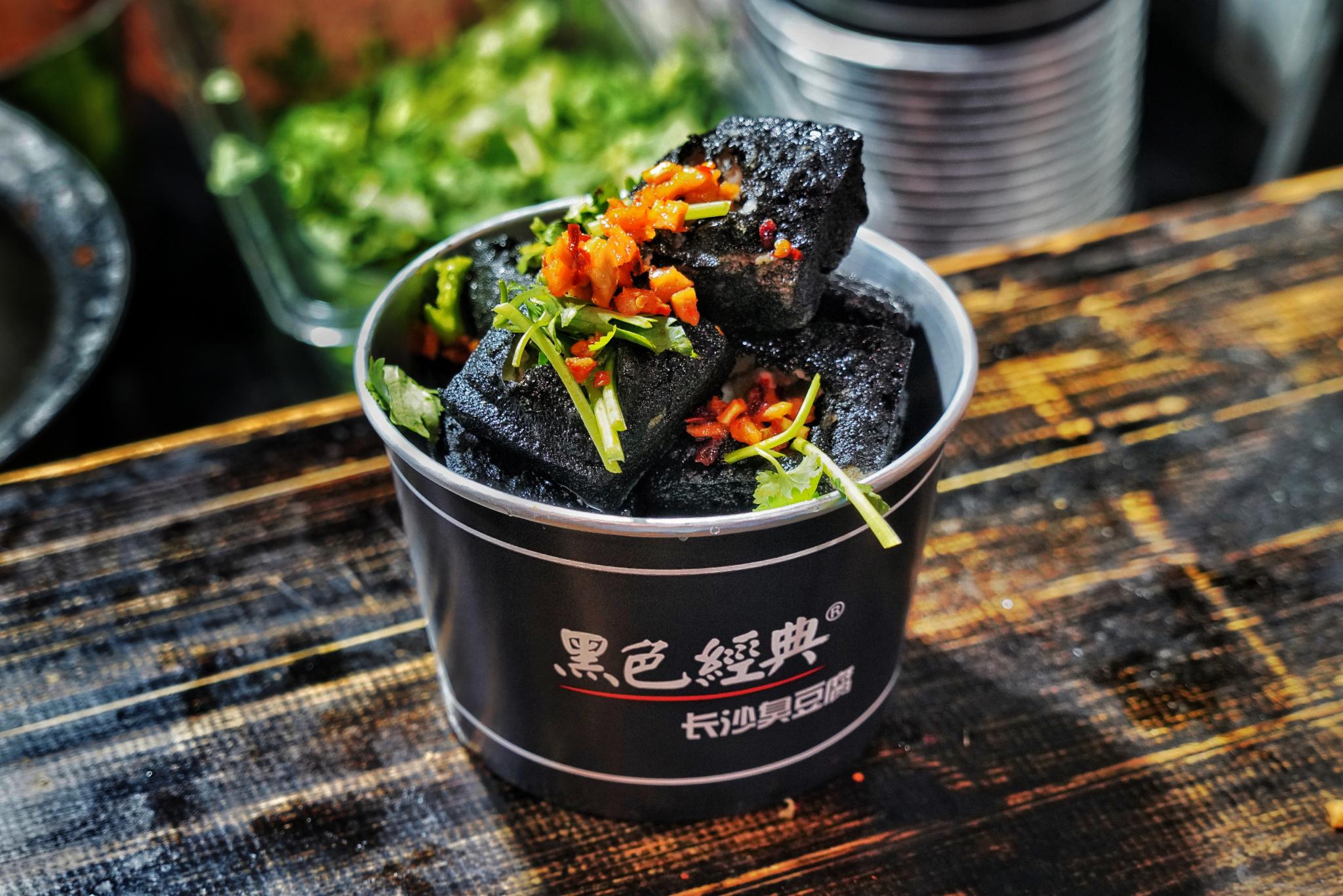
娭毑 (āi jiě) is the old Changsha word for grandmother, and the shop is named after the one who started it. Wu Aijie — Granny Wu. She is old now, and proud, and she does not stand over the wok every night the way she used to. Her son and daughter-in-law work the oil now, which is how it should be: a recipe this old deserves to be handed down like a key. But if you come on a good night, when the queue is short and the mood is kind, you may still see the old lady herself, bent over her small enamel cup, brushing sauce onto a cube the way a calligrapher finishes a character.
The shop has no ambitions. It does not want to be a chain. It does not want your photograph to make it famous — it is already famous, in the only way that counts, which is that the taxi drivers know it and the food critics argue about it and the grandmothers of Changsha approve of it. It is a street stall that grew walls, that has simply outlasted everything, including the city’s patience for shortcuts.
One Dish, Done Once
There is only one dish. That is the first rule of the place, and the second rule, and the third. A plate of stinky tofu — eight black cubes for ten yuan, give or take the mood of the evening — and nothing else to distract you. No cold noodles. No soup. No menu. The shop makes its one thing, over and over, until the wok remembers the recipe by muscle.
The tofu is black. This surprises people from the east of the country, where stinky tofu comes to the fryer a grey-white and leaves it a polite gold. Not here. The Changsha cube is fermented in a vegetable brine of winter bamboo shoots and mushrooms and other things the family will not name completely, and it comes out the colour of wet ink. It is humble. It is almost ugly. It is exactly right.
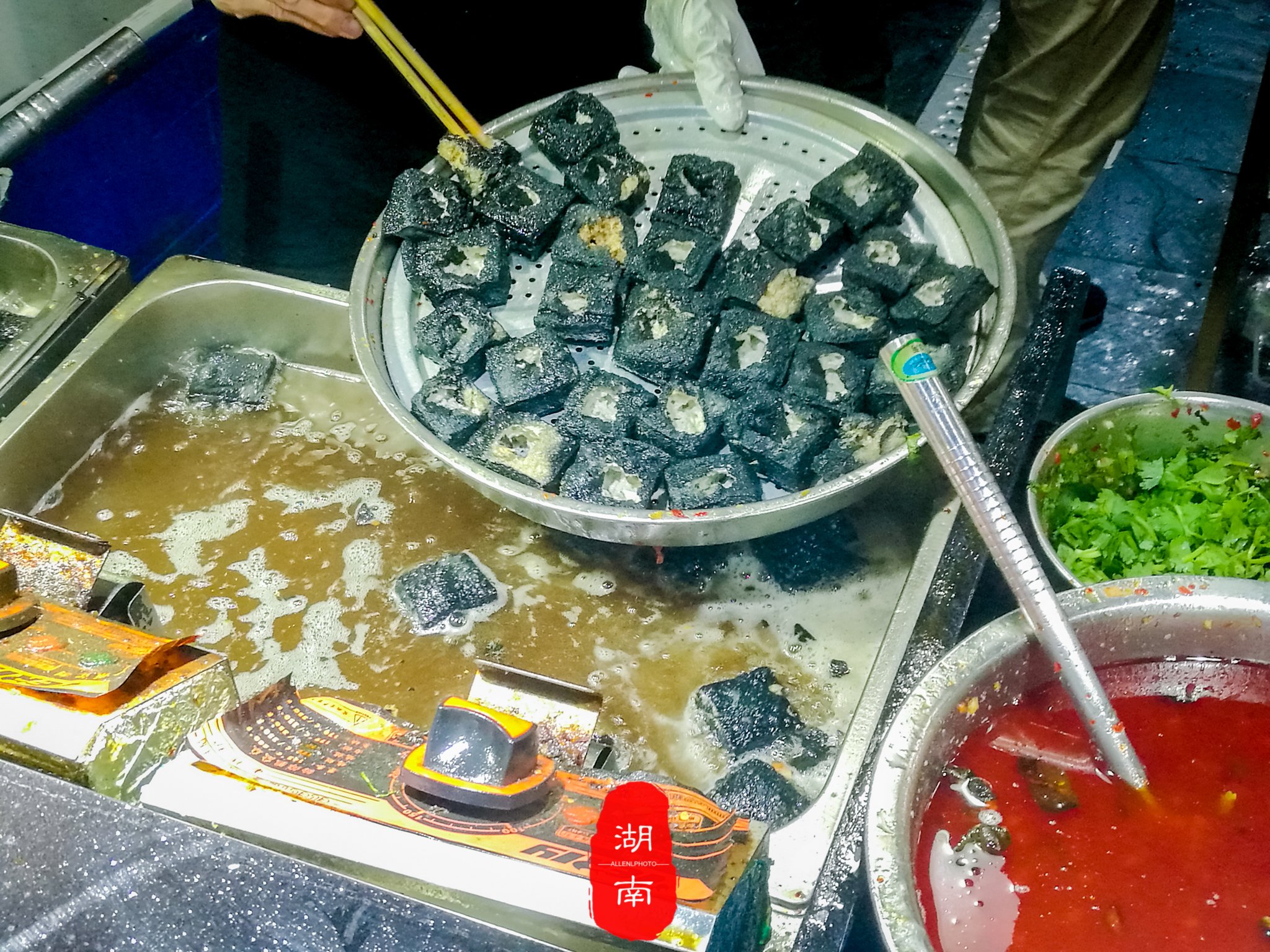
When it hits the dark oil the surface tightens. You watch it, because it is quick — the best cubes spend only a minute and a half in the wok, long enough to crisp the shell, never long enough to steal the softness from the middle. The people of Changsha have a phrase for it: 外焦里嫩 (wai jiao li nen), crisp outside, tender within. Eight Chinese characters for a contradiction that only a grandmother could have learned to manage.
The Seasoning That Nobody Changed
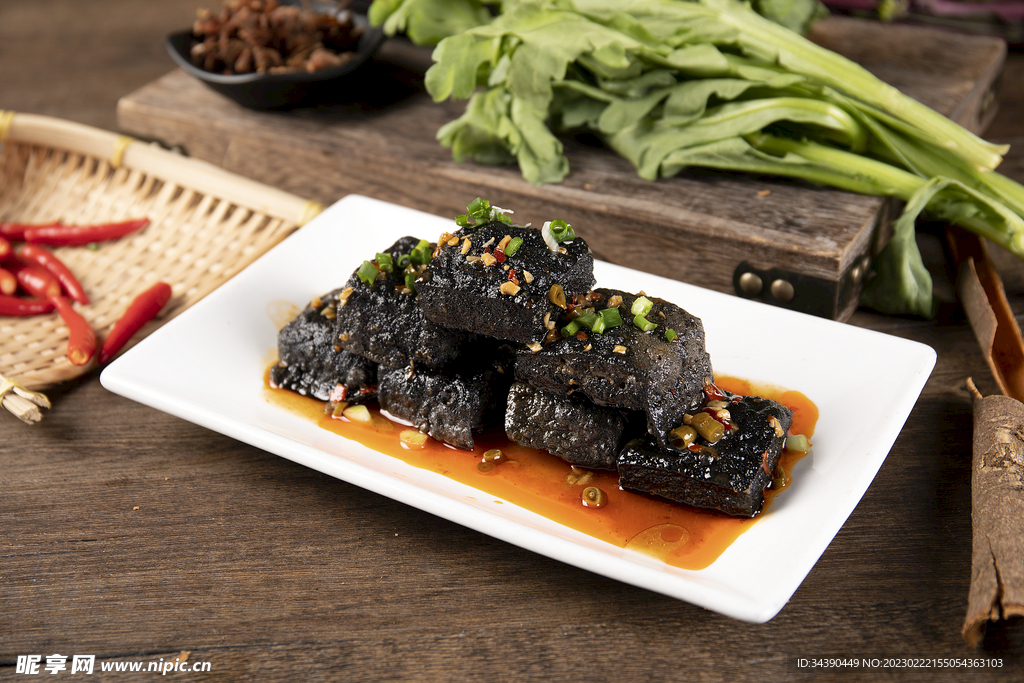
This is the part the new shops got wrong, and it is why we argue with anyone who serves stinky tofu with pickled cabbage and coriander and a dozen toppings. Granny Wu finishes her tofu the way it has always been finished: stabbed to release the steam, then drowned in a small dark dressing of chili, soy sauce, and sesame oil. That is all. Three ingredients. No garlic confetti, no herb scatter, no theatre.
You bite, and the first thing you meet is the crack — a sharp, dry snap that gives way to something white and molten and almost impossibly soft, tasting of the brine it was born in and of the fire that finished it. The chili does not announce itself; it arrives after the bite, as a slow, honest warmth. The vinegar in the soy dressing cuts the richness. The sesame oil closes it, round and calm, like the end of a sentence.
A local eats it differently from a tourist. We do not photograph it first. We do not ask what is in it — we already know. We take the first cube whole, without blinking, and only then, with the steam still in our mouths, do we admit that it is good. Because that is the Changsha way: suspicion first, loyalty forever.
Beware the Impostors
I have to tell you this, because it is our small civic duty. There are imitations now. Walk ten metres and you will find a brighter, cleaner shop with a similar name and a younger, politer version of the same sign — a copycat set up to catch the people who come looking for the original. The locals call it “Wu Minus One.” We do not go there. We do not even wave at it. And if you want the real thing, so should you.
The real one has a sign so old and small it reads like a secret, and a shopfront so plain it looks unfinished. It is the place where the queue forms itself, where the smoke rises straight, where the old lady’s family works without looking up. When you find it, you will know — not because of the name, but because of the line.
flowcloud once wrote that stinky tofu is the most philosophical food in Hunan, because it never pretends. That is true of the dish in general. It is true of this shop in particular. Forty-seven years of one grandmother, one corner of the city, one plate — an act of patience that the city has quietly rewarded with loyalty. Come hungry. Come early. And eat the first cube without hesitation. The grandmothers of Changsha will be watching.
Where to find it: At 南门口 (Nanmenkou), a few hundred metres from the walking street — a small shop across from where the original stall once stood. Look for the queue, not the sign.