
武冈卤菜 Wǔgāng lǔ cài is the braised food of 武冈市 Wǔgāng shì, a county-level city in the east of 邵阳市 Shàoyáng shì, and the town carries two of the very few geographical-indication marks ever awarded for a 卤 — one for 武冈卤豆腐, its braised bean curd, and one for 武冈卤铜鹅, its braised copper goose. 武冈 calls itself 中国卤菜之都, the braise capital of China, and the claim is not thin: the bean-curd trade alone is worth more than six billion yuan a year and the county is on the national list of the fifty biggest bean-products counties. What makes the food particular is the 卤水 lǔ shuǐ, the master broth, and the patience with which the town treats it.
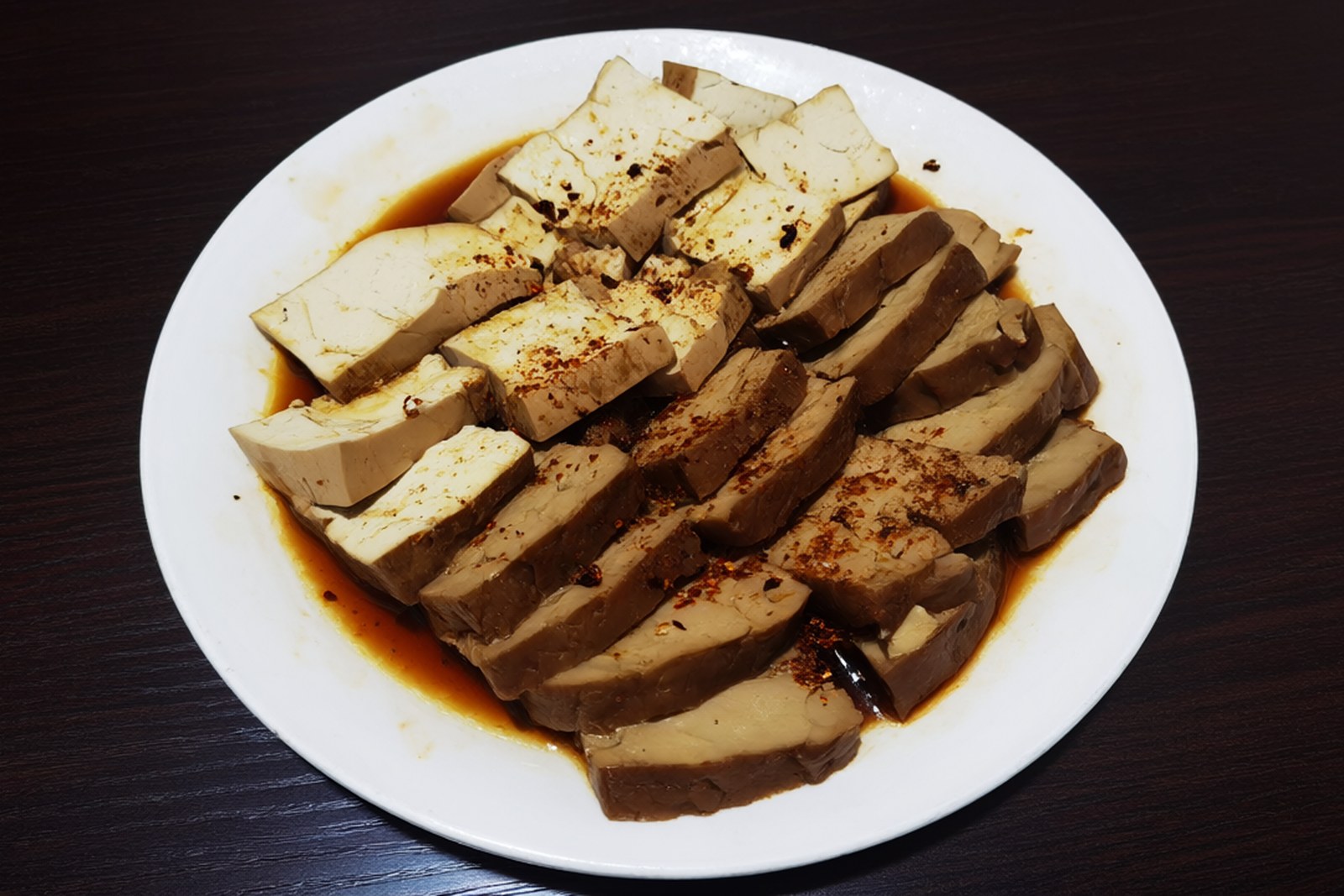
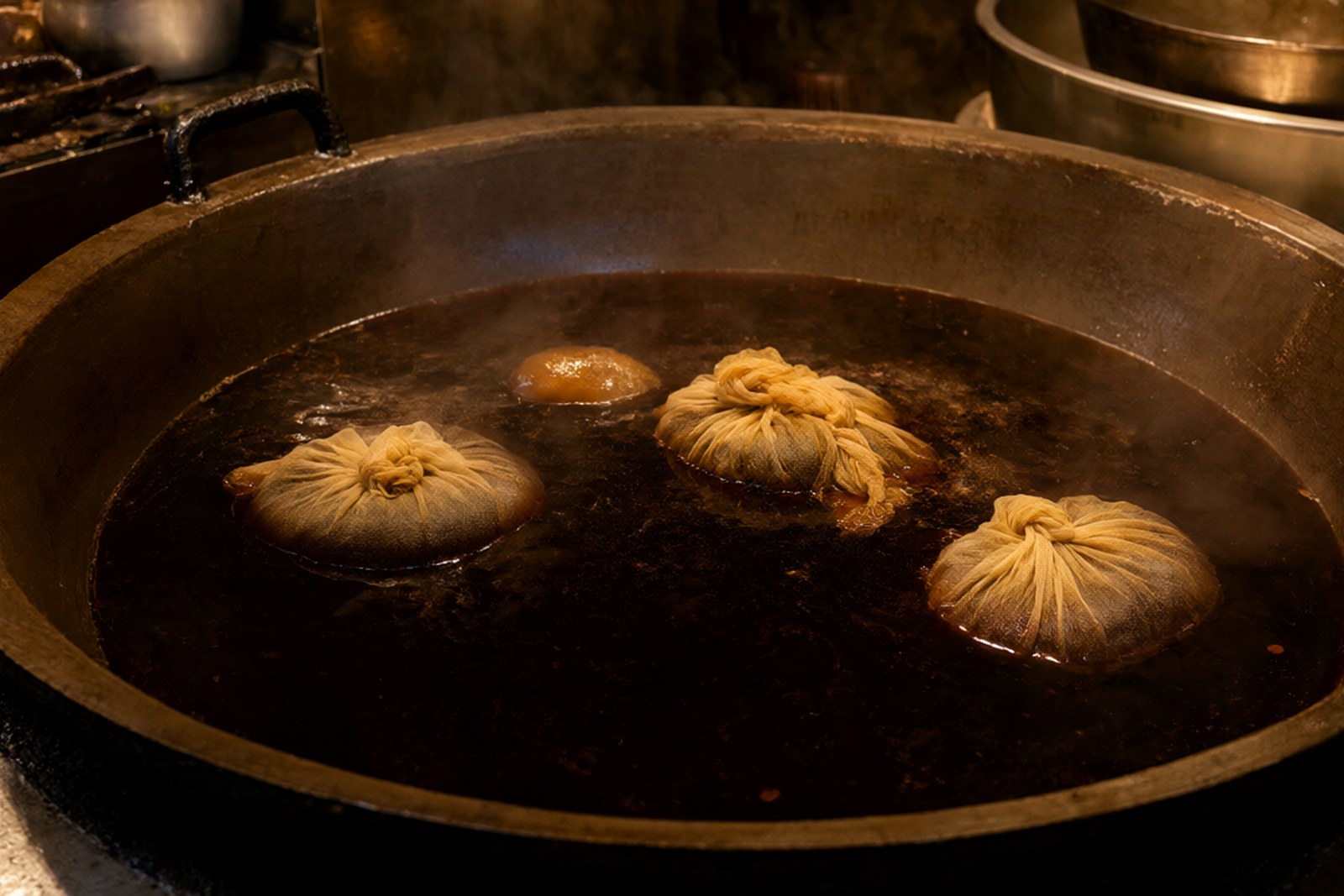
A 卤水 is not a marinade; it is a living thing, and in 武冈 a good one is measured in years. The base is a stock of pork bone and chicken, and into it go the aromatics that make a Hunan 卤 rather than a Sichuan one: star anise, cassia bark, Sichuan pepper, 草果 cǎo guǒ, clove, dried tangerine peel, liquorice, 沙姜 shā jiāng, 白芷 bái zhǐ, and a dozen more, some of them from the Chinese pharmacy rather than the kitchen. The whole thing is boiled, skimmed, strained and stored, and every time it is used it is topped up with fresh stock and fresh spices; a family 卤水 that has been fed for thirty years tastes of thirty years, and shop 卤水 in 武冈 are guarded the way a sourdough starter is guarded elsewhere.
The two great subjects of the broth are bean curd and goose, and both are local trades in their own right. 法新豆腐 Fǎxīn dòu fu, the tofu of 法新, a village in the county, is pressed firm enough to survive a long braise without collapsing, and the county’s bean-products industry is large enough that it has been through a public fight over the use of aluminium additives, which the market regulator says has been won: the number of non-compliant batches in national inspection fell from twenty in 2022 to none in 2025, and 武冈豆制品不含铝, Wugang bean products carry no aluminium, is now the industry’s own headline. 武冈铜鹅 Wǔgāng tóng é, the copper goose, is the other: a long-necked local breed with plumage the colour of bronze, one of the recognised geese of Hunan, and worth braising because it has enough fat and enough muscle to take it.
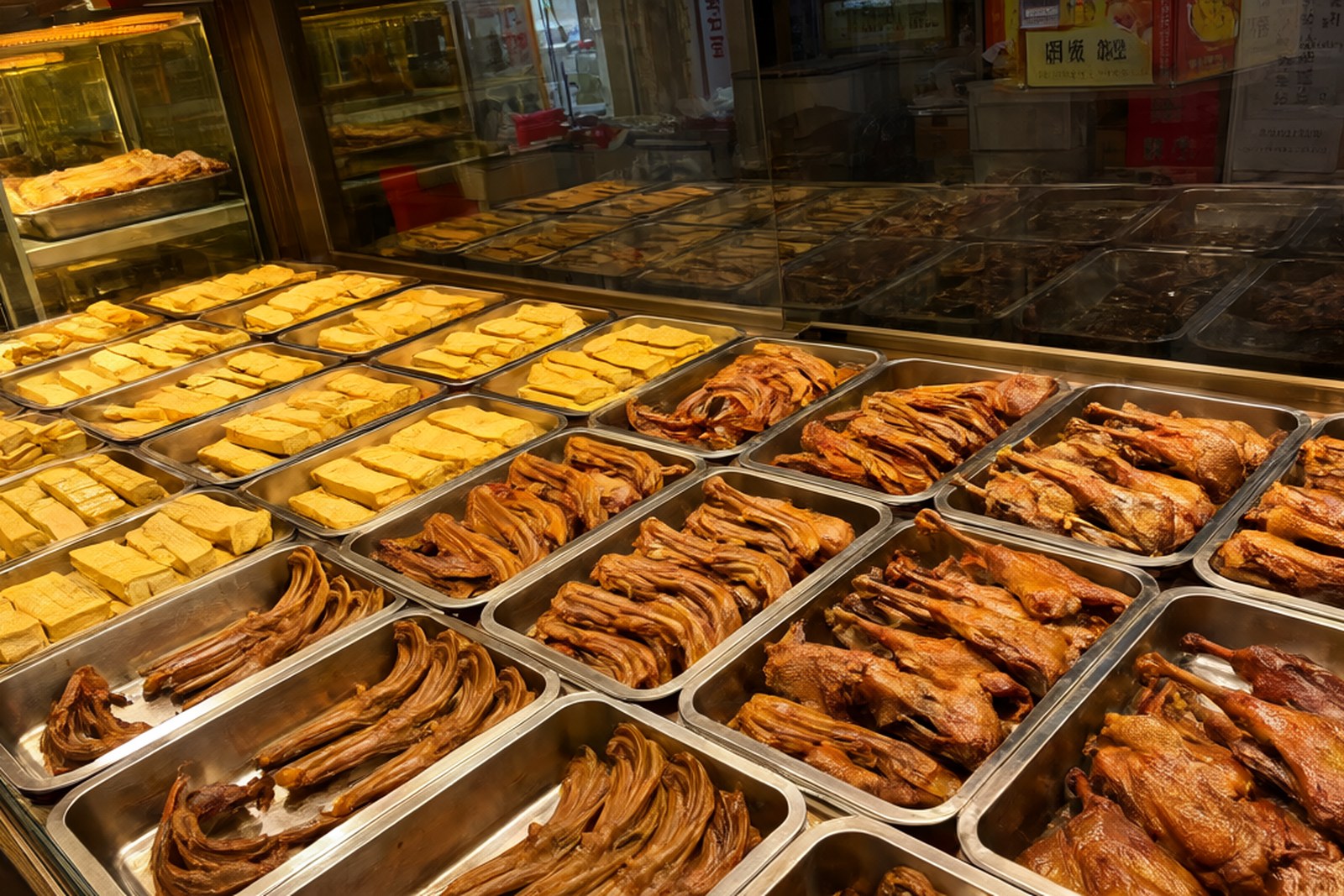
Eating it is a matter of ordering by the tray. 卤豆腐 lǔ dòu fu comes in thick slabs and in thin dried sheets, and the thin ones are the better buy because they take more of the 卤; 卤铜鹅 is sold by weight, cut off the bone in long pieces, and eaten with the fingers; and a shop worth its salt will also have 卤鸭掌, 卤蛋, 卤豆干 and 卤猪蹄. The finished thing is dark, glossy, faintly sweet at the front and hot at the back, and it is meant to be eaten cold or at room temperature rather than hot out of the pot. Buy it by weight, wrapped in paper, and carry it away with you: 武冈 卤菜 travels well, which is why the town sells so much of it vacuum-packed to the rest of the country.
Words and Names
武冈卤菜 Wǔgāng lǔ cài is the braised food of 武冈, 卤 lǔ meaning to braise in a spiced broth and 菜 cài the dish. 卤水 lǔ shuǐ is the master broth itself; 卤豆腐 lǔ dòu fu is the braised bean curd and 卤铜鹅 lǔ tóng é the braised copper goose, with 豆干 dòu gān the firmer dried bean curd and 鸭掌 yā zhǎng duck feet. 八角 bā jiǎo is star anise, 桂皮 guì pí cassia, 草果 cǎo guǒ the round cardamom and 沙姜 shā jiāng sand ginger. 法新 Fǎxīn is the tofu village and 铜鹅 tóng é the bronze-feathered goose of the county.
What the Locals Know
Buy 卤菜 by weight from a shop with trays rather than by the pack from a supermarket, and ask for a little of the 卤汁 lǔ zhī, the braising sauce, in a separate bag to pour over it at home. Look for 卤豆干 that is thin and dark rather than thick and pale, because the colour is the measure of how long it sat in the broth. Eat it at room temperature: heating 卤菜 hard drives off the aromatics that the long braise put in. If you are buying to take away, ask for it vacuum-packed, which is how the town sends it abroad, and note that 卤铜鹅 is the piece worth paying for and 卤豆腐 the one worth buying by the bagful.
flowcloud would say that a town which built an industry worth billions on the humblest protein there is, and then kept its reputation in a pot of broth that is fed and never thrown away, has understood that the flavour of a place is not in its recipe but in its continuity.
Where to find it: the 卤味 shops and market stalls of 武冈市, with the densest run along 都梁路 and 西直街, and vacuum-packed 卤菜 for sale at the shops and at the county’s bean-products factories. 卤豆腐 and 卤豆干 are ¥10 to ¥25 a jin, 卤铜鹅 ¥40 to ¥80 a jin, and a mixed bag to take away ¥20 to ¥60. 武冈市 is about an hour and a half by road from 邵阳市, with the 怀邵衡 line at 隆回站 and 洞口站 the nearest rail.