
乌坡京果 Wūpō jīngguǒ is a fried sweet the size of a thumb, and it is the one food in 屯昌县 Túnchāng xiàn that people measure their New Year by. The county is inland, in the north-central part of Hainan Island, and 屯昌 is one of the few Hainanese counties with no coastline, so its festive larder is built out of rice, sugar and oil from the hillsides rather than out of anything landed at a quay. The sweet comes from 乌坡镇 Wūpō zhèn in the county’s south-west, where it is made in workshops and sold out of tea shops, and it belongs to the same family of things as a doughnut only in that both are fried dough rolled in sugar. It is cylindrical, plump as a well-filled peanut, coated in a white sugar shell, honeycombed inside, and it is eaten with hot tea rather than as a dessert.
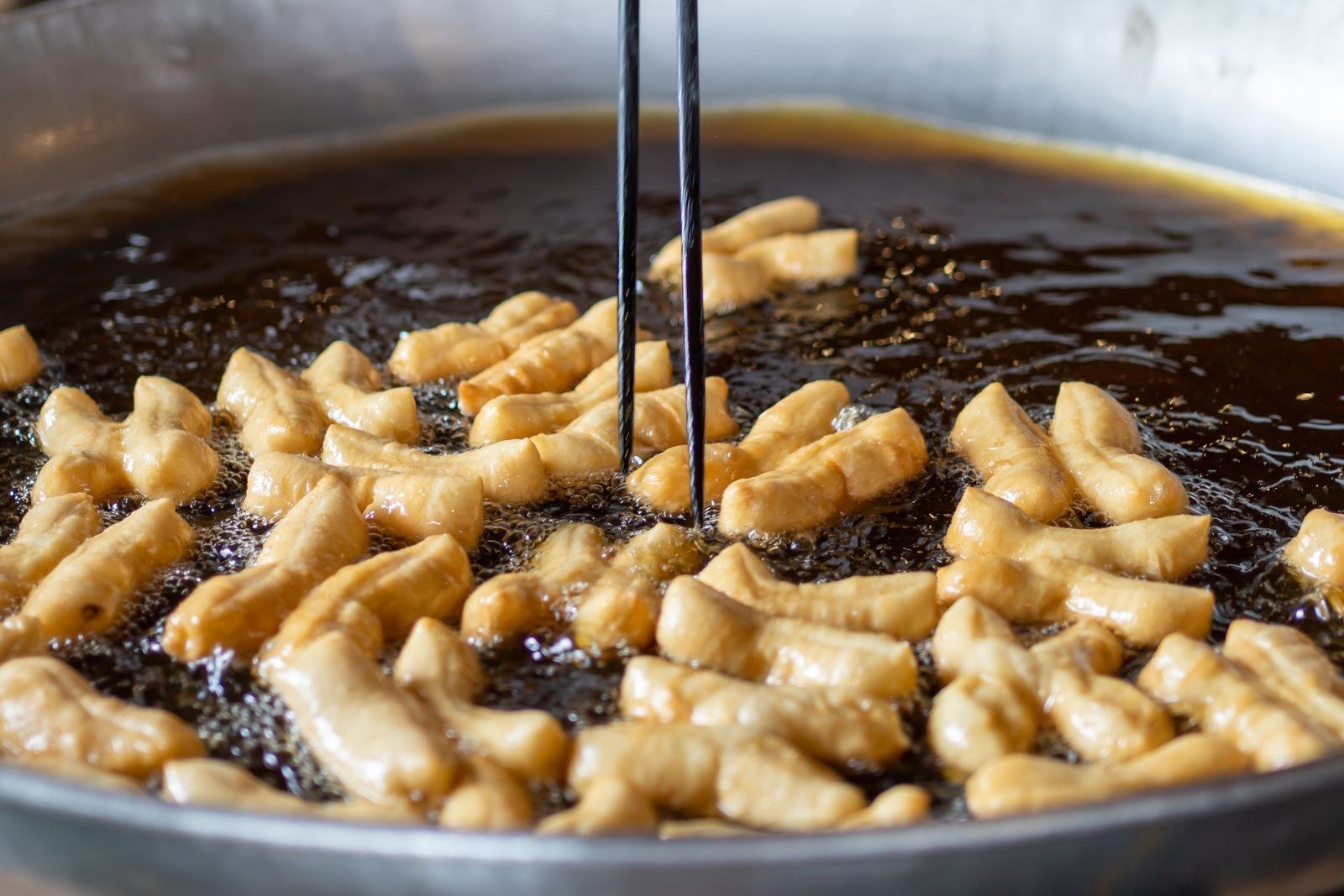
Two descriptions of the ingredients are in circulation and they are not the same recipe. One says the base is Wupo local rice with white sugar, honey and sesame oil; the other, which is the one the provincial tourism and Wenchang sources give, says glutinous rice flour with wheat flour and sugar. Both agree on the shape of the operation: the grain is ground and fermented, then mixed with sugar, oil, water and flour into a dough, which is rolled out and cut into strips about the length of a thumb, dropped into hot oil and turned for around ten minutes until they are golden and crisp – cooks break one open to see whether the middle is done – and then drained. Some are finished in a sugar syrup, which sets into the thin white coat the sweet is known for, and others are sold plain. The county recognises two flavours, sweet and unsweetened, the difference between them being mostly the amount of sugar, and the sweet ones outsell the plain.
Production is seasonal and almost entirely by hand. Workshops begin making jingguo in quantity every October and work through to the Spring Festival, and the picture the newspapers paint is of a couple dividing the labour at one table, one rolling and cutting the dough while the other works the ladle in the oil. The longest-running address in 乌坡镇 is 许家丰茶店 Xǔjiāfēng chádiàn on 新华街, which has been making the sweet for more than thirty years, and a local family named 吕史 Lǚ Shǐ has been making it for fifty, having taken the technique over from the parents and gone elsewhere to learn more of it; both are named in the provincial and national reporting as the town’s living examples of the craft. 乌坡花生饼, the peanut cake made by a third family in the same town for thirty-odd years, is usually sold beside it. In 2023 the county put 乌坡京果 on its list of ten famous snacks.
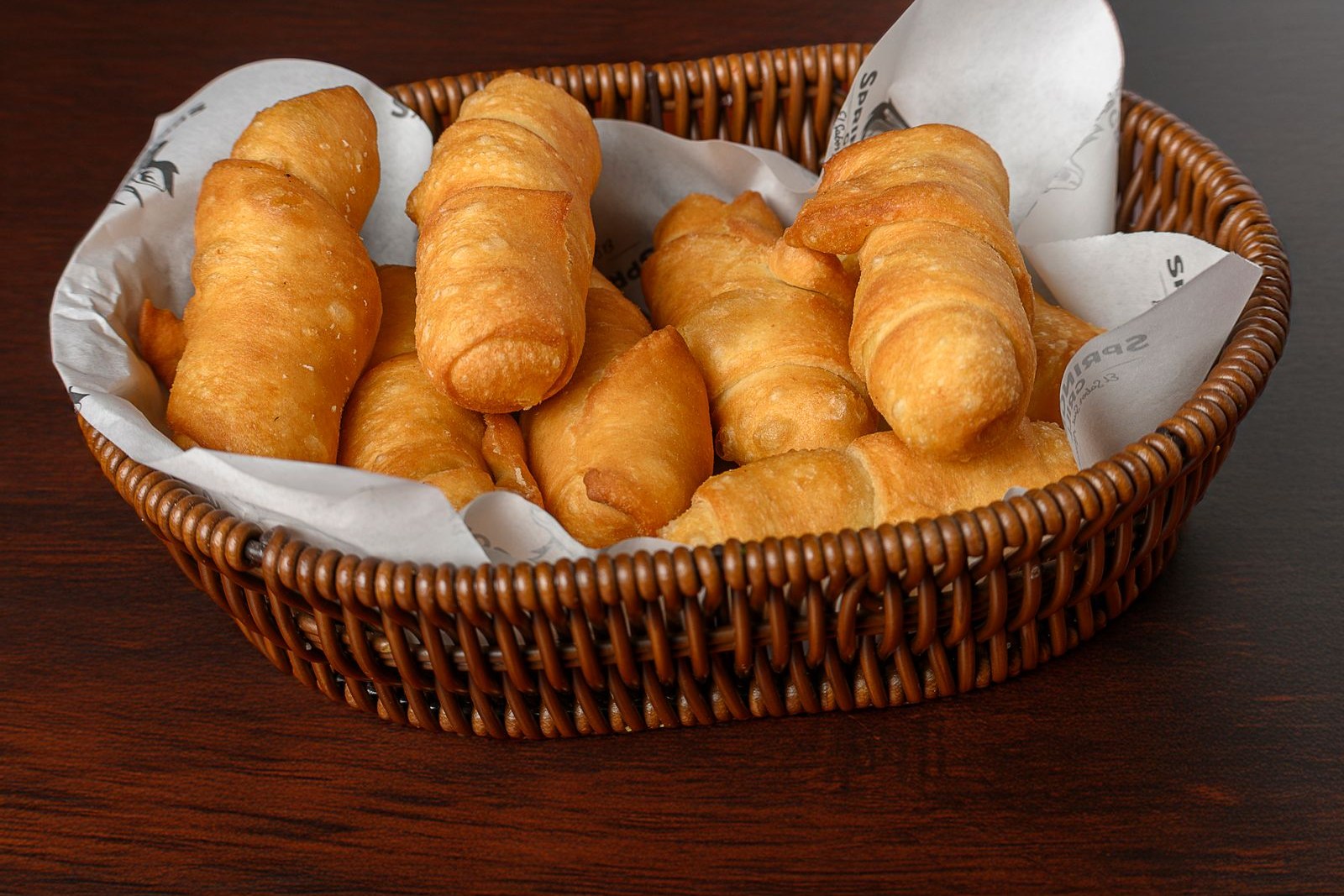
What the sweet is actually for is tea. 京果 is a New Year provision first and a snack second, kept in a tin or a paper bag through the holiday and put out on a plate whenever the kettle goes on, and the standard local line about it is 喝上一口热茶,就一口酥香酥脆的京果,年味也越来越浓了, one sip of hot tea and one bite of crisp jingguo, and the taste of the New Year grows stronger. It belongs with 老爸茶 lǎobà chá, the Hainanese teahouse where a plate of white sweets and a pot of tea is a whole afternoon, and it is also, increasingly, a gift: the town government has put it into a presentation box with the county’s other Wupo products. On that shelf it sits beside 乌坡花生 and 乌坡益智, which the county calls 乌坡三宝 Wūpō sān bǎo, Wupo’s three treasures.
The origin of the name is a story rather than a record. The version told in the local press is that in the Qing dynasty fruit products that had to be sent to the imperial clan were called 京果, capital fruit, and that the term later drifted onto these glutinous fried sweets instead; no Qing tribute inventory or other primary document has been produced to support it, so it is best told as 据说, they say, and not as history. What the record does support is much more recent and much more specific: a shop that has been frying these sweets in the same town for three decades, a family that has been frying them for five, and a county competition that put them on a list in 2023. Nobody has published the year the sweet was invented or the name of the first person to make it in 乌坡, and it is better to say so than to guess.
Words and Names
京果 jīngguǒ means literally capital fruit, and in Hainan it names this fried sweet rather than a fruit; the shape is what people describe by, 形似花生 xíng sì huāshēng, shaped like a peanut. 老爸茶 lǎobà chá, literally old-dad tea, is the Hainanese teahouse where it is eaten; 糯米粉 is glutinous rice flour and 糖霜 tángshuāng is the sugar frost on the finished sweet. 发酵 fājiào is the fermentation of the ground grain, which is what gives the honeycomb inside, and 漏勺 lòusháo is the slotted ladle the fryer turns them with. 乌坡三宝 Wūpō sān bǎo, Wupo’s three treasures, are 乌坡京果, 乌坡花生 and 乌坡益智; 屯长香 Túnchāng xiāng is the county’s public agricultural brand; and 屯昌十大小吃, the county’s ten named snacks of 2023, is the list this sweet entered.
What the Locals Know
The workshop and the teahouse are the two places to see it and they are usually a few doors apart. At 许家丰茶店 in 乌坡镇 the frying starts when the oil is hot and the dough is ready, and the sweet goes from the draining basket to the plate without a middleman. 吕史 Lǚ Shǐ, whose family has been at it for fifty years, describes taking the technique from his parents and then going out to learn more of it before bringing it home. The scale of the demand is what surprises visitors: in the fortnight before the Spring Festival people come to Wupo from 海口 Hǎikǒu, from 屯昌 itself and from 南吕 and 枫木 to buy it, and much of it is ordered by telephone first. The town’s publicity officer, 张丽 Zhāng Lì, told a reporter that the county’s residents ring up every year to reserve their jingguo, and one customer, 符永积 Fú Yǒngjī, gave the sweet its best review in a single line: 酥脆,吃起来不腻, crisp, and not greasy to eat.
The numbers are small and specific and worth having. Sweet and plain both sell at about 12 yuan a jin, and a version put together with homemade red-date, peanut, sesame and coconut sweets goes for 15. Production begins in volume each October, a single household can turn out around a hundred jin in a day, and in the run-up to the festival the busiest shops move roughly 200 jin a day, with the day before New Year’s Eve reported at 500. That is a workshop economy rather than a factory one, and it is why the sweet tastes of the season rather than of the year: it is made when the weather is cool enough to keep the dough and to keep the oil behaving, and sold within weeks of being made. If you want it at its best, buy it in December or January, buy it in Wupo rather than in a city shop, and buy it loose rather than boxed.
Eating it is a small ritual with rules that the county’s own writing has bothered to record. Children given a sweet work at it in a particular order, licking the sugar coat off first and then eating the crisp, chewy middle, and the provincial government’s account of the snack chooses that detail above all others. Adults put a piece beside a cup of hot tea and let the tea cut the sweetness; the sweet is not a dessert course so much as a companion to conversation, and the 老爸茶 shops of the county are where the habit is easiest to join. It keeps well enough to travel, which is why the town has turned it into a gift box, and it is the sort of thing a visitor ends up carrying home in a paper bag that smells faintly of oil and sugar. The one thing not to do is treat it as a curiosity. In 屯昌 it is a fixture of every January, and the county’s own summary of it is that a New Year without jingguo is not quite a New Year.
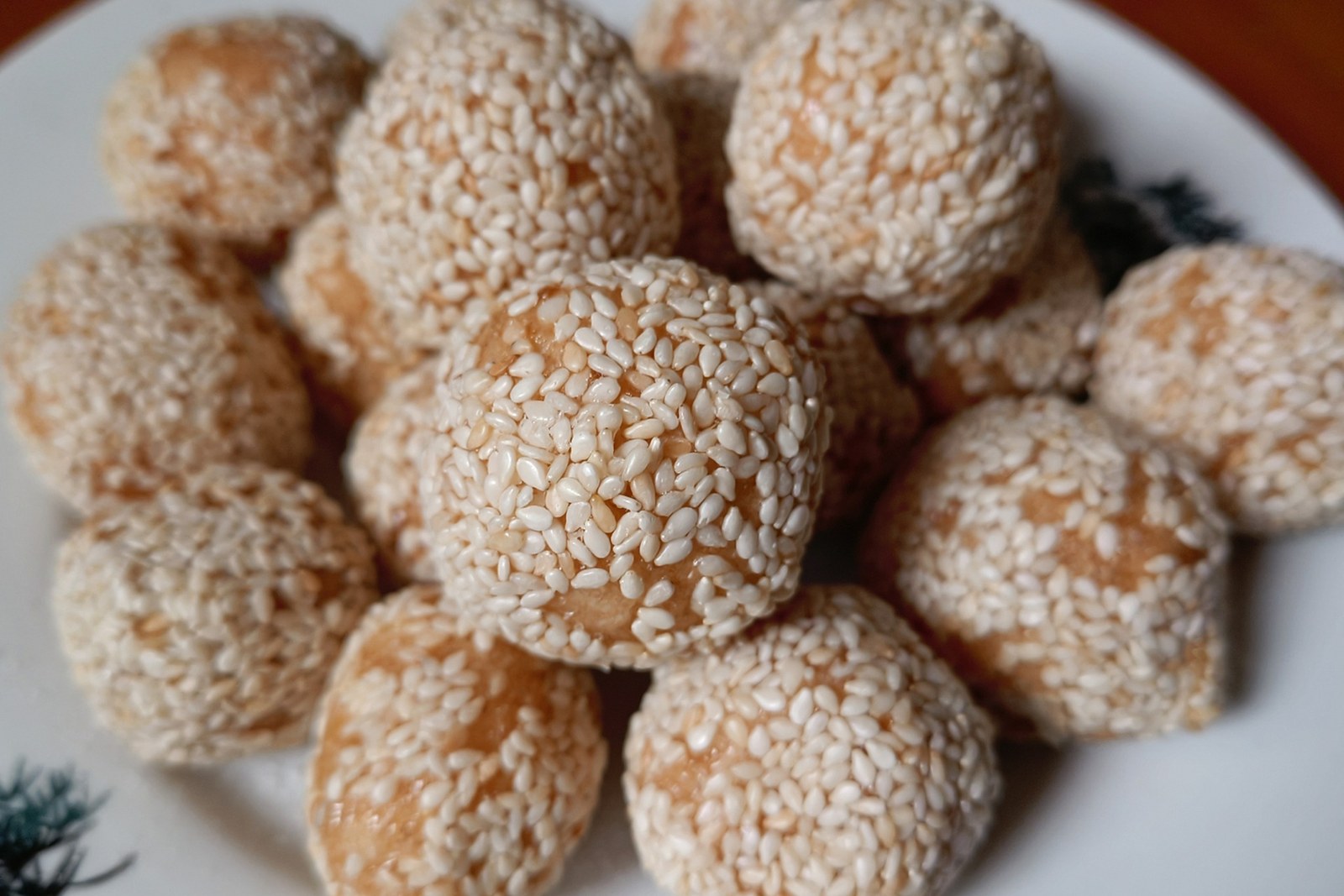
flowcloud would say that 乌坡京果 is the most honest kind of local food there is – a thumb of fermented rice, fried and frosted with sugar, made by two families in one inland town for fifty years, sold by the jin to people who telephone ahead in December, and eaten only ever with a cup of hot tea.
Where to find it: 许家丰茶店 Xǔjiāfēng chádiàn in 乌坡镇 Wūpō zhèn, on 新华街, the town’s longest-running maker, and the other workshops and tea shops along the same street; the 老爸茶 houses of 乌坡镇 and 屯城镇 Túnchéng zhèn, where it is served by the plate with tea all year round; the town’s gift-box counters, where it is packed with 乌坡花生 and 乌坡益智 as part of 乌坡三宝; and the markets of the county in December and January, when the orders from 海口, 南吕 and 枫木 take the daily turnover to its peak. 乌坡镇 lies in the south-west of 屯昌县, a long hour by road from the county town, and production runs from October to the Spring Festival rather than all year, so a visit in summer will find the woks cold. Buy it loose, keep it in a tin, and eat it with hot tea.