
Gāoshān xiǎo yángyù, yī guō yī kàng; làjiāo yī sǎ, wǔ yuán yī fèn. — Small highland potatoes, one pot one pit; a sprinkle of chilli, five yuan a serving.
Pit-cooked potatoes (炕洋芋, Kāng Yángyù) are the county’s street snack: small highland potatoes cooked dry in a shallow pan or pit — 炕, the dry-heat method that makes them without water — until the skins wrinkle and the insides meal, then served with a heavy sprinkle of chilli face (辣椒面) and salt. At about 5 yuan a serving, it is the cheapest hot thing on the street and the county’s answer to hunger between meals.
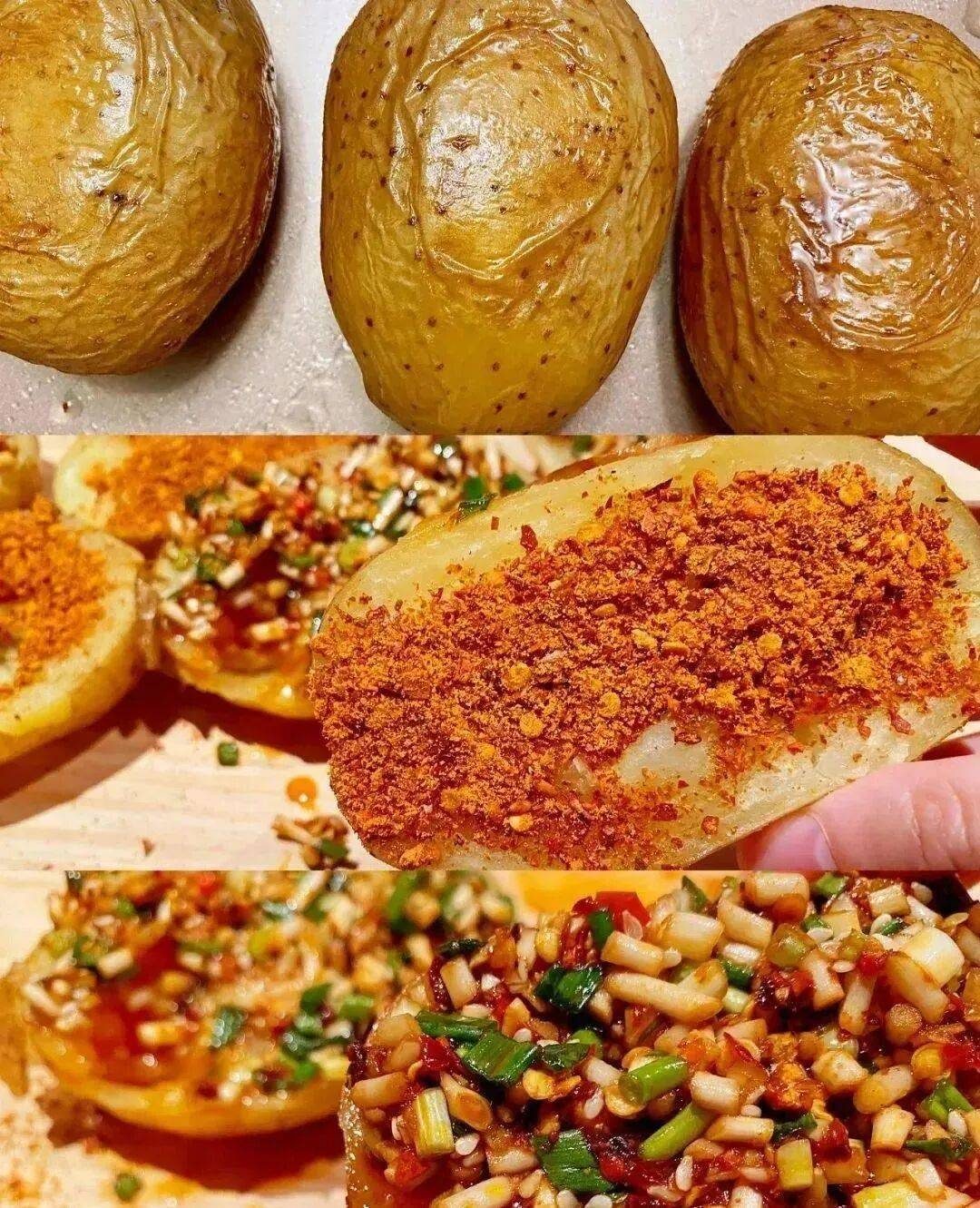
The gorge country’s potatoes are small, dense and waxy — grown cold on the mountain slopes, they concentrate rather than bulk out, and the dry 炕 method suits them exactly: no water to dilute, the skins take the heat and the texture turns floury. The chilli does the seasoning that the potato’s own mildness demands, and the skewer is the utensil. It is the same crop the county’s kitchens use for its potato pancakes, but the street version is the plainest possible expression of it.
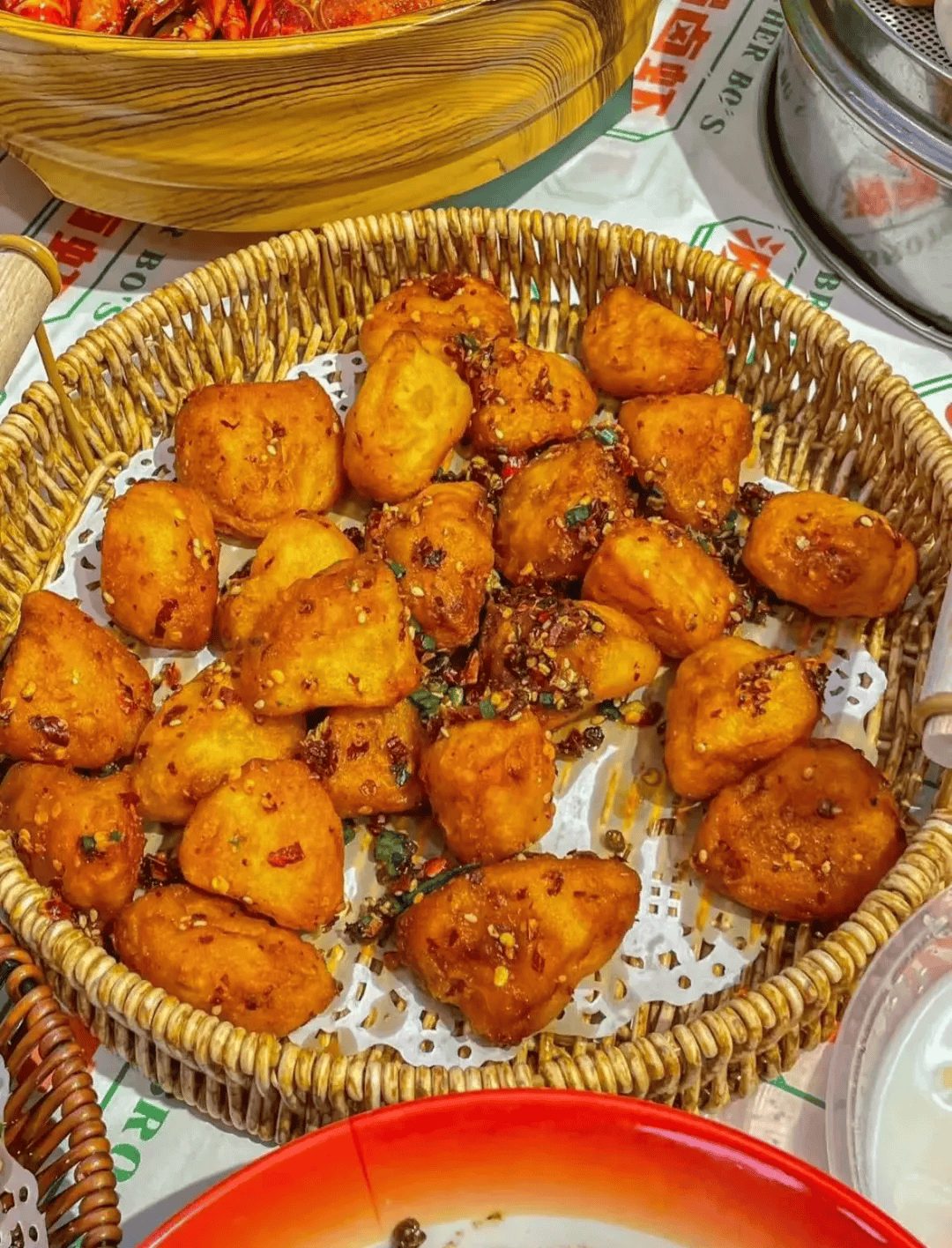
The best version is the street version: a pan at the stall’s front, potatoes turned as they wrinkle, sold by the cup or the skewer with the chilli already on. Locals eat them standing, as the between-meals snack they are, and the correct accompaniment is nothing — the chilli and the salt are the whole seasoning.
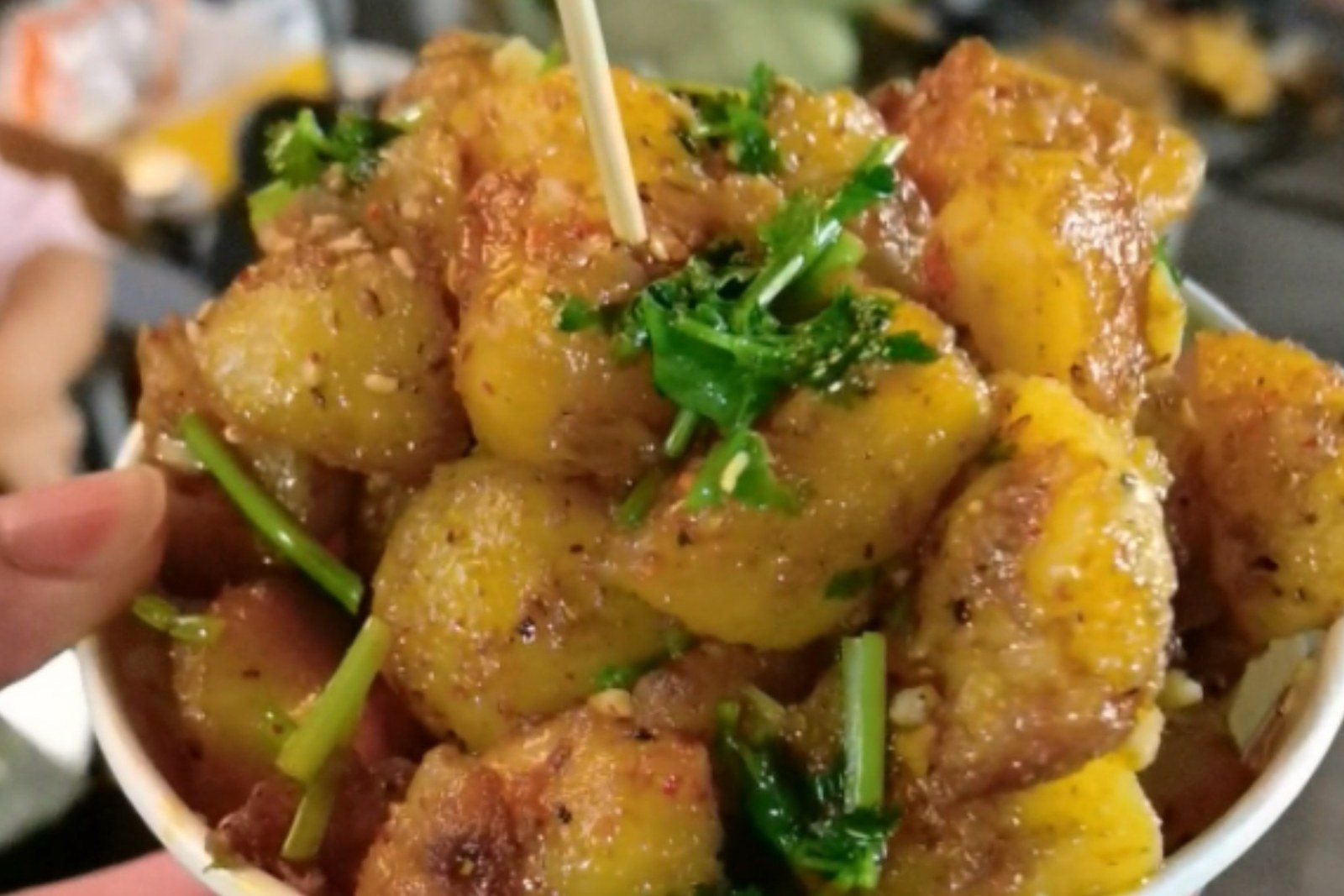
flowcloud would say that the county’s fish is famous and its potato is daily — and that five yuan buys the version the county actually eats.
Where to find it: the Shengnü Avenue snack street’s stalls — a pan at the stall’s front, sold by the cup or the skewer with the chilli already on, the crisped layer at the bottom of the pan being the point. All checked October 2026.
Words and Names
炕洋芋 kāng yángyù — pit-cooked potatoes · 炕 kàng — the dry-heat cooking method · 辣椒面 làjiāo miàn — chilli face, the dry chilli powder that seasons it · 高山 gāoshān — highland, the potato’s address · 洋芋 yángyù — potato, the southwestern word