
Làtí yī guō, yángyù yī dǎo; dōngtiān yī wǎn, nuǎn dào xīntóu. — One pot of cured knuckles, one pour of potatoes; one bowl in winter, warm straight to the heart.
The cured knuckle stew with potatoes (腊猪蹄炖洋芋, Làzhūtí Dùn Yángyù) is the county’s winter dish: cured pork knuckles from the mountain smokehouses, stewed slowly with the highland potatoes the county grows in quantity, until the knuckles give and the potatoes take the broth. It is the household register of Wuxi cooking — the smokehouse’s output meeting the field’s output in one pot — and the dish that appears at the county’s tables from the first cold snap onward.
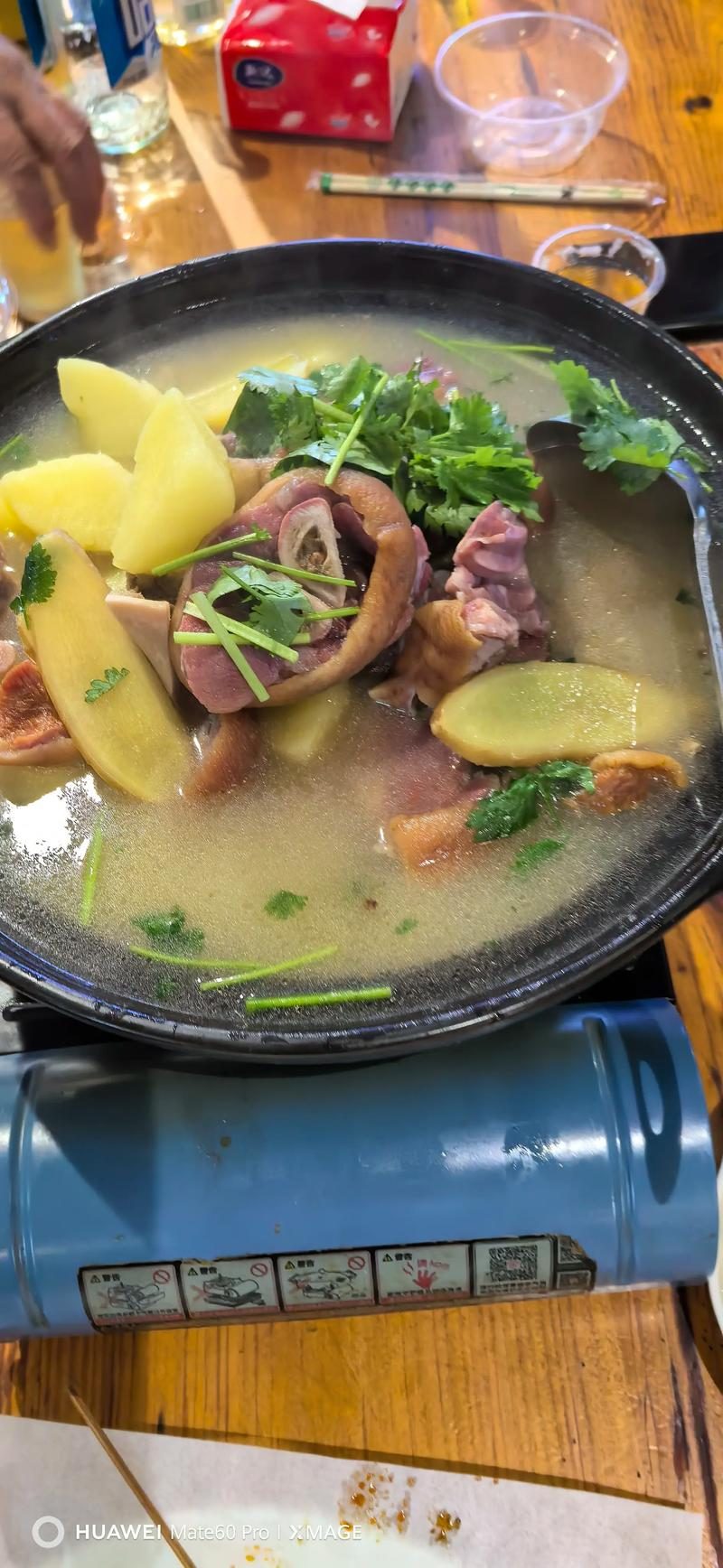
The cured knuckle brings smoke, salt and collagen; the potato brings starch and mildness. Stewed together, the potatoes do double duty — they thicken the broth slightly and absorb the smoke, while the knuckle’s fat finds its counterweight in the potato’s density. The highland potatoes of the Daba slopes are small and waxy, which is exactly the type that holds its shape through a long stew rather than dissolving.
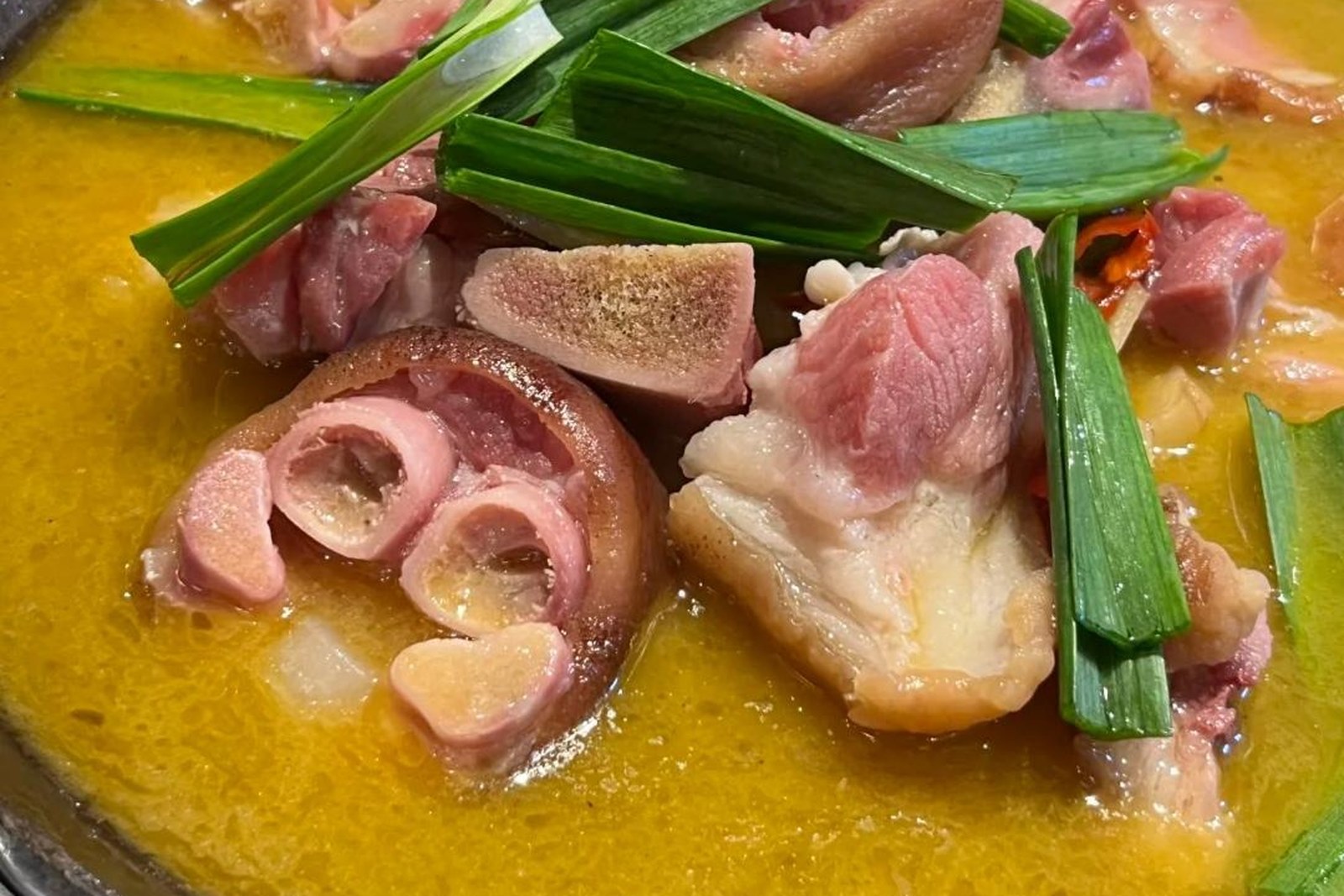
The pot is a long cook — order it with lead time at the smaller kitchens, and expect an hour. The correct table order is the pot first and the rest of the meal around it, since the broth improves as it runs. In the county’s farmhouses the stew is the winter lunch, made in quantity and reheated, and the second-day pot is the one locals rate.
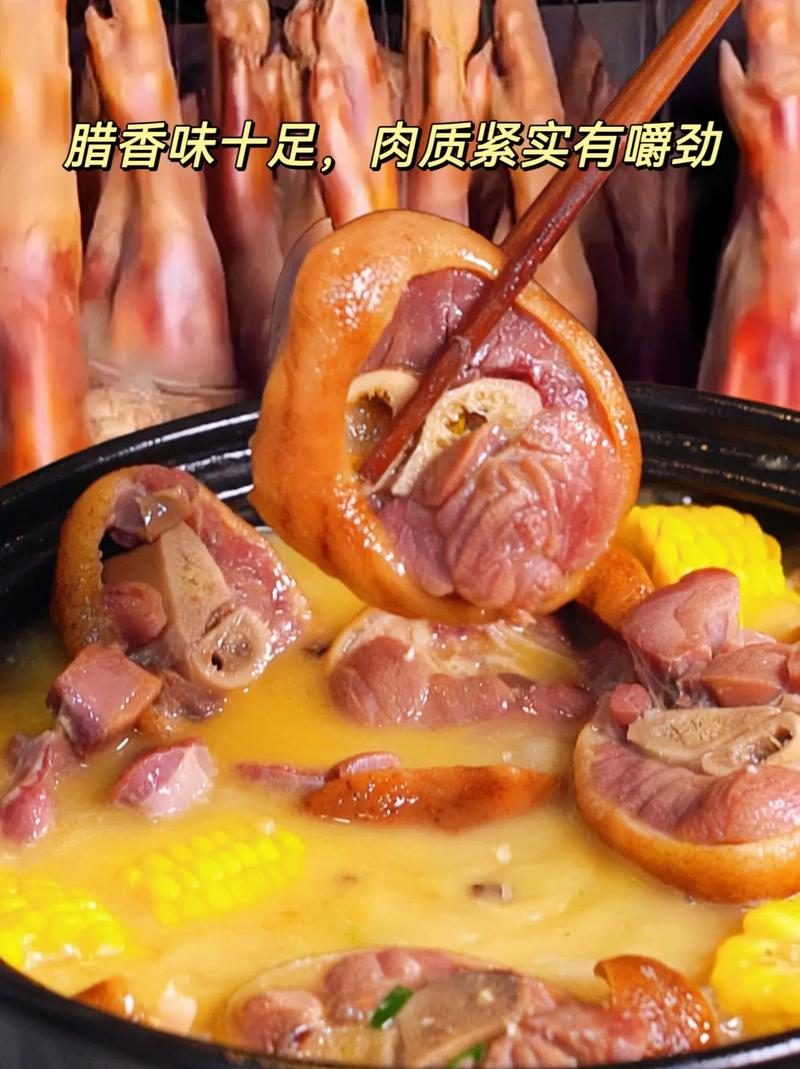
flowcloud would say that the county’s winter is one pot with two mountain products in it — and that the second day’s reheating is the chef’s actual signature.
Where to find it: the county’s farmhouse kitchens, where the stew is the winter lunch — order it with lead time at the smaller kitchens. All checked October 2026.
Words and Names
腊猪蹄 làzhūtí — cured pork knuckle · 炖 dùn — to stew, the method · 洋芋 yángyù — potato, the highland crop · 高山 gāoshān — high-mountain, the potato’s address · 腊肉 làròu — cured pork, the county’s pantry staple