
Miàn yī hù, huǒ yī hú, piáo’er yī gāo; tiánruǎn yī kǒu, gùxiāng yī shēng. — One ladle of batter, one pot of fire, one little gourd cake; sweet and soft in one mouthful, a lifetime of old-town flavour.
Piao’er cakes (瓢儿糕, Piáo’er Gāo) are the county’s traditional snack: a small sweet cake cooked in the laddle-shaped irons (瓢儿, “little gourds”) that give the dish its name, batter poured into the hot moulds and turned until the outside sets crisp and the inside stays soft. It is an old-street trade — the kind of snack sold from a single iron at a market corner — and the county’s answer to the question of what to eat while walking through Ningchang or the county seat’s morning market.
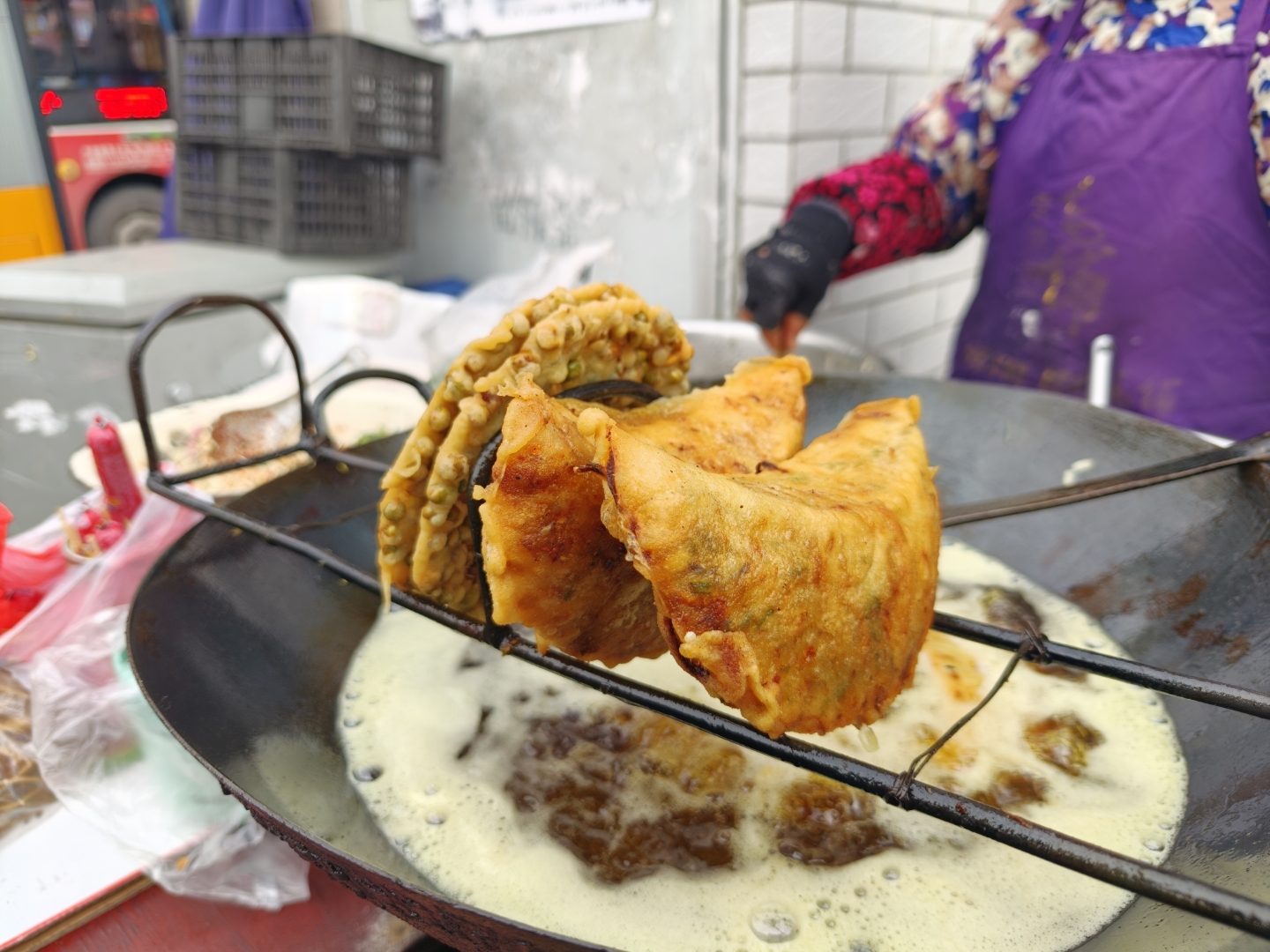
The cake’s character comes from the mould. The cast-iron 瓢儿 holds the batter in a shallow, rounded shape that crisps at the edges while the centre steams in its own moisture, and the cook’s skill is the turn — too early and the centre is raw batter, too late and the softness is gone. The batter is the plain one: rice flour, a little sugar, water; the interest is entirely in the iron and the fire.
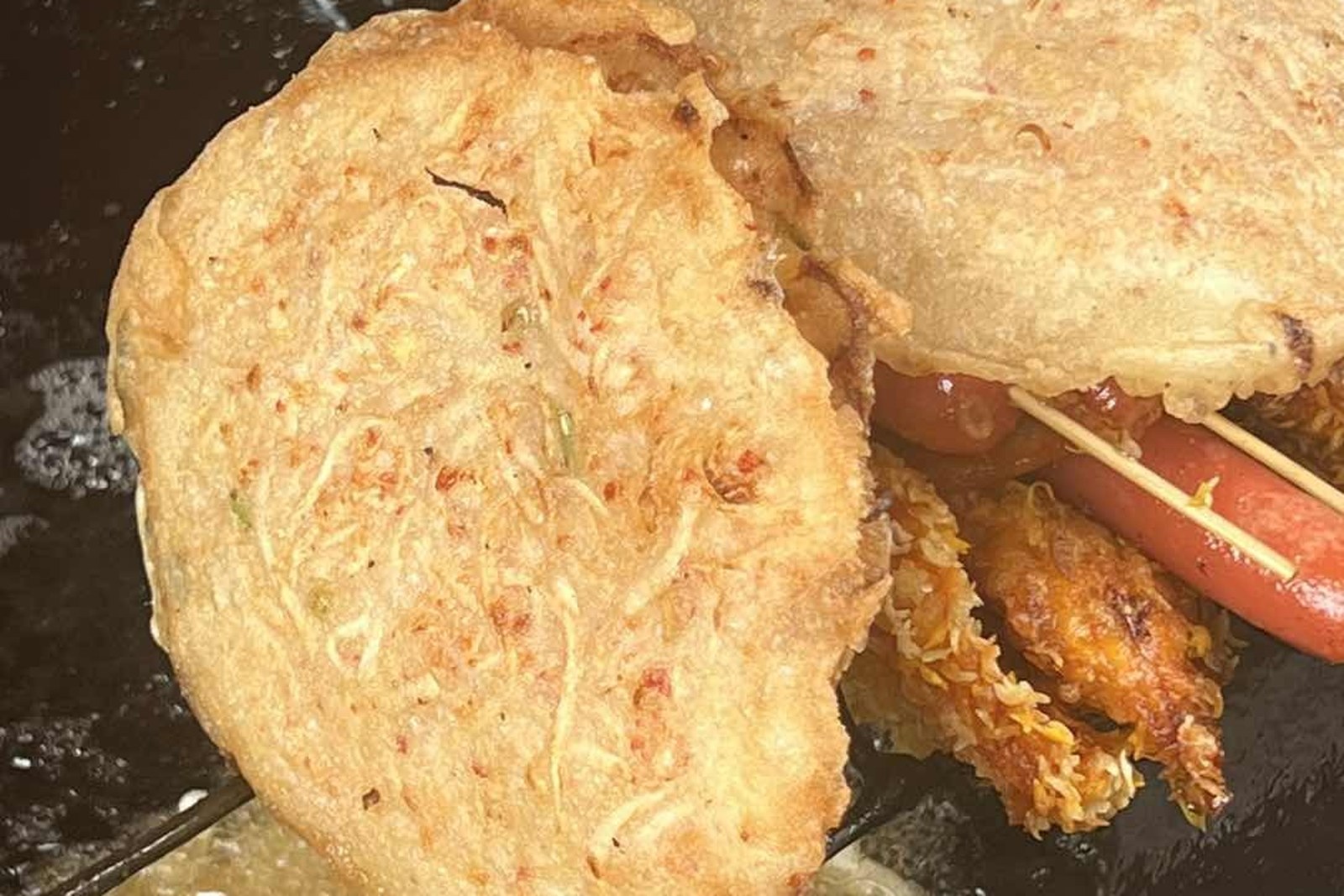
The cakes are a morning-and-market trade — the iron comes out with the market and closes when the batter runs out, so the timing is early and the stock is finite. Eat them hot from the iron; cooled, they lose the contrast that is the whole point. The old street’s vendors are the canonical address, and the correct purchase is a string of them carried in paper.
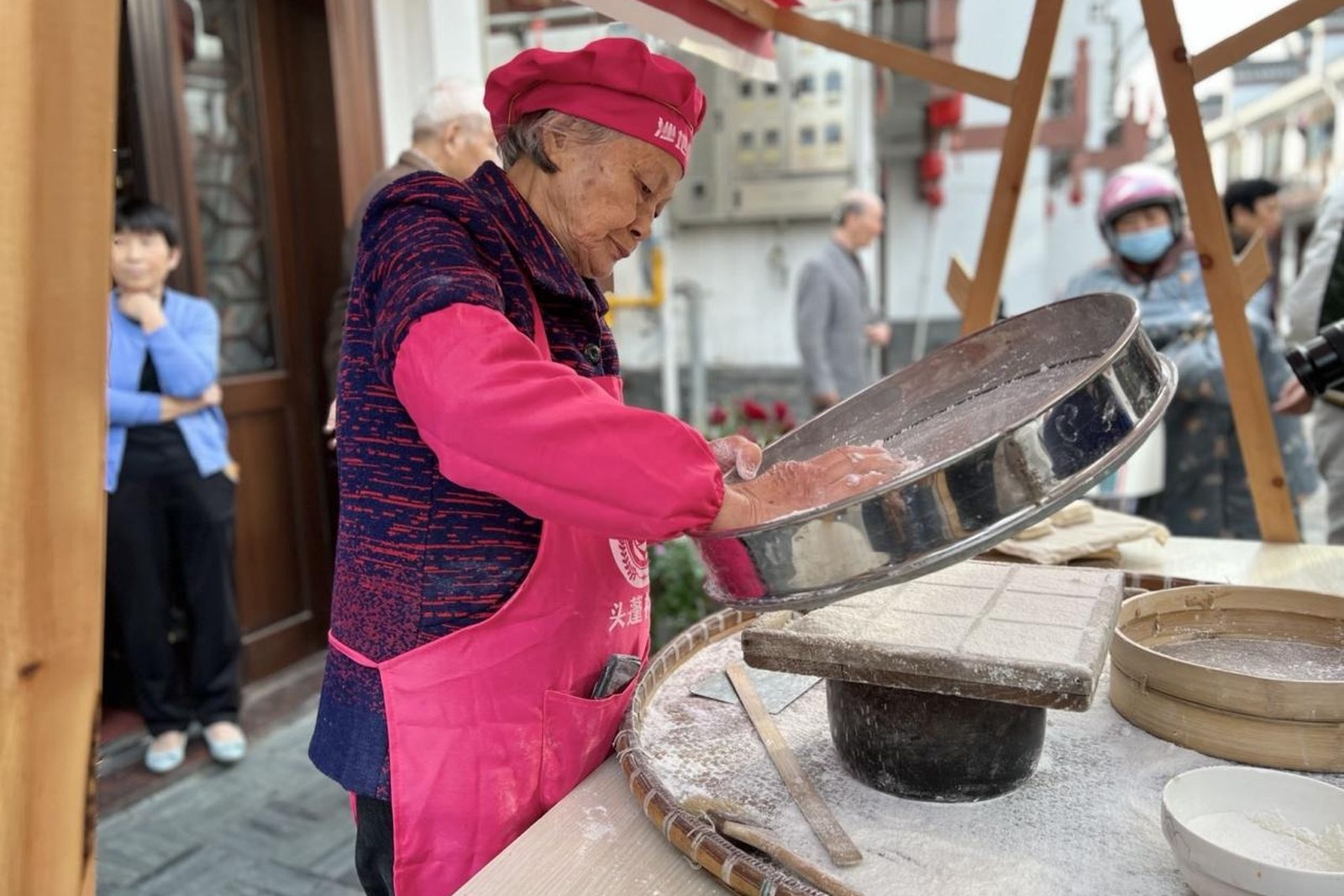
flowcloud would say that the county’s five-thousand-year industry has a sweet little iron at the market’s edge — and that the cake outlasts the salt stoves on the tongue.
Where to find it: the old street’s vendors and the county seat’s morning markets — one iron at a market corner, out early and closed when the batter runs out. All checked October 2026.
Words and Names
瓢儿糕 piáo’er gāo — “laddle cakes”, the snack named for its iron · 瓢儿 piáo’er — the little gourd, the ladle-shaped mould · 米粉 mǐfěn — rice flour, the batter’s base · 铁模 tiěmú — the cast-iron mould, the cooking vessel