
仙沟牛肉 Xiāngōu niúròu and the 仙沟牛市 Xiāngōu niúshì, the cattle market that sets its price, are one system: a market said to start in the late Qing, a slaughterhouse twenty minutes from the pens, and a street of grill houses selling beef the same afternoon it was walking. 仙沟 Xiāngōu is not a town of its own but a community inside 定城镇 Dìngchéng zhèn, the county seat of 定安县 Dìng’ān xiàn, about half an hour from 海口 Hǎikǒu, and the trade calls itself the largest surviving live-cattle market in Hainan.
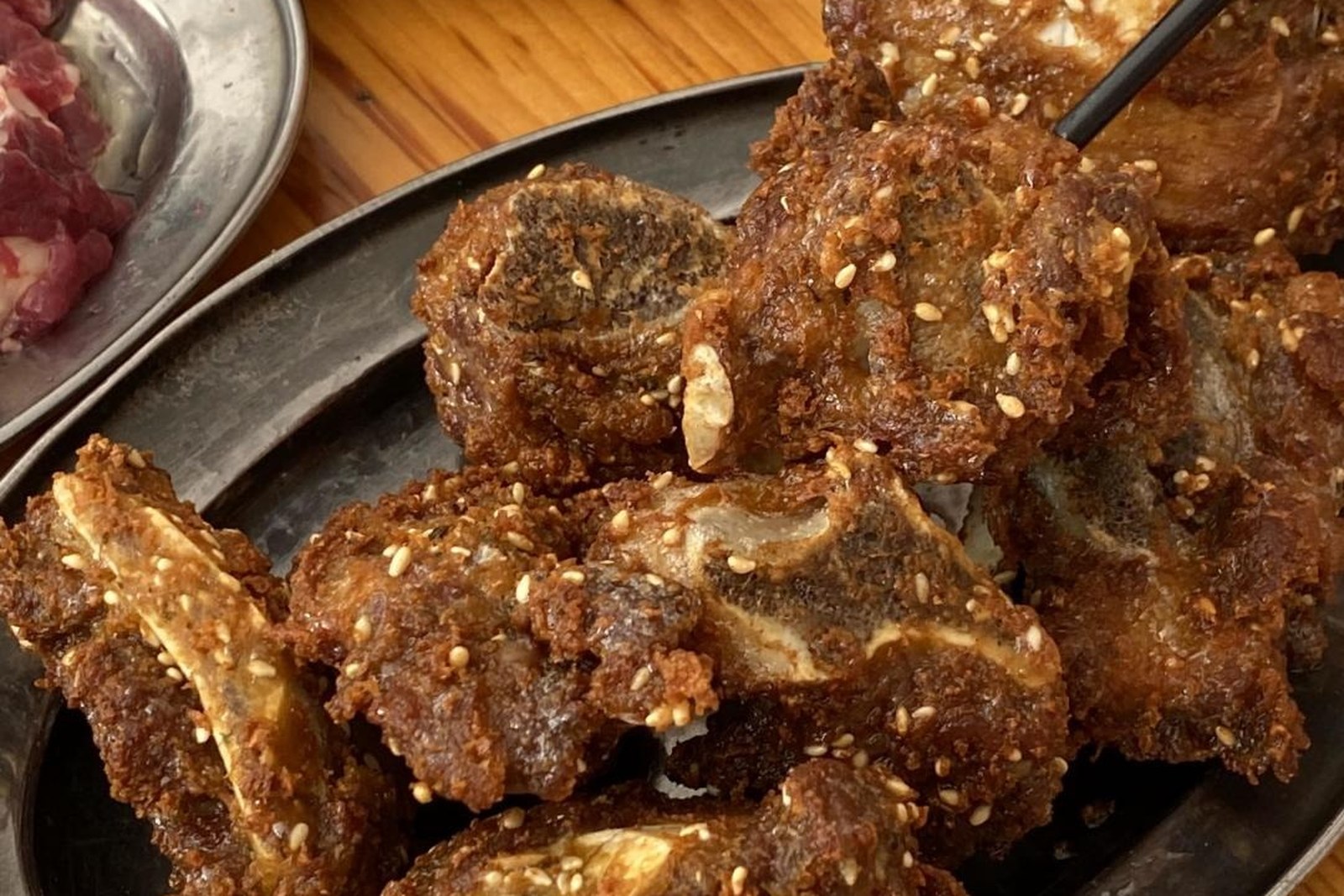
The chain from pen to plate is short and the meat is inspected twice. Cattle are taken first to a quarantine station inside the county, where the origin certificate and the ear tag are checked. Animals that pass go to the 仙沟 food-station abattoir to be killed, skinned, cut and gutted, which takes about twenty minutes for one yellow cow. Then comes the second check: the offal and the outer spine are opened and looked at for parasites, and an animal found carrying them is burned whole rather than sold. The meat goes straight out to the stalls at the abattoir gate, so a cut can be on a table within a few hours of the kill. It is also why the meat moves on the block: with the nerve endings not yet gone, a freshly cut piece twitches for about half an hour, and that is the whole of the name 会跳舞的牛肉, the beef that dances.
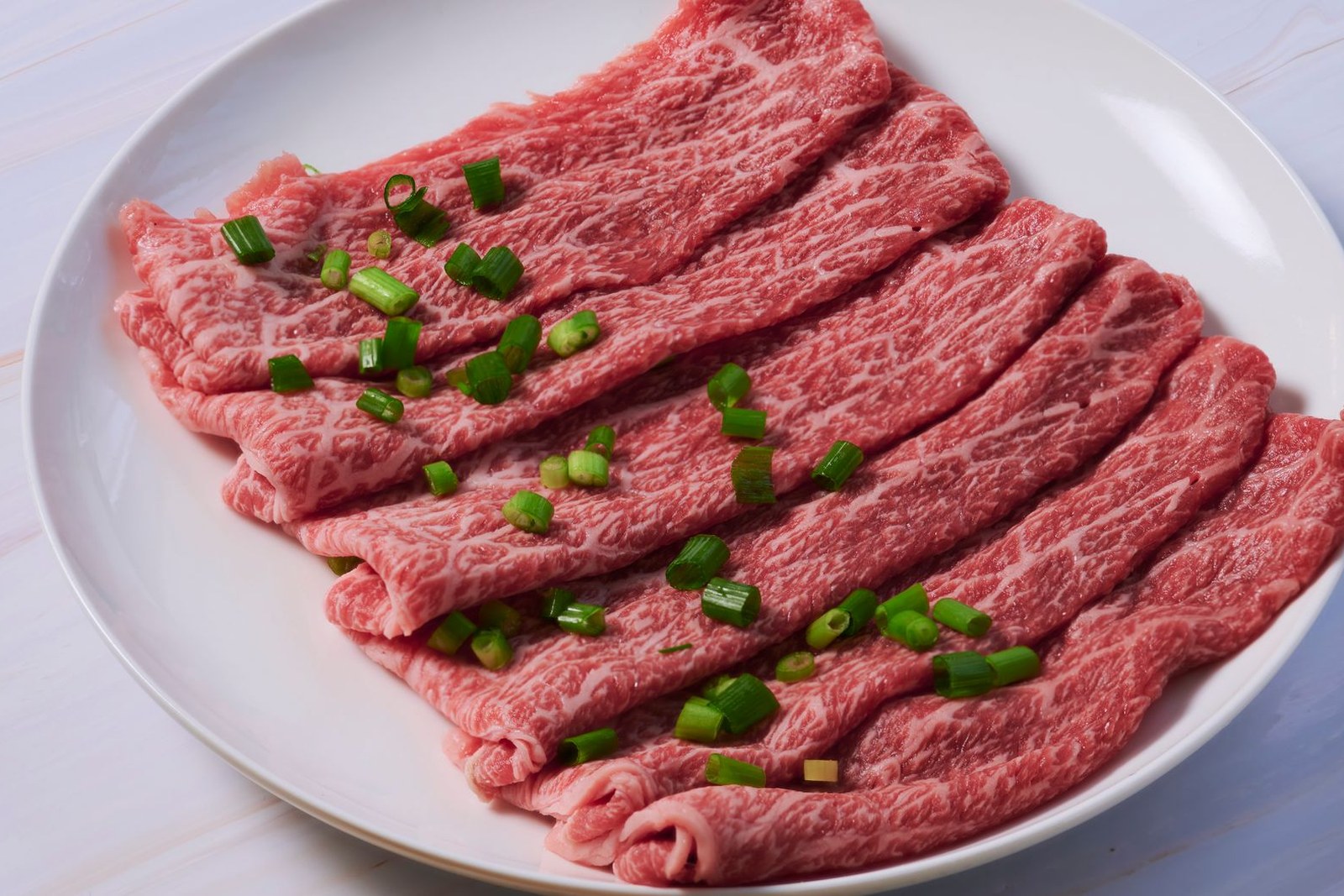
Eating it is a two-part arrangement called 子母锅 zǐmǔguō, the mother-and-child pot: a small central pot of clear beef stock for poaching, and a ring around it lined with grilling paper for frying. The beef is butchered differently for the two jobs, thin slices marinated for the grill and turned once on each side until the colour changes, and strips with a little fat left on for the stock. The oil in the pan is locally pressed peanut oil and the dip is the house’s own 什锦酱 shíjǐnjiàng. Since 2025 the county has also been pushing 糟粕醋 zāopòcù, the sour fermented-rice vinegar of 文昌, onto the same table.
Two things about the market’s name need care. The provincial press writes that it 一般认为 originates in the late Qing and has run for more than a century, and 一般认为, generally held, is the paper saying there is no proof. Buyers come from all over Hainan and, further out, from 湛江 and 茂名 in Guangdong and 北海 and 博白 in Guangxi, and 仙沟墟 Xiāngōu xū holds two markets a day, morning and evening. The phrase to use is 海南现存最大的活牛交易市场, the largest surviving live-cattle market in Hainan: surviving, not historic, and a market for live cattle rather than for beef. A folk version calls it the island’s largest market for plough oxen, and no official source uses 耕牛, so that word is best left alone.
The documented honours are recent and specific. 仙沟牛肉 entered 农业农村部’s third batch of 全国名特优新农产品, the national famous-special-excellent-new list, in 2024, the only beef brand from Hainan on it. On 12 November 2025 the 定安县仙沟牛产业协会 was founded with fifty-six member units covering breeding, slaughter, processing, restaurants and sales. On the street, twenty-one stalls selling what the signs call dancing fresh beef keep certificates of origin and inspection records and carry a traceability code that shows the meat-quality certificate and the animal health certificate, and a credit system licenses the traders scoring above eighty-five points.
Words and Names
仙沟牛肉 Xiāngōu niúròu is the beef and 仙沟牛市 the live-cattle market; 仙沟 itself is a 社区 shèqū, a community of 定城镇, also written 仙沟墟, the old market settlement. 会跳舞的牛肉 huì tiàowǔ de niúròu, the beef that dances, is the trade’s own name for meat killed hours earlier. 子母锅 zǐmǔguō is the split pot, 什锦酱 the mixed sauce, 糟粕醋 the sour rice vinegar of 文昌 now paired with it, and 小黄牛 xiǎohuángniú the small yellow cattle of the south. 活牛交易市场 huóniú jiāoyì shìchǎng is the exact term for the market, because it trades live cattle and not butchered beef.
What the Locals Know
The numbers move, so they have to travel with their dates. Around 2021 the assistant veterinarian at the station, 王师伟 Wáng Shīwěi, put the average at forty-odd head a day. By May 2025 the provincial press had the market killing up to sixty a day and supplying five tonnes of meat, with an annual value for the district of 240 million yuan. Over the three days before Labour Day in 2026 the average was eighty-two a day, 36.7 per cent above the ordinary rate. Over the Dragon Boat holiday of 19 to 21 June 2026 the whole county killed 204 head, an average of sixty-eight. That is growth rather than disagreement, but no single figure is the ordinary day.
The county behind the market is a cattle county. In 2024 定安县 sold 24,403 cattle worth 314 million yuan, and the herd is around 38,000 head, given as 38,500 by the county media centre and 38,000 by the provincial paper on the same day. The county is spending twenty million yuan on a 仙沟牛生态产业链项目, an ecological-chain project with a standardised slaughter and processing line at its centre, and the market and its street are being reshaped as a food small-town with the beef brand attached to it. The animal itself is locally raised for about a year and comes to the block at three hundred to five hundred 斤.
One number is missing and should stay missing. The county advertises that the street is 明码标价, everything priced and displayed, but no authoritative retail price per 斤 for Xiangou beef has been published, so no figure belongs in the text. The route the county recommends is worth copying: 文笔峰 Wénbǐ fēng in the morning, the 久温塘 cold spring at 龙门镇 in the afternoon, and the beef street in the evening.
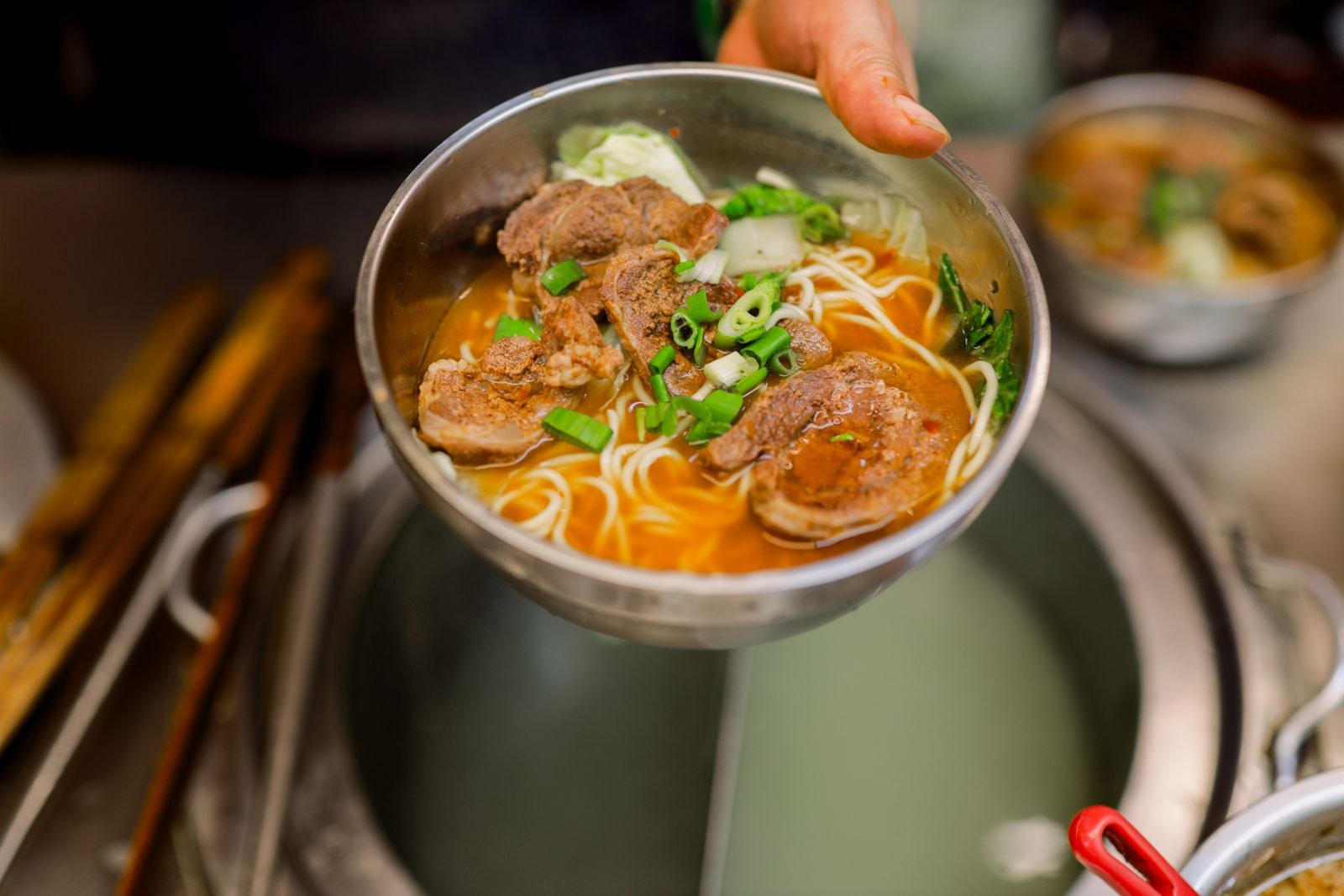
flowcloud would say that 仙沟牛肉 is not a recipe but a distance – a cattle market inside a county town, an abattoir twenty minutes away, a second inspection for parasites, and a street where the meat is still twitching when it reaches the pot.
Where to find it: 思源路 Sīyuán lù, the 仙沟牛肉美食一条街, the beef street in the 仙沟 community of 定城镇 Dìngchéng zhèn, where more than thirty fresh-beef stalls and eighty restaurants line one road and the pot arrives as a 子母锅; the food-station market and abattoir, where cattle are sold and killed from early morning and a whole yellow cow is butchered in about twenty minutes; the twenty-one traceable stalls of the 放心消费一条街, where the certificates hang at the front; and the new 糟粕醋 block beside the street. Go in the evening, order thin slices for the grill and fatty strips for the stock, and ask for the house sauce.