
火焙鱼 Huǒ bèi yú, fire-cured fish, is the preserved fish of 湘乡市 Xiāng xiāng shì and it is made almost entirely from one small species taken out of one reservoir. The fish is 刁子鱼 diāo zi yú, a slim, silvery, fast-swimming carp-like fish that feeds on smaller fish and insects, which is why its flesh is firm and almost sweet; the reservoir is 水府庙水库 Shuǐ fǔ miào shuǐ kù, a body of water of some forty-four square kilometres with ninety-odd square kilometres of wooded catchment around it, where the water stays high in dissolved oxygen and the local phrase for the place is 天下水府,人间瑶池 tiān xià shuǐ fǔ, rén jiān yáo chí – the water palace under heaven, the jade pool among men. Islands stand in the reservoir and the shoreline is a maze of inlets, which is the kind of water that keeps a fish population clean and a fishing family busy.
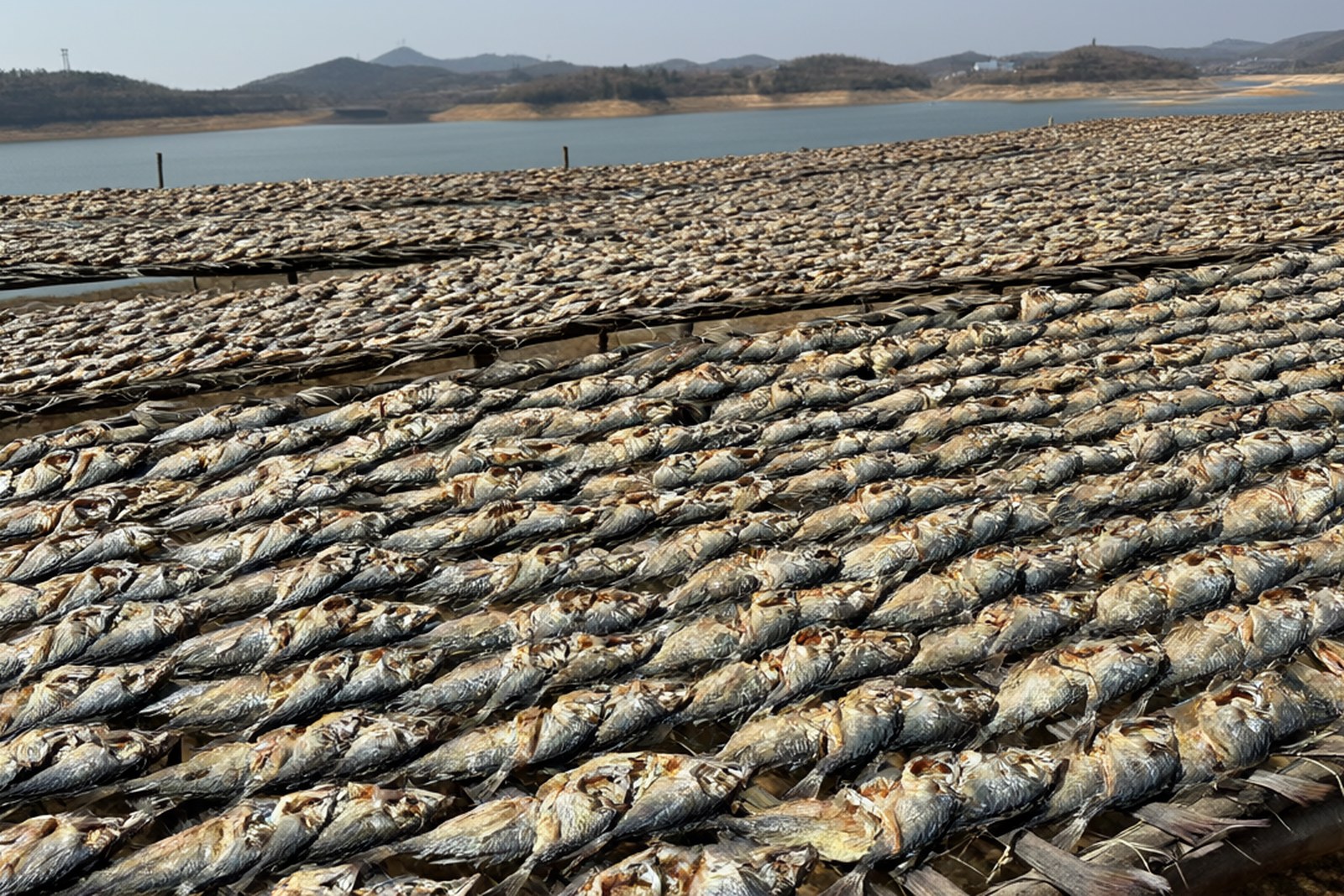
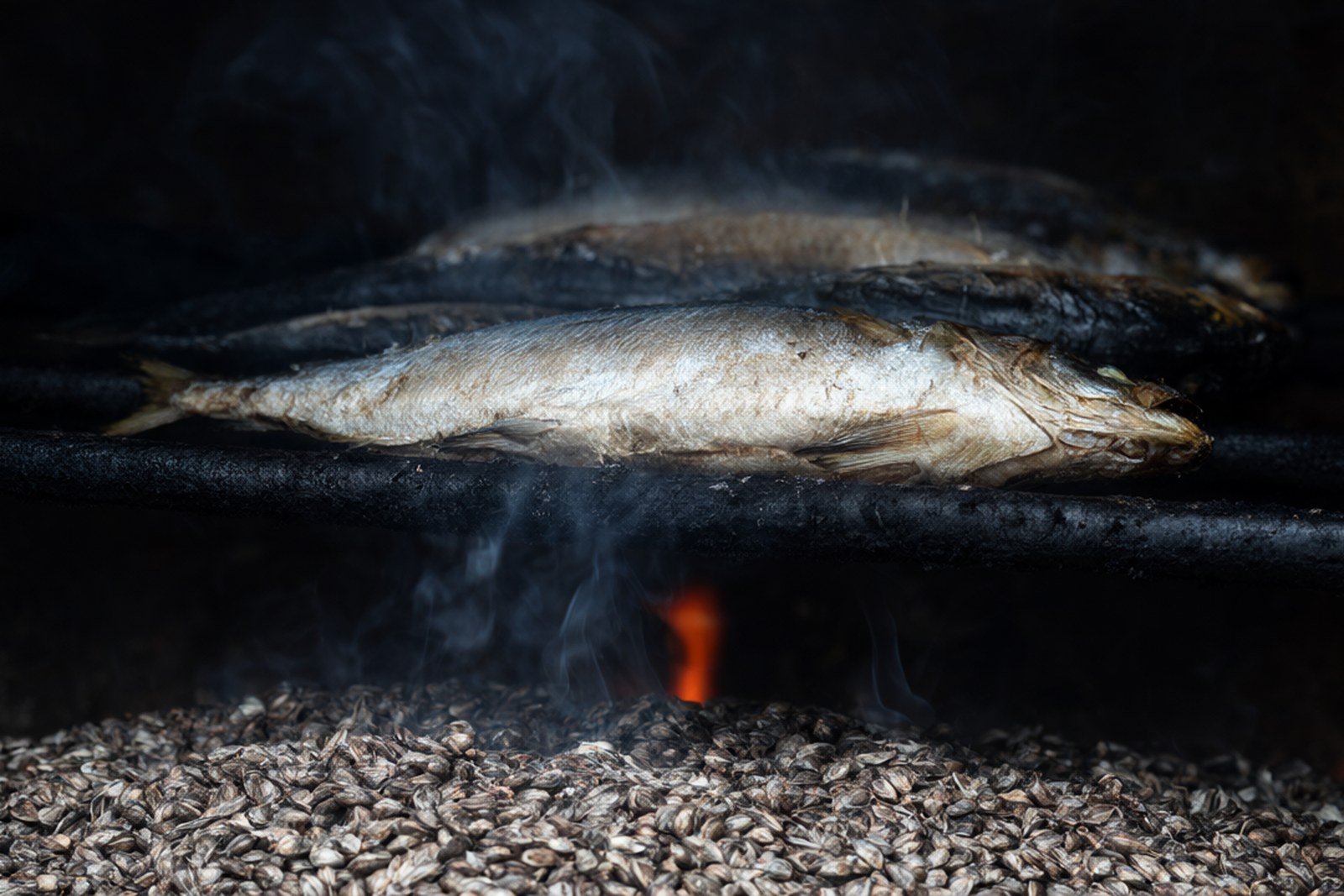
The technique is old, and it is old for the usual reason. Fishermen on the 涟水 Lián shuǐ and later on the reservoir had catches they could not eat or sell fresh, and the answer was to preserve them with salt, sun and smoke. The process attributed to the local families and still followed by the current makers runs to about ten days and has no shortcuts in it. The fish are gutted by hand – the test of good work is that there is no black membrane left inside the belly – washed and drained, then salted for three days. They are dried in the sun and air, steamed until cooked through, dried again for the better part of a week, during which they lose about a third of their weight, and only then smoked. The smoking is the signature step and takes two nights and two days over a low fire of 茶籽壳 chá zǐ ké, tea-seed husk, and 谷壳 gǔ ké, rice husk, sometimes with peanut shell, wood shavings or dried tangerine peel in the mix. The fish come out of it a deep gold, glossy rather than greasy, the skin intact and the flesh translucent when torn along the grain – 鱼皮金黄,鱼肉半透明 is the local description, and it is accurate.
The dish is on the municipal intangible-heritage list as 水府火焙鱼, and the trade is in the hands of one family line that has done it for about a hundred and twenty years and five generations. The current representative is 万望林 Wàn Wàng lín, a fisherman’s son who registered the 水府 trademark in 2014 and who by his own account came home from working elsewhere because he never saw his own town’s product on the shelves of the stations he passed through. His base at 棋梓镇 Qí zǐ zhèn in 湘乡市 processes more than eight hundred tonnes of fresh fish a year and buys from twenty-odd specialist farms and close to two hundred smallholders on contract, which matters because the reservoir itself was closed to fishing: from 2011 the city removed some hundred thousand cage nets and nearly four hundred blocking weirs from the water, and the fish now comes from ponds fed with reservoir water rather than from the reservoir itself. The water is cleaner as a result and the wild 刁子鱼 the old recipe was built around is harder to get, which is a trade-off the trade does not usually discuss and should.
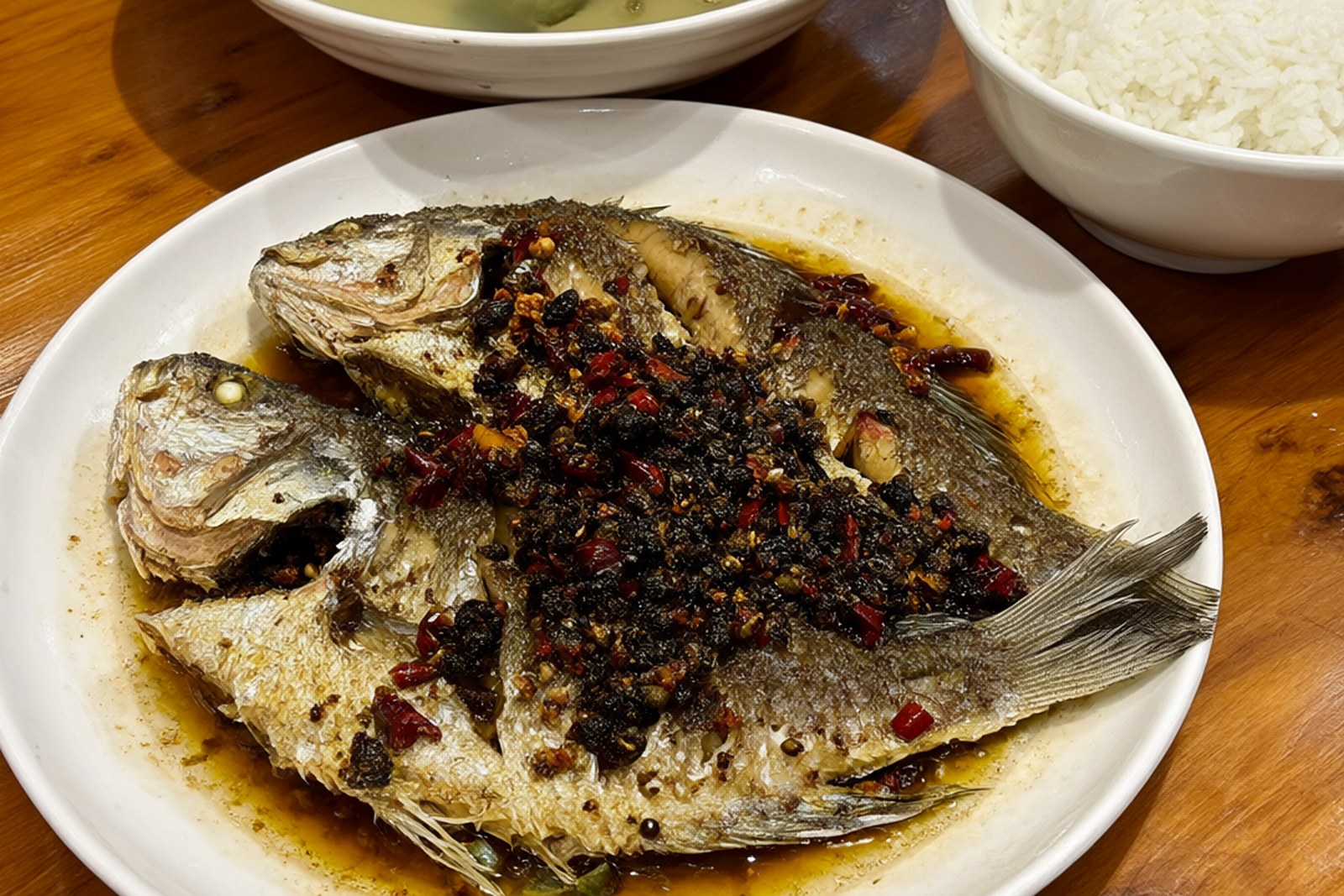
The way it is eaten is specific and is the part visitors get wrong. The fish is hard and dry as sold, so it is cut into pieces, soaked in plain water for five to eight minutes and then simmered for a few minutes and drained before it goes any further; skipping the soak gives a dish that is salty and tough. After that it can be steamed, stir-fried, pan-fried or deep-fried, and the local preference is steamed, because steaming brings back the texture of the fresh fish and lets the smoke do the talking. The standard dish is 香辣火焙鱼, the fish tossed with chilli and a little fermented black bean, and it is winter food – the busiest season at the smokehouse is the weeks before the Spring Festival, when families buy it by the bag.
Words and Names
火焙鱼 huǒ bèi yú is fire-cured fish, from 火 huǒ, fire, and 焙 bèi, to cure over a low heat. 刁子鱼 diāo zi yú is the small fish it is made from, a local name for a slim wild species; the same product is also made from 鳜鱼 guì yú, mandarin fish, and 银鱼 yín yú, icefish, though the 刁子 version is considered the best. 水府庙水库 Shuǐ fǔ miào shuǐ kù is the Shuifumiao reservoir and 库区 kù qū the reservoir district. 茶籽壳 chá zǐ ké is tea-seed husk and 谷壳 gǔ ké rice husk, the two standard smoking materials. The fish is sold whole-sided, 整条 zhěng tiáo, two sides of one fish still joined at the tail, rather than as fillets.
What the Locals Know
The test of a good batch is in the hand and the eye together: the sides should be complete and unbroken, gold rather than brown, dry to the touch but not brittle, and they should bend slightly before they snap. If the fish smell of nothing but smoke and salt and not of fish, the smoking went too long; if they are oily, the fire was too hot. Keep a bag in the freezer rather than the cupboard if you are carrying it any distance, because the fat in the skin is what goes off first. When you cook it, soak and simmer before anything else, and if you are steaming it, put a few slices of ginger and a spoon of the local chilli oil under the fish and let the steam come up through them. The bones soften in the steam and are eaten; there is no need to pick them out.
flowcloud would say that a fishing family who had to preserve a catch before it spoiled, and who ended up with a product that keeps for a year and tastes of the water it came from, has answered the oldest question in the trade better than refrigeration ever will.
Where to find it: the makers and yards around 棋梓镇 Qí zǐ zhèn on 水府庙水库 Shuǐ fǔ miào shuǐ kù in 湘乡市 Xiāng xiāng shì, where it is sold by weight, and the dry-goods stalls of the city markets in 湘潭市; expect roughly ¥60 to ¥160 per five hundred grammes depending on the species and the grade. 湘乡 is about forty minutes from 湘潭 by road and is on the 沪昆 high-speed line with 湘乡站 Xiāng xiāng zhàn in the town, and the reservoir is a short drive west of it.