
Xiaolou Braised Catfish: Canal Catfish, Sesame-Oil Fire and the Small Building of South Street, Tongzhou District, Beijing
南街小楼烧鲇鱼,运河烟火百年香。Nánjiē xiǎolóu shāo niányú, yùnhé yānhuǒ bǎinián xiāng – On South Street the Small Building braises its catfish; a hundred years of canal fires keep the fragrance.
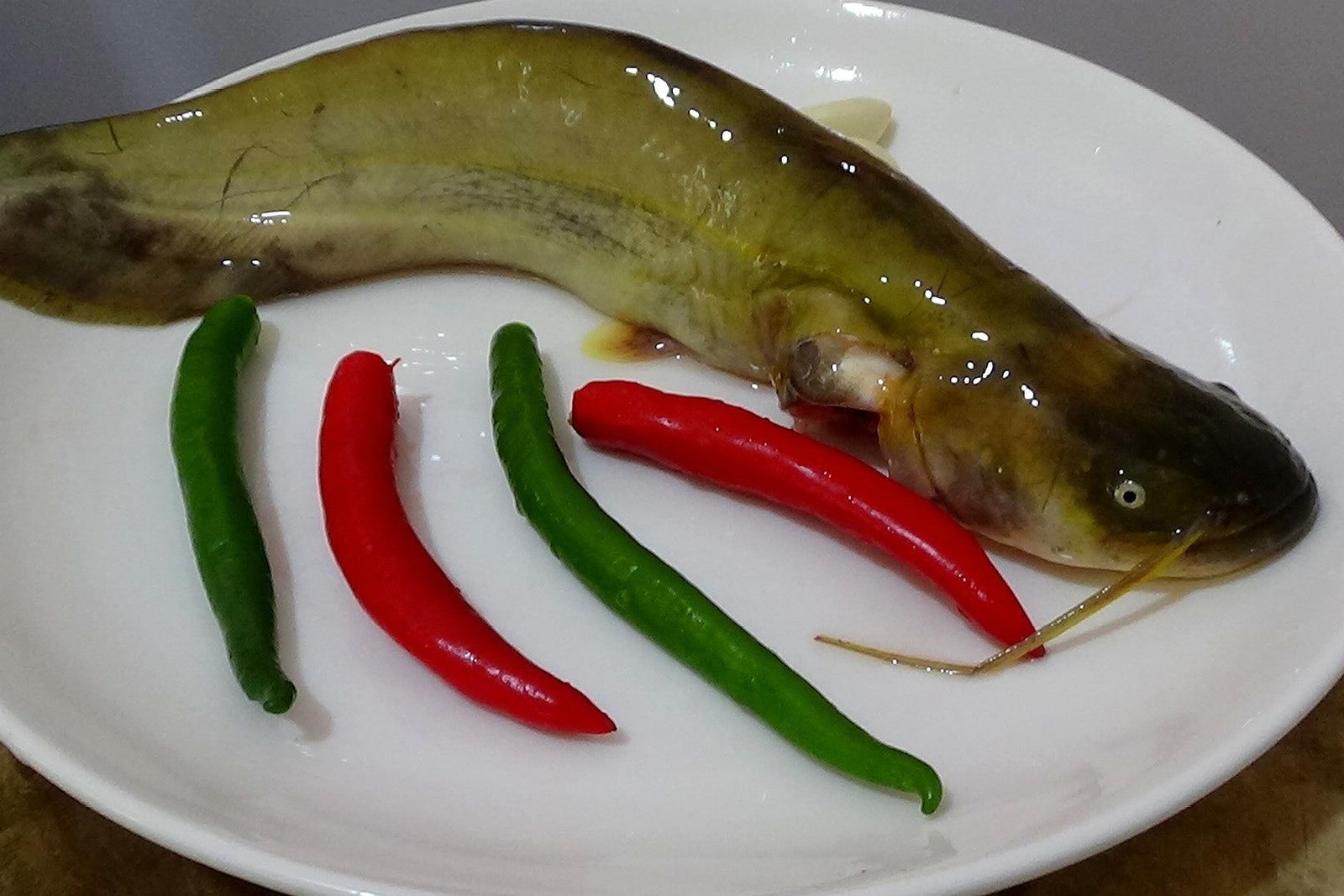
小楼烧鲇鱼 Xiǎolóu shāo niányú Xiaolou braised catfish is the canal-fish dish Beijing’s east has ordered by name for over a century, and the address is a dining room: 小楼饭店 Xiǎolóu Fàndiàn the Xiaolou Restaurant on the old South Street of 通州区 Tōngzhōu Qū Tongzhou District, Beijing, in the Hui quarter by the district mosque, where the Grand Canal’s northern port once filled the streets with grain barges, boatmen and appetites. The house began as 义和轩 Yìhéxuān Yihexuan, a tiny halal eatery opened – by the record’s most-quoted date, the twenty-sixth year of Guangxu, 1900, though the founders’ own descendants said the family wok was older still (worth confirming the details of the founding ledger) – by four Li brothers, kitchen men by inheritance, whose storefront grew until a small upstairs room earned the shop its town nickname, “the little building”, 小楼, and the nickname swallowed the formal name whole. The dish is the town’s own answer to its river: Tongzhou sits where the canal and its feeders run rich with catfish, a fish everyone caught and few restaurants respected, thick-fleshed, few-boned and famously muddy-tasting. The craft most visitors under-rate is the discipline the Li kitchen imposed on that mud: live fish, head and tail off, the middle section only, cloaked in pure mung-bean starch and red-braised in sesame oil through what the kitchen counts as three braises and three roastings – hard fire, soft fire, repeated passes through the oil – then finished with savoury stock and a glossing starch drag, so the flesh reads golden, crisp-shelled, tender inside and salt-fragrant, with the river mud argued entirely out of it. The naming is the tell: a dish named for nothing but its cooking, from a house named for nothing but its modesty – and both names outlived the grander rivals on the same street.
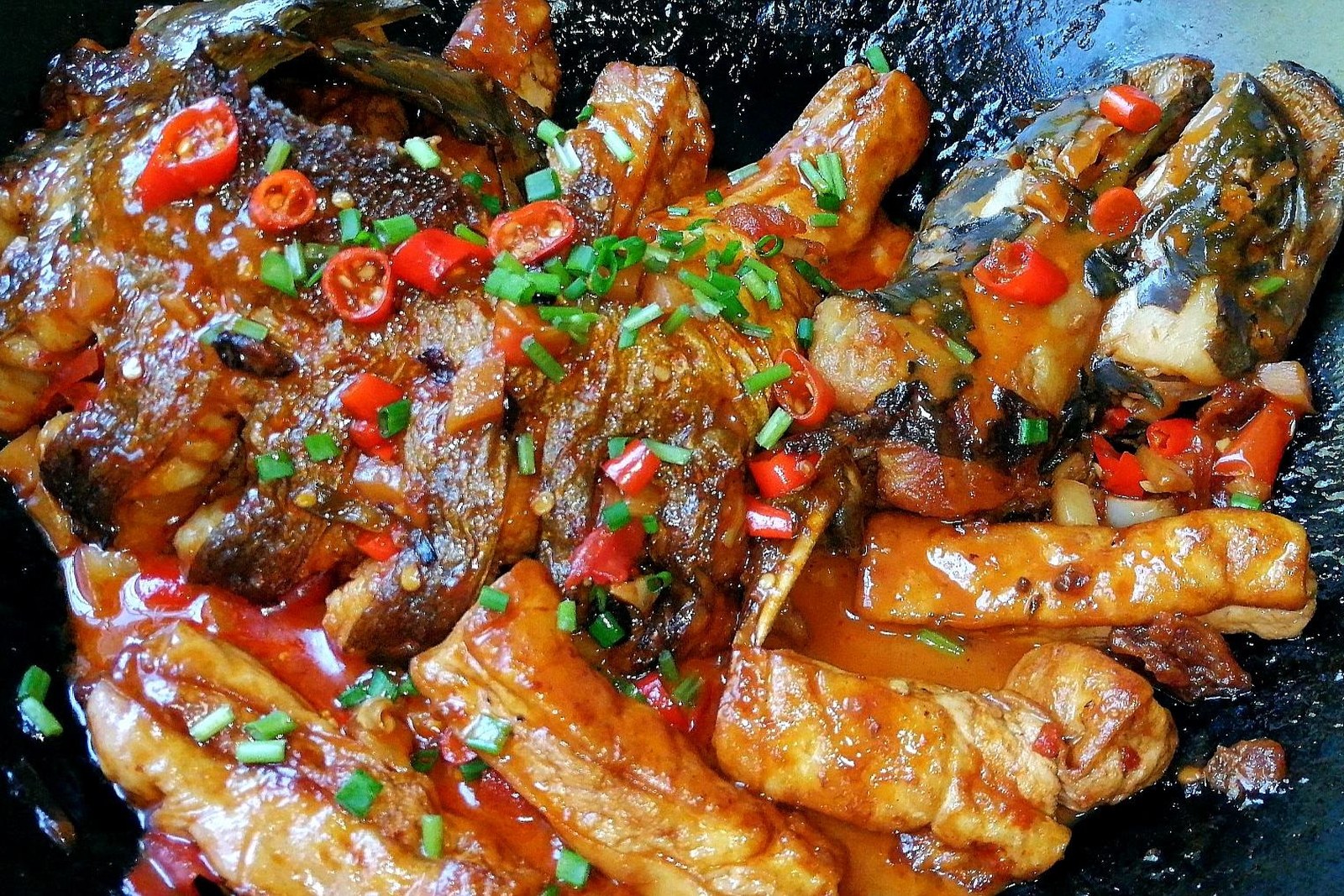
The eating is a crisp-into-tender grammar written for a fish that needs convincing, and the menu leans 咸香 xiánxiāng salt-savoury plus 焦 jiāo fried-crisp to match the house style. The anchor is the 焦烧鲇鱼 jiāoshāo niányú crisp-braised catfish itself – a slab of the middle cut, mahogany-gold, the starch shell cracking under the chopstick while the inside pulls away in soft sweet flakes – backed by the rest of the house trio the old regulars order by shorthand, the “three crisps of Xiaolou”: the same fire given to beef slices in a sweet-sour 焦熘 jiāoliú glaze, and to 饹馇 gézha, the mung-bean-sheet pancakes of the eastern counties, fried to a brittle gold (worth confirming the details – which of the three the kitchen counts as its own that week). Around the trio the halal kitchen runs its seasonal book: hot-pot mutton for winter, the braises and stews of a working neighbourhood table, the halal snacks and congee the old house kept for the early-summer weeks. The catfish’s own virtues decide the order: middle-section flesh carries almost no fine bones, so families order it without the usual fish fear, and the triple-fry means the dish holds its crisp even through a long, talkative dinner – canal cooking engineered for boatmen who arrived late.
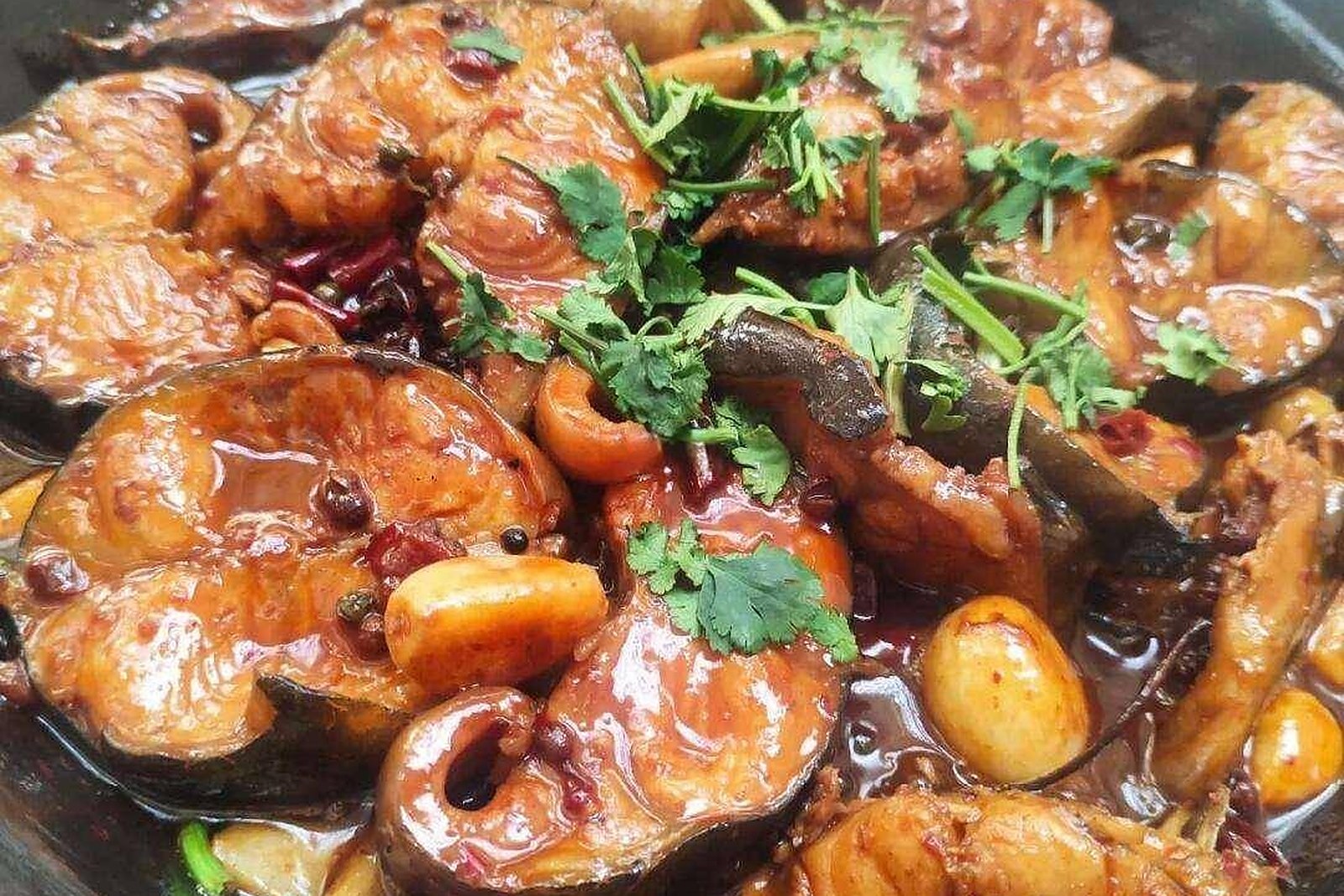
The honest grade is geography plus the day’s-fish clock. In 通州区 Tōngzhōu Qū Tongzhou District, Beijing the dish has exactly one honest address – the house that owns the name, on the old South Street among the mosque’s lanes – and the grade is decided at the tank: a fish killed to order and fried within the hour reads crisp and clean, a fish waiting portioned in a fridge reads soft and dusty, and no glaze hides the difference (worth confirming the details – what the tank held that morning). The making technique is recognised on the capital’s intangible-heritage rolls as a district craft (worth confirming which year and which level), and the dining room itself has been rebuilt several times into something far larger than the one-room shop the brothers opened – so order by the old names, not by the size of the room. A per-person bill runs on the fish and the number of the trio ordered, so call it worth confirming the details rather than a fixed number, and come at a proper meal hour: the kitchen fries to waves, and a table that arrives between them waits for the next batch – worth confirming the details, service by service.
The wry truth is that 小楼烧鲇鱼 Xiǎolóu shāo niányú is over-rated as an “old-brand check-in” and under-rated as river-fish engineering: heritage lists file it under nostalgia, while the actual thing – a mud-flavoured bottom-feeder argued into a crisp-gold delicacy by starch, sesame oil and a counted rhythm of fires, on a canal that no longer ships grain – is a piece of applied chemistry the menu never mentions. The town itself said it best in legend: the canal’s catfish, the story runs, were so outraged by the dish’s success that they raised a flood, and had to be shamed back into the water by a stone beast carved from a god’s drawing – a folktale that is, read plainly, a review. The self-deprecating footnote, and the district braid: a food writer will lecture the kitchen on “sustainable river fish” between bites, photograph the lacquered slab at heroic shutter, and then call it “commendably old Beijing” as if oldness were a flavour – which is the honest grade: 小楼烧鲇鱼 Xiǎolóu shāo niányú is a working dining room’s signature the writer will heritage-ify more than he finishes, and the family at the next table has already picked the slab to the bone and ordered the hot-pot before the shutter closes. The same 通州区 Tōngzhōu Qū Tongzhou District, Beijing thread runs on: the sesame-and-brown-sugar rounds of 大顺斋糖火烧 Dàshùnzhāi táng huǒshao Dashunzai sugar huoshao stack in the Hui-quarter shops, the red cubes of 仙源腐乳 Xiānyuán fǔrǔ Xianyuan fermented beancurd wait in their glass jars, the cherry rows of 西集大樱桃 Xíjí dà yīngtáo Xiji big cherries redden the double-river plain in May, and the vine trellises of 张家湾葡萄 Zhāngjiāwān pútáo Zhangjiawan grapes hang heavy into autumn – one district, four more tables.
Words and Names
- 小楼饭店 Xiǎolóu Fàndiàn / Xiaolou Restaurant · the century-old halal dining room that gave the dish its name - 义和轩 Yìhéxuān / Yihexuan · the four brothers’ original shop name the nickname erased - 鲇鱼 niányú / catfish · the canal’s muddy, rich-fleshed bottom-feeder - 焦烧鲇鱼 jiāoshāo niányú / crisp-braised catfish · the signature: starch-cloaked, sesame-oil fried, three braises three roastings - 绿豆淀粉 lǜdòu diànfěn / mung-bean starch · the pure-starch cloak that builds the crisp shell - 小楼三焦 Xiǎolóu sān jiāo / the three crisps of Xiaolou · catfish, beef slices and mung-bean sheets in one house style - 通州三宝 Tōngzhōu sān bǎo / the Three Treasures of Tongzhou · catfish, sugar huoshao and fermented beancurd in one town’s larder - 通州区 Tōngzhōu Qū / Tongzhou District · the Beijing district holding the canal’s northern docks
What the Locals Know
- Order the fish, not around it: the crisp-braised catfish is the house craft; dishes the old kitchen never fried are strangers on this street (worth confirming the details of the day’s menu).
- Ask for the middle cut: the section between head and tail is the dish’s whole point – few bones, thick flesh – and the kitchen knows exactly what you mean.
- Judge by the tank: fish fried to order reads crisp and clean; anything pre-portioned and waiting reads soft – no glaze hides it.
- Bring people: the trio of crisps – catfish, beef, mung-bean sheets – is sized for a full table, and the winter hot-pot answers the canal cold better than any single plate.
flowcloud would say that the 小楼烧鲇鱼 Xiǎolóu shāo niányú is the canal catfish, sesame-oil fire and the small building of South Street, Tongzhou District, Beijing – a 义和轩 Yìhéxuān kitchen that took the canal’s muddiest fish and argued it into a crisp-gold classic through 绿豆淀粉 lǜdòu diànfěn and three counted passes of fire – and that the honest move is to order the middle cut, judge by the tank, and bring a full table, because the river grew the fish and the kitchen grew the craft. All checked October 2026.
Where to find it: Tongzhou District Tōngzhōu Qū, Beijing – 小楼饭店 Xiǎolóu Fàndiàn, the halal old-brand dining room on the old South Street Nán Dàjiē of Tongzhou’s old town by the district mosque, where 焦烧鲇鱼 jiāoshāo niányú, the three crisps and the winter hot-pot are served through the day (worth confirming the details – opening hours and which of the trio runs that week); a per-person bill runs on the fish and the order, so call it worth confirming the details rather than a fixed number. Xiaolou braised catfish is the canal catfish, sesame-oil fire and the small building of South Street, Tongzhou District, Beijing, canal before wok.