
小杨火锅 Xiǎoyáng huǒguō, Xiaoyang hotpot, is Yongchuan’s own contribution to the endless family of Sichuan-Chongqing pots, and it is distinguished by its broth base: a simmering pot of bone stock enriched with chili bean paste, a generous measure of Sichuan peppercorn, star anise, cinnamon bark and a house blend of dried spices that varies from shop to shop. The name comes from the neighbourhood where the style first appeared, and the original shops still cluster along the evening streets, their outdoor tables packed with diners dipping thin slices of beef, tripe, duck blood, lotus root and glass noodles into the bubbling pot. The ritual is unhurried, a hotpot meal lasting two hours easily, and the conversation matters as much as the eating. This is the evening page of the Yongchuan food column.
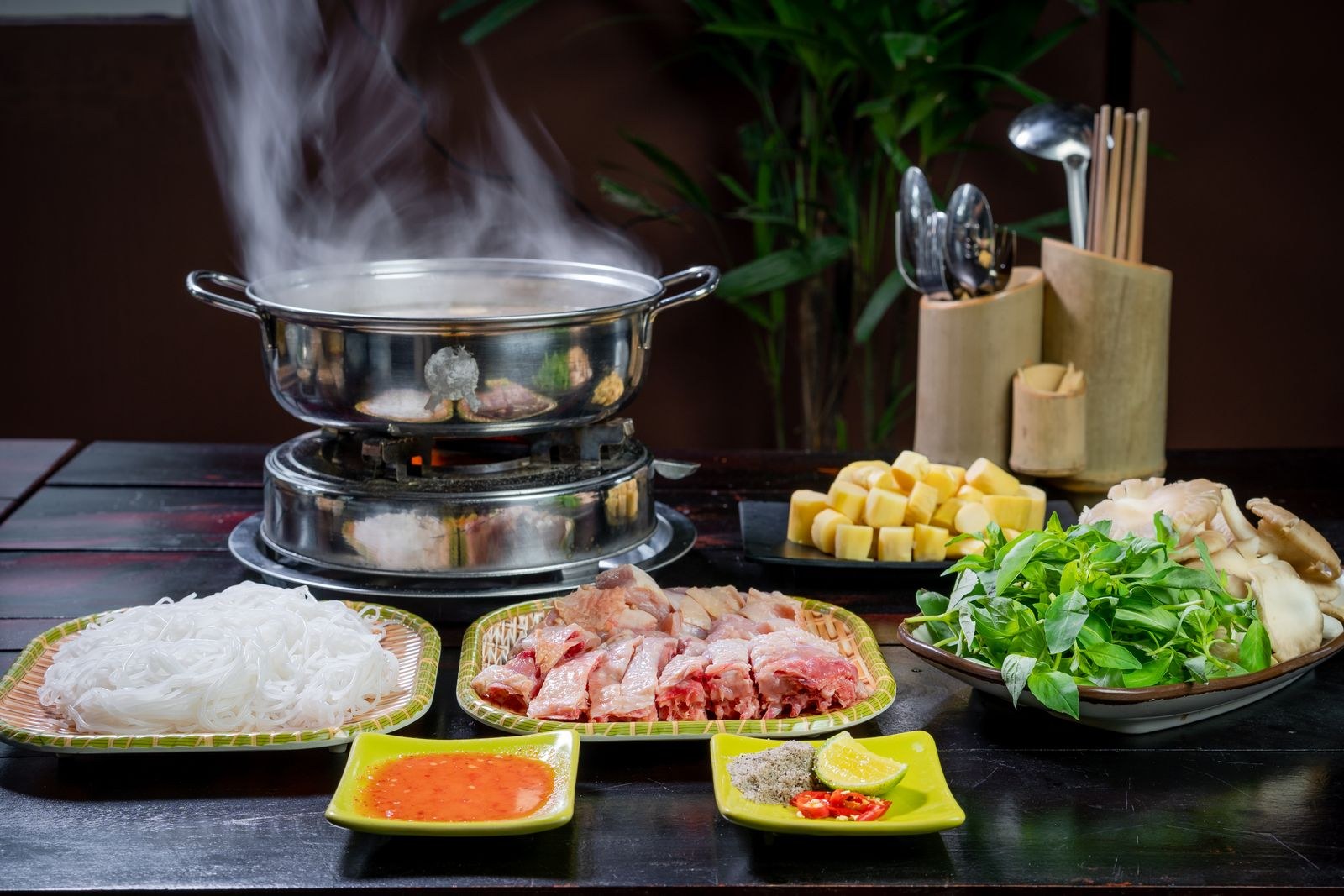
The broth is the house’s signature. Bone stock is the floor, and everything after it is the maker’s hand: the chili bean paste cooked deep so the red has weight, the peppercorn measured for the numbing note rather than the burn, the star anise and cinnamon laid in for the warm spine, and the dried-spice blend kept as the secret the shop passes down rather than writes down. No two houses taste the same, and the regulars can name their pot by the first spoon – sweeter, louder, more anise, less – because the blend is the address even when the sign is plain. The pot simmers the whole meal and deepens as it goes, the flavour of everything cooked in it folding back into the broth so the last bowl is the richest the table will see.
The dipping is the diner’s clock. Thin beef goes in first and comes out quick, tripe for the few seconds that keep it crisp, duck blood for the slow count that sets it, lotus root for the crunch and glass noodles for the soak that drinks the broth – and the order is less a recipe than a rhythm the table falls into over two hours. The outdoor tables are the honest format: the evening streets fill with the smell of the pots before you see the lanterns, and the meal runs long because nobody is in a hurry and the broth only gets better as it sits. The name marks the neighbourhood the style took root in, and the shops that carry it still cluster where the style began, the evening crowd spilling onto the lane with their pots smoking in the dark.
What the record supports and what it does not is worth stating plainly, because a neighbourhood pot with a name behind it is exactly the kind of subject that collects invented lineage. The record consulted – the plan’s own facts – names the bone-stock-and-chili-bean-paste broth, the peppercorn and the house spice blend, the neighbourhood the style came from and the evening-street shops; it does not name a founding shop, a founding year, a posted price or a documented first recipe, and none is invented here. The honest page reports a district pot the original shops run along the evening streets, each kitchen’s blend its own, and leaves the ranking to the smoke that already marks the lane every night.
What the visitor does is sit at the outdoor table and let the broth deepen. The meal is built for two hours, not twenty minutes, so the practical move is to order the thin beef and tripe early, let the lotus root and noodles go late, and finish with the last bowl of broth when it has taken everything the table cooked. Find the shop on the street where the style began and read the smoke rather than the sign, because the pot that has been simmering longest is the one worth the seat. All checked October 2026.
Words and Names
小杨火锅 Xiǎoyáng huǒguō, Xiaoyang hotpot, Yongchuan’s neighbourhood pot in 永川区 Yǒngchuān Qū, Yongchuan District: a simmering bone stock enriched with chili bean paste, Sichuan peppercorn, star anise, cinnamon bark and a house blend of dried spices that varies shop to shop, into which diners dip thin beef, tripe, duck blood, lotus root and glass noodles. The name comes from the neighbourhood where the style first appeared, and the original shops cluster along the evening streets. No founding shop, founding year, posted price or recipe is on the public record consulted, and none is invented here.
What the Locals Know
The local knowledge is the blend, not the sign. A house’s pot is its address – the peppercorn measure, the anise weight, the depth of the bean paste – and the regulars know their shop by the first spoon, because the spice mix is the one thing the kitchen keeps and never writes down. The second thing locals know is the clock of the dip: beef and tripe early, lotus root and glass noodles late, and the final bowl of broth taken when it has folded in everything the table cooked, which is the finest the pot will give. The outdoor tables are the honest format, the evening smoke the only advertisement worth reading. What the record does not carry is any ranking of shops, and the page declines to make one – the lane that smells of the pots is the review.
flowcloud would say that Xiaoyang hotpot is the district’s neighbourhood pot – bone stock deepened with chili bean paste, Sichuan peppercorn, star anise, cinnamon and a house spice blend no two shops write the same, the name marking the street the style took root in, the original shops clustering along the evening lanes with outdoor tables of beef, tripe, duck blood, lotus root and glass noodles – and that the honest page reports a district pot rather than any famous house, with no founding shop or price on the record and none invented. All checked October 2026.
Where to find it: the Xiaoyang hotpot shops cluster along the evening streets of 永川区 Yǒngchuān Qū, Yongchuan District, on the neighbourhood the style first appeared, their outdoor tables and smoking pots marking the lane before you see a sign; no specific shop address, posted price or founding year is on the public record consulted and none is invented here, and the street that smells of the pots is the practical guide. The meal is eaten slowly, over two hours, finishing with the last bowl of broth. Pair this page with the Yongchuan boiled-fish page for the district’s other river pepper dish, and with the district-seat hotel page for the base the evening lanes run back to.