
Xiji Big Cherry: Double-River Sandy Loam, Night-Damp Soil and the May Picking Rows of Tongzhou District, Beijing
两河沙土夜来潮,五月樱桃红满梢。Liǎng hé shātǔ yè lái cháo, wǔyuè yīngtáo hóng mǎn shāo – Two rivers’ sandy soil turns tide-damp by night; in May the cherries redden every branch tip.
西集大樱桃 Xíjí dà yīngtáo Xiji big cherry is the early-summer fruit Beijing’s east drives out for, and the address is a double river: 西集镇 Xíjí Zhèn Xiji town at the southeastern corner of 通州区 Tōngzhōu Qū Tongzhou District, Beijing, the flat the 京杭大运河 Jīng-Háng Dà Yùnhé Beijing-Hangzhou Grand Canal and the 潮白河 Cháobái Hé Chaobai River have silted into a plain between them – orchard country where the cherry rows run village after village, 沙古堆 Shāgūduī Shagudui and its some thirty neighbours among them, an expanse the town counts in thousands of mu (worth confirming the details of the current acreage). The soil is the argument: a sandy loam the locals nickname 蒙金夜潮 méngjīn yècháo – sandy by day, tide-lit by night – because the river-laced sand bakes dry under the sun and wicks moist again after dark, and the cherry, a shallow-rooted tree that loves water and fears waterlogging, wants precisely that day-dry, night-damp rhythm; the fruit’s deep sweetness is the soil’s own diary. The craft most visitors under-rate is variety timing: the orchards plant 早大果 zǎodàguǒ Early Big Fruit to open the season, 红灯 Hóngdēng Red Lantern for the mid-season, 雷尼 Léiní Rainier for the gold-blushed close, some twenty cultivars in relay so the picking runs weeks instead of days. The naming is the tell: 大 dà big is half the name – the plain grows fruit sized for the gift box, and the town has never apologised for it.
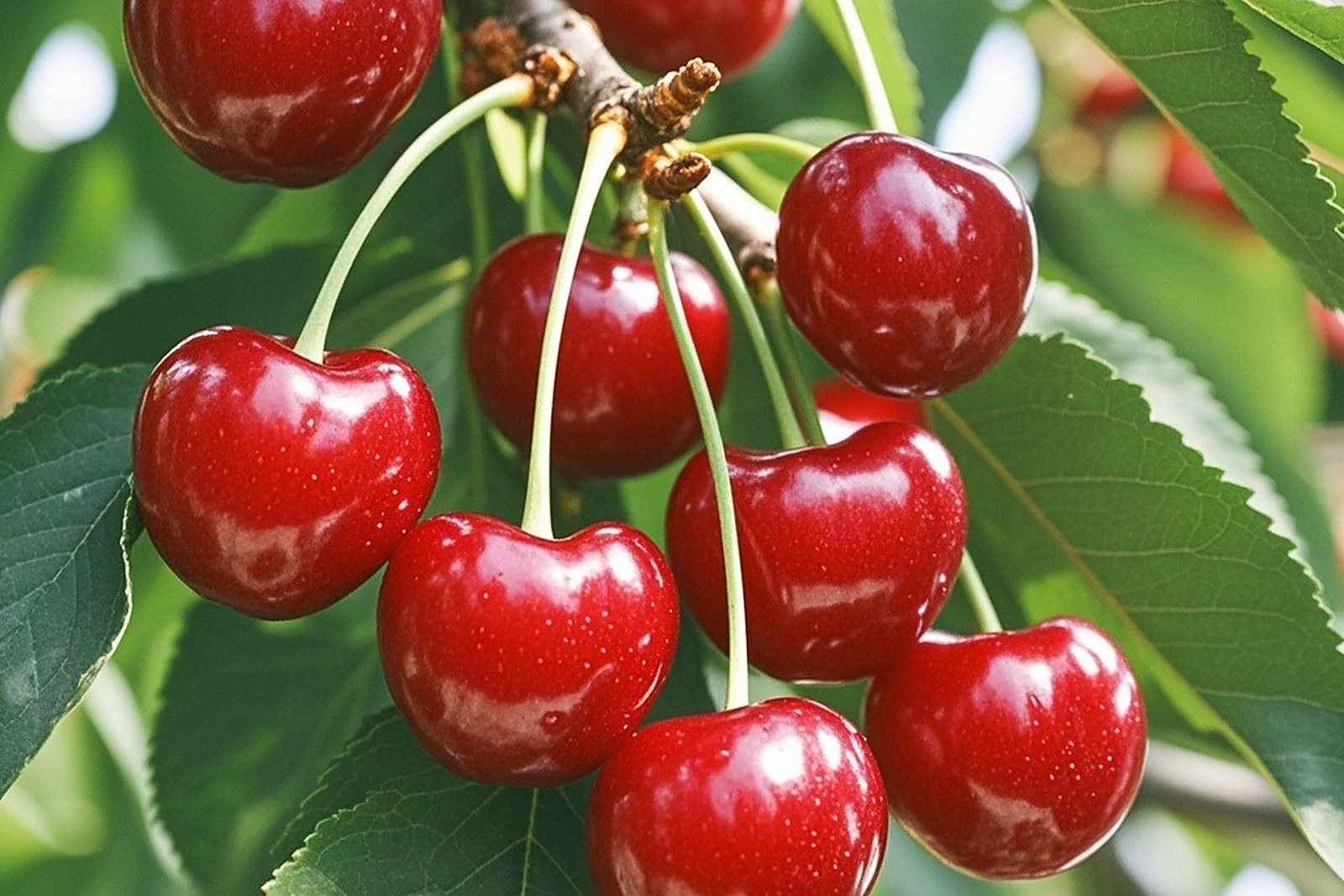
The eating is a picker’s grammar written for fruit that does not travel well, and it leans 甜 tián sweetness plus 脆 cuì crisp flesh to match the rows. The anchor is the fruit off the tree, eaten standing in the row – skin taut, flesh snapping, juice cold-sweet, a taste the same variety packed and driven to the city never quite keeps – backed by the household uses the orchard kitchens keep: cherry preserved in sugar, cherry steeped into small-batch fruit wine, fresh boxes weighed at the shed for the drive home. The season is short and public: picking opens around mid-May, runs into June, and the town hangs a picking-season festival on it, with the orchards posting open rows and prices at their gates (worth confirming the details – which rows are open in which week, because the cultivars ripen on their own clocks). The trade grades itself in the shed: fruit picked ripe that morning sells by the box to families who taste first, fruit picked firm for the courier run sells by the kilo to tables that will never meet the tree – both honest, only one of them an occasion.
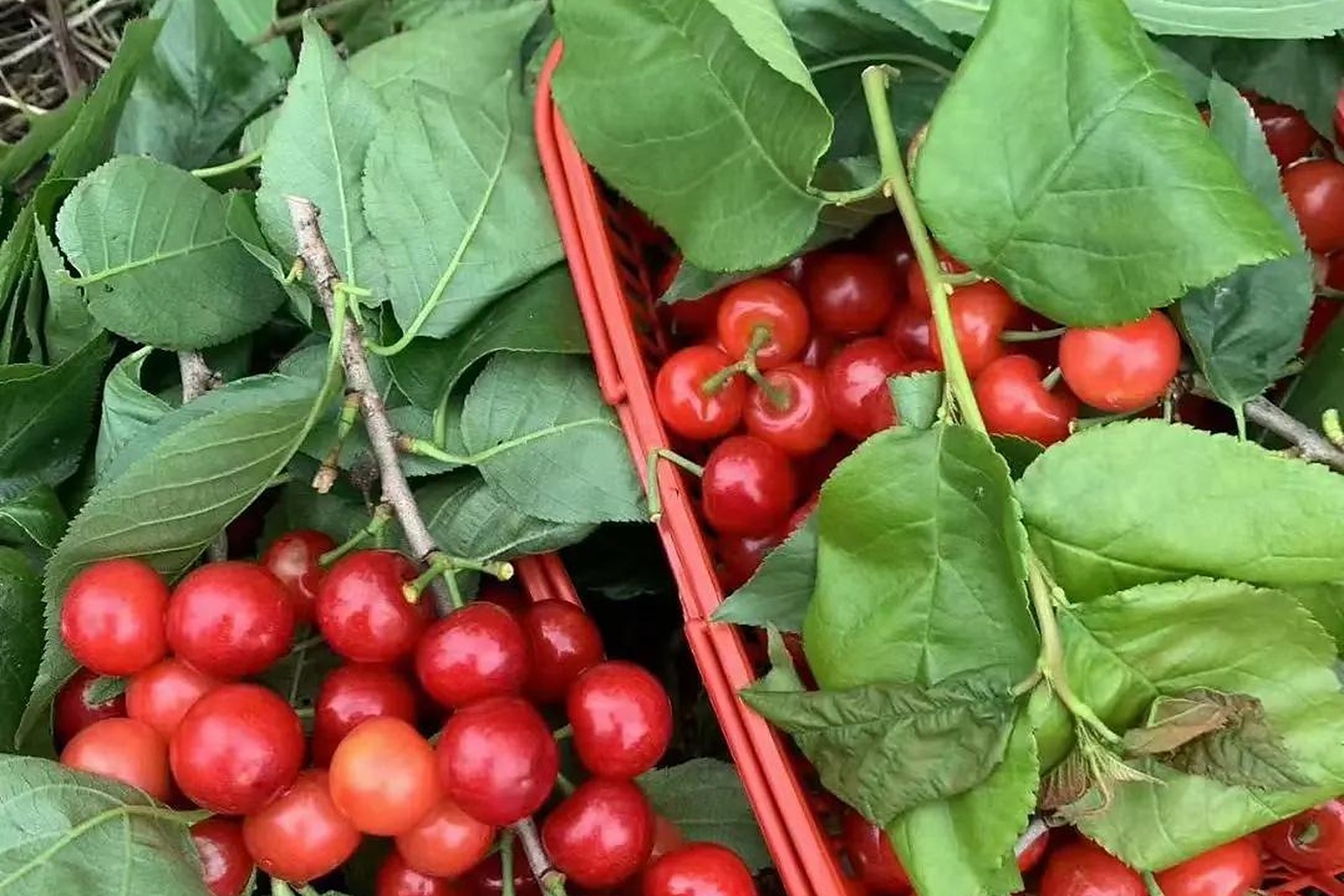
The honest grade is geography plus the ripeness clock. In 通州区 Tōngzhōu Qū Tongzhou District, Beijing the orchards gather along the town’s lanes between the two rivers, where the clientele is half 周末 zhōumò weekend pickers with empty baskets and half city buyers collecting pre-ordered boxes – a mix that keeps the rows honest in a way a fruit-stand pile never could, because a grower here is graded by returning families who remember which block ripened sweet last year (worth confirming the details – which gardens book by phone and which take walk-ins). The region’s fruit holds a national geographical-indication listing for Tongzhou’s big cherries (worth confirming which year and which registry), and the picker’s test outranks any label: lift the stem – fresh fruit parts clean from a green, pliable stalk; a dry brown stalk means the fruit has been waiting. A per-person bill runs on the basket and the week, so call it worth confirming the details rather than a fixed number, and come early in the day or on a weekday: the June sun empties the shade as fast as it fills the rows.
The wry truth is that 西集大樱桃 Xíjí dà yīngtáo is over-rated as a weekend photo fruit and under-rated as soil reading: the picking-visit genre files it under “farm experience”, while the actual thing – a double-river sand plain whose day-dry, night-damp rhythm a tree can taste, and a varietal relay planted to stretch weeks out of a season that lasts a blink – is hydrology and horticulture the flyer never explains. The locals’ own four syllables for the soil, 蒙金夜潮 méngjīn yècháo night-tide sand, are the whole agricultural report the brochures paraphrase. The self-deprecating footnote, and the district braid: a food writer will explain “terroir” to a grower whose entire answer is to snap a cherry in half and hand it over, weigh a basket at heroic shutter, and then call the fruit “commendably photogenic” as if red were a flavour – which is the honest grade: 西集大樱桃 Xíjí dà yīngtáo is a working orchard the writer will romanticise more than he picks from, and the family at the next row has already finished a kilo standing up and bargained for the second before the shutter closes. The same 通州区 Tōngzhōu Qū Tongzhou District, Beijing thread runs on: the canal catfish of 小楼烧鲇鱼 Xiǎolóu shāo niányú Xiaolou braised catfish fries golden on the old South Street, the sesame-and-brown-sugar rounds of 大顺斋糖火烧 Dàshùnzhāi táng huǒshao Dashunzai sugar huoshao stack in the Hui-quarter shops, the ruby jars of 仙源腐乳 Xiānyuán fǔrǔ Xianyuan fermented beancurd line the shop shelves, and the trellises of 张家湾葡萄 Zhāngjiāwān pútáo Zhangjiawan grapes take the season on into autumn – one district, four more tables.
Words and Names
- 西集镇 Xíjí Zhèn / Xiji Town · the double-river orchard corner of southeastern Tongzhou - 蒙金夜潮 méngjīn yècháo / night-tide sandy loam · the day-dry, night-damp soil the cherries drink by - 大樱桃 dà yīngtáo / big cherry · the sweet cultivar family sized for gift boxes - 红灯 Hóngdēng / Red Lantern · the mid-season heart-shaped standard of the rows - 雷尼 Léiní / Rainier · the gold-blushed late-season close of the relay - 采摘季 cǎizhāi jì / picking season · the mid-May-to-June weeks the town plans around - 地理标志 dìlǐ biāozhì / geographical indication · the national listing the plain’s fruit carries - 通州区 Tōngzhōu Qū / Tongzhou District · the Beijing district holding the orchard plain
What the Locals Know
- Pick by the cultivar, not the calendar: 早大果 zǎodàguǒ opens the season, 红灯 Hóngdēng carries the middle, 雷尼 Léiní closes it – ask which block is ripe this week (worth confirming the details with each garden).
- Lift the stem: a green pliable stalk means fruit picked fresh; a dry brown one means the basket has been waiting – the stem grades the shed.
- Book the first weekend you can: mid-May into June is the whole argument, and the best rows empty fast on fine weekends (worth confirming which gardens take walk-ins).
- Eat the first kilo standing: fruit off the branch is a different fruit from the same variety driven home – buy the box, but taste the row.
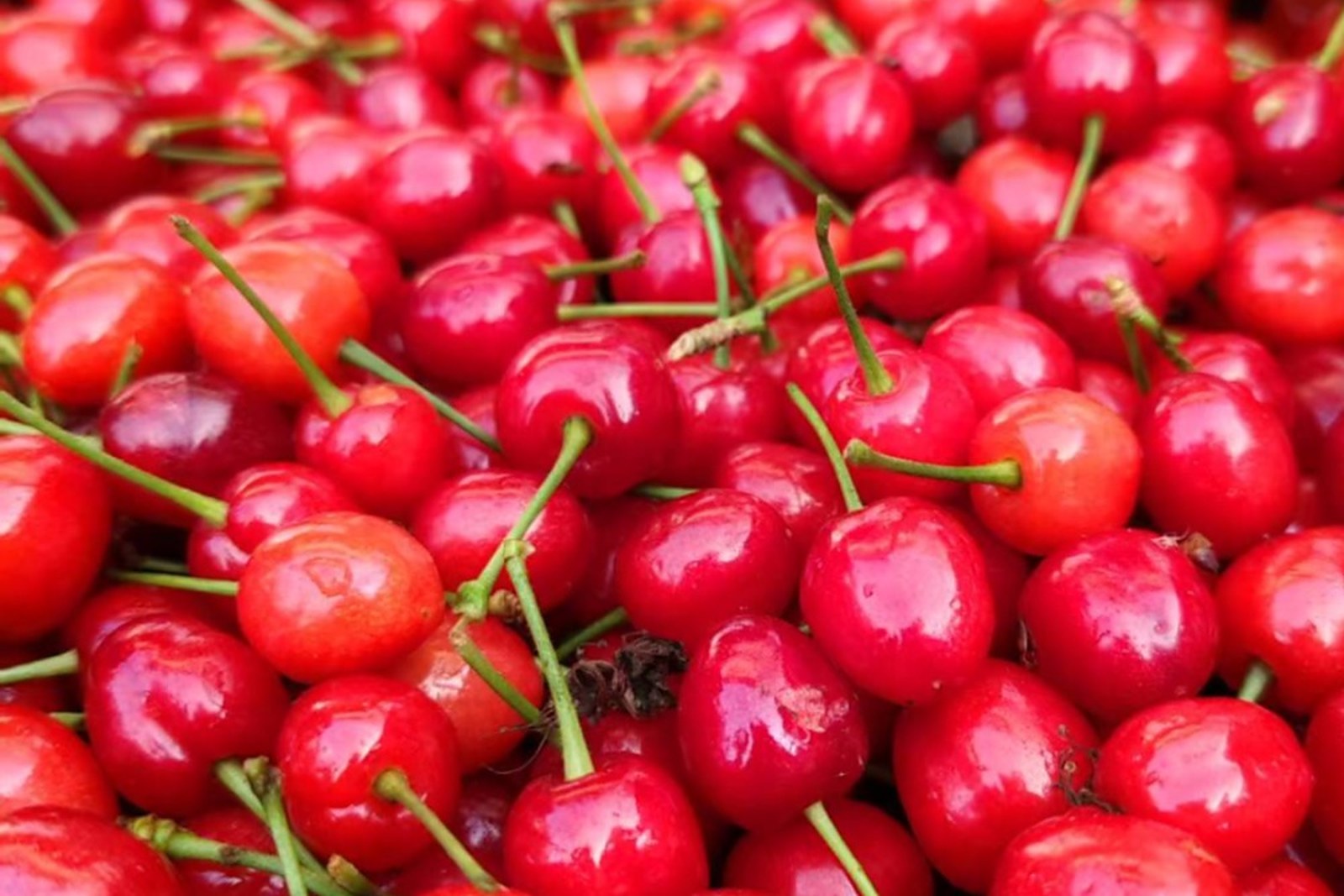
flowcloud would say that the 西集大樱桃 Xíjí dà yīngtáo is the double-river sandy loam, night-damp soil and May picking rows of Tongzhou District, Beijing – a 蒙金夜潮 méngjīn yècháo plain between the canal and the 潮白河 Cháobái Hé where some twenty cultivars in relay fill the mid-May-to-June 采摘季 cǎizhāi jì – and that the honest move is to pick by the cultivar, lift the stem, and eat the first kilo standing, because the rivers built the soil and the soil keeps the sweetness. All checked October 2026.
Where to find it: Tongzhou District Tōngzhōu Qū, Beijing – the cherry picking gardens and village shed counters along the lanes of 西集镇 Xíjí Zhèn Xiji town, around 沙古堆 Shāgūduī and the other orchard villages between the Grand Canal and the Chaobai River, open through the mid-May-to-June picking season (worth confirming the details – which gardens book by phone and which take walk-ins); a per-person bill runs on the basket and the week, so call it worth confirming the details rather than a fixed number. Xiji big cherry is the double-river sandy loam, night-damp soil and May picking rows of Tongzhou District, Beijing, soil before sweetness.