
Xinchang Street Eats: Begonia and Plum-Blossom Cakes, River-Town Zongzi Stalls and the Drama-Filming Tea Shops of an Old Water Town in Pudong New Area, Shanghai
新场桥头海棠热,粽香塌饼水乡甜。Xīnchǎng qiáotóu hǎitáng rè, zòng xiāng tābǐng shuǐxiāng tián – At Xinchang’s bridges the begonia cakes come off the moulds hot; zongzi fragrance and griddle cakes sweeten the water town.
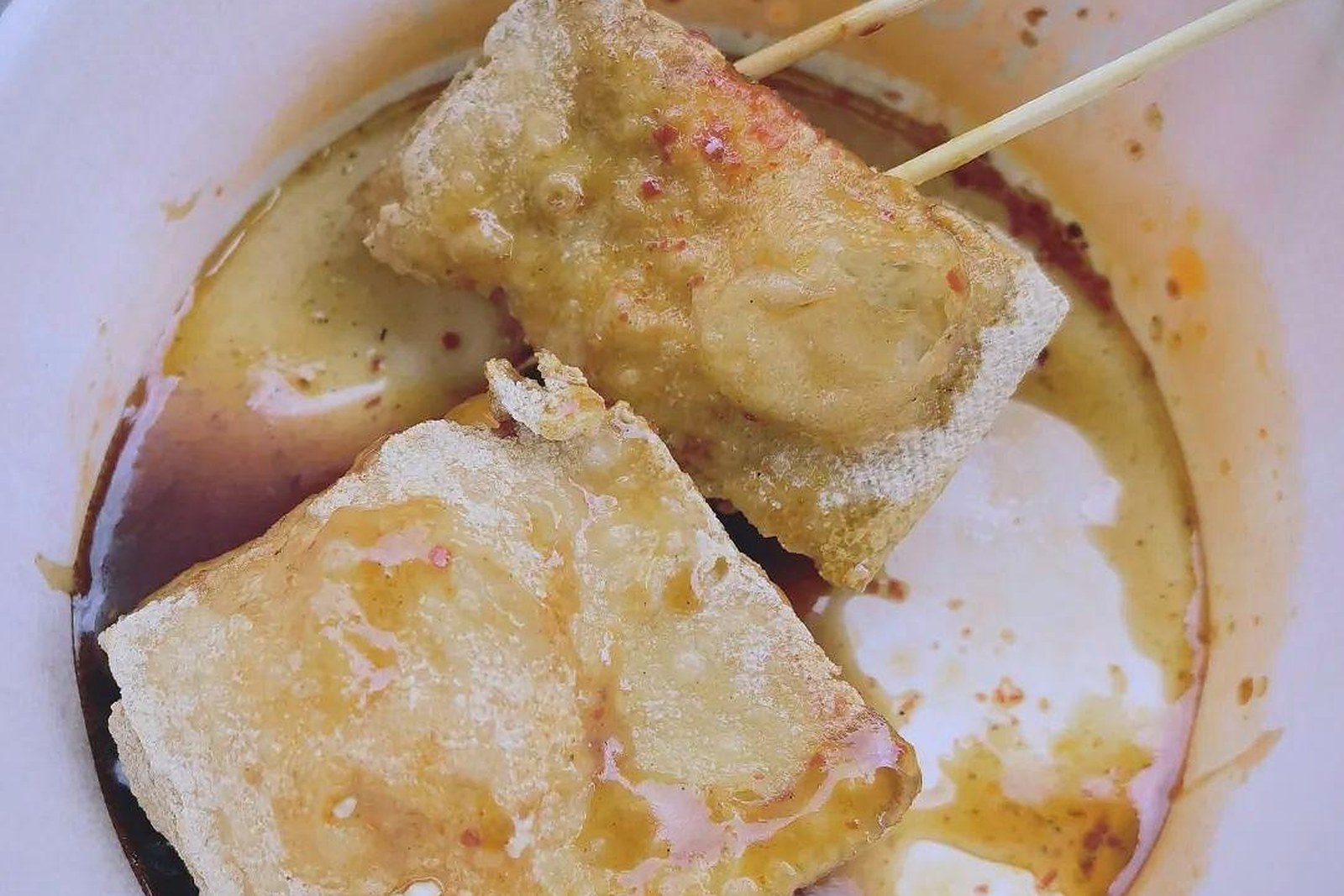
新场古镇小吃 Xīnchǎng gǔzhèn xiǎochī Xinchang Old Town snacks is the water-town snack trade of 新场古镇 Xīnchǎng Gǔzhèn Xinchang Old Town in 浦东新区 Pǔdōng Xīn Qū Pudong New Area, Shanghai – the old canal town on the district’s southern reach where the riverside streets still run to their original width and the food stalls string along the water between the stone bridges. The windows are the town’s own almanac: 海棠糕 hǎitáng gāo begonia cakes and 梅花糕 méihuā gāo plum-blossom cakes baked in their flower-shaped moulds and turned out hot into paper trays, 粽子 zòngzi zongzi boiled in the big morning pots – fat ones with salted yolk, slim ones with plain sweet bean – and 塌饼 tābǐng the flat griddle cakes fried at the pan windows, the whole 水乡食摊 shuǐxiāng shítān water-town stall line feeding the strolling tide (worth confirming the details – which stall holds which bridge frontage turns over as old towns do, and the specific doors are best confirmed on the street rather than recited). The town carries a second trade inside the first: the tea shops and riverfront rooms that serial dramas keep borrowing as backdrops – crews rig their cameras between the lattice windows and the old counters, and the shops that appear on screen the year before fill with visitors the season after (worth confirming the details – which frontage starred in which production shifts with every shoot, and the tea shops’ own notices are the honest guide). The clientele is the weekend tide plus the town’s own morning loop. The blunt definition: the water town that eats in courses along the canal – the taste of Pudong eaten one hot mould at a time.
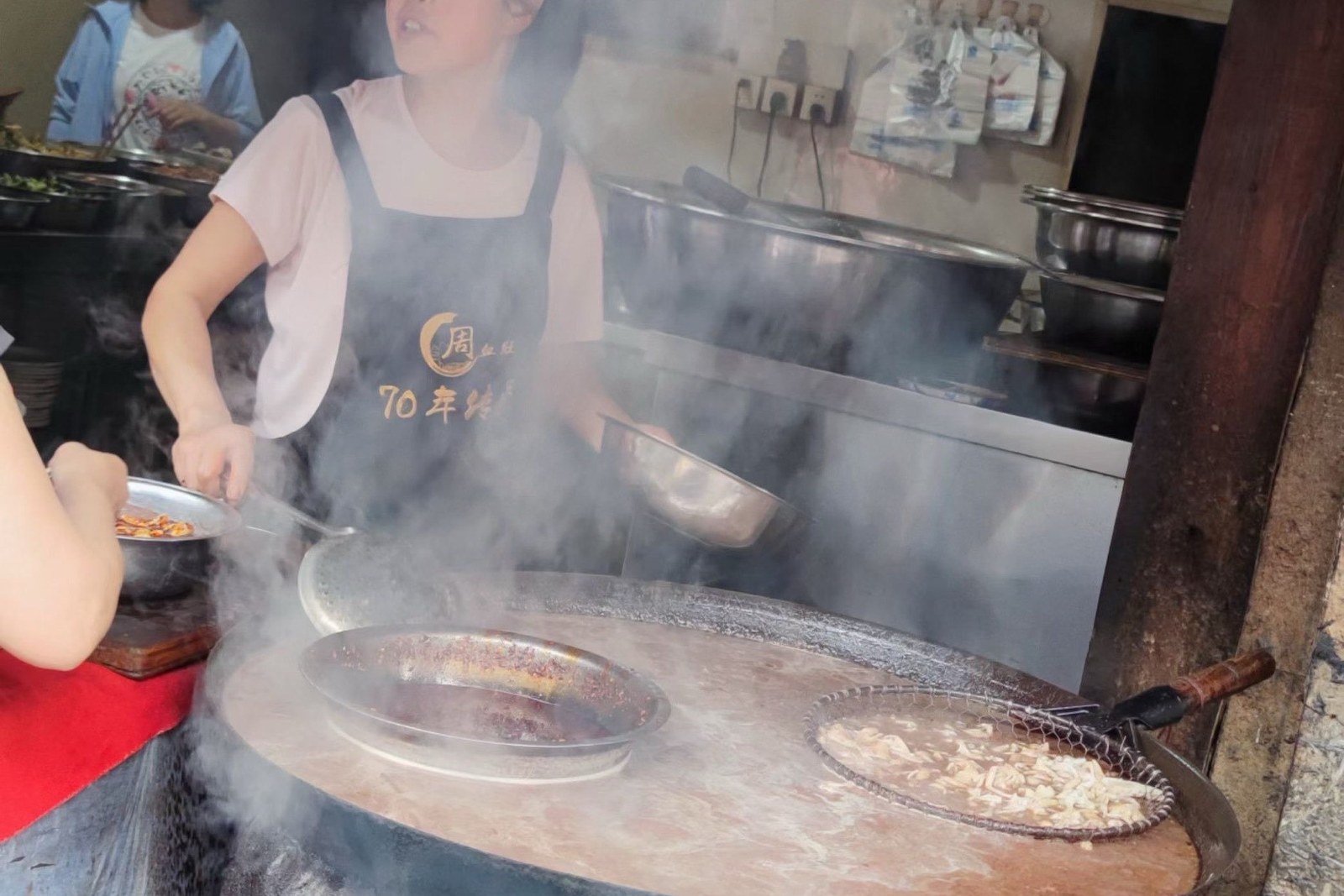
Call it honestly: water-town money on a strolling clock. Getting there is one door: 地铁16号线 dìtiě shíliù hào xiàn Metro Line 16 to 新场站 Xīnchǎng zhàn Xinchang station is the rail door, and the last stretch into the old town runs by bus, short ride or a flat walk down toward the bridge lanes (worth confirming the details for the connecting services and which gate fronts the canal streets today, the approaches shifting with the old town’s season arrangements). A begonia or plum-blossom cake prices at pocket change, a zongzi at street-snack money, a seated canal-side tea table with snacks at casual-neighbourhood money – though exact figures are worth confirming the details on rather than quoting, the stalls being small, family-run and priced for the stroller before the tour. The crowds run to the weekend tide: Saturdays and Sundays pack the bridge lanes shoulder to shoulder and the cake moulds sell out by late afternoon, weekday mornings hand the canal to the residents and the drying laundry, and a weekday mid-afternoon, when the moulds bake for the remaining regulars and the river runs quiet, is the eater’s own hour (worth confirming the details for individual stalls’ hours, which follow the old town’s trade rather than any posted sign).
The honest star is the bridge-to-bridge eating line, and the snacks are graded against it. What gets oversold is the “untouched ancient water town” framing: guides sell a preserved wonder of endless authentic stalls, and a first-timer may meet an ordinary canal town of snack windows, souvenir counters and camera crews – which is not the disappointment but the point. What repays the effort is grading the line the way the town does: a cake window judged by whether the moulds are filled to order and turned out hot rather than held warm from the last batch, a zongzi pot judged by whether the leaves unwrap sticky and whole, a 塌饼 tābǐng pan judged by whether the griddle is actually frying when you arrive. The test costs nothing: eat down the street in courses – a hot cake at one bridge, a zongzi at the next – and take the counter with the resident queue rather than the photograph queue (worth confirming the details – the counters migrate with the leases, and today’s plainest window may be next season’s remembered one).
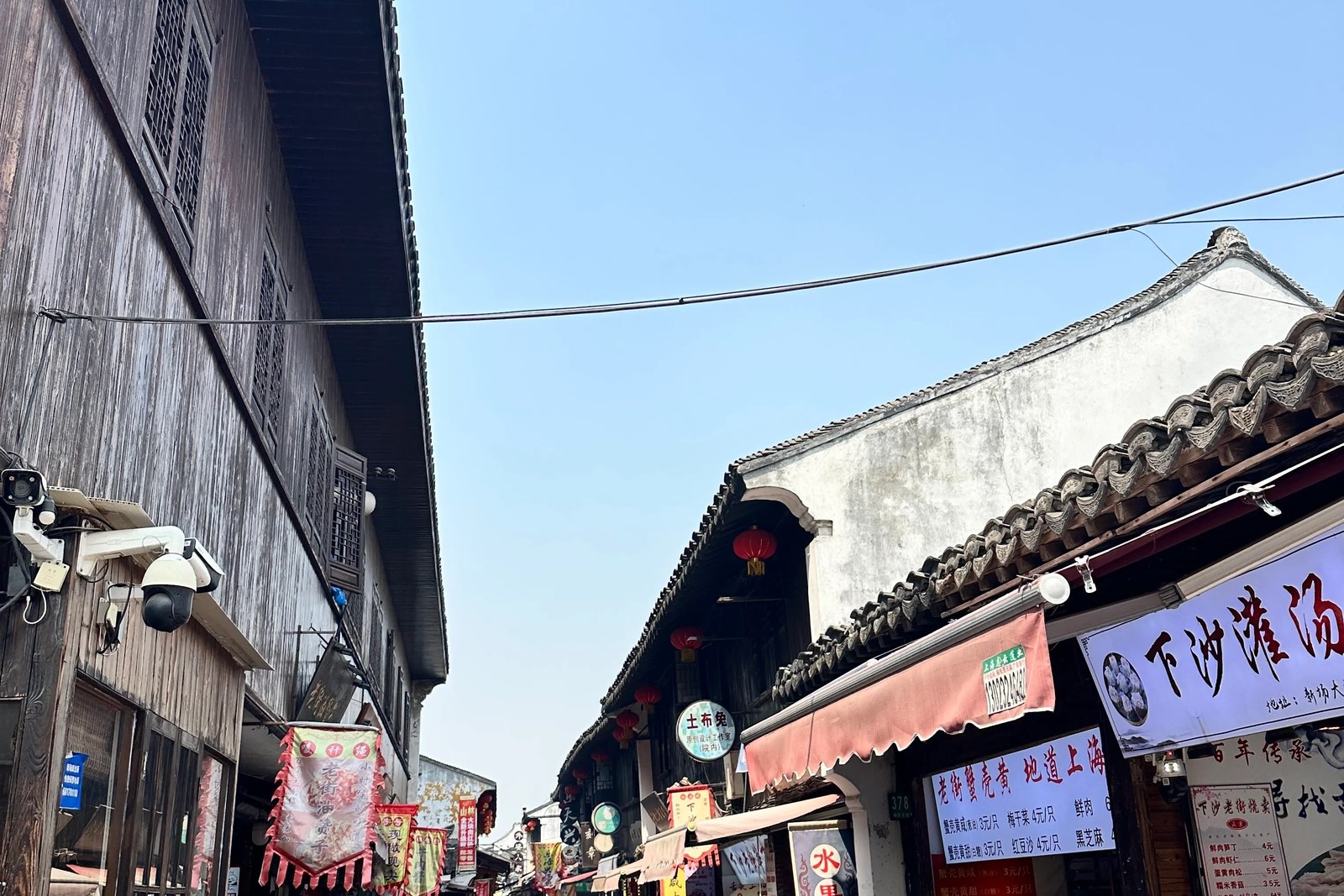
The town’s deepest habit is the canal-side tea table: residents who take the morning seat above the water, order the pot and the day’s first cakes, and let the serial-drama crews set up around them without moving – a patience the stalls have learned to cook around. Time it right – a weekday morning, before the stroller tide – and the tea table explains the town better than any filming notice: the dramas borrow the backdrop, and the tea table keeps the town (worth confirming the details – which riverfront rooms keep the full morning service today, the tea-side trade thickening with the filming seasons and thinning on wet weekdays).
The rest of this Pudong list keeps other tables: the root-kitchen banquets of 三林本帮菜 Sānlín běnbāng cài Sanlin benbang cooking simmer a metro ride north at Sanlin, the flaky-pastry ovens of 高桥松饼 Gāoqiáo sōngbǐng Gaoqiao songbing bake at the river mouth, the tower-dining registers of 陆家嘴商圈餐饮 Lújiāzuǐ shāngquān cānyǐn Lujiazui mall and river-view dining stack the skyline mid-district, and the international street tables of 碧云路国际餐饮街 Bìyún Lù guójì cānyǐn jiē Biyun Road international eating street cook in five tongues at Jinqiao – one district, four more tables, all inside 浦东新区 Pǔdōng Xīn Qū Pudong New Area; and when the canal afternoon needs a bed in the old town or a route onward, the stay-and-street notes for the district pick up where the cake moulds leave off.
Words and Names
What the Locals Know
flowcloud would say that the 新场古镇小吃 Xīnchǎng gǔzhèn xiǎochī is the begonia-cake moulds and the zongzi pots of a canal town in Pudong New Area, Shanghai – a 水乡茶食 shuǐxiāng cháshí discipline where the stone bridges and the drama-camera rigs answer the hot paper trays and the griddle pans along the 新场 Xīnchǎng canal front – and that the honest move is to eat the bridge line in courses, split a warm mould cake with the strollers, and let the residents’ tea table cast the vote, because the dramas borrow the town and the tea tables keep it. All checked October 2026.
Where to find it: 浦东新区 Pǔdōng Xīn Qū Pudong New Area, Shanghai – the water-town snack belt of 新场古镇 Xīnchǎng Gǔzhèn Xinchang Old Town, strung along the canal between the stone bridges where the 海棠糕 hǎitáng gāo begonia cakes, 梅花糕 méihuā gāo plum-blossom cakes, 粽子 zòngzi zongzi and 塌饼 tābǐng griddle cakes keep the 水乡食摊 shuǐxiāng shítān stall line and the serial-drama tea shops keep their riverfront seats, reached from 新场站 Xīnchǎng zhàn on Metro Line 16 and the short connecting ride or walk into the old town, where the town keeps the strolling clock – weekend middays the visitor tide over the bridges, weekday mornings the residents’ canal loop, weekday mid-afternoon the eater’s own (worth confirming the details – which stall and which tea shop hold which frontage today, old-town doors turning over as old towns do); pocket-change to casual-neighbourhood money, so call it worth confirming the details rather than a fixed number, and let the residents’ bridge-to-bridge queue cast the vote. Xinchang street eats is the begonia and plum-blossom cakes, river-town zongzi stalls and the drama-filming tea shops of an old water town in Pudong New Area, Shanghai – the taste of 浦东新区 Pǔdōng Xīn Qū Pudong New Area eaten one hot mould at a time beside the canal. All checked October 2026.