
Dumplings in Taro Coats: Xinchang Yujiao
芋泥捏皮包鲜馅,山中滋味最清欢 Yù ní niē pí bāo xiān xiàn, shān zhōng zīwèi zuì qīnghuān – Taro mash pinched into skins around fresh filling; mountain flavors make the purest joy
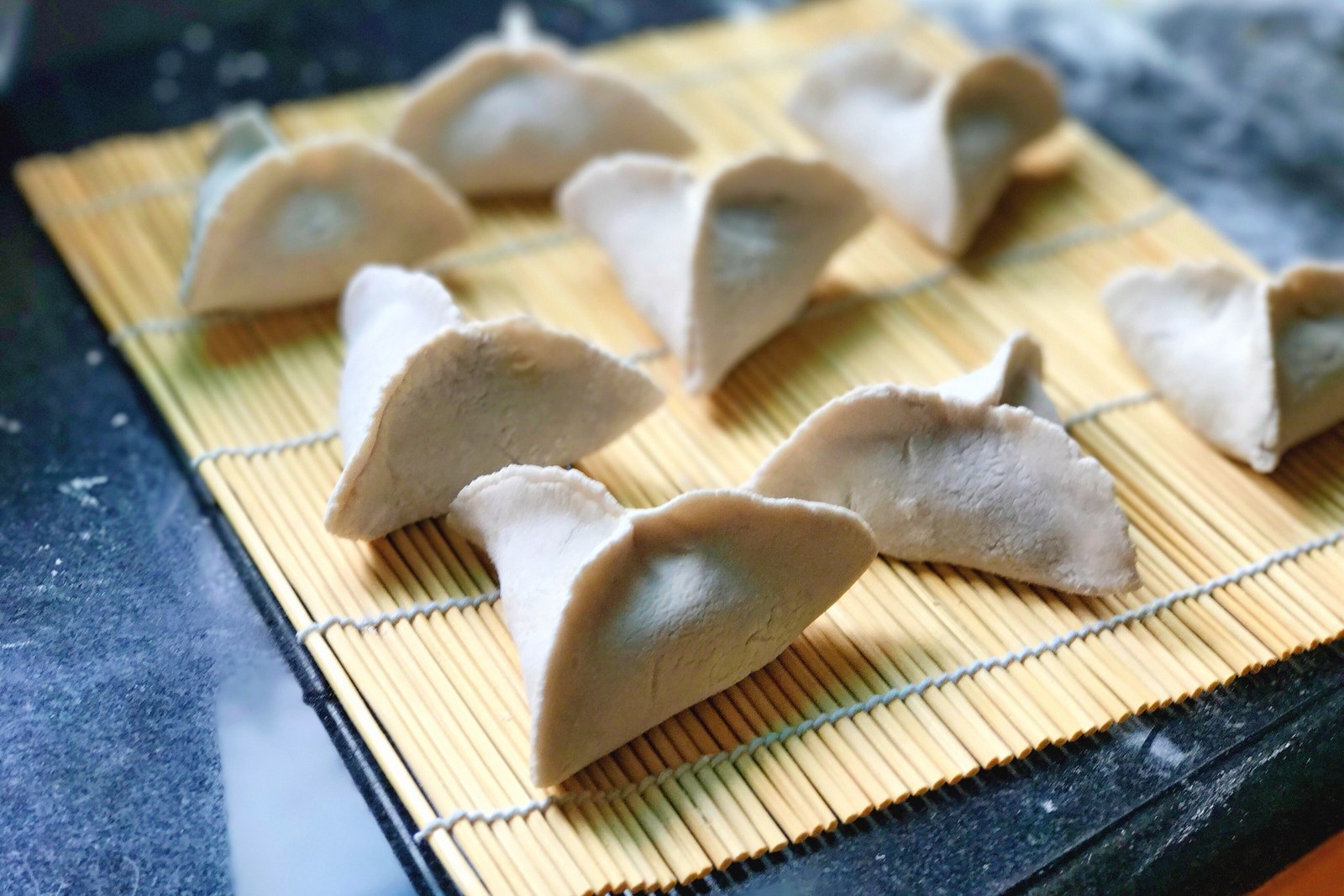
新昌芋饺 Xīnchāng yùjiǎo is the mountain county’s answer to the dumpling: in 新昌县 Xīnchāng Xiàn Xinchang the wrapper is not flour at all but cooked taro – 芋艿 yùnǎi taro corms steamed, peeled and pounded into a warm mash, then kneaded with sweet-potato starch into a dough that wraps like silk and chews like nothing on the plain. The filling is pork and diced bamboo shoot, the shape is a tight little triangle, and the result is a dumpling whose skin slides, bounces and clings all at once.
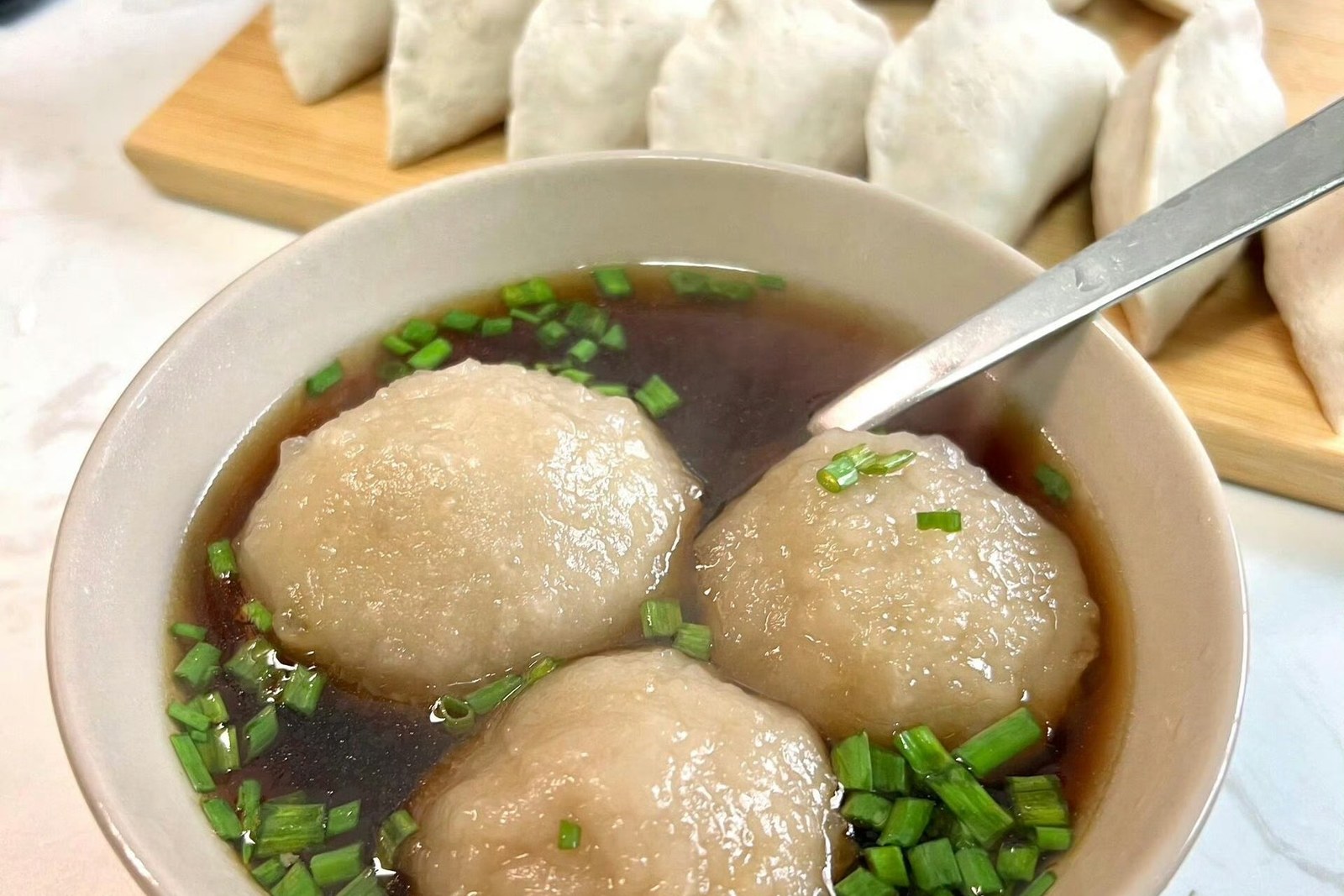
The wrapper is the whole philosophy: mountain counties grew little wheat, so the hills improvised skins from what they had – taro for softness, sweet-potato starch for pull – and the technique stayed in family kitchens for generations. Fresh-made wrappers are warm and tacky in the best way; by the next morning they stiffen, which is why the county’s serious shops roll and fill in the same hours they boil.
The serving is a soup ritual: the triangles drop into a bone-broth pot with greens, come up glossy, and land in bowls finished with lard, scallion and a splash of the cooking broth. Locals eat them with a spoon first – the skin stays slippery right to the last bite – and the broth, thinned by taro starch into something silky, is considered half the dish.
Eat them where the mountains keep the tradition: the old shops around Xinchang’s county town boil them all morning for pilgrims walking to the Great Buddha Temple, farmhouse kitchens in the 天姥山 Tiānmǔ Shān valleys serve them to hikers off the old road, and a bowl costs little more than pocket change. After a mist morning on the ridge, hot yujiao are the county’s welcome home.
The same city holds more flavors worth chasing: 绍兴臭豆腐 Shàoxīng chòu dòufu the fried stinky tofu, 梅干菜扣肉 méigāncài kòuròu the steamed pork, 嵊州小笼包 Shèngzhōu xiǎolóngbāo the soup dumplings, or 西施豆腐 Xīshī dòufu the tofu stew of Zhuji – four more doors into the same 绍兴市 Shàoxīng Shì Shaoxing City table.
Words and Names
芋饺 yùjiǎo taro dumplings, the triangle wrappers; 芋艿 yùnǎi taro corms, the skin’s base; 番薯淀粉 fānshǔ diànfěn sweet-potato starch, the skin’s spring; 三角饺 sānjiǎo jiǎo the triangle fold of Xinchang; 猪油 zhūyóu lard, the finish the broth deserves.
What the Locals Know
Ask when the wrappers were made – same-day is the only answer worth ordering. The soup should read faintly silky from the taro starch; a clear watery broth means yesterday’s skins. And add the lard yourself if the counter sets it out: the county’s rule is that yujiao without lard is only half a bowl.
flowcloud would say a bowl of Xinchang yujiao is the hills arguing with the plains: no wheat, no problem – the mountain mashed its taro, borrowed a fold, and built a dumpling the flour counties cannot copy. All checked November 2026.
Where to find it: Morning shops and dumpling houses around the county town of 新昌县 Xīnchāng Xiàn Xinchang boil them fresh all day – ten to fifteen yuan a bowl in broth, the triangle skin must bounce not crumble, and farmhouse tables along the Tianmu trails are the version worth walking for. All checked November 2026.