
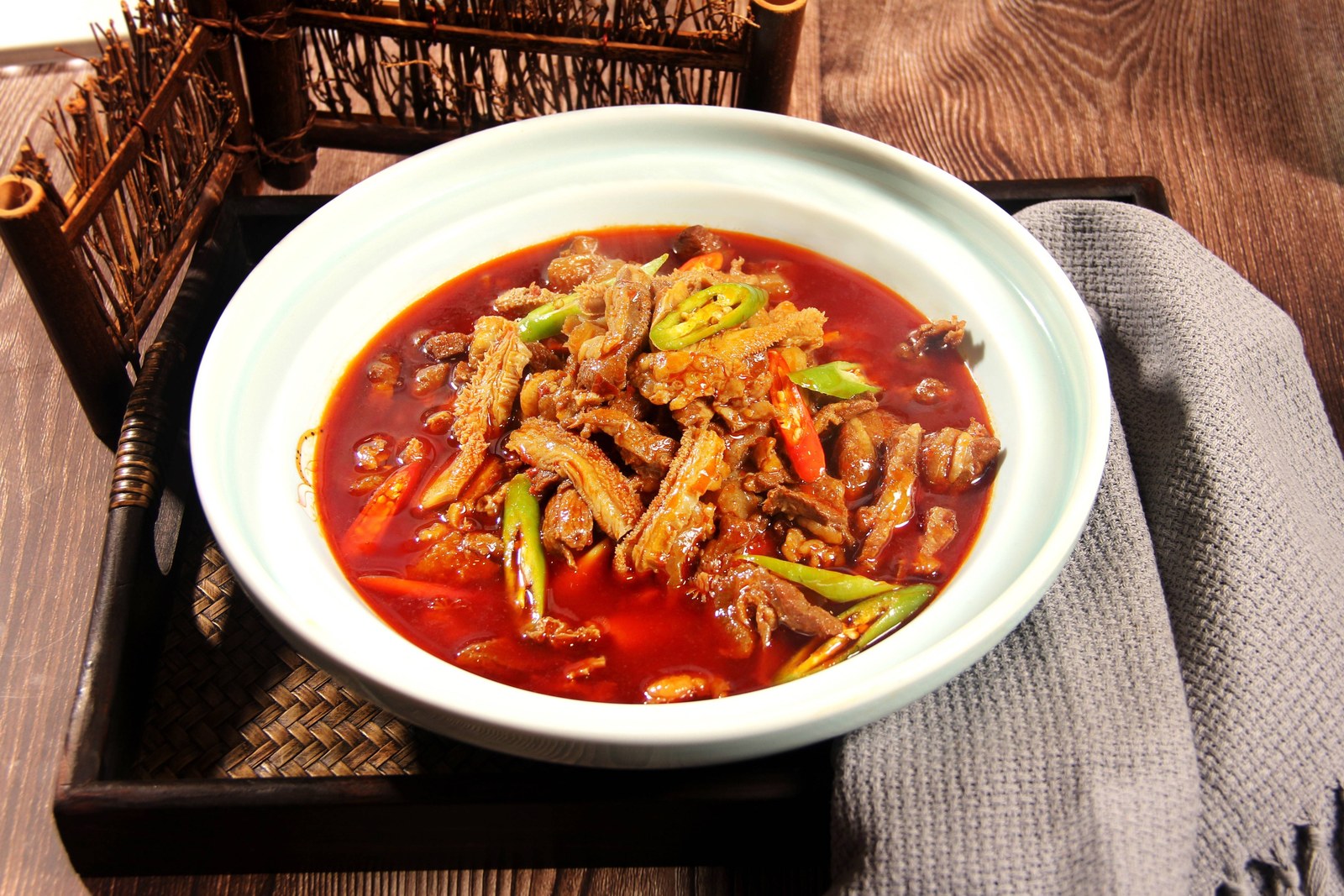
新化三合汤 xīn huà sān hé tāng is a soup built from three parts of one animal, and it is the bowl that 新化县 Xīn huà xiàn, a county in the hills of central 湖南 Hú nán administered from 娄底市 Lóu dǐ shì, puts in front of anyone who asks what the place tastes like. 三合 sān hé is three together, and the three are beef, tripe and blood: the tenderloin of a young yellow bull, the thick black-skinned tripe of a water buffalo, and blood caught fresh at the killing, all of it in one red, sour, peppery broth that is thickened with nothing at all. The county calls it 新化三大碗之首 Xīn huà sān dà wǎn zhī shǒu, the first of Xinhua’s three great bowls, and on a menu it is just as often written 霸王汤 bà wáng tāng, the overlord’s soup, a name it was given in the nineteenth century and has never handed back.
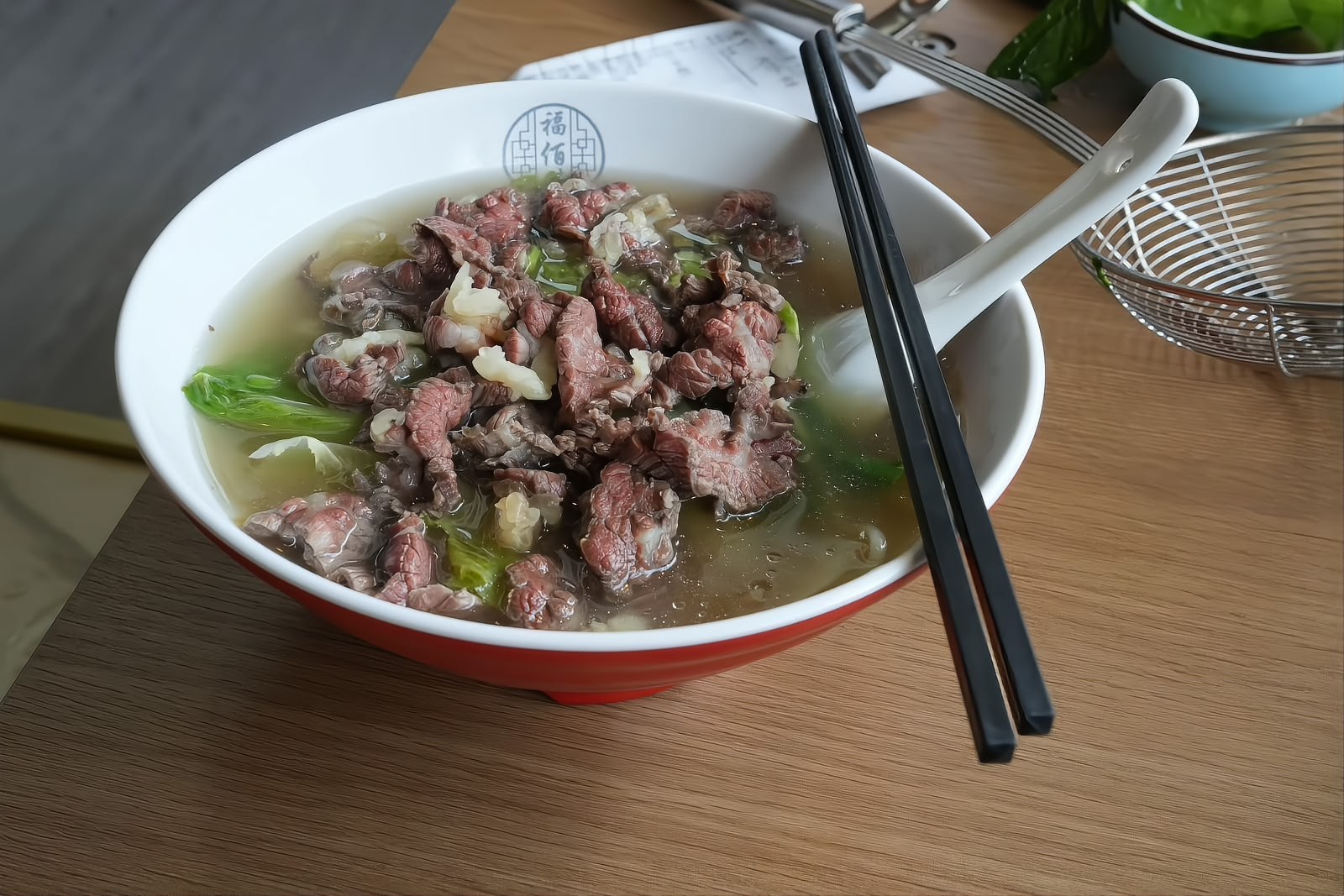
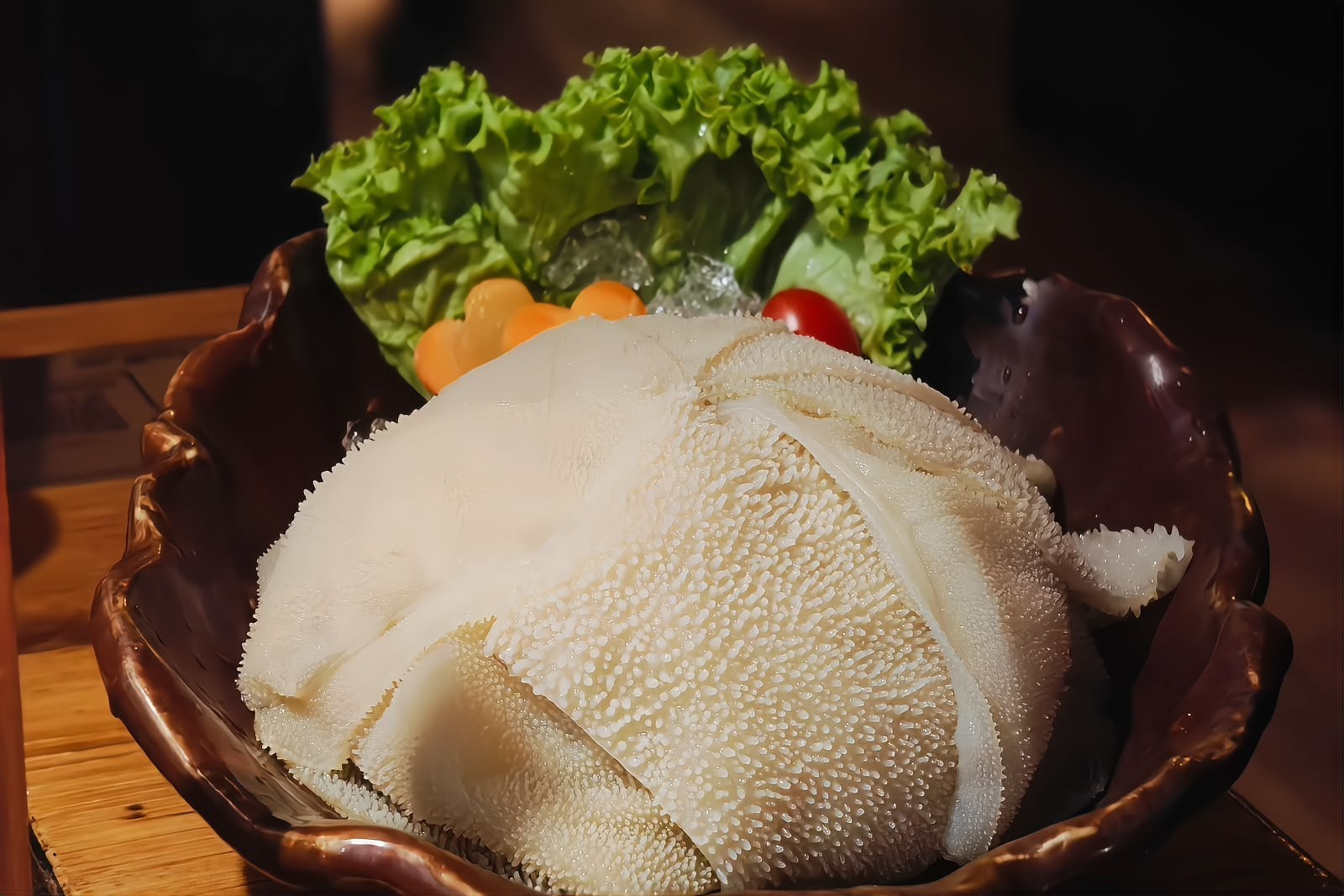
The selection is the whole argument, and the trade states it as a rule rather than a preference. 公黄牛的里脊肉, the tenderloin of a bull of the local yellow cattle, is sliced across the grain into pieces thin enough to curl; 母水牛的毛肚 máo dù, the tripe of a female water buffalo, is cut into strips about a centimetre wide with the dark inner skin left on, because the skin is where the crunch lives; and 牛血 niú xuè, blood from the same morning’s killing, is set, cut into slices some three millimetres thick and put in at the end, because it toughens if it cooks too long. The county compresses all of it into four characters, 三黄两水 sān huáng liǎng shuǐ, three yellows and two waters: yellow-cattle beef, yellow-cattle blood and yellow chilli, water-buffalo tripe and well water. The three textures have nothing to do with one another. The beef is soft and only just resistant, the tripe cracks between the teeth and tastes faintly sweet, and the blood is smoother than bean curd and will not break up however long it stands in the pot. The broth comes out red and clear at once, oily without being heavy, and it is sharpened with 米醋 mǐ cù, rice vinegar, which is what makes the bowl taste awake rather than merely hot.
What makes it unmistakably 新化 is the last thing that goes in. 山胡椒油 shān hú jiāo yóu, mountain-pepper oil, is pressed from the fruit of 木姜子 mù jiāng zǐ, the litsea tree that grows wild through these hills, and it is a thin yellow-green oil whose smell sits somewhere between lime peel, camphor and black pepper. It is dosed by the spoonful at the very end with the heat off, and it is the reason the dish travels badly: too little and the soup is an ordinary sour beef broth, too much and the bowl tastes of a chemist’s shop. With it go dried red chillies fried in oil until the pan runs scarlet, sliced ginger, garlic, spring onion and a little salt. The county’s verdict on the finished thing is 麻辣鲜香 with a sour edge, and the local instruction is to eat it hot enough to bring sweat out on the forehead. This is a wet, foggy river valley, and the soup is eaten, or at least defended, as something that drives damp out of the body; the county’s own material describes it as 驱寒祛湿 qū hán qū shī, dispelling cold and damp, and treats that as a fact rather than a flourish.
Two origin stories are in circulation and the county prints both. The older belongs to the 梅山 Méi shān country and to the 苗 Miáo customs practised in it long before the Song: an old man passing through the 横阳山 Héng yáng shān came upon a village butchering an ox, and when a man in the crowd foamed at the mouth and fell, he called for a bowl of ox blood with one piece of beef, one piece of unwashed tripe and three red chillies, boiled it and had the patient drink it; the man sweated, woke and was well, and the stranger walked off into the rock. The newer story is a working man’s one. From the 道光 Dào guāng years of the nineteenth century, men of 新化 made their fortunes building 毛板船 máo bǎn chuán, rough plank boats, floating timber down the 资江 Zī jiāng to 武汉 Wǔ hàn, selling the wood and breaking the boats up for fuel rather than sailing them home. The river had seventy-two rapids and the valley had fevers, and the men who worked it wanted a bowl that would put strength back into them and keep the damp out. The third layer is the 湘军 Xiāng jūn, the Hunan army of the 1850s, whose commander 曾国藩 Zēng Guó fān is said to have had the soup cooked for soldiers sick with rheumatism, which is where 霸王汤 is said to come from. It was listed as provincial intangible cultural heritage in 2018 and is promoted today as a 中国湘菜地标美食, a landmark dish of Hunan cooking.
Words and Names
三合汤 sān hé tāng is the dish, 三合 meaning three things brought together, and 新化三合汤 puts the county’s name in front of it. 霸王汤 bà wáng tāng, the overlord’s soup, is the same bowl under the nickname it carries on menus. 山胡椒油 shān hú jiāo yóu is the mountain-pepper oil, and 木姜子 mù jiāng zǐ the wild litsea tree it is pressed from; the oil is sold in Hunan under both names. 毛肚 máo dù is tripe with its dark lining still on, which is the point of it, 牛血 niú xuè is beef blood, 米醋 mǐ cù is the rice vinegar, and 三黄两水 sān huáng liǎng shuǐ is the four-character rule for what may go in the pot. 梅山 Méi shān, plum mountain, is the old name for this upland country and for the culture the county still claims.
What the Locals Know
Order it by the bowl rather than from the set menu, because it is a soup and a main course at once, and expect it to arrive scalding enough that you should not stir it. The chilli oil and the mountain-pepper oil sit on the surface and go into the broth as you eat, so the first spoonful is milder than the last; anyone who stirs the bowl first gets the whole dose at once. Ask for the 洋溪 Yáng xī style if you want the version built around the blood, which is the tenderest in the county, and the 孟公 Mèng gōng style if you want the one that leans on the tripe, which is chewier and, to a good many local palates, the better bowl. The blood is the thing to judge a kitchen by: it should be smooth, hold its shape on the chopstick and taste of nothing but itself. The habit here is to eat it as the last thing before going home, on the argument that it does more for you than a nightcap, and the phrase to use if the surface oil is too much is 少放点油 shǎo fàng diǎn yóu, a little less oil.
flowcloud would say that a bowl invented to keep boatmen standing on a river with seventy-two rapids has ended up on an intangible-heritage list and in the guidebooks, which is what eventually happens to every food that was once simply a way of surviving hard labour.
Where to find it: the restaurants and late-night stalls of 新化县, above all in the county town 上梅镇 Shàng méi zhèn and along the 资江 Zī jiāng; the county sits in the west of 娄底市, about two hours by road from 长沙, and is reached either by the old 沪昆 Hù kūn railway to 新化站 at 上梅镇 or by high-speed train to 新化南站 at 洋溪镇, eighteen kilometres out. Look for it on the menu as 三合汤 or 霸王汤. It is a house dish in the towns of 洋溪 and 孟公, which the county treats as the two styles of the same soup, and it is served in the restaurants of 娄底 and 长沙, where the better kitchens keep a bottle of mountain-pepper oil behind the counter and add it at the table.