
怀乡鸡 Huái xiāng jī is the chicken of 信宜市 Xìn yí shì, the mountainous county-level city in the north of 茂名市 Mào míng shì, and it is named after 怀乡镇 Huái xiāng zhèn, the township it comes from. The bird is one of the oldest farm breeds in the province, with a breeding history the local record puts at more than a thousand years, and its defining feature is a colour: the feathers, the skin and the feet are all yellow, and the beak is yellow too, which is why it is also called 三黄鸡 sān huáng jī, the three-yellow chicken. It is a slow bird grown in hills, and it tastes of having walked around.
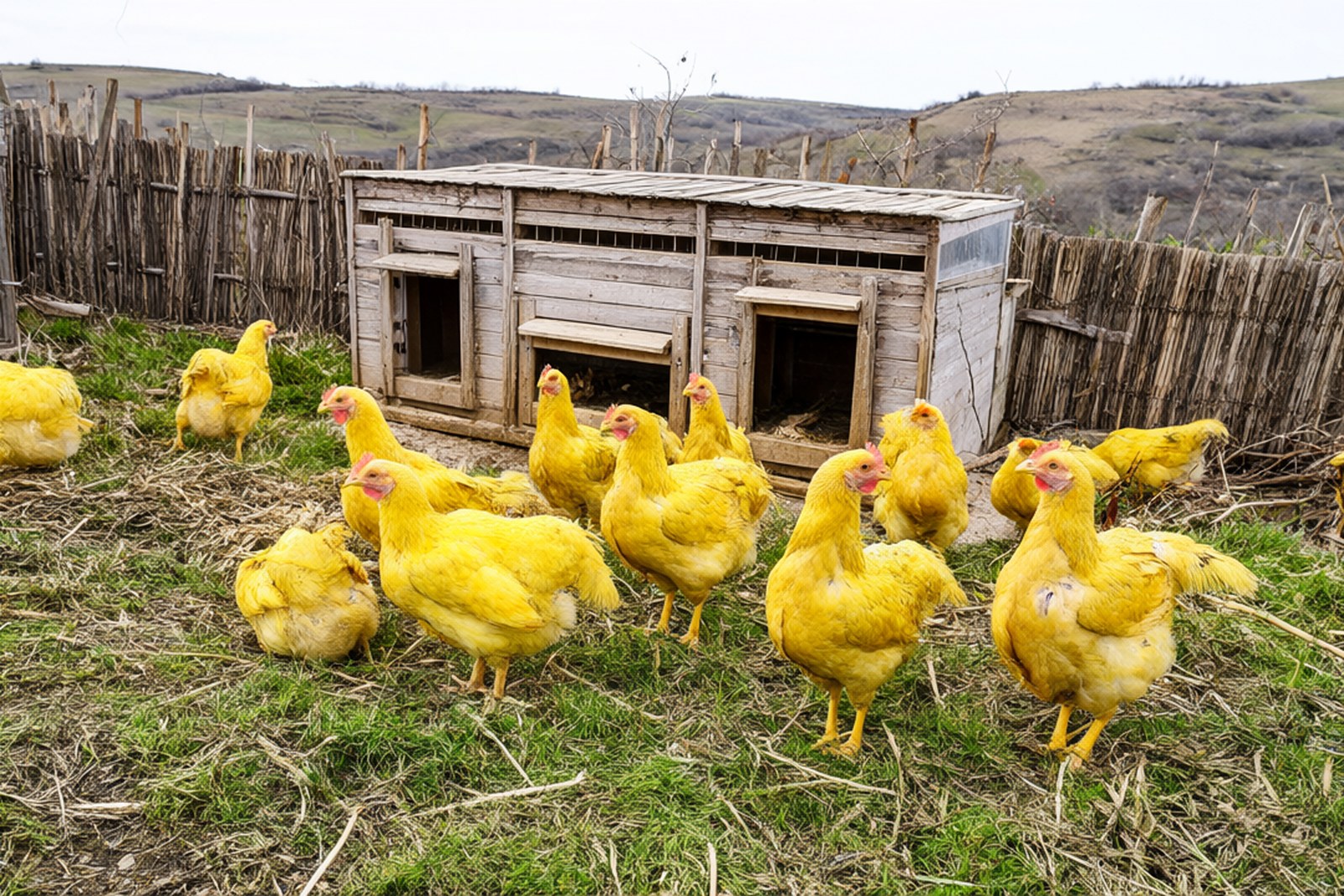
The county’s case for it is documentary rather than rhetorical. 信宜怀乡鸡 appears in the provincial register of livestock and poultry breeds, in the national register of animal genetic resources, and in the national protection list for those resources; it carries a national geographical-indication certification mark and protection status as a product, and the province has listed it among its named-brand products and as a regional public brand. The local claim that it stands among the four great chickens of Guangdong is the county government’s own phrasing, and the breed’s position in the province’s official lists is not in dispute even where the ranking is. What the registers are really recording is a bird adapted to a particular place: 信宜 is hill country on the border with 广西, its villages sit in valleys that hold the mist, and the chickens run in the orchards and the bamboo rather than in sheds. A bird grown that way takes months to reach the table, and the meat that comes off it is firm and flavoured rather than soft and neutral.
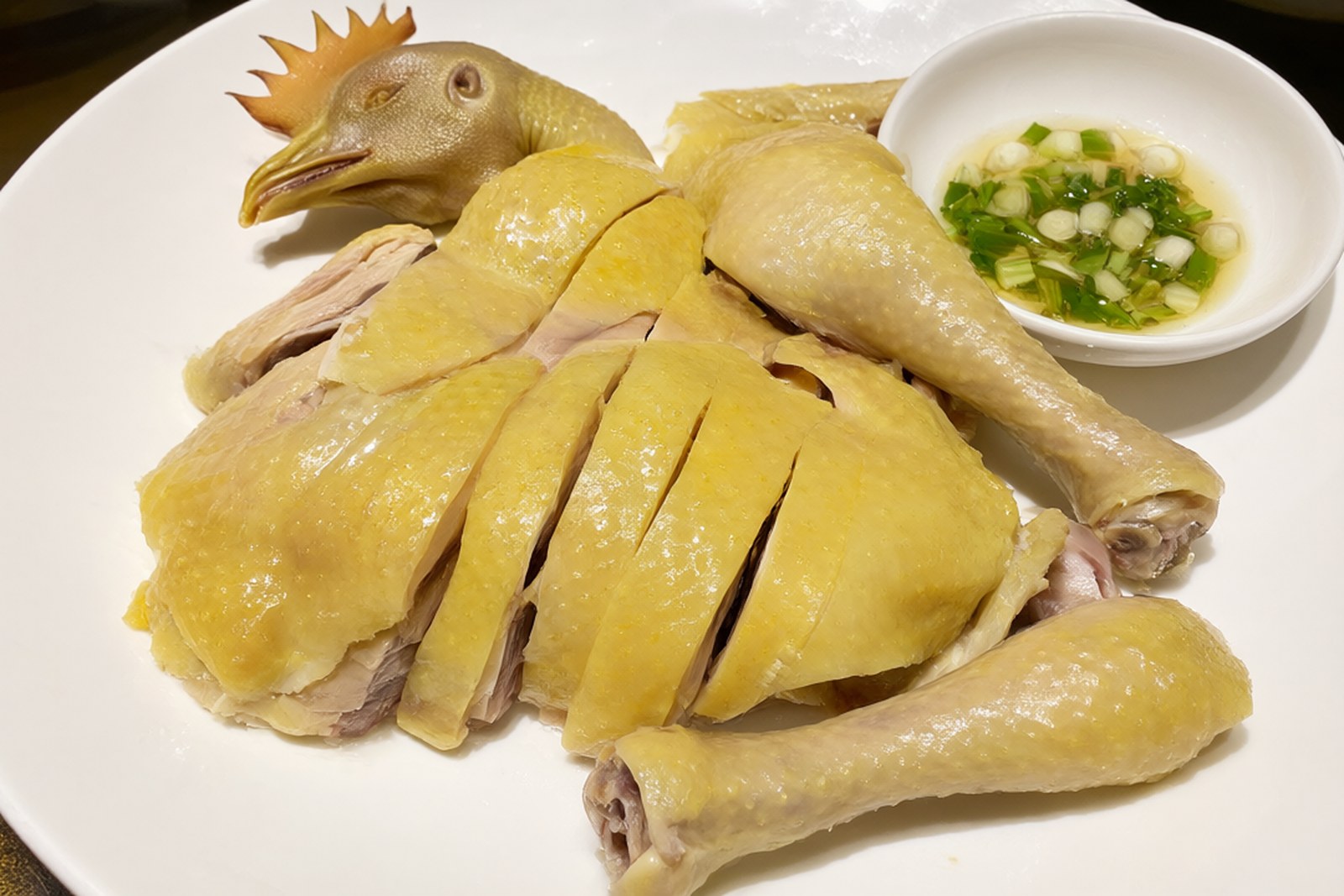
The cooking the county does with it is the cooking of a place that trusts its ingredients. 白切鸡 bái qiē jī, the chicken poached whole and cut cold into pieces, is the treatment that shows the bird off and the one that would expose a bad one; it is served with a dip of ginger, spring onion and hot oil, and the local measure of a good 怀乡鸡 is that the meat under the skin is sweet enough to eat without the dip and that the skin is yellow and tight. 盐焗鸡 yán jú jī, baked in coarse salt, is the other standard, and it is done here in a covered pot with the bird wrapped so the salt does not touch it. The bones are expected to be thin and the meat firm; a 怀乡鸡 that has been grown fast is not a 怀乡鸡, and the breed’s own slow growth is the reason the county’s farmers can charge more for it than the market pays for a battery bird.
The rest of the county’s table is built around the same hills. 信宜 is the source of 氹仔鱼 dàng zǎi yú, the grass carp raised in the small water pits that farmers dug beside their houses, a practice the county’s record dates to the Tang, when the villagers of the Xiantong years dug ponds both to keep fish and to have water to fight fire with, and which later moved into the rice fields so that the same water produced a crop and a fish; the county gazetteer records it as established practice by the Qing. The fish is cooked whole and poached, its flesh firm enough to lift in pieces and, the local claim goes, without either a muddy note or a fine bone to worry about. 镇隆镇 Zhèn lóng zhèn, the old county town, contributes 杨桃鸭 yáng táo yā, starfruit duck, also called 五敛子鸭 wǔ liǎn zi yā, a braise going back six hundred years that uses sour starfruit, fresh or dried, to cut the fat of a local field duck, and which was entered on the county’s intangible-heritage list in 2022. And 平塘镇 Píng táng zhèn has 茶香肉 chá xiāng ròu, tea-scented pork, made with fresh 铁观音 tiě guān yīn leaves and belly pork from a local pig, which is a dish built to be eaten in the hills where the tea grows.
Words and Names
怀乡鸡 Huái xiāng jī is the breed’s proper name and 三黄鸡 sān huáng jī, three-yellow chicken, the shape description that goes with it; 怀乡 is the township and the breed is named for it. 白切鸡 bái qiē jī is the poach-and-cut-cold treatment, and 盐焗鸡 yán jú jī the salt-bake. 氹仔鱼 dàng zǎi yú is the pit-raised grass carp and 氹 dàng the water pit it is raised in. 杨桃鸭 yáng táo yā is starfruit duck, also called 五敛子鸭 wǔ liǎn zi yā, and 茶香肉 chá xiāng ròu is the tea-scented pork of 平塘镇.
What the Locals Know
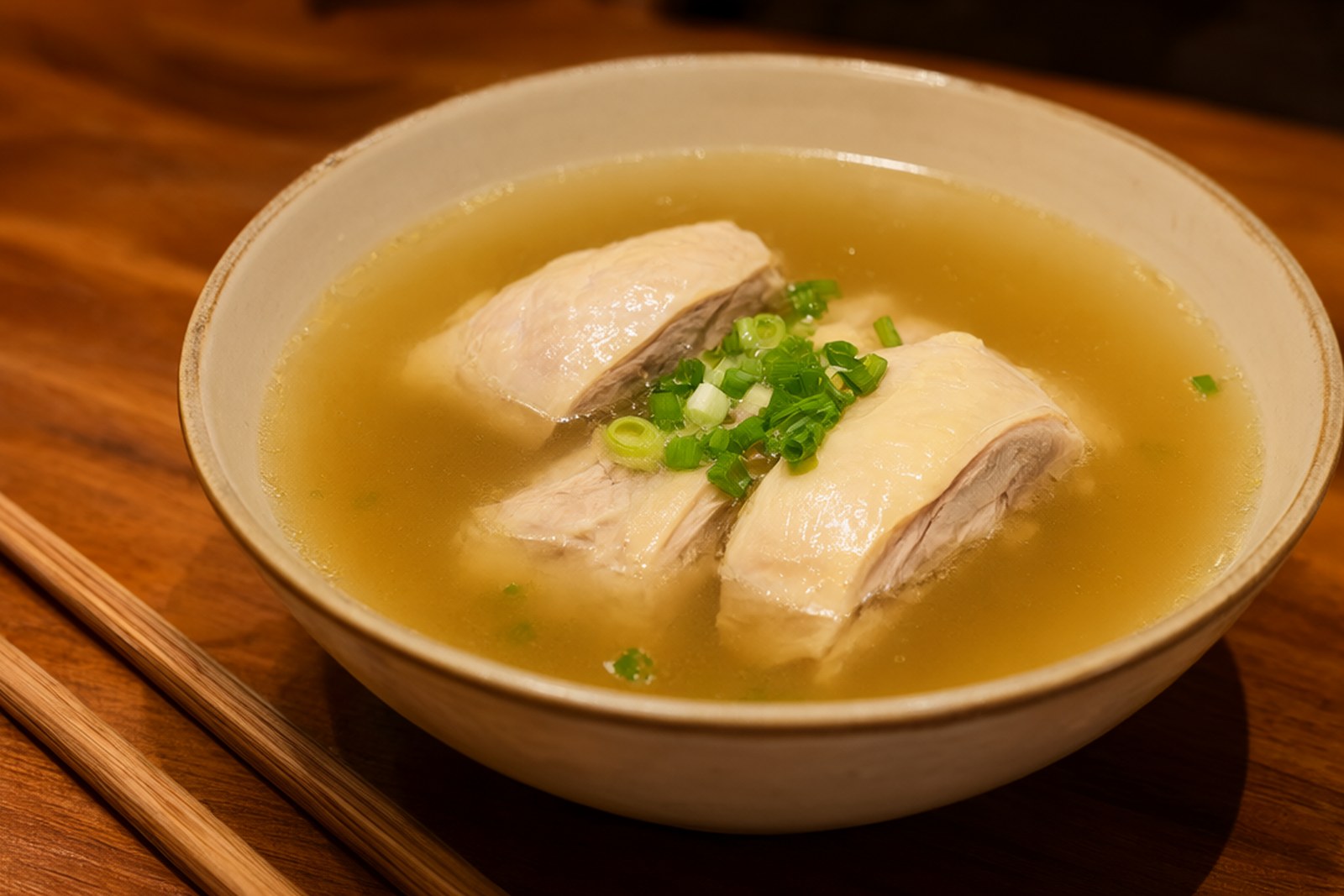
A 怀乡鸡 is sold by weight and by age, and the county’s own advice is to ask for a bird that has been running outside for at least half a year; the meat should feel firm through the breast and the feet should be scaly and worn, which is the mark of a bird that has used them. The colour test matters, because the breed’s whole claim is the yellow: the skin should be a warm yellow under the feathers and the shanks the same, and a pale bird sold as 怀乡鸡 is the commonest fraud. For 白切鸡 the bird goes into water just off the boil and comes out when the thigh juices run clear, around fifteen minutes for a small one, and it is cooled and cut cold because warm chicken tears; the dip is made with ginger pounded to a paste and spring onion, and the oil poured over it should be hot enough to smell. The county’s restaurants will serve the same bird three ways in one meal, and the third way is usually the broth the chicken was poached in, which is not a dish so much as an acknowledgement that nothing about the bird should be wasted.
flowcloud would say that a county which spent a thousand years breeding a bird for the colour of its feet, and then cooks it by boiling it and cutting it cold with a dish of ginger beside it, is making a fairly confident statement about the hills it lives in.
Where to find it: the farm restaurants, markets and breeding farms of 信宜市, with the densest concentration around 怀乡镇 itself, where the bird is sold live and by weight and the local kitchens serve it poached or salt-baked; a dressed free-range bird costs considerably more than the supermarket equivalent and the price is the honest signal. 信宜 is reached by road and coach from 茂名市 in about an hour and a half, and it sits on the 包茂 expressway corridor north of the city; the county’s mountain sights and its hot springs are in the same valleys as the farms, so a meal and a night in the hills are the same trip.