
The Beauty’s Bowl: Xishi Doufu
一勺豆腐羹滑嫩,美人名字传千秋 Yī sháo dòufu gēng huánèn, měirén míngzi chuán qiānqiū – One ladle of silken tofu stew; the beauty’s name travels a thousand autumns
西施豆腐 Xīshī dòufu is 诸暨 Zhūjì Zhuji’s signature stew, and the county named it after its most famous daughter: 西施 Xī Shī Xi Shi, the legendary beauty of the Spring and Autumn court, was born here, and the local tables decided their proudest dish should carry her name. The bowl itself is a thick silken stew – dice of tender tofu, minced pork, bamboo shoots and wood-ear mushrooms folded into chicken stock, then pulled together with starch until the soup turns to velvet.
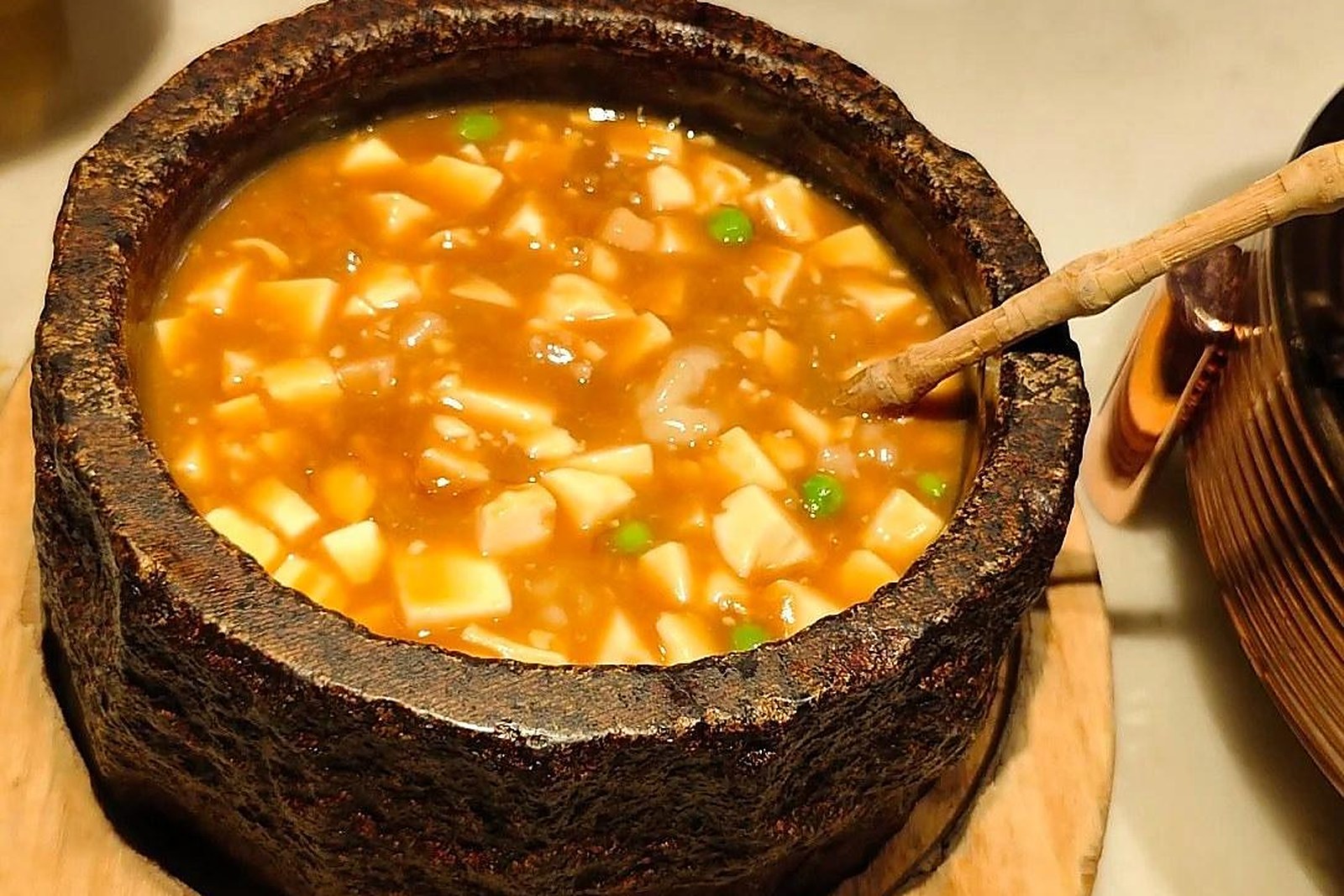
The craft is in the thickening: the tofu is cut fine and never pressed dry, the stock must stay at a tremble rather than a boil, and the starch goes in through a slotted ladle so the gauze-thin clouds set without going gluey. Every Zhuji kitchen guards its ratio – a proper 羹 gēng holds its shape on the spoon for one full second before it yields, and a runny bowl is counted a rookie’s apology.
The name does cultural work far beyond branding: this is the first dish of every Zhuji banquet, the bowl that opens weddings, homecomings and New Year tables, served while guests are still finding their seats. Locals explain the naming with straight faces – the stew’s pale shimmer and soft fold are as close as a kitchen gets to a beauty – and no one in Zhuji orders it without hearing at least one retelling of the legend.
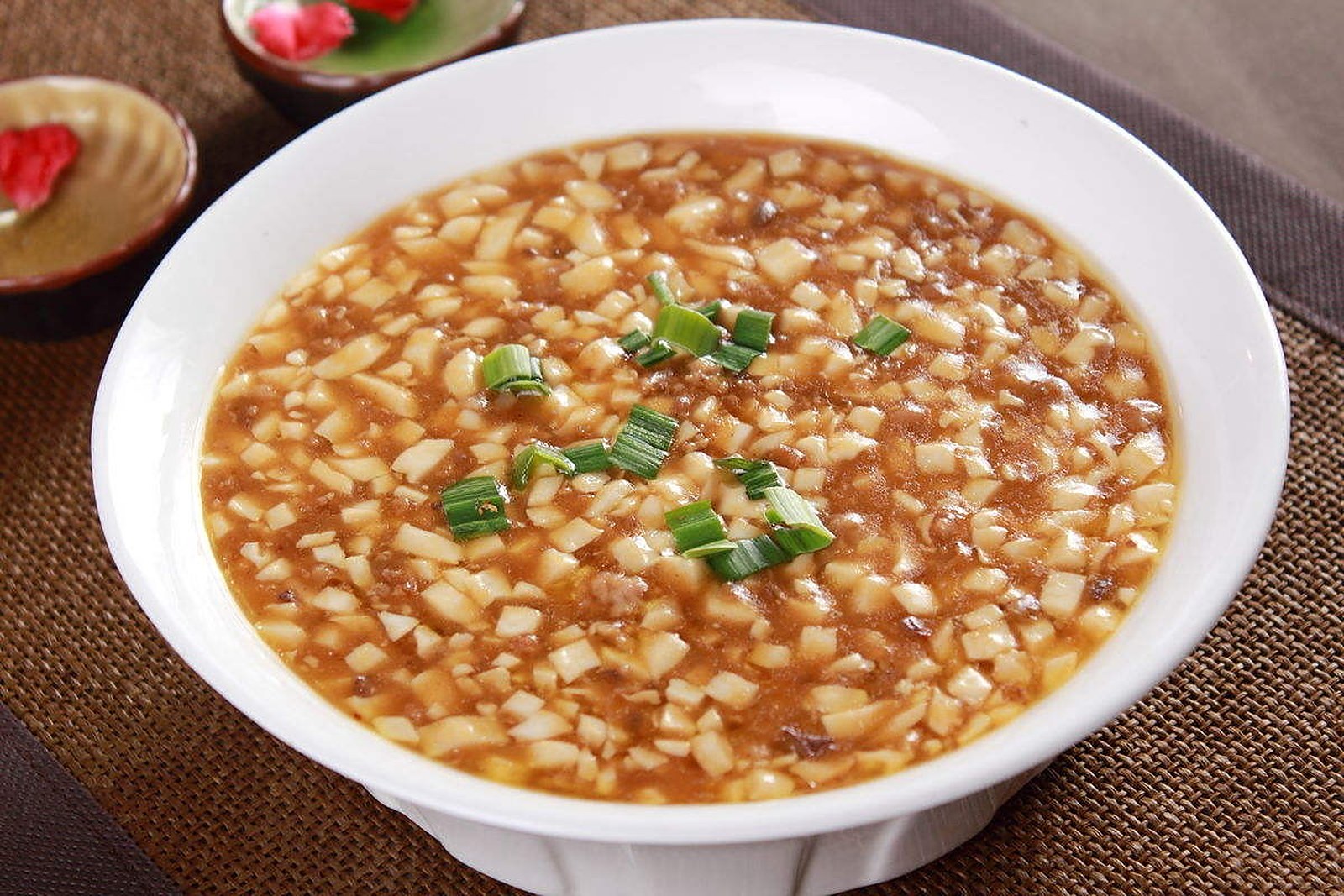
Find it where the county eats: the restaurants around the 西施故里 Xīshī Gùlǐ Xi Shi heritage quarter serve the canonical version, the old-town kitchens pour it by the basin at lunch, and the bowl pairs naturally with a handful of torreya nuts – Zhuji’s other treasure – or a small cup of huangjiu. One spoonful explains the whole county: soft water, soft tofu, a soft name that outlived kingdoms.
The same city holds more flavors worth chasing: 绍兴臭豆腐 Shàoxīng chòu dòufu the fried stinky tofu, 梅干菜扣肉 méigāncài kòuròu the steamed pork, 嵊州小笼包 Shèngzhōu xiǎolóngbāo the soup dumplings, or 新昌芋饺 Xīnchāng yùjiǎo the taro-skin dumplings – four more doors into the same 绍兴市 Shàoxīng Shì Shaoxing City table.
Words and Names
西施豆腐 Xīshī dòufu Xishi tofu, the silken stew; 羹 gēng a thick savory stew, the dish’s true category; 西施 Xī Shī Xi Shi, the ancient beauty of Zhuji; 勾芡 gōuqiàn the starch thickening that makes the velvet; 香榧 xiāngfěi torreya nuts, Zhuji’s nutty counterpart.
What the Locals Know
Order it scalding or not at all – the stew’s silk collapses as it cools, and winter bowls from a busy kitchen are the standard. Locals judge the starch by the aftertaste: a proper geng never coats the throat. And the garnish matters: chopped scallion goes on at the pass, never in the pot.
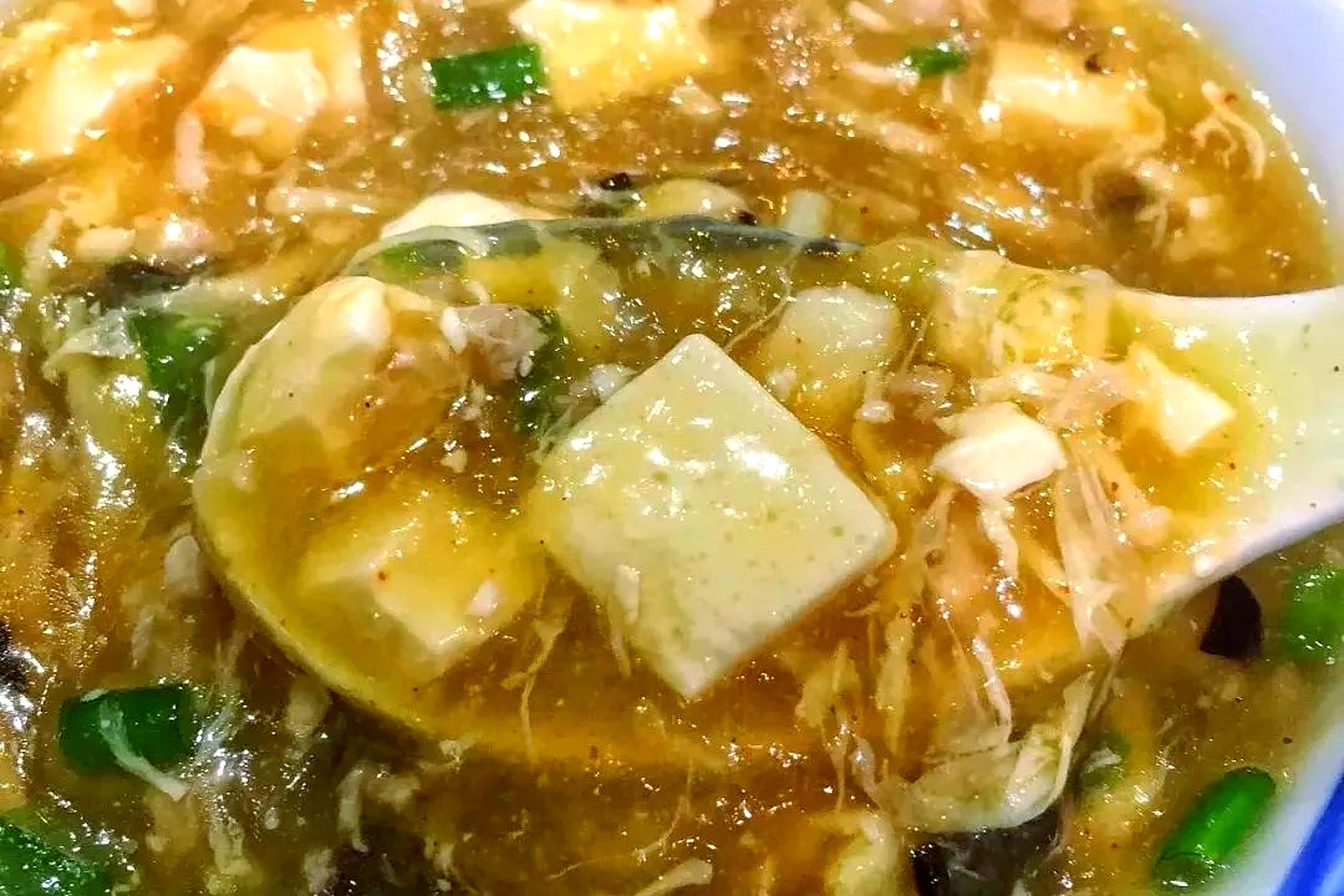
flowcloud would say a bowl of Xishi doufu is Zhuji serving its own legend with a ladle: a beauty’s name, a velvet body, and a first course that greets every guest before the speeches do. All checked November 2026.
Where to find it: Restaurants around the Xi Shi heritage quarter and the old-town streets of 诸暨市 Zhūjì Shì Zhuji serve the stew all day – fifteen to thirty yuan a bowl, the spoon-holds-one-second test decides a good kitchen, and banquet halls bring it out first as the county’s greeting course. All checked November 2026.