
一节香竹,满筒饭香。Yī jié xiāngzhú, mǎn tǒng fàn xiāng – One joint of fragrant bamboo; a tube full of rice scent.
竹筒饭 Zhútǒng Fàn bamboo-tube rice – the 傣族 Dǎizú Dai call it 香竹饭 Xiāngzhú Fàn fragrant-bamboo rice – is the forest dish of 西双版纳 Xīshuāngbǎnnà Xishuangbanna: 糯米 nuòmǐ sticky rice packed with a little 水 shuǐ water into a fresh 香竹 xiāngzhú fragrant-bamboo tube, the joint plugged with a 芭蕉叶 bājiāo yè banana-leaf stopper, then set over 炭火 tànhuǒ embers or laid in the 火塘 huǒtáng hearth until the bamboo scorches and the rice steams inside, taking up the 竹香 zhúxiāng bamboo fragrance through the green wall. It is the food of the 雨林 yǔlín rainforest and the 傣家 Dǎijiā hill villages, cooked where bamboo grows, and the honest shape is that you eat the rice and then break the tube: the 竹膜 zhúmó thin membrane that lines the inside peels off with the cooked grain as a 竹衣 zhúyī bamboo “skin,” which is the prized part. A 竹筒饭 zhútǒng fàn tube runs about 10-20 yuan at a 景洪 Jǐnghóng Jinghong stall (worth confirming the details), and the 热带 rèdài tropical claim is that the 香竹 xiāngzhú is a special 甜竹 tiánzhú sweet bamboo whose young culms scent the rice as no pot can. Locals eat it as a portable meal on the 上山 shàngshān hill trip and as a 节庆 jiéqìng festival staple, and the 傣族 Dǎizú say the best tube is one cut that morning from a living clump.

The mechanism is the green wood and the grain. The cook selects a young 香竹 xiāngzhú joint – 1-2 years old, before it turns 老 lǎo woody – fills it partway with 糯米 nuòmǐ soaked rice and a splash of 清水 qīngshuǐ, caps it with a 芭蕉叶 bājiāo yè plug, and roasts it slowly so the 竹汁 zhúzhī bamboo sap steams the grain from outside in. The 香竹 xiāngzhú is the seasoning: as the tube chars, its inner 竹膜 zhúmó releases a 清香 qīngxiāng clean, almost grassy scent that the 糯米饭 nuòmǐ fàn absorbs, and the 竹衣 zhúyī that forms is what gives each mouthful a faint 竹甜 zhútián bamboo sweetness; a tube of ordinary 老竹 lǎozhú old bamboo would only taste of smoke. When the 竹皮 zhúpí skin is blackened and the rice is done, the eater splits the tube with a 刀 dāo knife and peels the charred 竹壳 zhúké shell away to reveal the grain wrapped in its 竹衣 zhúyī. 竹筒饭 Zhútǒng Fàn is the savoury twin of the 菠萝饭 bōluó fàn pineapple rice – both are sticky rice cooked inside a plant – but where the pineapple one is sweet and steamed, the bamboo one is savoury and fire-roasted, and sometimes a little 腊肉 làròu cured pork or 花生 huāshēng peanut is added to the tube for a richer 筒 tǒng. The comparison visitors draw is with 竹筒酒 zhútǒng jiǔ bamboo-tube liquor of the same forests, but the rice is the everyday one.
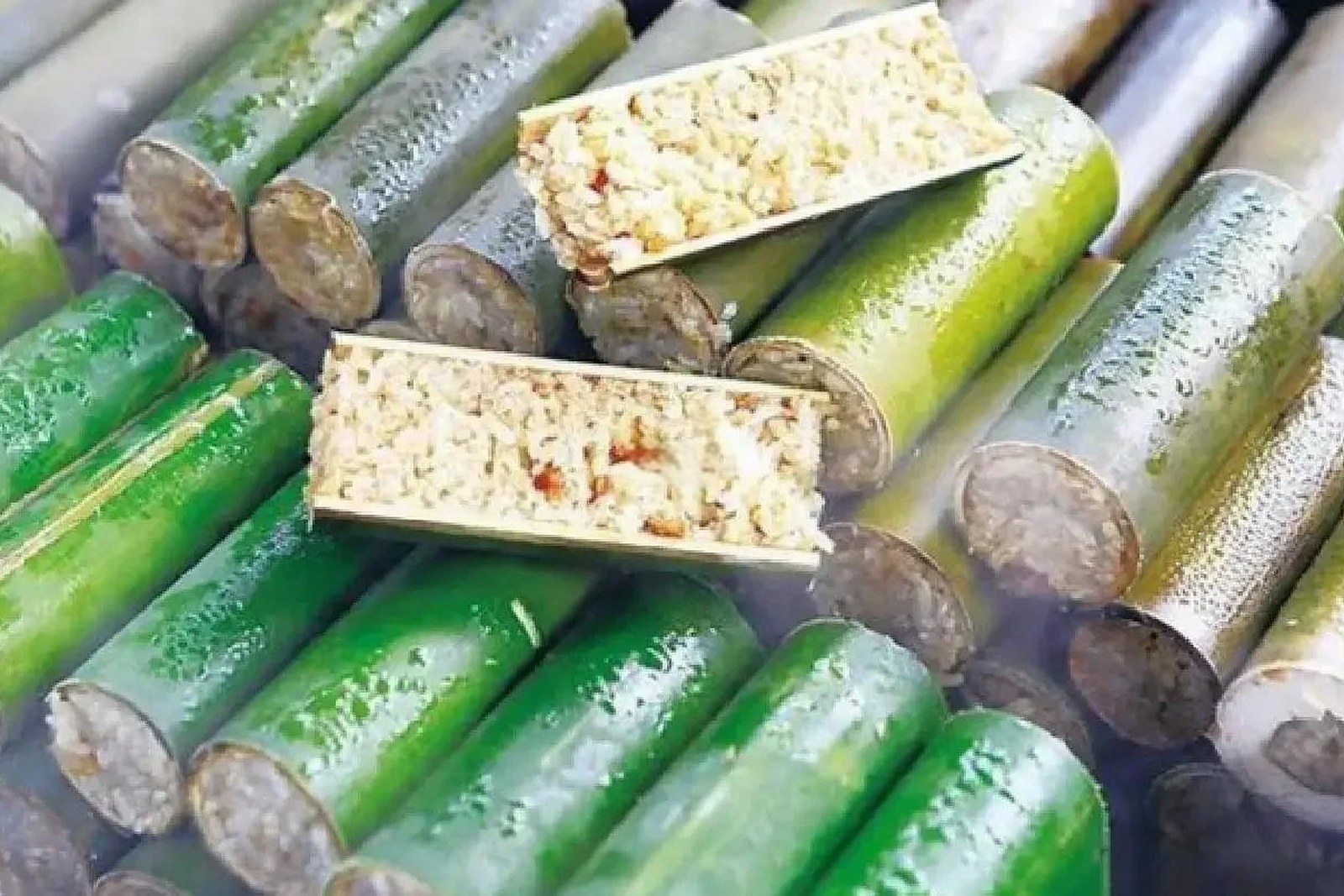
Locals eat it fresh-split, on the spot. The move is to buy a 竹筒饭 zhútǒng fàn from a 傣味 Dǎiwèi stall in 告庄西双景 Gàozhuāng Xīshuāngjǐng Gaozhuang Xishuangjing or a 傣族园 Dǎizú Yuán village, let the seller split it, and peel the 竹衣 zhúyī off the rice rather than eating the charred 竹壳 zhúké (worth confirming current stalls and that the bamboo is real 香竹 xiāngzhú, not painted 普通竹 pǔtōng zhú). Ask for it 现烤 xiànkǎo roasted that moment, because a tube held since morning goes 干硬 gānyìng dry-hard and loses the 竹香 zhúxiāng, and eat it plain or with a little 红糖 hóngtáng brown sugar if the 傣家 Dǎijiā offer it. The 基诺山 Jīnòu Shān Jinuo mountain villages and the 雨林 yǔlín forest edges are where the honest tube comes from, cut from a living 香竹 xiāngzhú clump that morning, and the 热带 rèdài dry season is when the bamboo is at its most fragrant. The rule for newcomers is to peel, not bite: the 竹衣 zhúyī comes away in one sheet, and the blackened 竹壳 zhúké stays in the fire, not on the plate.
Words and Names
竹筒饭 Zhútǒng Fàn bamboo-tube rice · 香竹饭 Xiāngzhú Fàn fragrant-bamboo rice · 西双版纳 Xīshuāngbǎnnà Xishuangbanna · 傣族 Dǎizú the Dai people · 香竹 Xiāngzhú fragrant bamboo · 糯米饭 Nuòmǐ Fàn sticky rice · 竹衣 Zhúyī the bamboo membrane · 傣味 Dǎiwèi Dai flavour · 火塘 Huǒtáng the hearth · 基诺山 Jīnòu Shān Jinuo mountain · 告庄西双景 Gàozhuāng Xīshuāngjǐng Gaozhuang Xishuangjing · 景洪 Jǐnghóng Jinghong
What the Locals Know
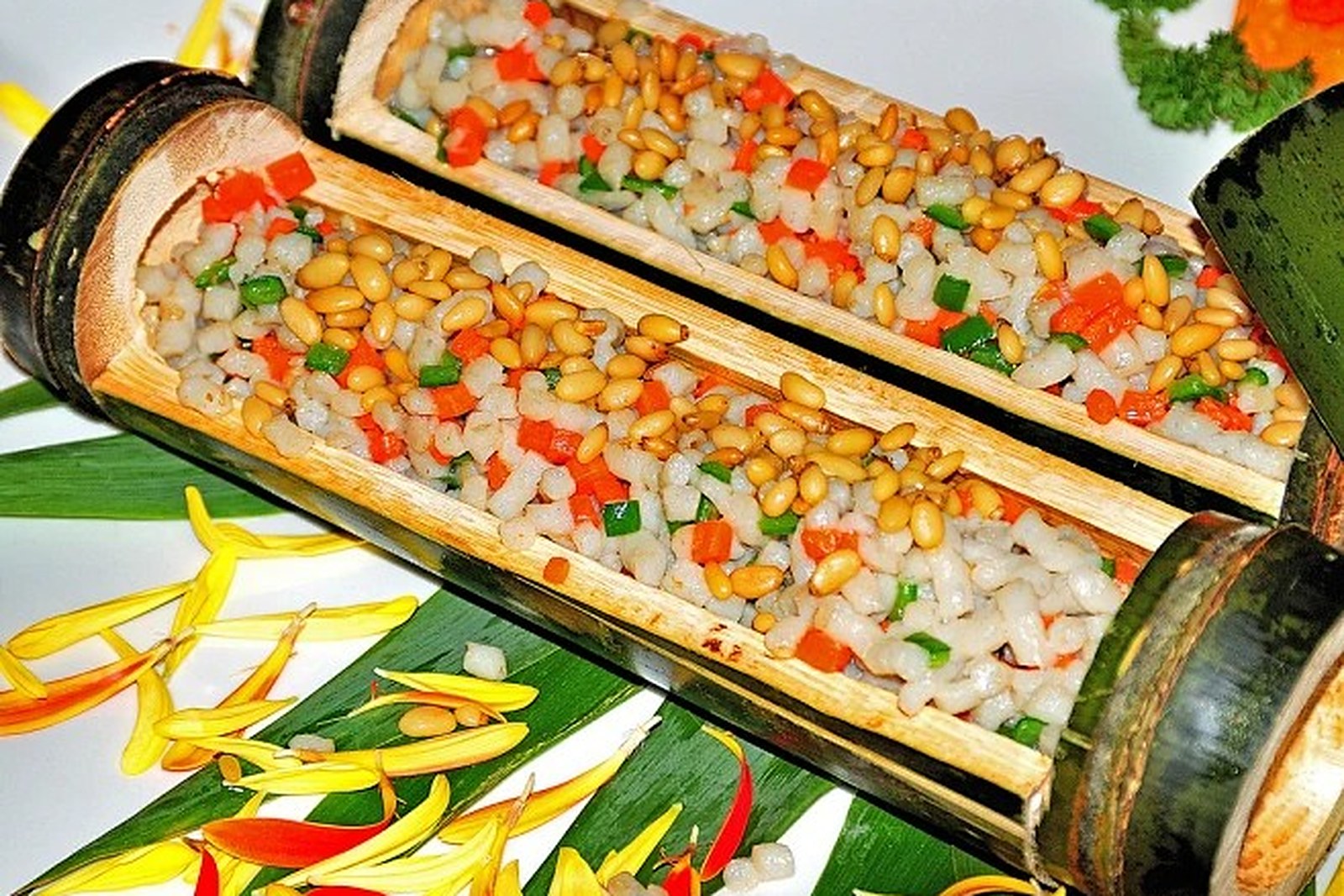
flowcloud would say that bamboo-tube rice is fire through green wood – 糯米 nuòmǐ steamed inside a fresh 香竹 xiāngzhú joint until the 竹衣 zhúyī peels away sweet – and that the honest move is to buy it split hot at a 傣族园 Dǎizú Yuán stall and peel, not bite, because the bamboo is the pot and the 竹衣 zhúyī is the prize. All checked October 2026.
Where to find it:: the 傣味 Dǎiwèi stalls of 告庄西双景 Gàozhuāng Xīshuāngjǐng Gaozhuang Xishuangjing and the 傣族园 Dǎizú Yuán Dai villages in 景洪 Jǐnghóng Jinghong – a 竹筒饭 zhútǒng fàn runs about 10-20 yuan, 糯米 nuòmǐ steamed inside a fresh 香竹 xiāngzhú tube over 炭火 tànhuǒ (worth confirming, and confirm real fragrant bamboo). The honest tube is cut that morning from a living 香竹 xiāngzhú clump in the 基诺山 Jīnòu Shān forests, split and peeled at the stall. All checked October 2026.