
一叶芭蕉,盛满山河。Yī yè bājiāo, chéngmǎn shānhé – One banana leaf; a land and river laid upon it.
傣味手抓饭 Dǎiwèi Shǒuzhuāfàn Dai-style hand rice is the celebratory spread of the 傣族 Dǎizú Dai people of 西双版纳 Xīshuāngbǎnnà Xishuangbanna – a great 芭蕉叶 bājiāo yè banana leaf laid flat on the table, heaped with a 糯米饭 nuòmǐ fàn sticky-rice mound in the middle and ringed by a dozen small piles of 烤肉 kǎoròu grilled meat, 鬼鸡 guǐjī ghost chicken, 喃咪 nánmī chili dip, 野菜 yěcài wild herbs, 火腿 huǒtuǐ cured ham, 花生 huāshēng peanuts and 腌菜 yāncài pickles, all to be taken up in the fingers and pressed into a bite. It is the dish of a 泼水节 Pōshuǐ Jié Water Festival table and of any 傣家 Dǎijiā Dai household feast, the food of a people whose 热带 rèdài tropical warmth makes eating with the hand natural rather than primitive. A 手抓饭 shǒuzhuāfàn set for two runs about 68-128 yuan in 景洪 Jǐnghóng Jinghong (worth confirming the details), and the honest shape is that the leaf is the plate and the rice is the base: you pinch a little 糯米饭 nuòmǐ fàn, wrap it around a morsel of meat or a leaf of herb, and eat from the hand the way the 傣族 Dǎizú have for centuries along the 澜沧江 Láncāng Jiāng Lancang (Mekong) river.
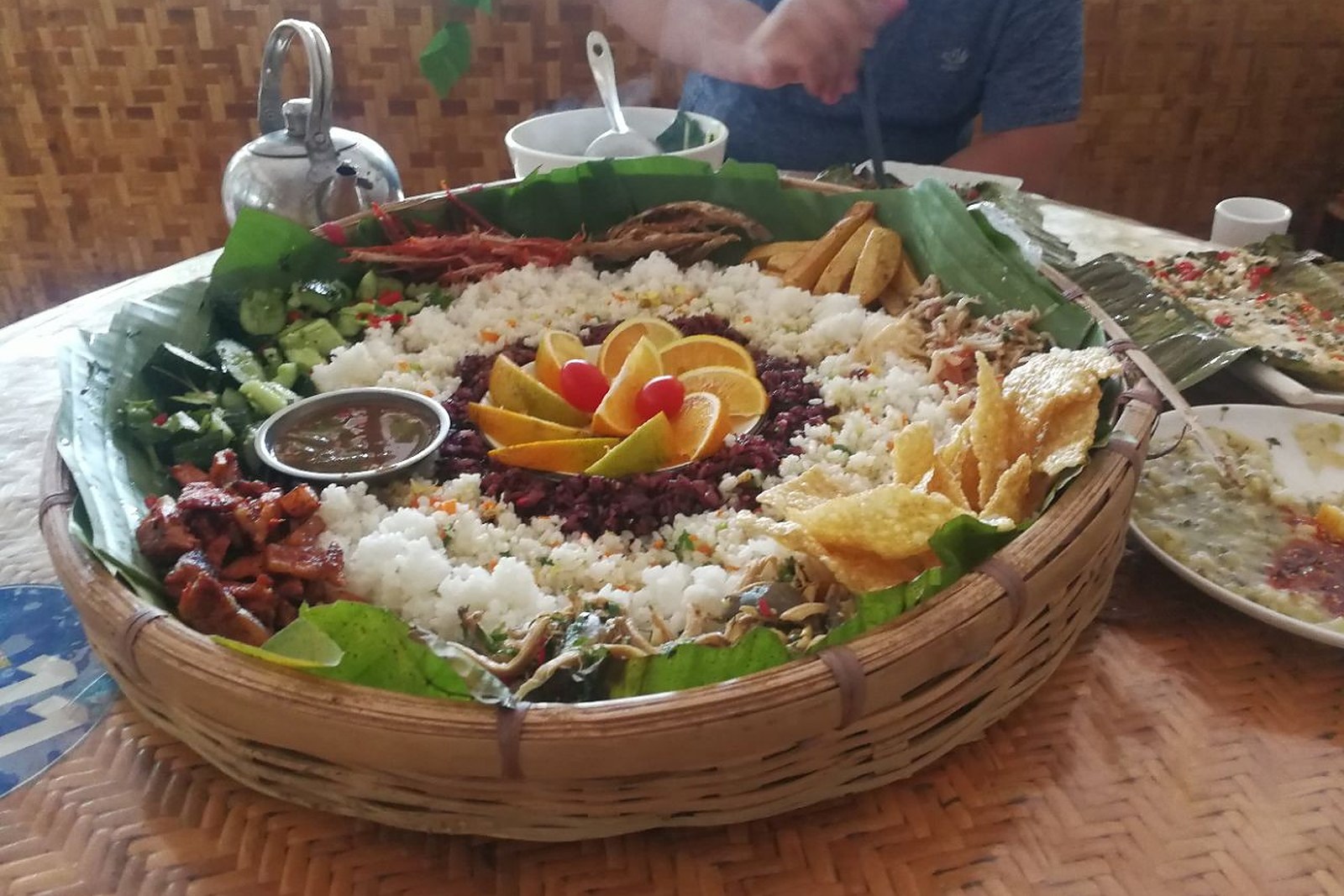
The mechanism is the leaf and the rice. The 糯米饭 nuòmǐ fàn sticky rice is steamed until it clumps, then mounded on the 芭蕉叶 bājiāo yè so each diner can tear off a ball; around it the cook arranges the 配菜 pèicài sides, which are the real show – 香茅草烤鱼 xiāngmáocǎo kǎoyú lemongrass grilled fish, 柠檬鬼鸡 níngméng guǐjī lemon ghost chicken, 烤五花 kǎo wǔhuā grilled pork belly, 喃咪 nánmī a fermented-chili shrimp-paste dip, and a scatter of 野菜 yěcài foraged greens that change with the 雨林 yǔlín rainforest season. The 傣族 Dǎizú eat with the right hand only, using the thumb and four fingers to press rice and relish into a single 饭团 fàntuán ball – never a fork, which would miss the point of feeling the food – and the leaf is replaced between courses so the table never gets dirty. The spread is the Dai idea of generosity made edible: a 手抓饭 shǒuzhuāfàn is not a single dish but a 一桌 yī zhuō whole table compressed onto one leaf, and the comparison visitors draw is with a 过桥米线 guòqiáo mǐxiàn crossed-bridge noodle bowl, but where the noodle is one bowl built by the eater, the hand rice is a dozen things chosen by the eater.
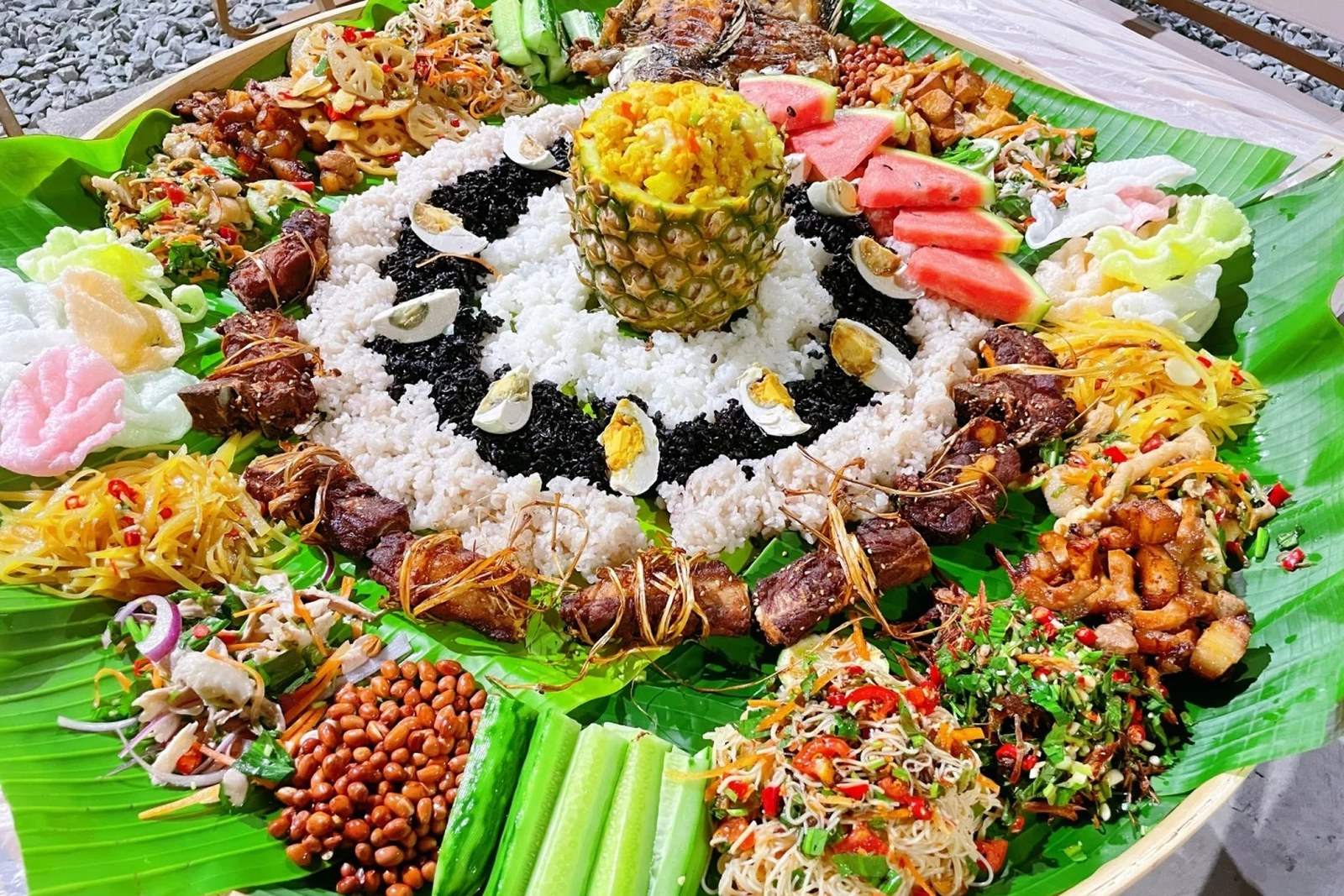
Locals treat it as a shared, slow feast. The move is to order one 手抓饭 shǒuzhuāfàn leaf for the table at a 傣味 Dǎiwèi Dai-flavour restaurant in 告庄西双景 Gàozhuāng Xīshuāngjǐng Gaozhuang Xishuangjing or the 曼听 Màntīng Manting area, wash your hands at the 铜盆 tóngpén copper basin the house provides, and eat from the 糯米饭 nuòmǐ fàn outward, mixing sides rather than eating them one by one (worth confirming current houses and the leaf’s price). The 告庄西双景 Gàozhuāng Xīshuāngjǐng night-market rows are where visitors meet it cheapest, but the honest version is at a 傣家 Dǎijiā family or a 傣族园 Dǎizú Yuán Dai Minority Park restaurant where the leaf is laid fresh and the sides are cooked that day. Eat it with the right hand, take a little of everything, and save the 喃咪 nánmī for last to wipe the leaf clean – and the 热带 rèdài heat means locals eat it in the cool of evening, never at noon. Newcomers are told to start with plain 糯米饭 nuòmǐ fàn and one side until the 酸辣 suānlà sour-hot rhythm lands, because a first-timer who piles on 鬼鸡 guǐjī and 喃咪 nánmī at once will find the chili and the herbs a shock.
Words and Names
傣味手抓饭 Dǎiwèi Shǒuzhuāfàn Dai-style hand rice · 傣族 Dǎizú the Dai people · 西双版纳 Xīshuāngbǎnnà Xishuangbanna · 芭蕉叶 Bājiāo Yè banana leaf · 糯米饭 Nuòmǐ Fàn sticky rice · 喃咪 Nánmī chili-shrimp-paste dip · 鬼鸡 Guǐjī ghost chicken · 野菜 Yěcài wild herbs · 泼水节 Pōshuǐ Jié Water Festival · 告庄西双景 Gàozhuāng Xīshuāngjǐng Gaozhuang Xishuangjing · 景洪 Jǐnghóng Jinghong · 澜沧江 Láncāng Jiāng the Lancang (Mekong) river
What the Locals Know
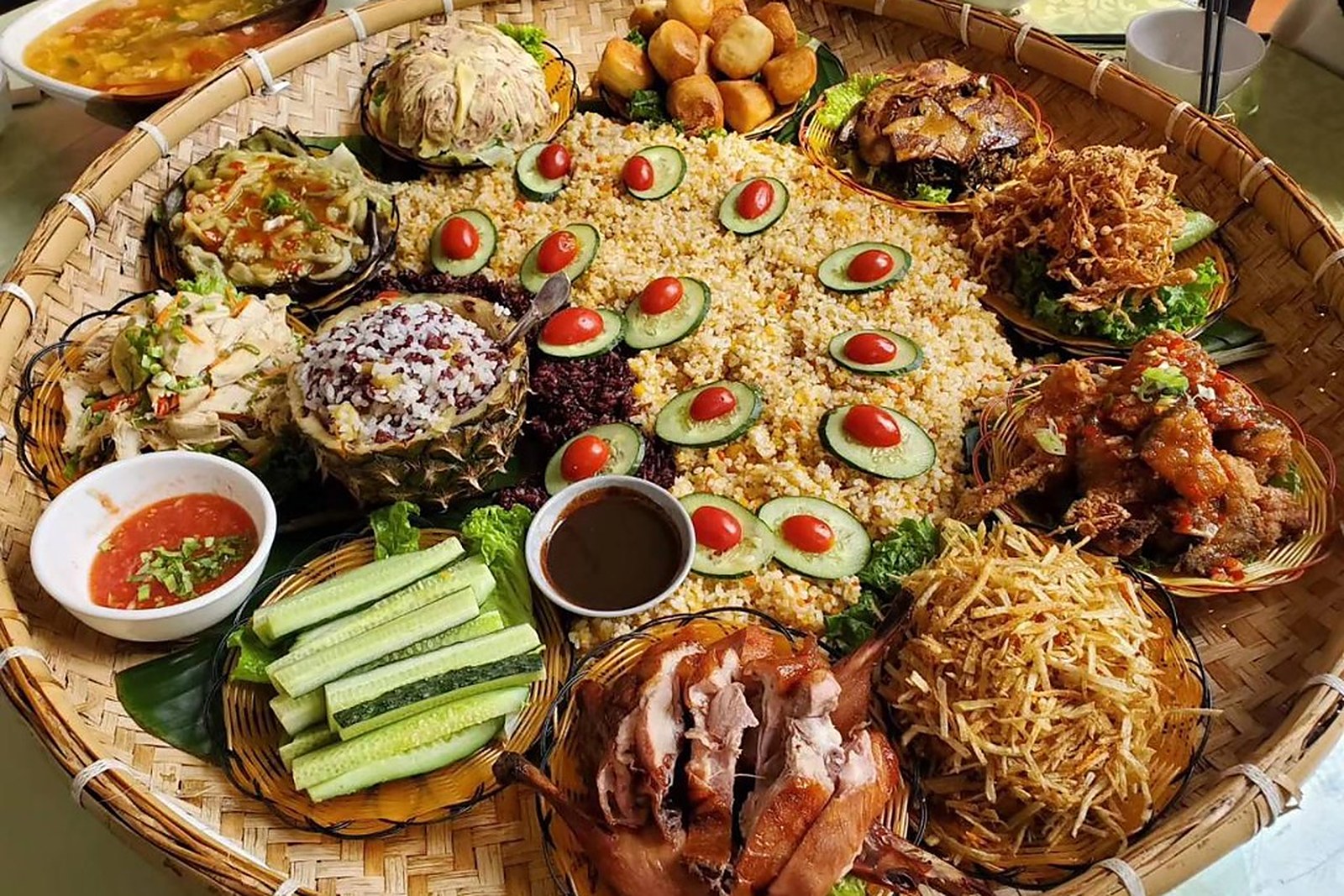
flowcloud would say that Dai hand rice is a banana leaf spread – steamed 糯米饭 nuòmǐ fàn mounded in the middle and ringed by 鬼鸡 guǐjī, 烤鱼 kǎoyú and 野菜 yěcài, eaten from the right hand – and that the honest move is to order one leaf for the table in 告庄西双景 Gàozhuāng Xīshuāngjǐng and press rice around every side, because the leaf is the plate and the hand is the only utensil. All checked October 2026.
Where to find it:: the 傣味 Dǎiwèi Dai restaurants of 告庄西双景 Gàozhuāng Xīshuāngjǐng Gaozhuang Xishuangjing and the 曼听 Màntīng Manting area in 景洪 Jǐnghóng Jinghong – a 手抓饭 shǒuzhuāfàn leaf for two runs about 68-128 yuan (worth confirming the details), laid on a 芭蕉叶 bājiāo yè with sticky rice and a dozen sides. The honest addresses are a 傣家 Dǎijiā family table or a 傣族园 Dǎizú Yuán restaurant where the leaf is fresh and the sides are that day’s. All checked October 2026.