
Eight Treasures in a Rice Cake: Xitang Bazhengao
八味研磨成糕点,一方糕里藏药香 Bā wèi yánmó chéng gāodiǎn, yī fāng gāo lǐ cáng yào xiāng – Eight ingredients ground into a rice cake; one square of cake hides the scent of herbs
八珍糕 bāzhēn gāo is 西塘 Xītáng Xitang’s contribution to the medicine-cabinet-as-dessert genre: a soft white rice-flour cake folded with eight “treasures” – a varying recipe of lotus seed, white hyacinth bean, yam, poria, Euryale seed and other dried goods traditionally counted as stomach-friendly. Town legend traces it to a Qing-era teahouse that baked the blend for children and elders who could not stomach richer sweets, and the town’s teahouse counters still cut the cake into squares beside every pot of tea.
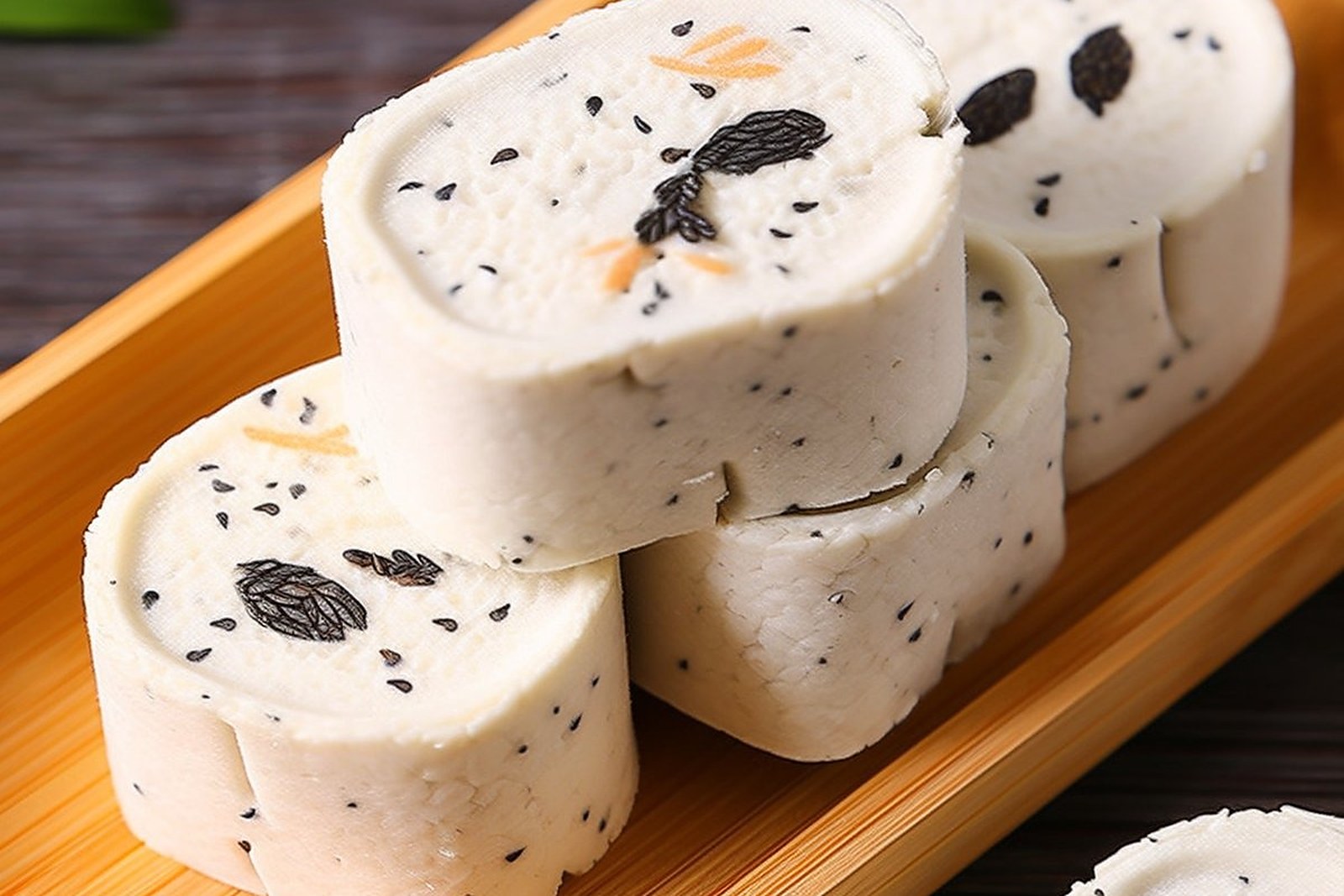
The making is simple and exact: the eight dried ingredients are stone-ground into the rice flour, sweetened just enough, steamed into sheets and cut – the result is a cake that reads bland for one bite and then lands its purpose, a faint herbal perfume riding under the rice sweetness. Older visitors buy it as digestion insurance; children buy it because it is the sweet their grandparents point at first.
Xitang eats it two ways: fresh off the steamer, when the squares are warm and barely hold together, and packed, when the cake firms into a travel shelf-stable block that survives the train home. The teahouse ritual pairs it with chrysanthemum tea – cake on the saucer, tea on the side, the canal going by – and the town’s gift boxes stack the squares in paper like little white books, the packaging as old-fashioned as the recipe.
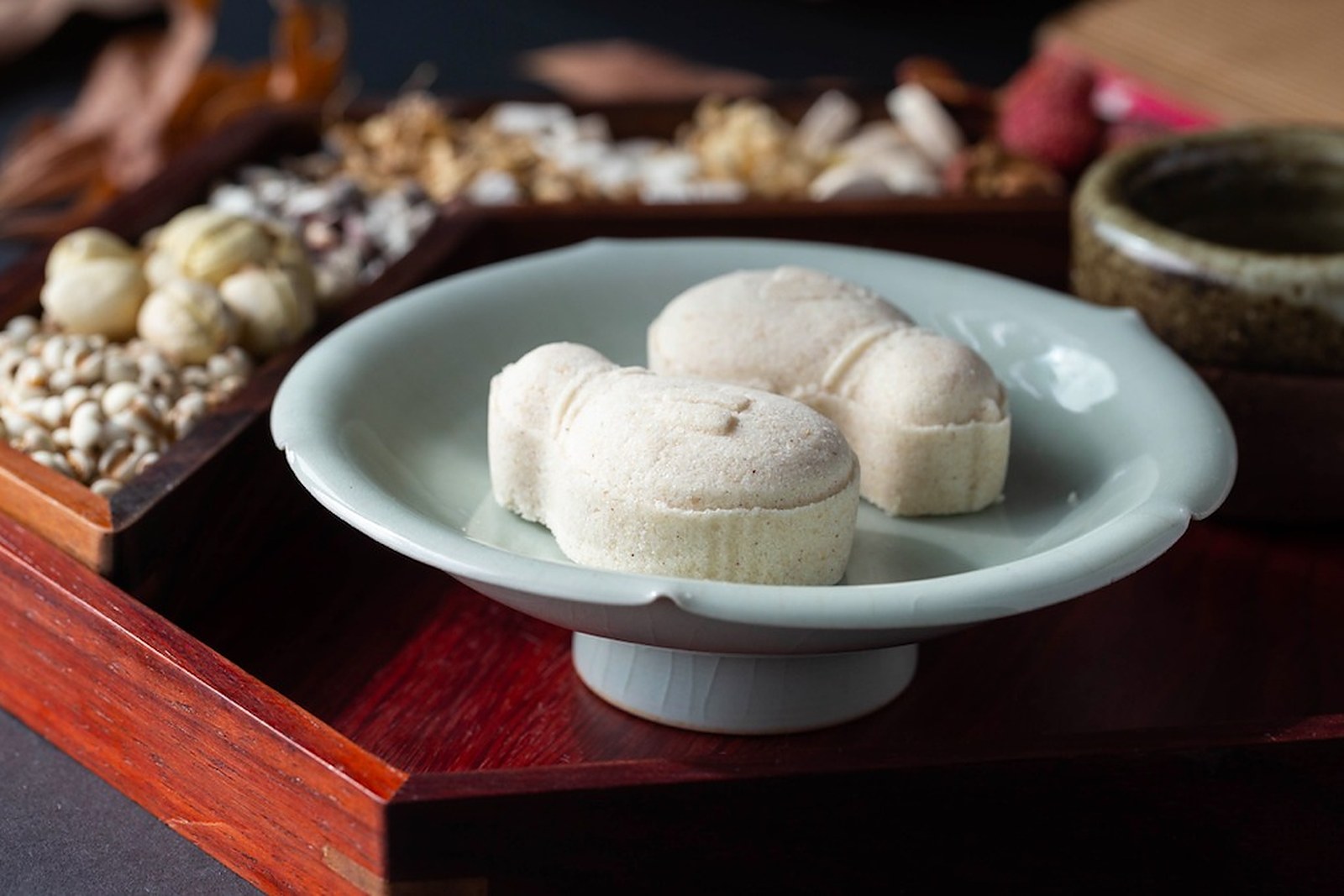
Finding it is part of the visit: the old town’s counters steam batches through the morning, the smell travels half a lane, and the first batch of the day sells out before the tour boats dock. The cake is cheap enough to be an afterthought purchase and old enough to be the point – a water-town sweet that has outlived every food fashion since the Qing, one square at a time.
The same city holds more flavors worth chasing: 嘉兴粽子 Jiāxīng zòngzi the pillow dumplings, 南湖菱 Nánhú líng the lake caltrop, 海宁缸肉 Hǎiníng gāngròu the straw-tied pork, or 平湖糟蛋 Pínhú zāodàn the lees-cured eggs – four more doors into the same 嘉兴市 Jiāxīng Shì Jiaxing City table.
Words and Names
八珍糕 bāzhēn gāo the eight-treasure cake; 西塘 Xītáng Xitang, the home town; 茯苓 fúlíng poria, the classic ingredient; 芡实 qiànshí Euryale seed, the pond’s own contribution; 茶馆 cháguǎn the teahouse, the cake’s counter.
What the Locals Know
Judge the cake by its give: a fresh square bends and springs back, a stale one cracks – buy where the steamer is still hissing. The herbal flavor should whisper, not lecture; a batch that tastes like a pharmacy overdid the poria. And the classic pairing is chrysanthemum tea, not coffee – the cake was invented in a teahouse and behaves best there.
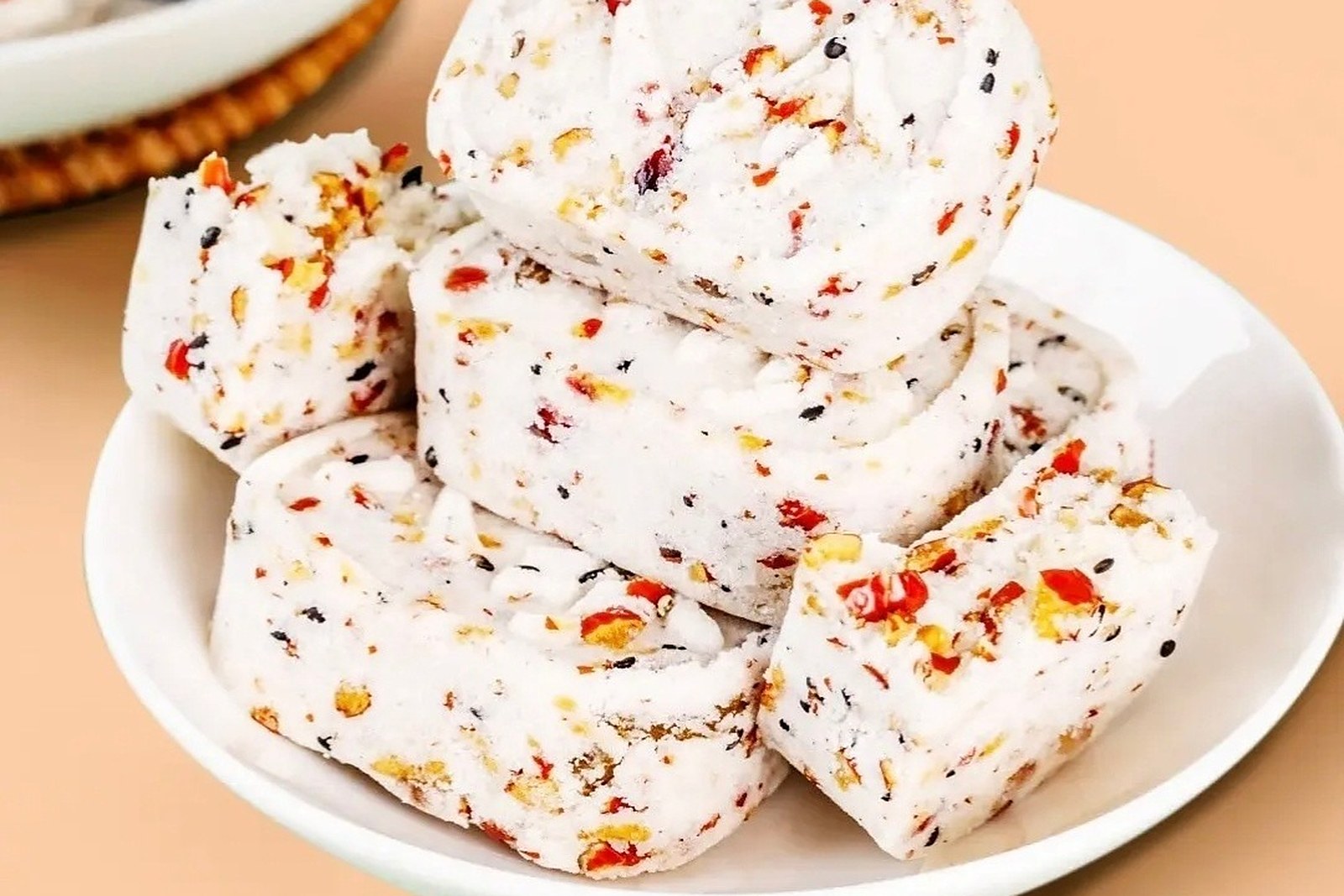
flowcloud would say bazhengao is a grandmother’s idea of dessert executed at street scale: eight dried treasures hidden in white rice cake, a recipe older than the town’s ticket gates, and a sweetness that treats digestion as a courtesy rather than a compromise. All checked November 2026.
Where to find it: The teahouse counters inside 西塘 Xītáng Xitang old town steam the batches through the morning – a few yuan for a stack of squares, the warm first batch is the one to catch, and the paper-packed version travels well. All checked November 2026.