
Làpáigǔ yī guō, Tǔjiā yī wèi; rénjūn liùshí, nuǎn yī wǎn. — One pot of cured ribs, one Tujia flavour; sixty a head, one warm bowl.
The Tujia cured rib soup pot (土家腊排骨汤锅, Tǔjiā Làpáigǔ Tāngguō) is the county’s communal dish: cured pork ribs from the mountain smokehouses, stewed into a soup pot at about 60 yuan per person, with the county’s mountain vegetables going in after. It is the Tujia range’s farmhouse cooking in restaurant form — the smokehouse’s winter output cooked as a shared pot, which is the form the mountain table actually takes, and the dish that carries the county’s cured-meat register.
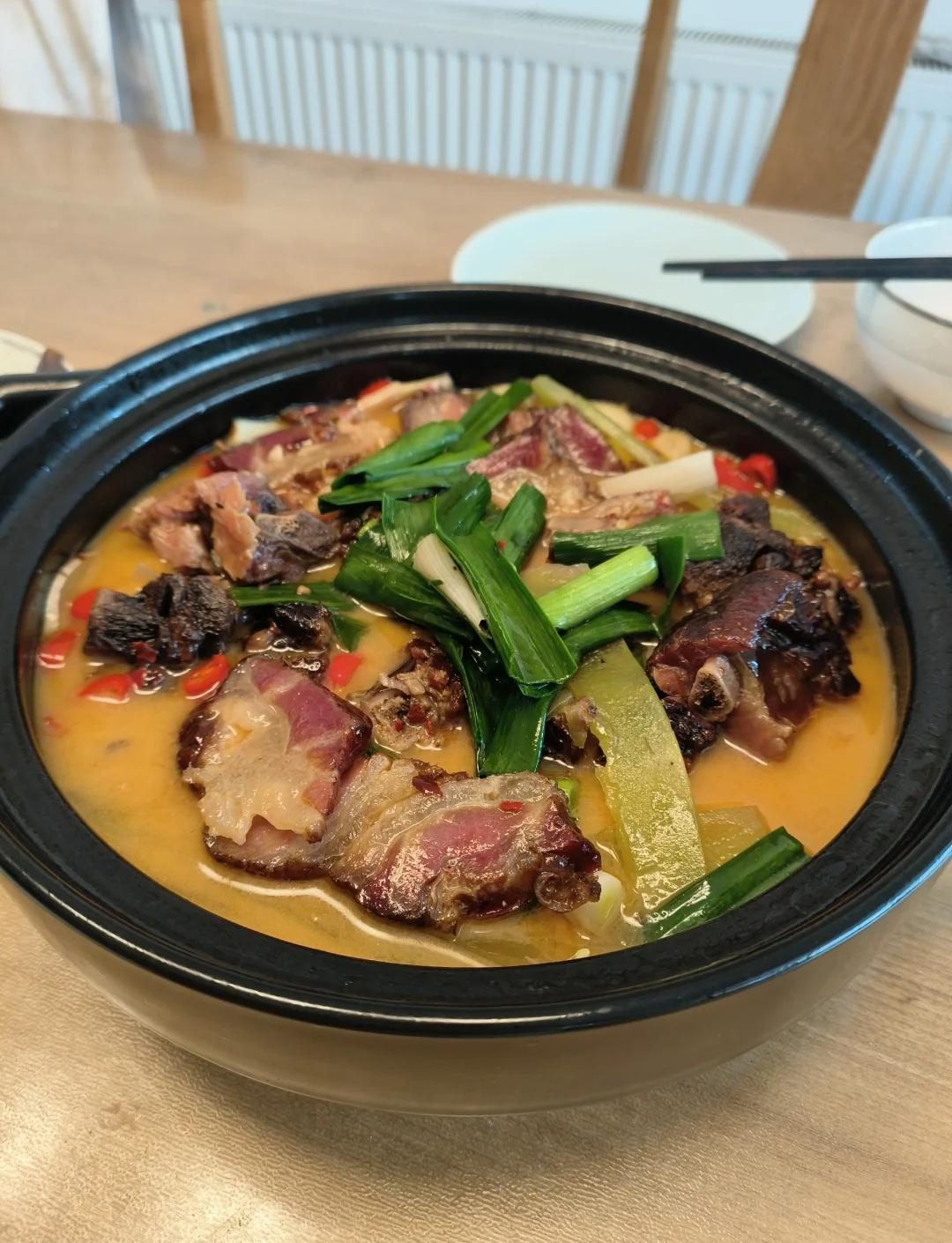
The cured rib is the range’s pantry in one cut: smoke, salt and time, all resolved by a long stew into a broth that needs no seasoning. The ribs’ bones give the pot its depth, and the mountain vegetables — the county’s highland produce — take the reduced broth the way the region’s other pots do. The dish’s logic is the same across the Wuling range: preserve in winter, stew all year, share by the pot.
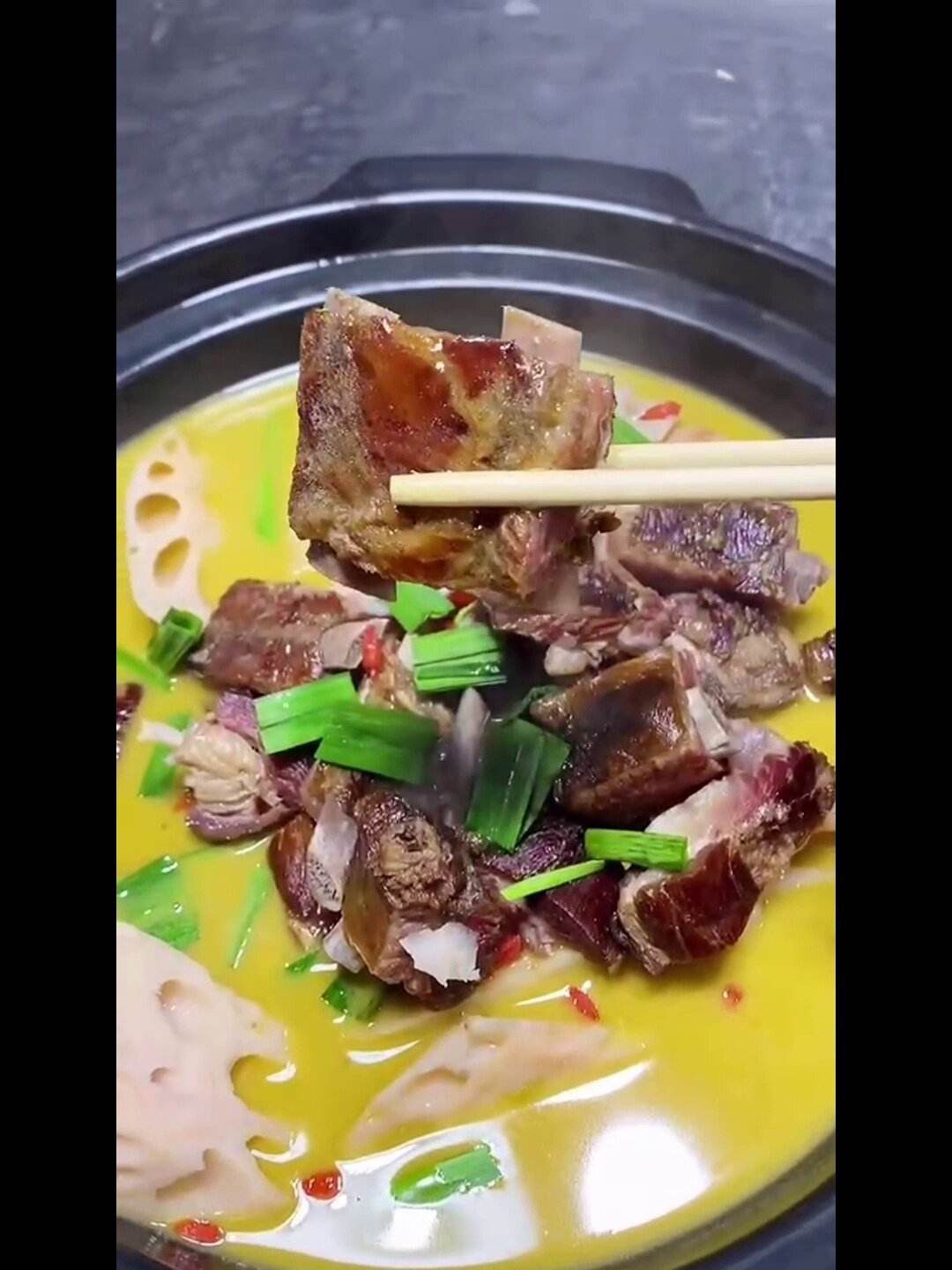
The pot is a long cook — order it with lead time and let it anchor the meal. The correct sequence is the ribs first, then the vegetables, and the broth last. The county’s kitchens source the cured meat from the mountain households, and the farmhouse version — from the household’s own rafters — is the one to ask for with an introduction.
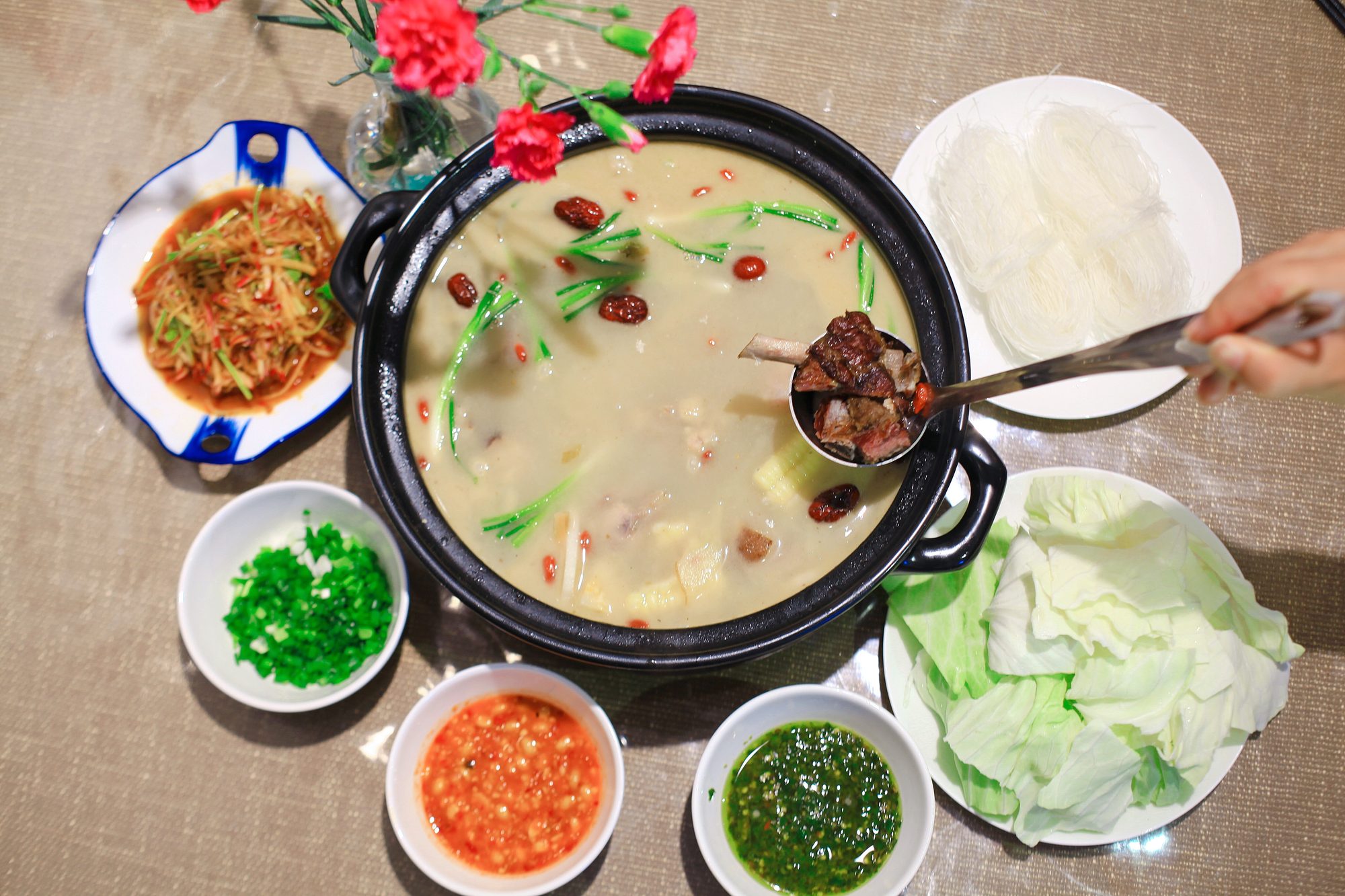
flowcloud would say that the county’s winter rafters feed its year-round pots — and that the smokehouse’s second shift runs in the soup pot.
Where to find it: the county’s kitchens, which source the cured meat from the mountain households — the farmhouse version comes from the household’s own rafters. All checked October 2026.
Words and Names
腊排骨 làpáigǔ — cured pork ribs · 汤锅 tāngguō — soup pot, the communal format · 土家 Tǔjiā — the Tujia, the register’s people · 腊味 làwèi — the cured-meat register · 高山蔬菜 gāoshān shūcài — the highland vegetables, the pot’s partners