
破酥千层,炭火一炉。Pòsū qiāncéng, tànhuǒ yī lú – A thousand flaky layers, one oven of charcoal.
喜洲粑粑 Xǐzhōu Bāba is the cake the old square runs on – a 破酥 pòsū “broken-flake” dough laminated with 猪油 zhūyóu lard into a hundred layers, filled either sweet with 玫瑰糖 Méiguī Táng rose syrup and brown sugar or savoury with minced pork, ham, scallion and salt, seared on a griddle and finished in a coal oven until the crust blisters. One cake runs about 5-15 yuan, the ovens work from morning to dusk around 四方街 Sìfāng Jiē, and the honest shape is that the lard and the layers are the point – this is 破酥 pòsū technique in oven form, not a stuffed bread.
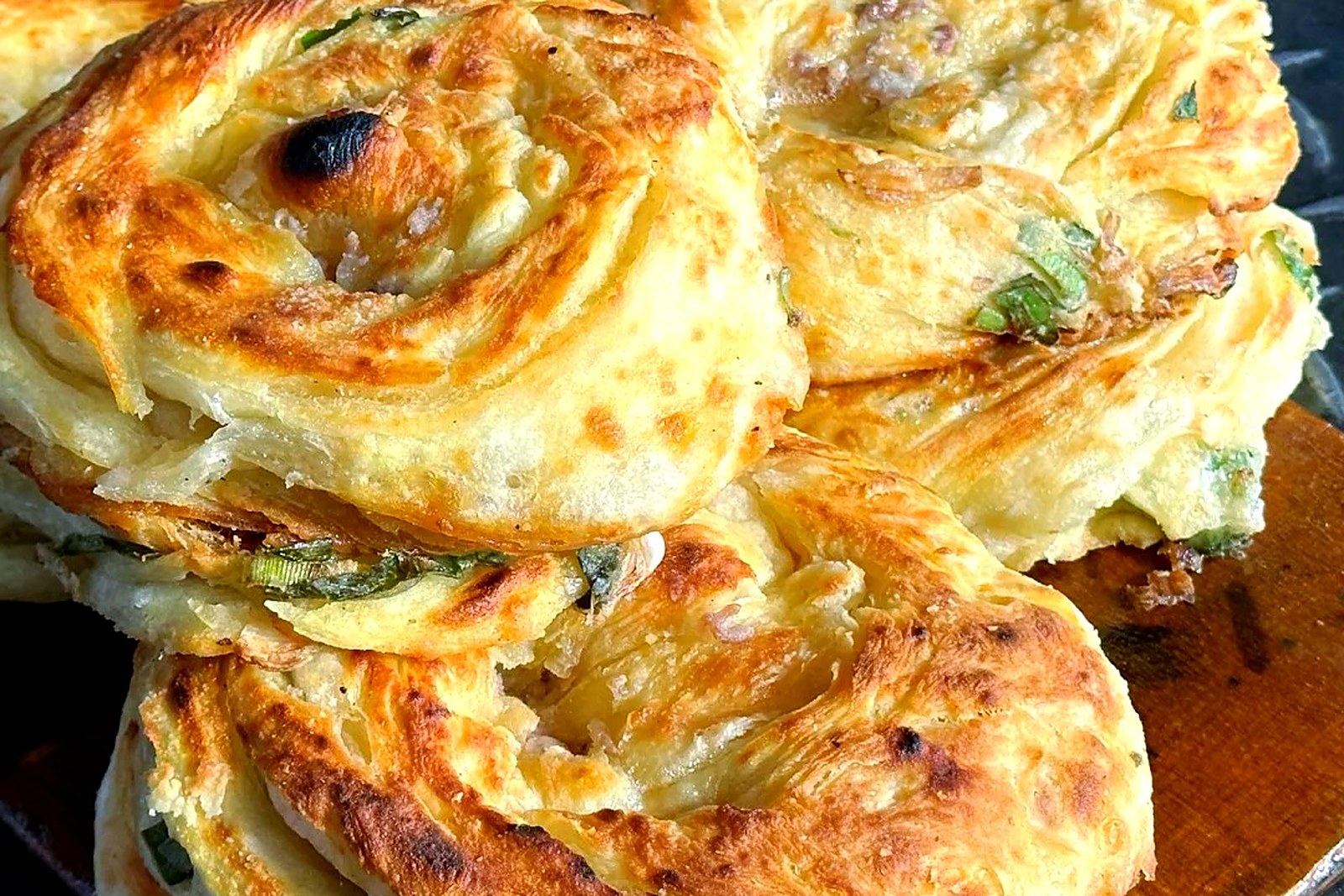
The mechanism is the fold. The dough is rolled thin, painted with lard, folded and rolled again until the layers cannot be seen, then wrapped around the filling and flattened – the 破酥 pòsū “broken flake” that gives the Bai kitchen its name for laminated dough, the same method as the 破酥包 pòsū bāo steamed bun, moved from the steamer to the coal oven. The oven does two jobs: the griddle sets the base, the 炭炉 tànlú coal chamber above crisps the top and puffs the layers apart. The 炭炉 tànlú is the old coal-fired oven, not a gas deck, and the coal is half the flavour the cake is named for – a gas oven makes a flatter, paler cake, which is the tell of a shortcut. The lard is what makes the layers open; oiling the pan instead of folding the dough is the shortcut a visitor can taste. That is also the cake’s limit – it is at its best for ten minutes out of the oven and dies as it cools, which is why nobody sells it to take home. The comparison with a 锅盔 guōkuī is exact: same idea of a griddle-and-oven cake, different laminated soul.
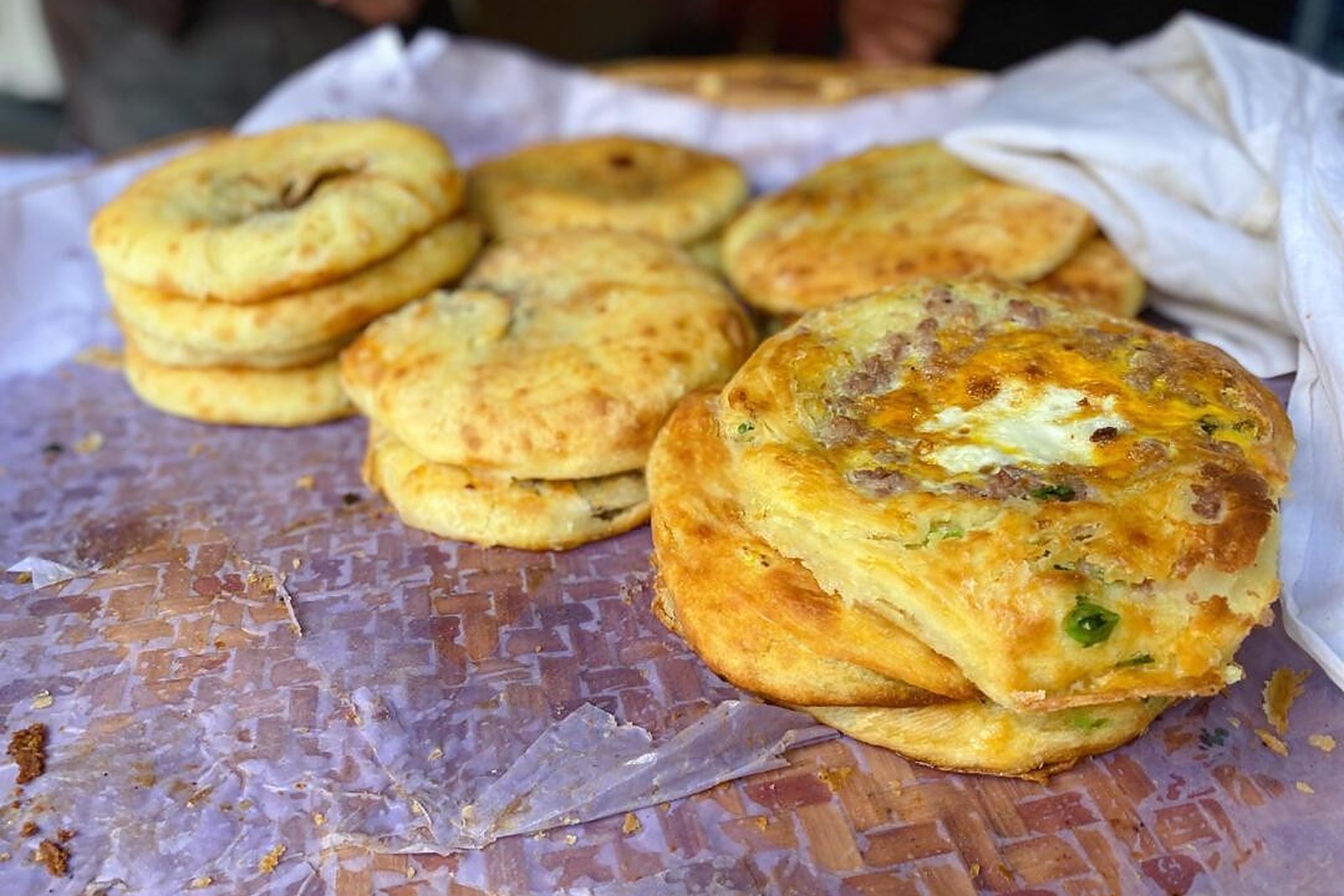
Locals buy it at the stall and eat it standing on the square. Ask for 甜 tián sweet (the rose one is the classic) or 咸 xián savoury, take it in two hands because the flakes shatter, and do not save it for later – if the queue is long at the famous stall, the next oven over is usually the same recipe at the same price, because the oven is the identifier, not the signboard. 酥香园 Sūxiāngyuán is a name locals cite at the 四方街 Sìfāng Jiē stalls. A cake and a bottle of water is the field picnic, and the pairing with the 海舌 Hǎishé peninsula walk is the local half-day: town in the morning, cake at noon, sandbar in the afternoon. Buy the savoury one for the walk out and the sweet one for the way back.
Where to find it: the coal-oven stalls around 四方街 Sìfāng Jiē and 题名坊 Tímíng Fāng in 喜洲古镇 Xǐzhōu Gǔzhèn, about 18 km north of the old town; the coal oven is the tell. All checked October 2026.
Words and Names
喜洲粑粑 Xǐzhōu Bāba Xizhou baba · 破酥 Pòsū “broken flake”, the laminating technique · 猪油 Zhūyóu lard · 玫瑰糖 Méiguī Táng rose-petal syrup · 炭炉 Tànlú coal oven · 四方街 Sìfāng Jiē Xizhou’s old market square · 甜/咸 Tián/Xián sweet/savoury · 火腿 Huǒtuǐ ham
What the Locals Know
The local knowledge about the baba is about the oven and the minute, and it is the same check a Xizhou regular makes on the square. The 炭炉 tànlú coal oven is the identifier, not the signboard – a gas deck makes a flatter, paler cake, which is the tell of a shortcut – and if the queue is long at the famous stall, the next oven over is usually the same recipe at the same price. The second check is the flake: the lard is what makes the layers open, so oiling the pan instead of folding the dough is a shortcut a visitor can taste, and the honest cake is taken in two hands because the flakes shatter. The third is the clock – the cake is at its best for ten minutes out of the oven and dies as it cools, which is why locals buy it at the stall and eat it standing rather than save it for later.
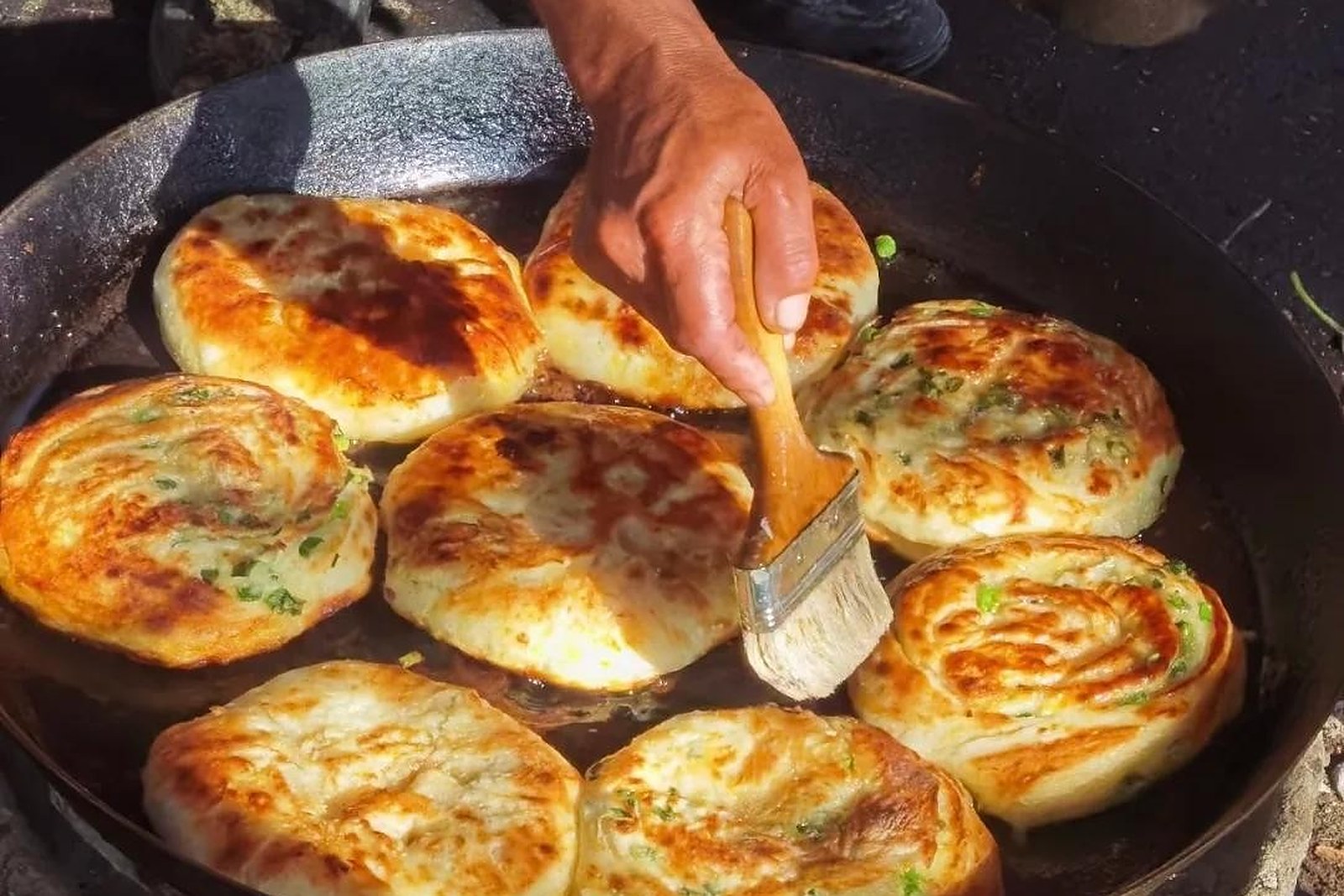
flowcloud would say that the baba is lard, layers and coal – a griddle first, then the oven, rose or pork inside – and that the honest move is to buy it at the stall and eat it standing, because the flake is the point and it dies when it cools. All checked October 2026.
Where to find it: the coal-oven stalls around 四方街 Sìfāng Jiē and 题名坊 Tímíng Fāng in 喜洲古镇 Xǐzhōu Gǔzhèn, about 18 km north of the old town, one cake about 5-15 yuan – 酥香园 Sūxiāngyuán is a name locals cite at the square stalls – and the coal oven is the tell, not the signboard (checked October 2026, subject to change).