
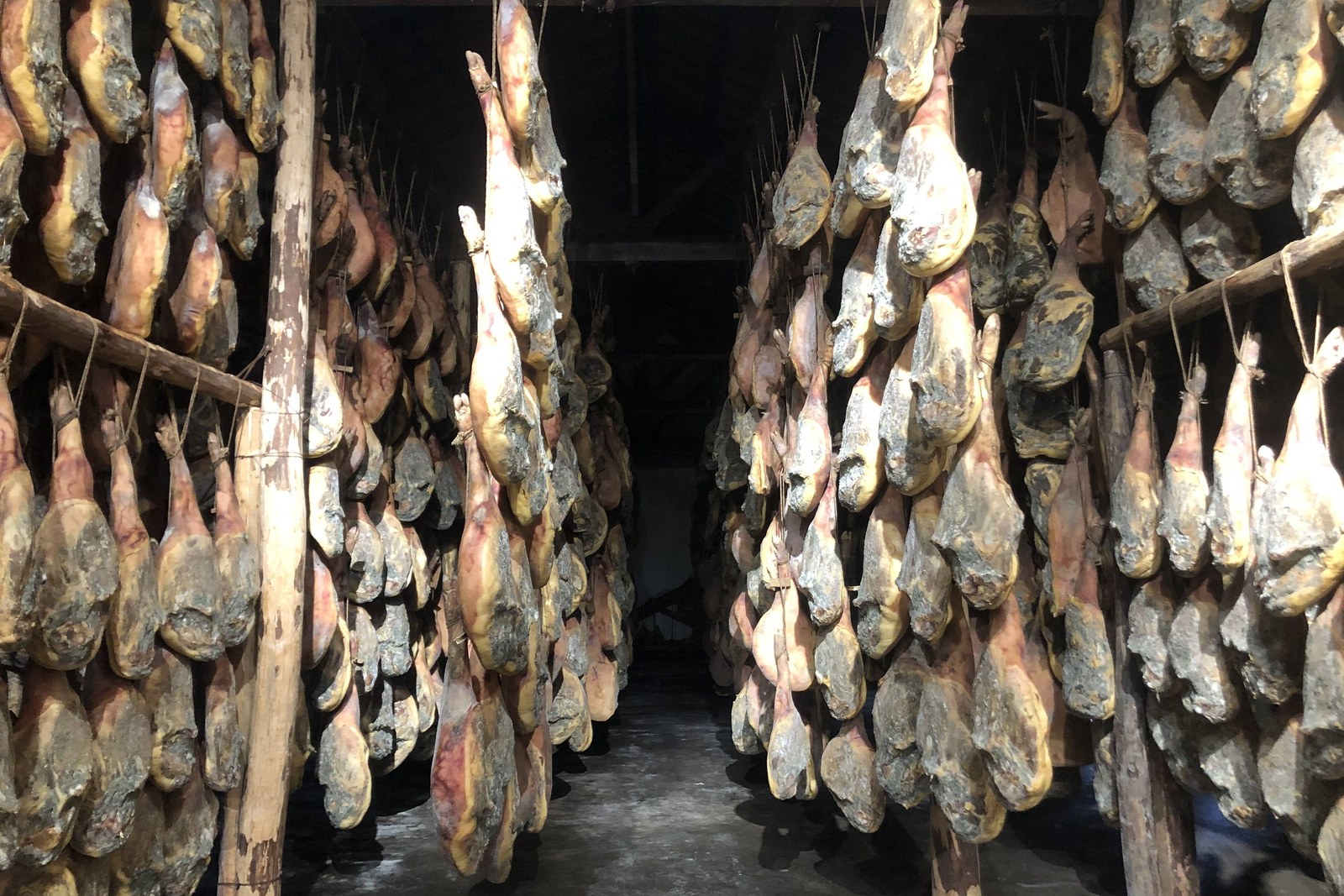
宣威火腿 Xuānwēi huǒtuǐ, Xuanwei ham, is the cured leg of 宣威市 Xuānwēi Shì Xuanwei City, in the northeast of 曲靖市 Qūjìng Shì Qujing, eastern Yunnan – a salt-cured, wind-dried ham that ages through the cold season and is eaten sliced thin, cooked into the province’s famous dishes, or pressed into mooncakes. It is one of the few Chinese hams with a protected geographical-indication status, and the thing that separates it from a generic red-cured leg is the local pig and the long, slow cure rather than any spice: a 乌金猪 Wūjīn zhū Wujin black pig, fat-layered and well-marbled, salted in the winter and left to lose moisture and deepen for a year or more. The honest shape of the article is therefore a ham-and-place page: the pig, the salt, the ageing room, and the town that gave the cure its name, with no single shop to point at because the product is the region’s, not a counter’s.
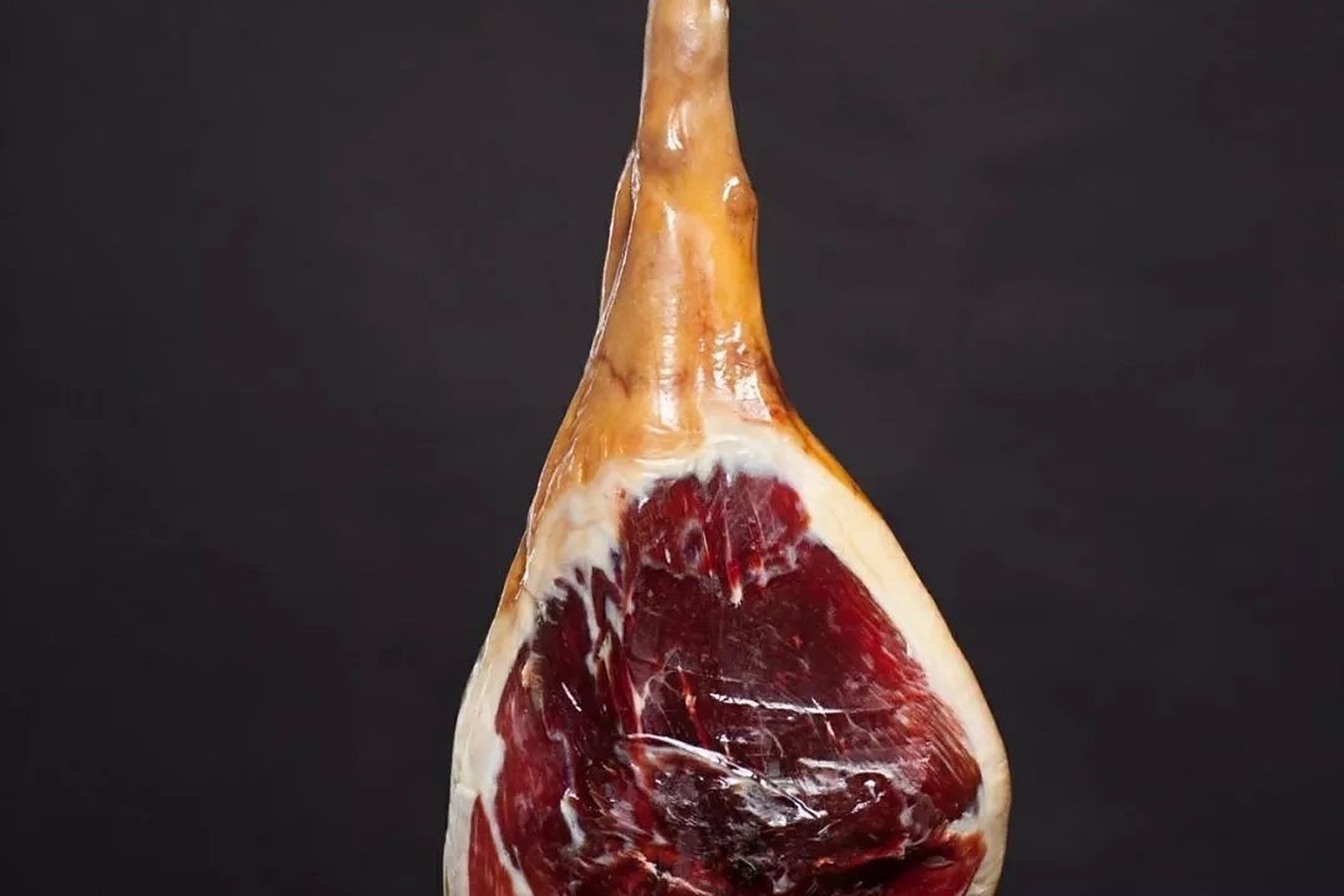
What the eater actually gets is the texture before the salt. A well-aged leg is dense and faintly translucent at the edge, the red meat running into a clean white fat that chews firm rather than waxy, and the flavour is nutty and savoury with a long sweet finish that reads as cured meat rather than straight salt – the mark of a cure that was given time instead of heat. The Wujin pig matters here because its fat lays down in fine seams through the muscle, so a thin slice carries both red and white in one bite, and that is the cut a Xuanwei eater looks for: paper-thin, room-temperature, eaten as it is before it is cooked into anything. The local quality check is the 三针清香 sān zhēn qīng xiāng “three-needle clear aroma” test – a warmed needle pushed into three points of the leg and sniffed, where a clean sweet smell at every point means a sound cure and any sour note means the batch is wrong.
The place is the other half of the name, and it is specific. 宣威 sits on the eastern Yunnan plateau at a cool altitude that suits a winter cure: cold enough to dry the salted leg without rot, dry enough that the ham loses moisture slowly instead of case-hardening, which is exactly the climate a long-aged ham needs and the reason the cure is tied to the town rather than to a recipe anyone can ship. The commercial fame is recent but the product is old: 宣威 ham was already a regional staple before the late-Qing merchant 浦在廷 Pǔ Zàitíng Pu Zaiting organised it into tins and took it to fairs, and the story the town tells is that 孙中山 Sūn Zhōngshān Sun Yat-sen wrote the inscription 饮和食德 yǐn hé shí dé – “drink harmony, eat virtue” – for the enterprise, which is the kind of dated origin line a heritage ham is allowed to keep. The honest article therefore names the town, the pig and the cure, not a maker, because the ham is Xuanwei’s before it is anyone’s brand.
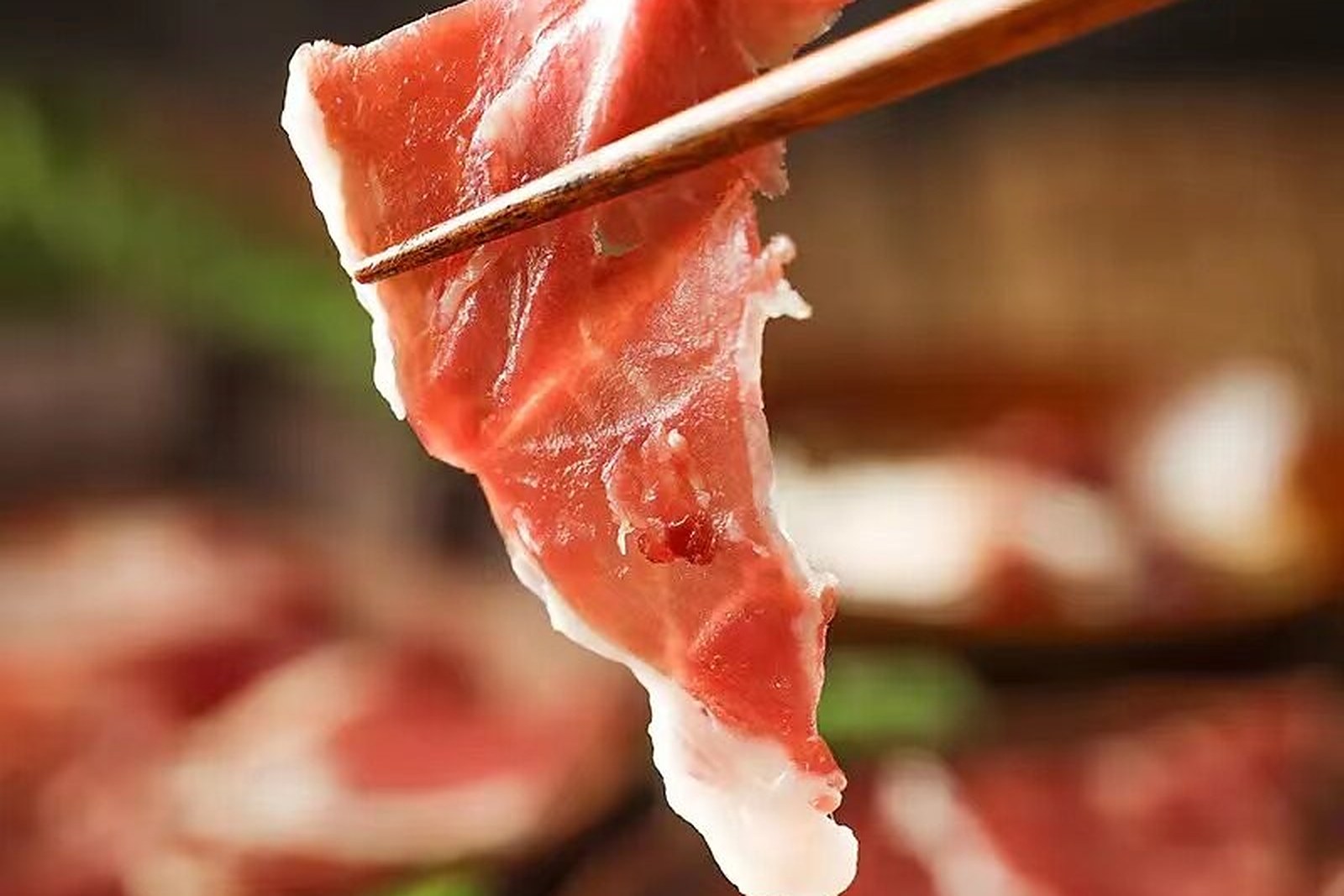
How it is used is where the ham becomes Yunnan rather than just a cured leg. Eaten plain it is 云腿 yún tuǐ “cloud ham,” the name the province gives its own cured leg, sliced cold as a starter or laid over steamed vegetables; cooked it goes into 汽锅鸡 qìguō jī steamed-pot chicken as the seasoned backbone of the broth, and pressed into 云腿月饼 yún tuǐ yuèbìng Yunnan ham mooncakes and 宣威火腿饼 Xuānwēi huǒtuǐ bǐng Xuanwei ham pastries, where the salted meat balances a sweet pastry crust. The practical answer to where to find it is Xuanwei City and the wider Qujing market, because the leg is a regional product sold by weight from whole hams rather than a dish on a single menu – a visitor buys a slice at a deli counter or a vacuum pack at a station shop, not a seat. The honest form of the sentence is that the ham is something you carry home from eastern Yunnan, not something you order at one address.
What the record does not contain is a single shop worth naming, and that absence is the shape of a geographical-indication product rather than a gap to fill. A protected ham made across a whole city by many curers has no counter, no founder’s table and no signature address on any public record the sources consulted, so this page does not invent one; the maker is the town and the cure is the craft. A whole leg is priced by age and grade rather than by the bowl, and a thin retail slice runs from a few tens of yuan per 500 grams upward for an older cure, which is the only price line worth giving because the rest moves with the year and the grade. The article is therefore a ham-and-place page: the pig, the salt, the cold cure and the town, with Xuanwei itself as the only address that matters.
Words and Names
宣威火腿 Xuānwēi huǒtuǐ, Xuanwei ham, the cured leg of 宣威市 Xuānwēi Shì Xuanwei City in 曲靖市 Qūjìng Shì Qujing, eastern Yunnan – a salt-cured, wind-dried ham from the local 乌金猪 Wūjīn zhū Wujin black pig, fat-layered and well-marbled, salted in winter and aged a year or more. It carries a protected geographical-indication status, the quality mark being the 三针清香 sān zhēn qīng xiāng “three-needle clear aroma” test where a warmed needle pushed into three points should smell clean and sweet. Eaten plain it is 云腿 yún tuǐ “cloud ham,” sliced cold or laid over steamed vegetables; cooked it seasons 汽锅鸡 qìguō jī steamed-pot chicken and fills 云腿月饼 yún tuǐ yuèbìng Yunnan ham mooncakes and 宣威火腿饼 Xuānwēi huǒtuǐ bǐng Xuanwei ham pastries. The late-Qing merchant 浦在廷 Pǔ Zàitíng Pu Zaiting organised the ham into tins and took it to fairs, and the town credits 孙中山 Sūn Zhōngshān Sun Yat-sen with the inscription 饮和食德 yǐn hé shí dé “drink harmony, eat virtue” – a dated origin line a heritage ham is allowed to keep.
What the Locals Know
The local knowledge about the ham is about the cut and the cure, and it is the same check a Xuanwei buyer makes at any deli counter. The slice should be paper-thin and room-temperature, red meat running into a clean white fat in one bite, because that is how the Wujin pig’s fine fat seams read as cured meat rather than as wax, and a thick warm slice hides a cure that was rushed. The second check is the aroma: a sound aged leg smells nutty and sweet, never sour or ammoniac, which is the 三针清香 three-needle test in plain language – push a warmed needle in and trust your nose at all three points. The trade also knows the ham is a regional product sold by the whole leg and the slice, not a dish at one counter, so the right way to buy it is a vacuum pack or a weighed slice from Xuanwei or Qujing rather than a search for a single famous shop, and an older cure costs more per 500 grams because the price follows the year and the grade, not a menu.
flowcloud would say that Xuanwei ham is a ham-and-place product rather than a recipe – the salt-cured, wind-dried leg of the local Wujin black pig from Xuanwei in eastern Yunnan, aged a year or more and judged by the three-needle clear-aroma test – and that the correct way to treat it is as the region’s cure rather than a counter’s dish, because the ham carries a protected geographical-indication status with no single maker, workshop address or signature bowl on any public record consulted, and Xuanwei itself, on the cool eastern-Yunnan plateau that suits a slow winter cure, is the only address worth naming. All checked October 2026.
Where to find it: the Xuanwei ham is a cured leg of 宣威市 Xuanwei City in 曲靖市 Qujing, eastern Yunnan, sold by the whole ham and the thin slice rather than served at one address – a vacuum pack or a weighed portion from a Xuanwei or Qujing deli counter or station shop is the practical buy, and an older cure runs from a few tens of yuan per 500 grams upward by grade and year. The 乌金猪 Wujin pig and the cool plateau cure are what give the leg its name and its density, and a Xuanwei neighbour worth one mention is 云腿月饼 Yunnan ham mooncake, the pastry that puts the same cured meat into a sweet crust, named here as a regional product rather than as a page of its own.