
菠萝 bō luó, the pineapple of 徐闻县 Xúwén xiàn, is a fruit rather than a cooked dish, but the county it grows in is one where the crop has shaped the ground, the calendar and the roads, and it deserves to be treated the way the county treats it. 徐闻 occupies the southern tip of the 雷州半岛 Léizhōu bàndǎo, and the soil there is a deep red 砖红壤 zhuān hóng rǎng, the lateritic clay that comes of weathered basalt; the peninsula is a volcanic plateau with a tropical monsoon over it, hot and wet and with no winter to speak of, and the combination suits the pineapple better than anywhere else in the country. There are thirty-five thousand hectares of it in the county and seventy thousand tons and more a year, close to a third of the national crop, and 菠萝的海 bō luó de hǎi, a sea of pineapples, is what everyone calls the country around 曲界镇 Qūjiè zhèn.
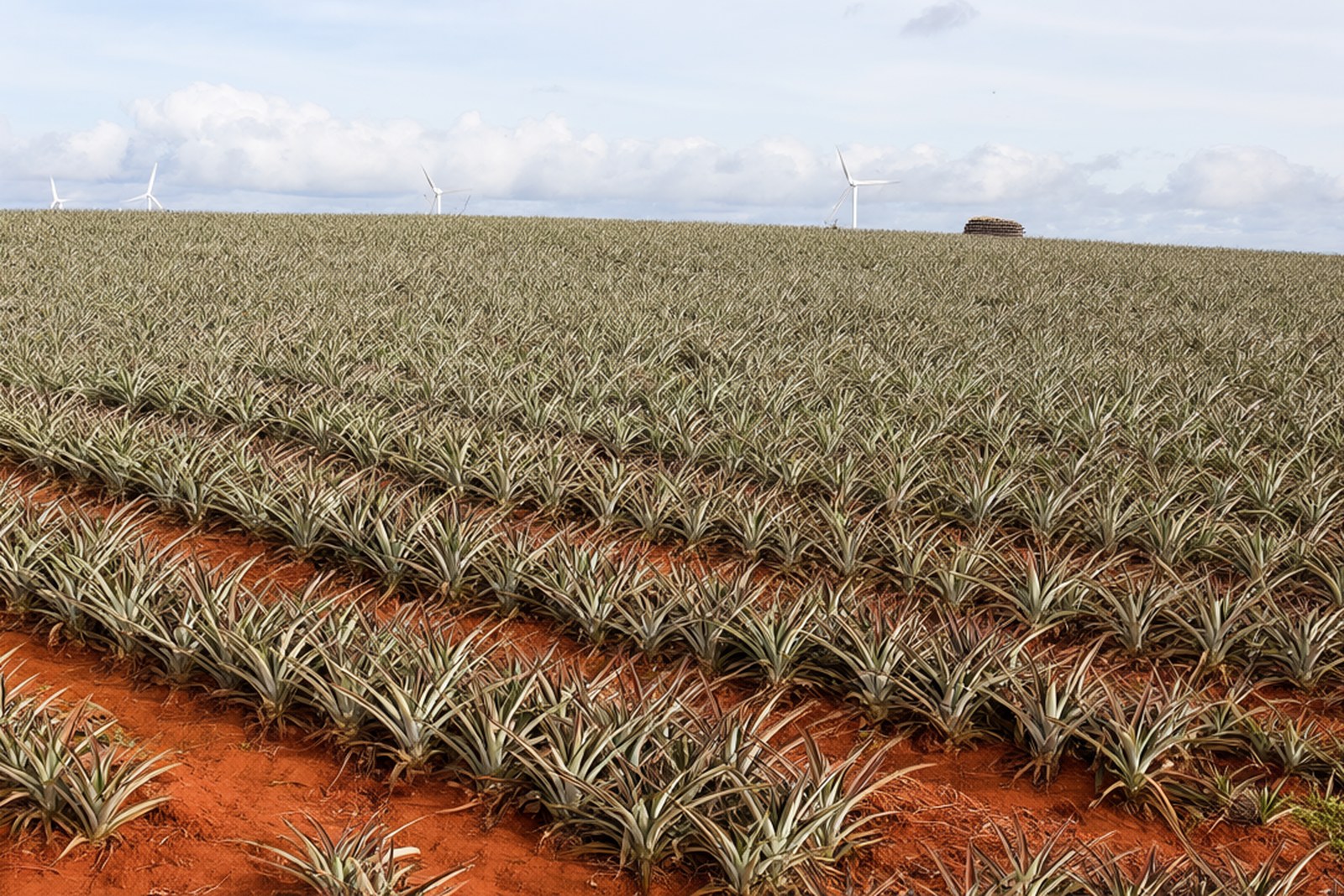
The pineapple is not native and it did not arrive early. It came back with a returned emigrant. In 1926 倪国良 Ní Guóliáng, a 徐闻 man who had been working in Singapore, brought two hundred suckers home to 愚公楼 Yúgōnglóu and planted them out, and the strain he carried is the one that still dominates the county and takes the name of the route it travelled: 巴厘 Bālí, Bali. For most of a century it was a smallholder crop, grown on the slopes in among the scrub and sold green or dried, and the county’s modern reputation began in the 1980s and 1990s, when the planting spread out across the plateau in blocks. In August 2005 愚公楼菠萝 Yúgōnglóu bō luó was registered as a geographical indication product, the first in the county, and the 徐闻菠萝 has since also been entered on the national register of agricultural geographical indications.
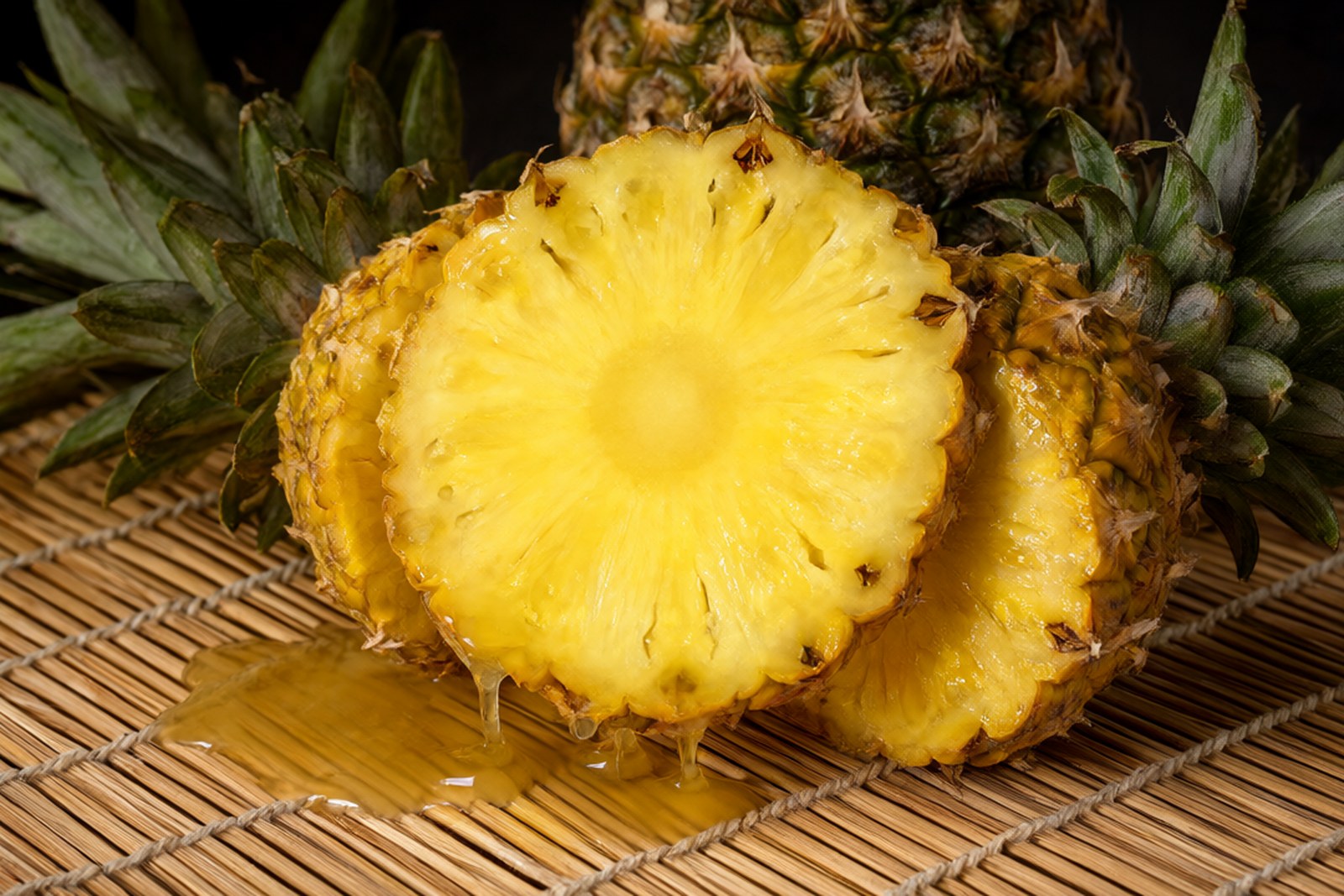
The 巴厘 Bālí fruit is small, squat and sharply conical, with a deep golden flesh, high sugar and a heavy perfume, and it is a 菠萝 rather than a 凤梨: its eyes are set deep into the flesh and it wears a crown of stiff saw-toothed leaves, so it has to be peeled properly, the eyes cut out in a spiral or the whole skin taken off in one go. That is why the county sells it the way it does, on the roadside and already prepared, spun on a spike and scored so that it comes apart in your hand. The newer plantings are the 台农 Táinóng series and 金钻 Jīn zuàn, the smooth-skinned, eye-less form the trade sells as 凤梨, which gives up some of the perfume in exchange for keeping quality and an easy cut. The old hands in the county say the 巴厘 tastes more and the 金钻 travels better, and that both statements are true.
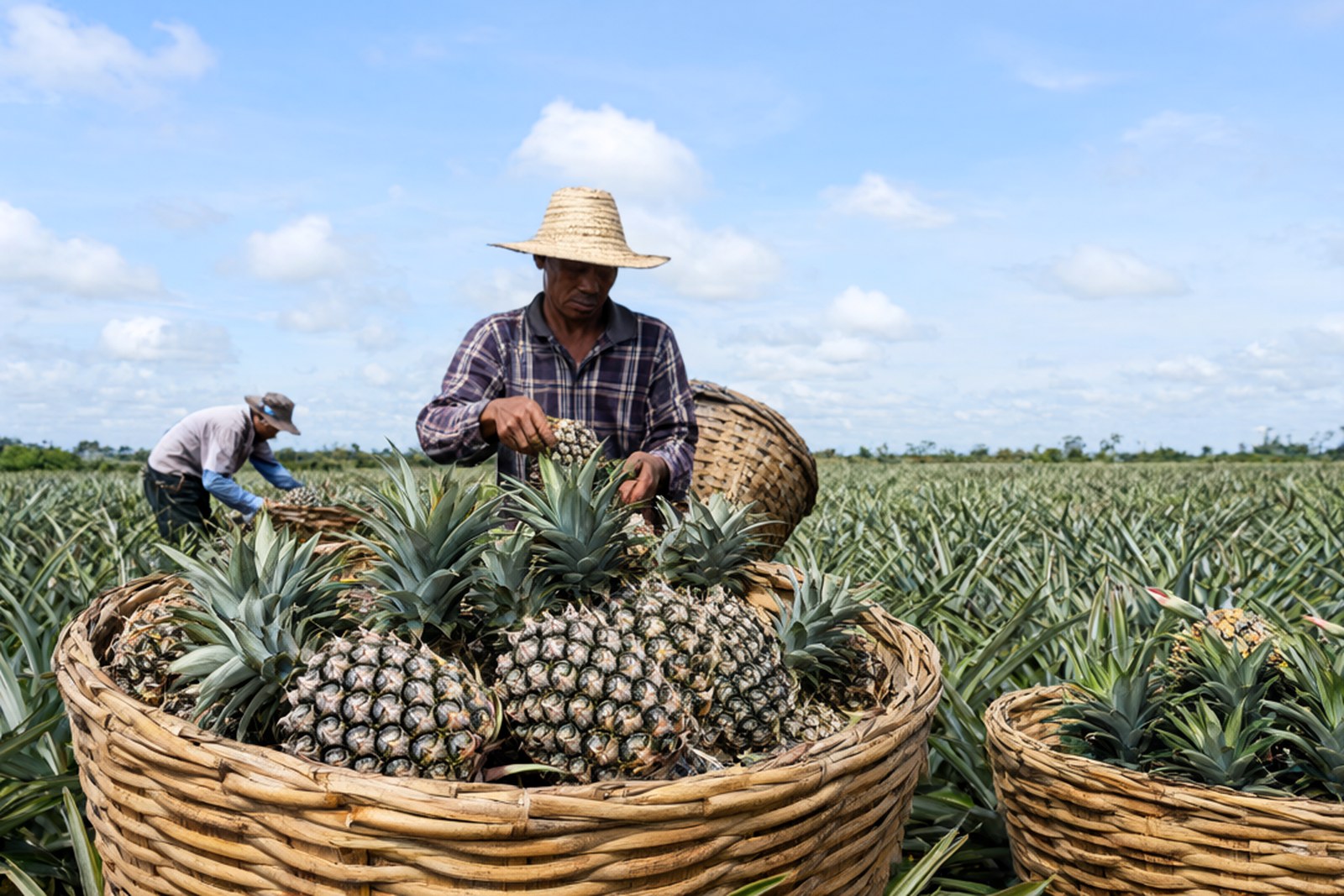
The crop runs on its own calendar. The main harvest comes in the spring and early summer, from March to June, with a second and smaller flush in the autumn, and in the peak weeks the road through 曲界 Qūjiè is lined with stalls for kilometre after kilometre and the whole valley smells of it. 曲界镇 alone plants about thirteen thousand hectares and produces more than two hundred and sixty thousand tons, and the county has built a visitor centre and a viewing tower out over the rows at 上井 Shàng jǐng, where the fields roll away in every direction and there is nothing else in the frame. The rest of the crop goes into juice, 菠萝干 bō luó gān, the dried slices, 菠萝酥, the pastry, and 菠萝罐头, the canned rings that were the county’s first export. A whole fruit bought at the roadside is three to eight yuan and it will be peeled for you on the spot, which is the only sensible way to eat it: standing up, in the sun, with the juice running down your wrist, looking at the field it came out of.
Words and Names
菠萝 bō luó is pineapple and 凤梨 fèng lí is the smooth-skinned cultivar the trade sells as a different fruit; 巴厘 Bālí is the Bali strain brought home in 1926 and 台农 Táinóng and 金钻 Jīn zuàn are the modern ones. 菠萝的海 bō luó de hǎi is the sea of pineapples, 曲界 Qūjiè the town at the middle of the fields and 上井 Shàng jǐng the viewing point above them. 愚公楼 Yúgōnglóu is the village the first suckers were planted at, 砖红壤 zhuān hóng rǎng the red lateritic soil, 徐闻 Xúwén the county and 雷州半岛 Léizhōu bàndǎo the peninsula it occupies.
What the Locals Know
Buy from the fields and not from a city market, and buy a 巴厘 if you want the perfume, because the 金钻 sold as 凤梨 is sweeter and blander and is bred for the journey out. A ripe 巴厘 smells sweet at the base and gives slightly when pressed there, and one that is hard at the base and smells of nothing is not ready whatever colour it is showing. Have it peeled on the spot and eat it within the hour, since a cut pineapple goes flat quickly in this heat; if you are taking one away, take it whole and unripe. The juice made at the roadside in 曲界 is worth one glass on the way through, and the dried slices, which keep, are the thing to carry home.
flowcloud would say that a county which turned a hundred suckers carried home from Singapore into a third of the national crop, and then named the result a sea, has done the two things that regional food is always doing at once: taking something foreign and making it local, and then believing in it far more than the people it came from ever did.
Where to find it: the pineapple fields and roadside stalls of 徐闻县, with 曲界镇 Qūjiè zhèn on the 徐闻 to 雷州 road and its 上井 Shàng jǐng viewpoint the centre of the 菠萝的海, in season from March to June and again briefly in the autumn. A whole 菠萝 is ¥3 to ¥8 peeled on the spot, a glass of juice ¥5 to ¥10, and dried slices ¥20 to ¥40 for a bag. 徐闻 has its own 徐闻站 Xúwén zhàn on the 深湛 high-speed line at the end of the peninsula, about forty minutes by road north to 曲界, with 湛江市 some two hours away by expressway.