
The High-Protein Table: Yak Meat
风干入冬香满帐,铜锅滚雪肉味浓 Fēnggān rù dōng xiāng mǎn zhàng, tóng guō gǔn xuě ròu wèi nóng – The winter’s drying meat fills the tent with fragrance; in the copper pot the snow boils and the meat runs deep
藏式牦牛肉 zàngshì máoniú ròu is the protein backbone of the Tibetan table – the meat of the yak, darker and sweeter than beef with a dense chew that comes from animals grazing at four thousand meters, cooked in 西藏自治区拉萨市 Xīzàng Zìzhìqū Lāsà Shì Lhasa in three canonical forms: the bubbling hotpot, the winter’s wind-dried strips, and the braised platters of the city’s Tibetan kitchens.
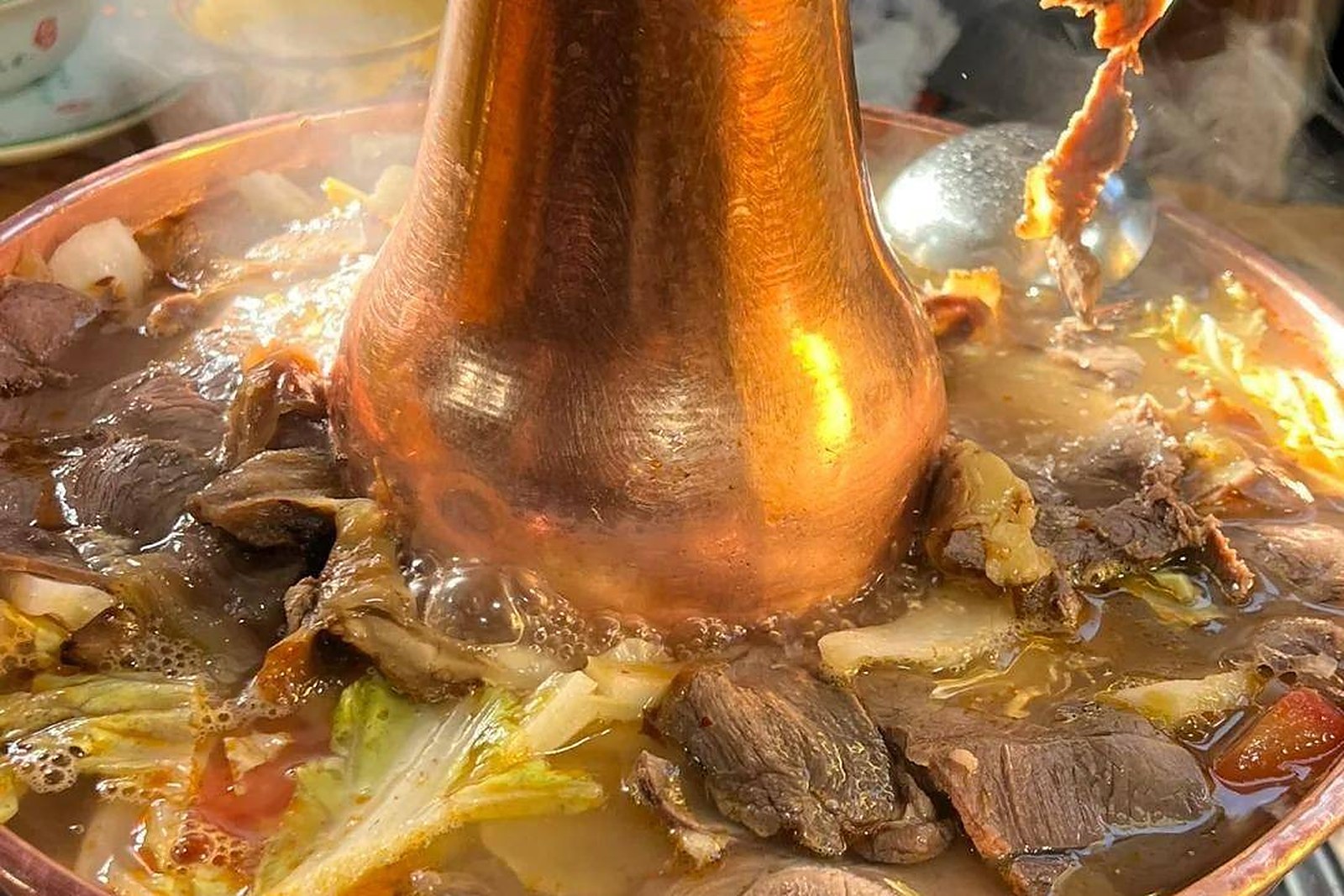
The hotpot is the celebratory form – a copper chimney pot of yak-bone broth stacked with sliced raw yak, cabbage, radish and hand-pulled noodles, the chimney breathing fire down the table’s center while the broth builds flavor layer by layer. The meat cooks in seconds to a firm, sweet-edged bite that no lowland beef matches, and the broth at the end, drunk straight, is the dish’s whole argument.
The winter form is 风干牛肉 fēnggān niúròu – strips of raw yak hung to dry in the cold dry air of November and December, eaten hard through the spring as the plateau’s jerky: chewy, sweet-salty, faintly gamey, sliced paper-thin or gnawed as is. Every farmhouse hangs its store in the rafters; every household’s recipe differs by a degree of salt and a length of hang, and connoisseurs argue the villages the way others argue vintages.
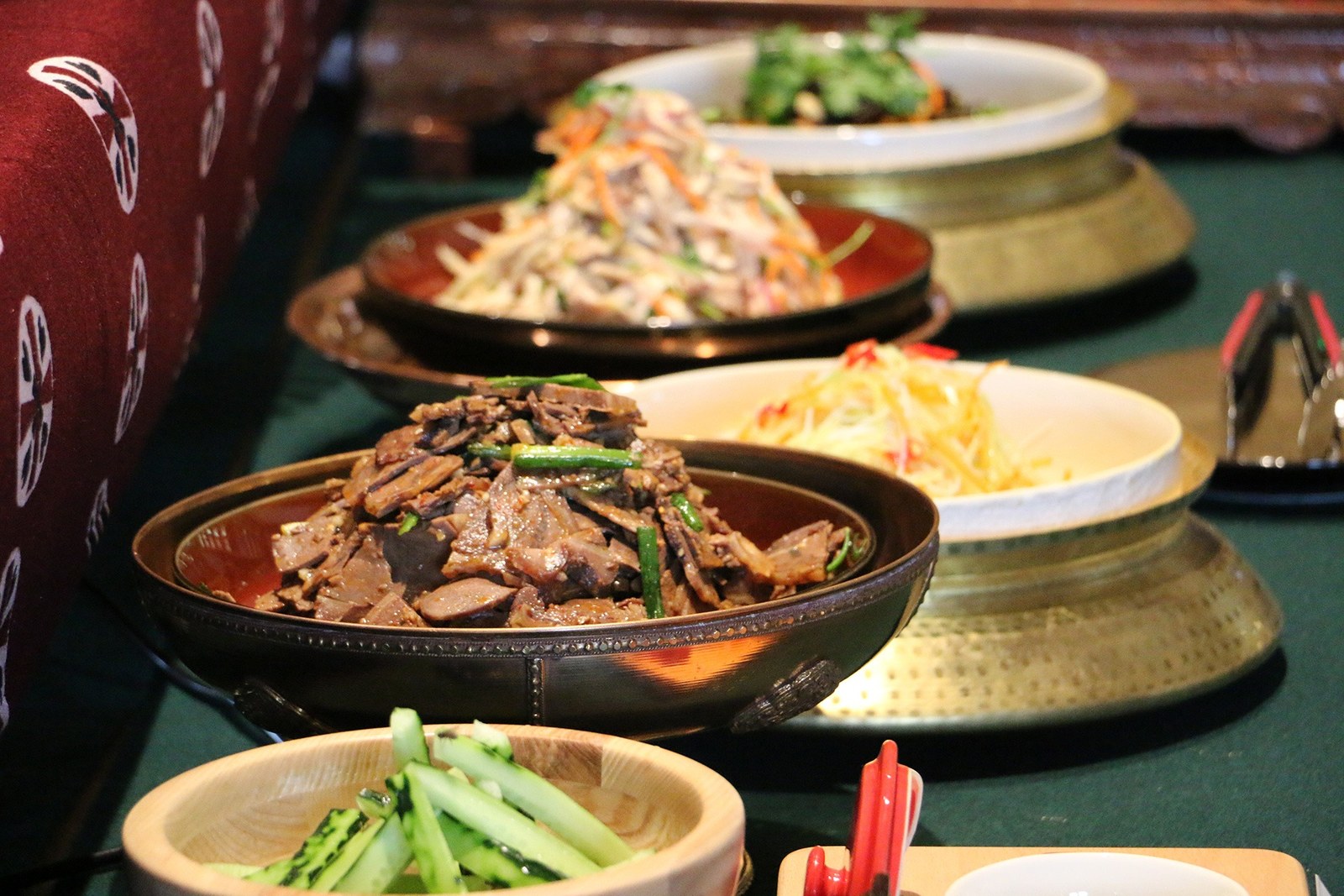
The third form is the kitchen braise – yak stewed with radish, stir-fried with chilies and Sichuan pepper, or served as a sliced cold platter with dipping salt at festival tables. In Lhasa’s restaurants the menu logic is simple: if the town has one pot worth crossing town for, it is the yak hotpot; if one snack worth carrying home, the dried strips; and both begin with animals that smelled of the high pasture they grazed.
The same 西藏自治区拉萨市 Xīzàng Zìzhìqū Lāsà Shì Lhasa holds more flavors worth chasing: 甜茶 tiánchá the teahouse pot, 糌粑 zānba the roasted-barley staple, 酥油茶 sūyóuchá the churned tea, or 牦牛酸奶 máoniú suānnǎi the set yogurt – four more doors into the same Lhasa table.
Words and Names
牦牛肉 máoniú ròu yak meat; 风干牛肉 fēnggān niúròu the wind-dried strips; 牦牛肉汤锅 máoniú ròu tāngguō the copper hotpot; 骨汤 gǔtāng the yak-bone broth base; 高原 gāoyuán the high pasture that flavors the animal.
What the Locals Know
The broth tells all – a proper yak hotpot starts as bone-and-meat stock that clarifies as it cooks; a pot that starts cloudy is a shortcut kitchen. The jerky connoisseurs buy by village, not by stall, and the strips from the drier valleys hang sweeter. And never order the hotpot medium-rare anything: yak is cooked through or it is nothing, and the meat rewards the patience. All checked November 2026.
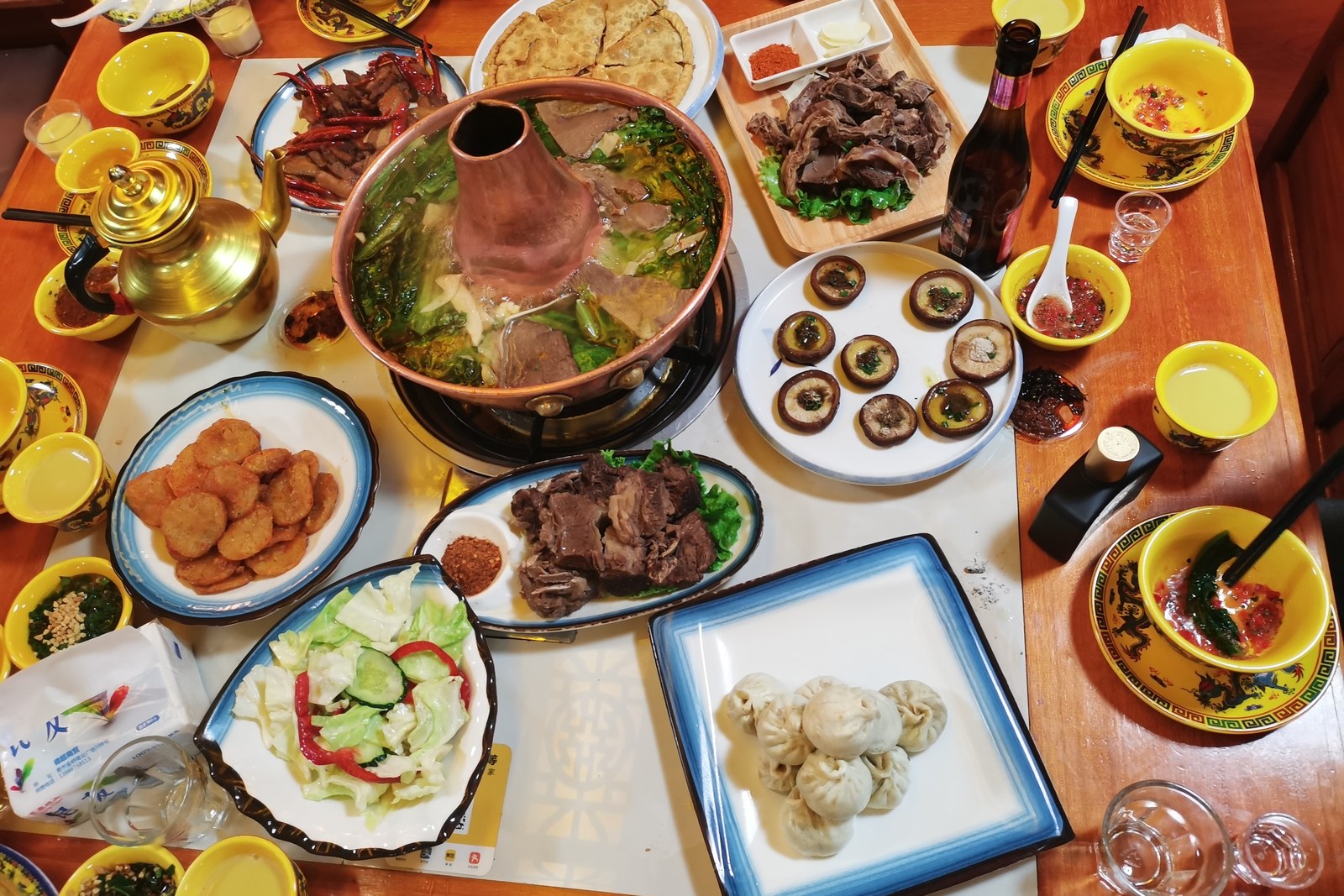
flowcloud would say the yak is the plateau’s pantry on four legs: copper pot in winter, jerky by the door, and a flavor that needs only salt and height.
Where to find it: The Tibetan restaurants around the old town run the copper hotpots year-round, the winter markets stack the dried strips in boxes, and farmhouse tables across the district serve both as a matter of course. All checked November 2026.