
Set Curd at 3,650 Meters: Yak Yogurt
玉碗凝脂拌白糖,高原酸味沁齿凉 Yù wǎn níngzhī bàn báitáng, gāoyuán suān wèi qìn chǐ liáng – Jade bowls of set curd dusted with white sugar; the plateau’s sourness cools the teeth
牦牛酸奶 máoniú suānnǎi is the plateau dessert that needs no help – whole yak milk simmered, fermented overnight and set into a spoonable curd so firm the bowl holds upside down, served across 西藏自治区拉萨市 Xīzàng Zìzhìqū Lāsà Shì Lhasa in bowls or cups dusted thick with white sugar. The flavor is the argument: tangier, richer and cleaner than any commercial yogurt, with the grassy depth of milk from animals that graze at four thousand meters.
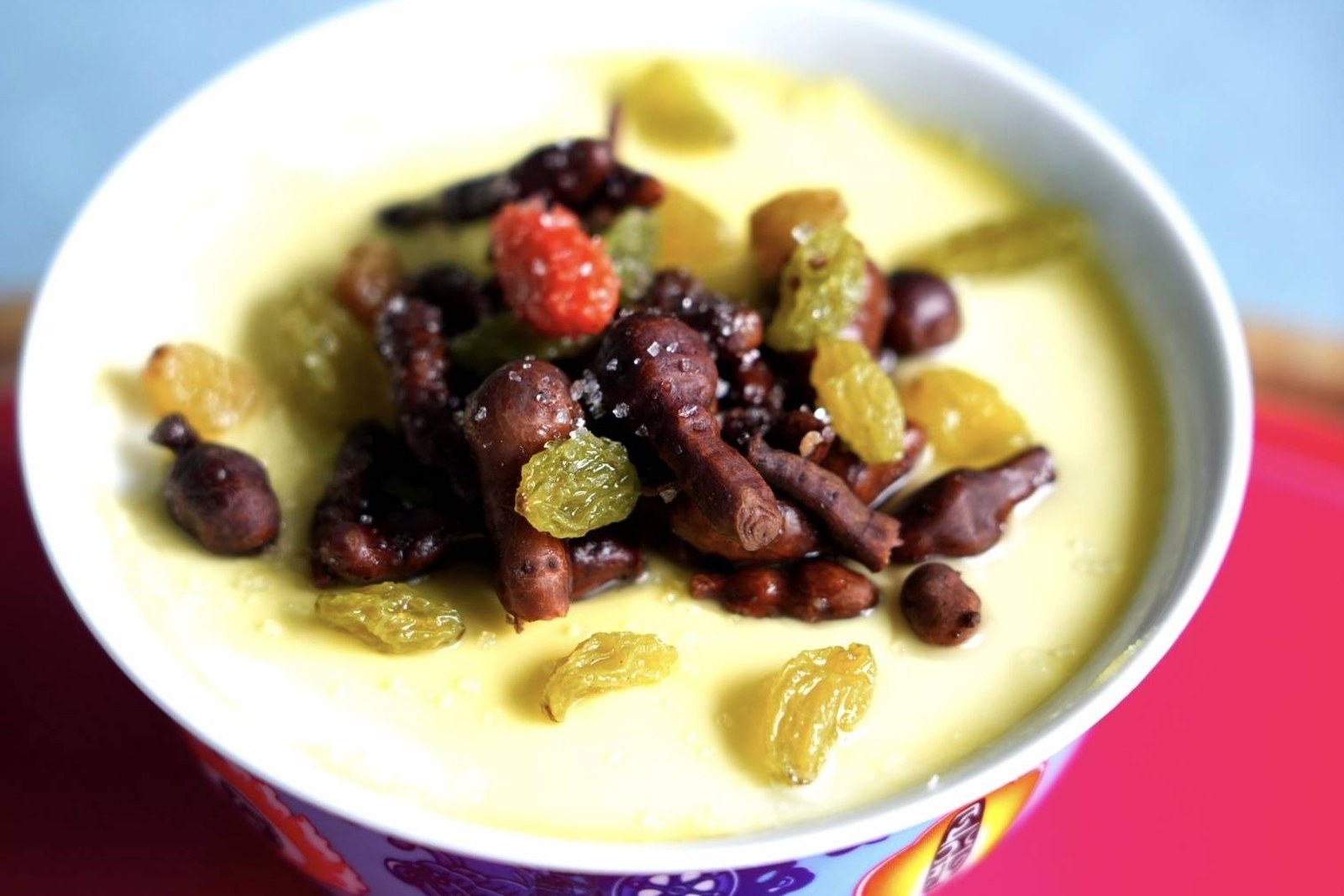
The classic serving is the street-and-market form: a deep bowl of the set curd, a wooden spoon, and a sugar jar on the counter – you sweeten to your own taste and eat it standing, the curd so dense the spoon stands a moment on its own. Festival tables dress it further: layered with rice and sugar for the harvest plates, or under a skin of yellow butter at the farmhouse, where the curd sets overnight in its wooden pail.
Lhasa has made the yogurt a destination in itself. The yogurt houses around the foot of the Potala spoon it into glass cups with toppings for the tourist trade, but the honest version still lives in the market halls and teahouse fridges – plain, sour, sugar on top, eaten with the morning’s tea. The best bowls run spring to autumn, when the fresh milk comes down from the pastures around the valley.
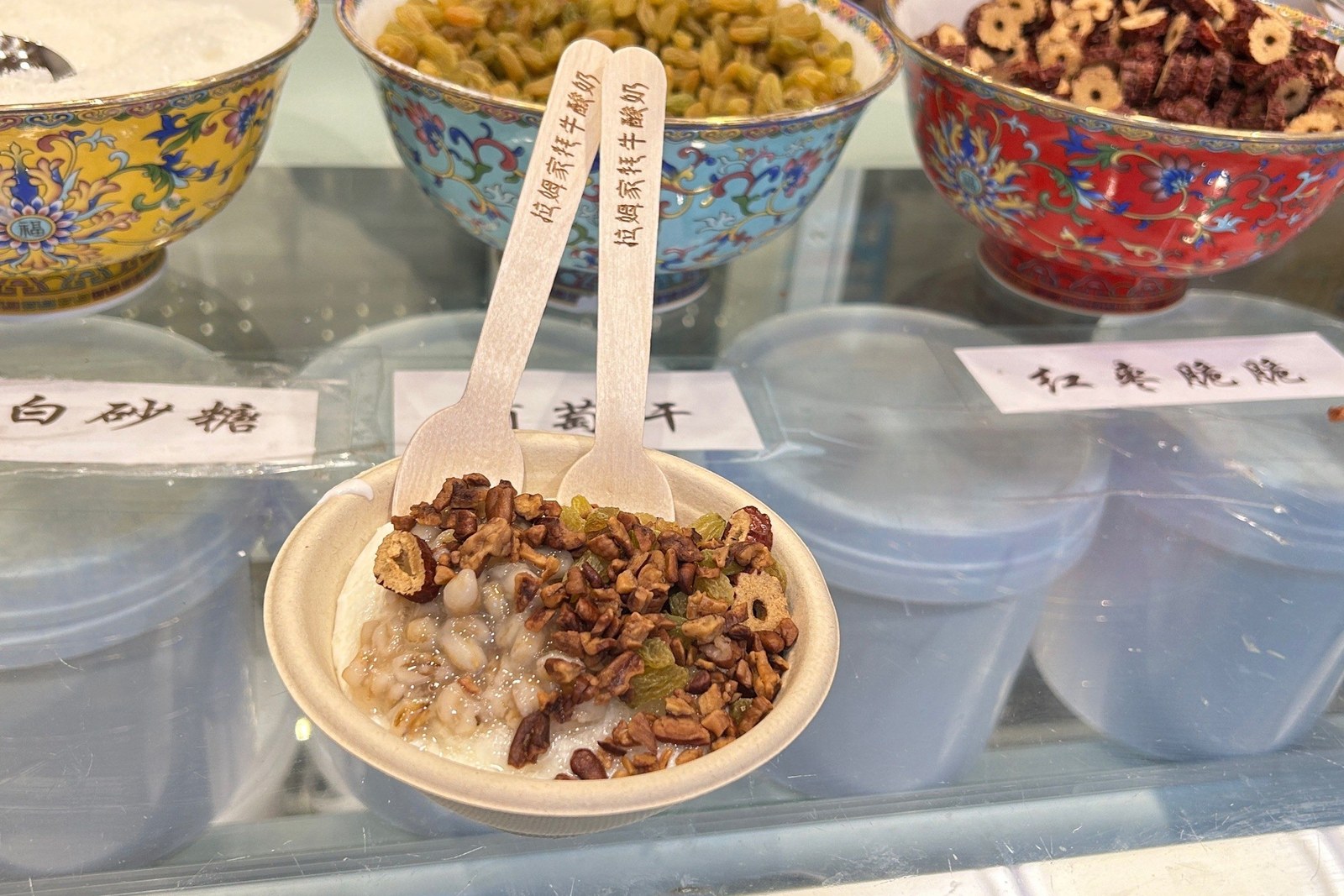
As a food it closes the plateau’s loop: the same animals that carry loads and feed the pots give the milk that ferments into this, the sugar that arrived by the old trade routes sweetens it, and the wooden bowls that hold it come off the same workbenches as the churns. One spoon tells you what the Tibetan kitchen is – nothing wasted, everything at hand, altitude turned into flavor.
The same 西藏自治区拉萨市 Xīzàng Zìzhìqū Lāsà Shì Lhasa holds more flavors worth chasing: 甜茶 tiánchá the teahouse pot, 糌粑 zānba the roasted-barley staple, 酥油茶 sūyóuchá the churned tea, or 藏式牦牛肉 zàngshì máoniú ròu the yak pots – four more doors into the same Lhasa table.
Words and Names
牦牛酸奶 máoniú suānnǎi yak yogurt, the set curd; 酸奶坊 suānnǎi fáng the yogurt houses; 白糖 báitáng the white sugar dusted on top; 酸奶皮 suānnǎi pí the butter skin on the farmhouse bowl; 奶渣 nǎizhā the dried cheese curds that sometimes join the bowl.
What the Locals Know
The wobble is the test – a proper set curd holds the spoon, and a bowl that runs means milk was stretched. Locals eat it sour first, sweet second: too much sugar hides whether the milk was good. And the autumn bowls are the connoisseur’s pick, after the pastures have fattened the herds and the curd sets richest. All checked November 2026.
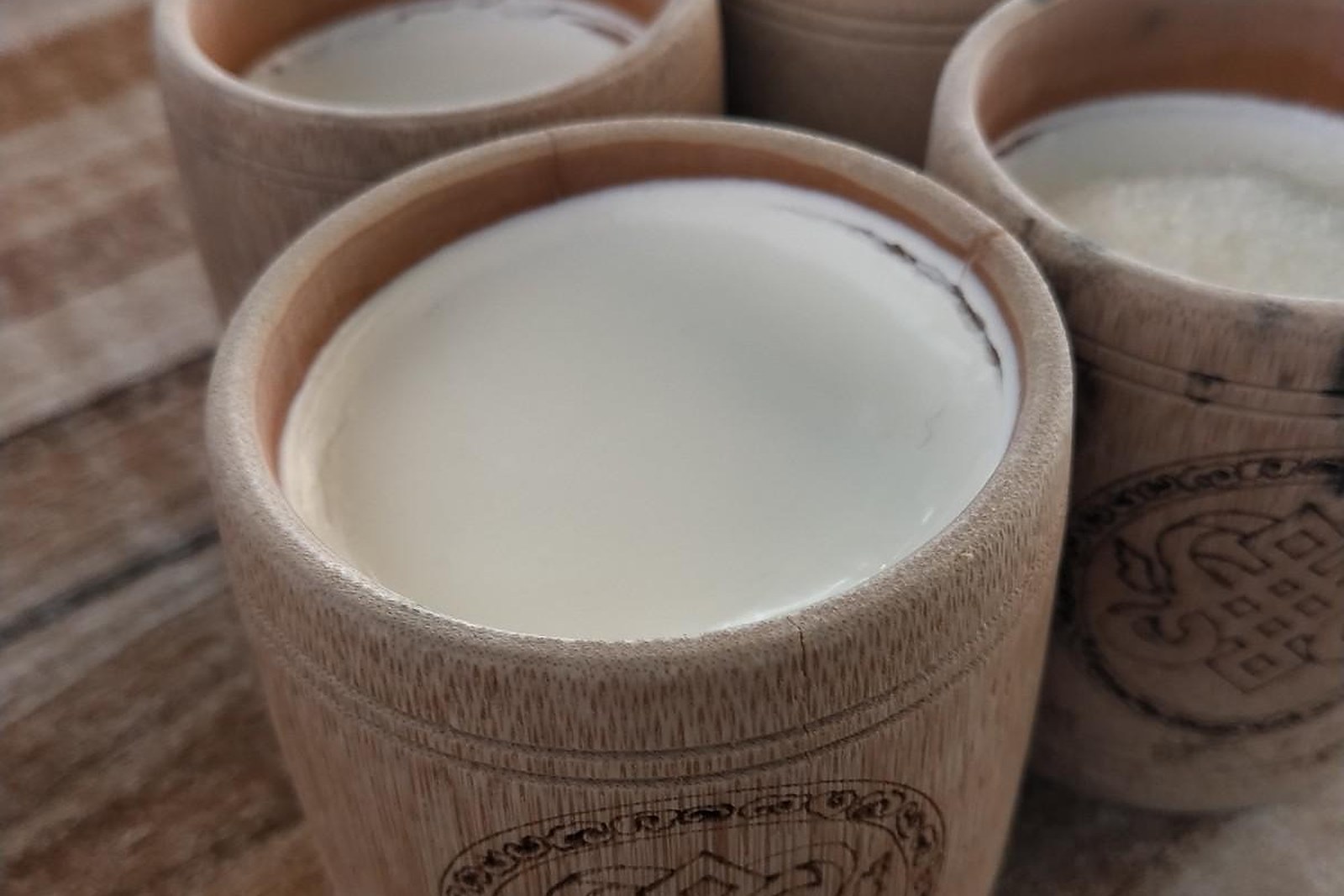
flowcloud would say the set curd is the high pasture’s dessert course: sour enough to argue, sweet enough to settle it, and gone before the honey reaches the bottom.
Where to find it: The market food halls and teahouse fridges keep the plain set curd year-round, and the yogurt houses by the Potala’s west side serve the dressed versions that made the dish famous. All checked November 2026.