
Yamdrok Lamb — the Lakeside Flocks of the Holy Water
湖畔风吹草浪低,羊肥肉嫩不须姜 Húpàn fēng chuī cǎolàng dī, yáng féi ròu nèn bù xū jiāng – By the lakeshore the wind bows the grass waves; the sheep grow fat, the meat so tender it needs no ginger
羊湖羊 Yánghú Yáng Around 羊卓雍措 Yángzhuó Yōngcuò Yamdrok Lake, the flocks have the best address on the plateau: lakeshore meadows of tender grass, water that never fails, and wind that keeps them healthy. The lamb from these herds – grazed along the holy lake’s arms in 浪卡子县 Làngkǎzǐ Xiàn Langkazi county – is famous up and down the region for exactly what the pastoralists promise: meat so clean and sweet it barely needs seasoning.
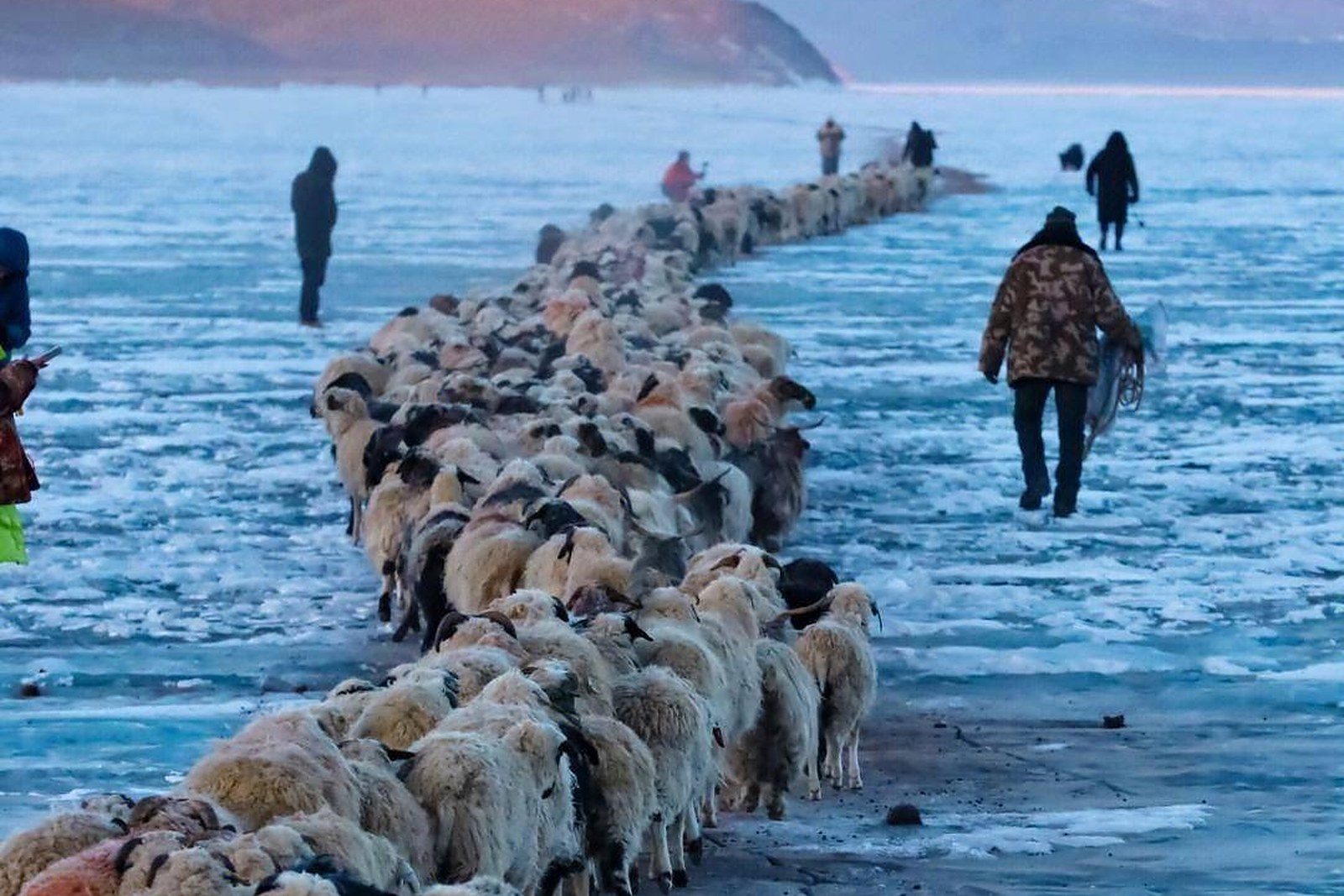
The geography does the cooking before the kitchen starts. Lakeside grass is softer and greener than range pasture, the herds walk less and eat better, and the meat comes out fine-grained with none of the toughness high-altitude mutton often carries. In county-town restaurants the lamb shows up everywhere – hand-grabbed boiled lamb with salt and cumin, thick broth with radish, and in festival season the roast, skin crackling over lean pink meat.
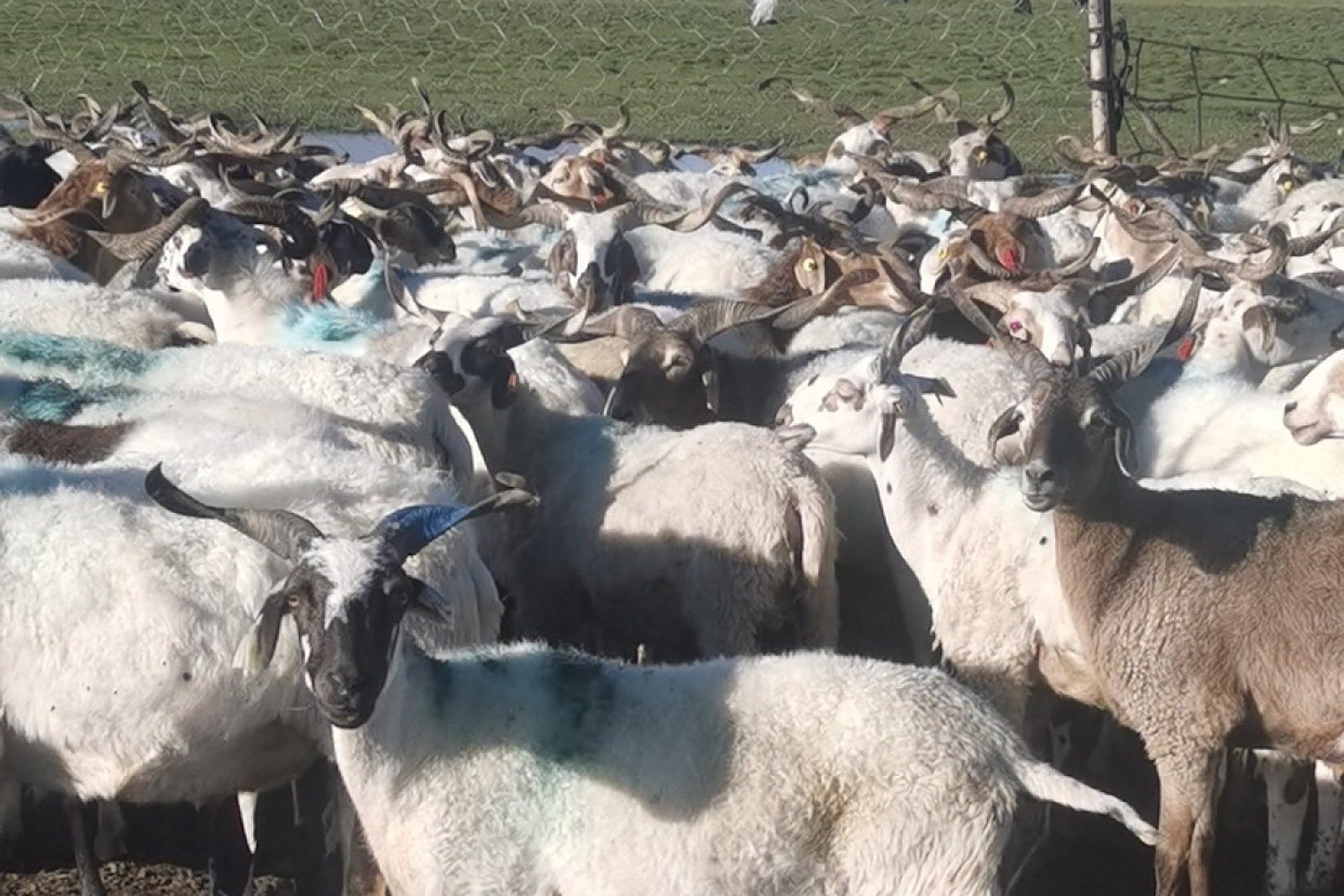
The classic table is the simplest one. 手抓羊肉 shǒuzhuā yángròu hand-grabbed lamb – boiled in clear water with nothing but salt – is the local test of a herd’s quality, because there is nothing to hide behind: good lakeside lamb comes out sweet, tender and faintly grassy, with the broth that follows worth a bowl on its own. Fatter cuts go to the wok with wild onions; bones go to the stockpot; nothing argues with the flavor of the grass.
Travelers meet the lamb best in the county town’s restaurants after a lake day – the drive along the shore builds exactly the appetite this meat answers – or at festival tables in the lakeside villages, where a whole boiled platter marks the occasion. In Langkazi the lamb is everyday food elevated by its address; visitors should order the plain boiled plate first and let the meat explain the lake it came from.
Words and Names
羊湖羊 Yánghú Yáng Yamdrok lakeside lamb, the flocks of the holy lake’s meadows; 手抓羊肉 shǒuzhuā yángròu hand-grabbed lamb, the clear-boiled test dish; 浪卡子县 Làngkǎzǐ Xiàn Langkazi county, the lakeside home of the herds; 草场 cǎochǎng pasture, the lakeshore grass that flavors the meat; 高原羊肉 gāoyuán yángròu plateau mutton, the broader class this lamb stands at the top of. The same 山南市 Shānnán Shì Shannan holds more flavors worth chasing: 卡赛 kǎsài the golden festival pastry, 隆子黑青稞 Lóngzǐ Hēi Qīngkē the dark grain of the high fields, 桑日葡萄 Sāngrì Pútáo the riverside grapes of Sangri, or 桑耶素斋 Sāngyē Sùzhāi the monastery-town vegetarian table – four more doors into the same Shannan table.
What the Locals Know
Locals judge lakeside lamb in the broth, not the roast: clear water, a whole plate, and a sweet smell rising off the meat means a herd that wintered well on the shore grass. The word around Langkazi is that the lake “feeds” its flocks – herders move them along the arms with the seasons and the flavor follows the grass. And the first bowl of broth is medicine by local consensus: plate first, broth second, rice never. All checked November 2026.
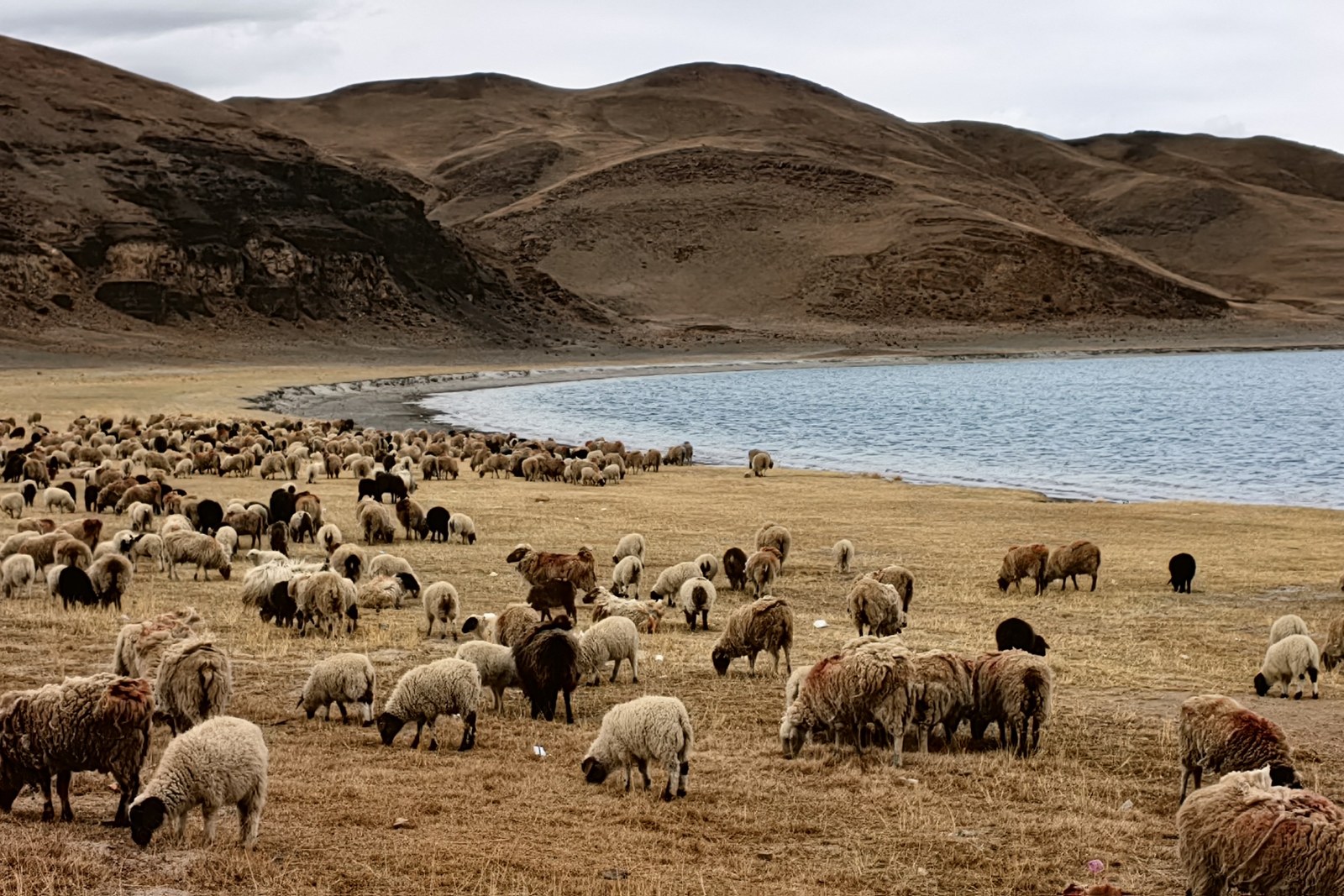
flowcloud would say Yamdrok lamb is the lake’s second crop – the first is that impossible blue, and the sheep eat the grass that drinks the runoff.
Where to find it: Restaurants around Langkazi county town and the lakeshore villages serve the lamb daily, with the boiled plate as the classic order; tables in 山南市 Shānnán Shì Shannan’s city lamb houses pour the same broth for homesick lakesiders. All checked November 2026.