
春砂仁焖鸡 chūn shā rén mèn jī is the dish of 阳春市 Yángchūn shì, the northern county of 阳江 Yángjiāng, and it is built on a spice that grows almost nowhere else. 春砂仁 chūn shā rén is the fruit of 砂仁 shā rén, Amomum villosum, a plant of the ginger family whose dried seed pods are used in Chinese medicine and in the kitchen, and the variety that grows in the hills of 阳春 is the one the whole country regards as the best – a pod that is fragrant, warm and slightly sweet, with a scent somewhere between cardamom, camphor and citrus peel. It is one of the small, particular products a place is known for, and the county has built its name on it.
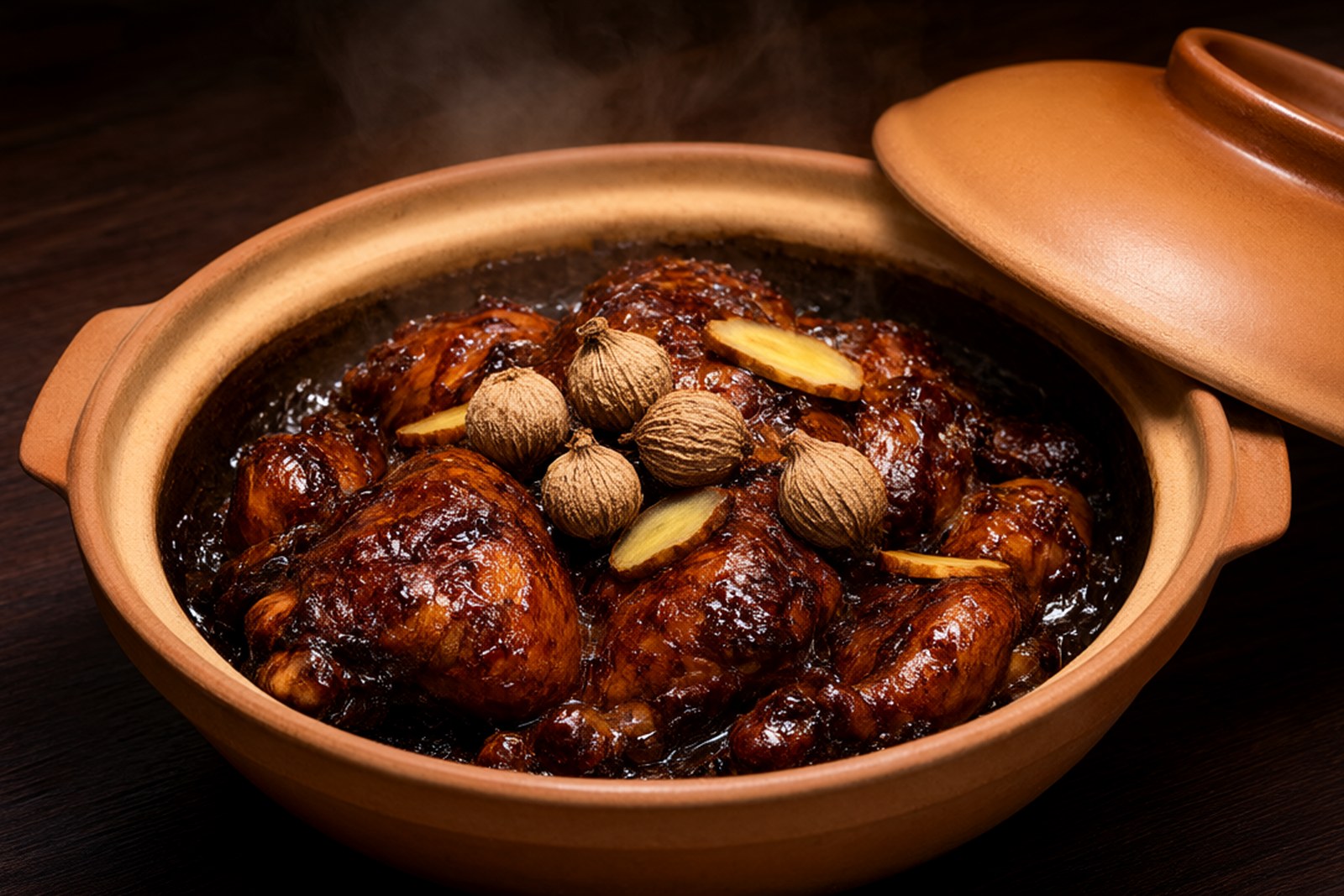
The dish is a braise, and a simple one: a whole or jointed chicken is browned and then simmered in a covered clay pot with 春砂仁, ginger, a little soy and a splash of rice wine, sometimes with 香菇 xiāng gū, shiitake, and a few pieces of dried 陈皮 chén pí, aged tangerine peel. The amomum pods are cracked open so the seeds can release their fragrance, and they go in whole or lightly crushed, so the finished chicken carries a warm, aromatic, faintly medicinal note behind the savoury sauce. It is cooked slowly, lid on, until the meat is tender and the sauce has darkened and thickened, and it is served in the pot it was cooked in, with rice.
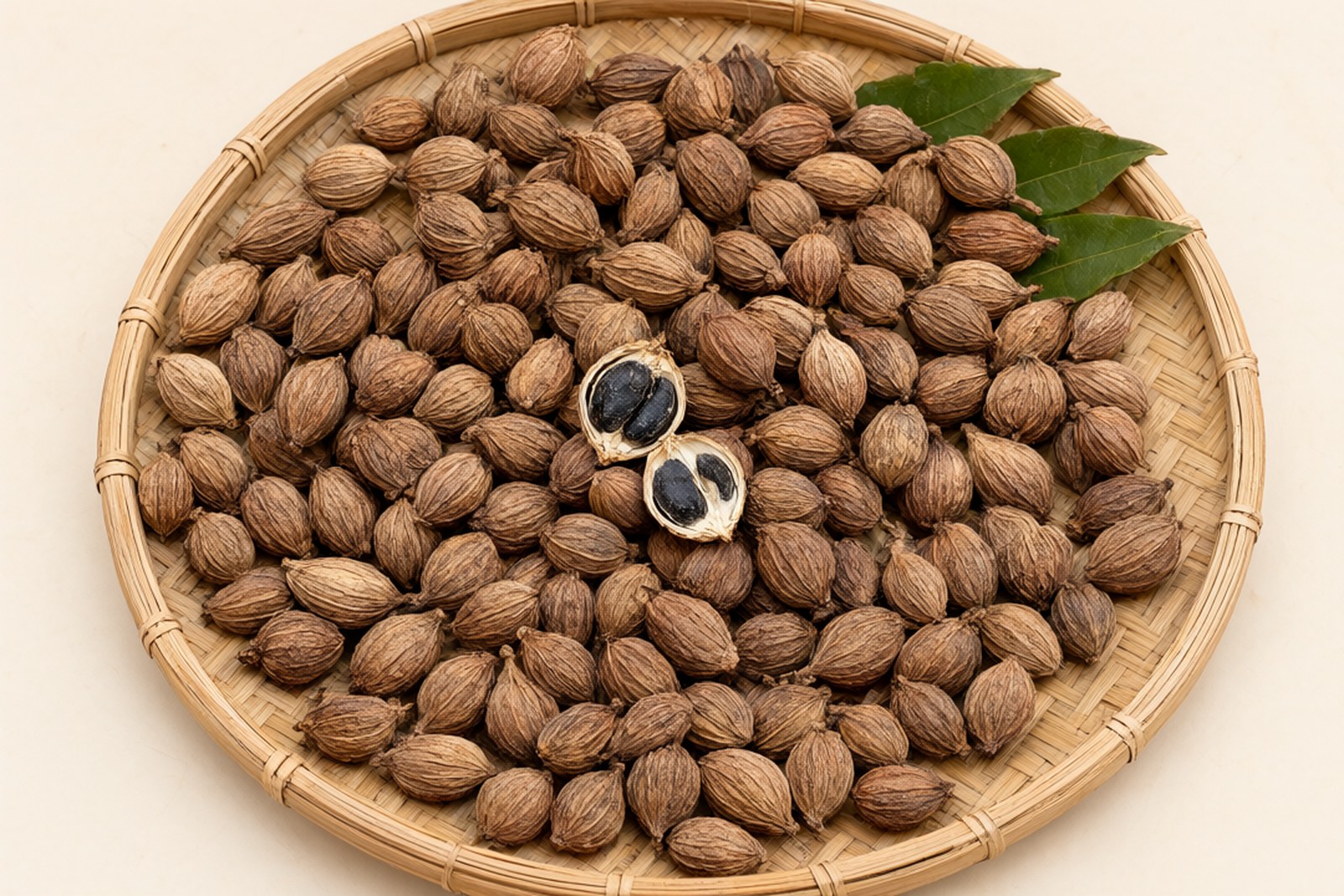
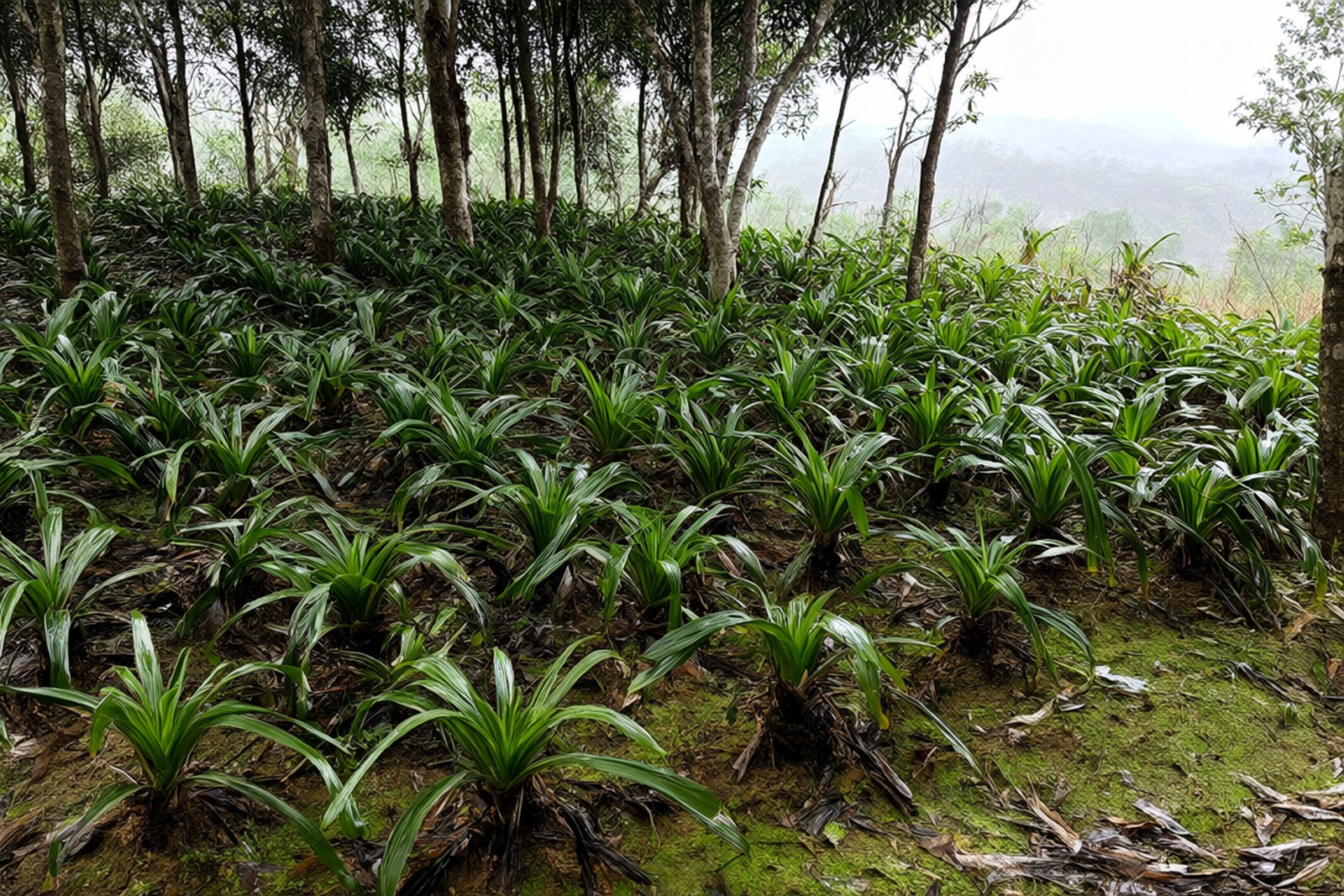
What makes it worth eating here rather than anywhere is the plant. 砂仁 is grown under the trees on the wooded slopes of the 阳春 hills, at the foot of the mountains where the air is damp and the soil is right, and the county’s 春砂仁 has a reputation that reaches back centuries, sold as a medicine for the stomach and as a kitchen spice for rich meats. The plant is a tall, leafy herb of the ginger family, and the fruit is picked green and dried until the pods turn brown and the seeds inside grow dark and glossy. Because the local one is regarded as the finest, the county has given the herb its name, and the braise is the way a visitor is most likely to meet it on the table.
The dish belongs to the family kitchen rather than the restaurant, and that is part of its character. 春砂仁焖鸡 is cooked at home, for a family meal or for a guest, in a clay pot on a slow flame, and it is valued as much for how it sits on the stomach as for how it tastes; the amomum is a warming spice, and the dish is eaten in the cooler months and by anyone who wants a rich meal to feel gentle. If you are in 阳春, ask for it at a local 农家菜 nóng jiā cài, a farmhouse restaurant, and drink the sauce over rice. It is the taste of the county’s hills, spooned out of a pot.
Words and Names
春砂仁 chūn shā rén is the 阳春 amomum, the dried fruit of 砂仁 shā rén, Amomum villosum; 阳春砂 Yángchūn shā is another name for the local one. 焖 mèn is the covered braise, and 焖鸡 mèn jī the braised chicken. 鸡 jī is chicken, 姜 jiāng ginger, 香菇 xiāng gū shiitake and 陈皮 chén pí aged tangerine peel. 农家菜 nóng jiā cài is farmhouse cooking, and 阳春市 Yángchūn shì is the county the herb belongs to.
What the Locals Know
Order it at a farmhouse restaurant in the county rather than in the city, because the dish is a home one and the farm kitchens do it best. The pods are not meant to be eaten entire; crack one and taste the seeds, but leave the husk on the plate. Ask for less sugar if the sauce tastes sweet, because a good 春砂仁焖鸡 should be savoury and aromatic rather than sweet. The herb itself is sold dried in the county’s markets and pharmacies, so a bag of 春砂仁 to take home is the local purchase that makes sense; and a little of it goes a long way, so buy small. Come in autumn, when the year’s crop is dried and sold.
flowcloud would say that a county which grew one fragrant seed under the trees of its hills, learned to fold it into a pot of chicken, and then let the whole country call the plant by its name, has shown how a small and specific place can make itself unforgettable through a single scent.
Where to find it: the 农家菜 farmhouse restaurants of 阳春市, and the clay-pot houses and 砂仁 shops of 阳春’s markets, where dried 春砂仁 is sold by weight. A pot of 春砂仁焖鸡 is ¥60 to ¥130 depending on the size of the bird, and a bag of dried pods is ¥40 to ¥120. 阳春市 is reached by road from 阳江 city in about an hour and a half, and by the rail line to 阳春站 Yángchūn zhàn.