
The Canal Town’s White Cake: Yangcun Gaogan
石磨米粉蒸方砖,运河六百年糕香 Shímó mǐfěn zhēng fāngzhuān, yùnhé liùbǎi nián gāo xiāng – Stone-milled rice flour steams into white bricks; six hundred years of cake scent ride the canal
杨村糕干 Yángcūn gāogān is the canal town’s signature sweet – fine stone-milled rice flour pressed and steamed into firm white bricks, some plain and some filled with red-fruit or sweet pastes. The cake first appears in the records of the Ming Yongle years, when the Grand Canal made 杨村 Yángcūn Yangcun a grain stop, and its making changed little: rice ground fine, sugar worked through, steam doing the rest. It remains 天津市武清区 Tiānjīn Shì Wǔqīng Qū Wuqing District’s most named food, now made under Tianjin’s first group standard for a traditional snack.
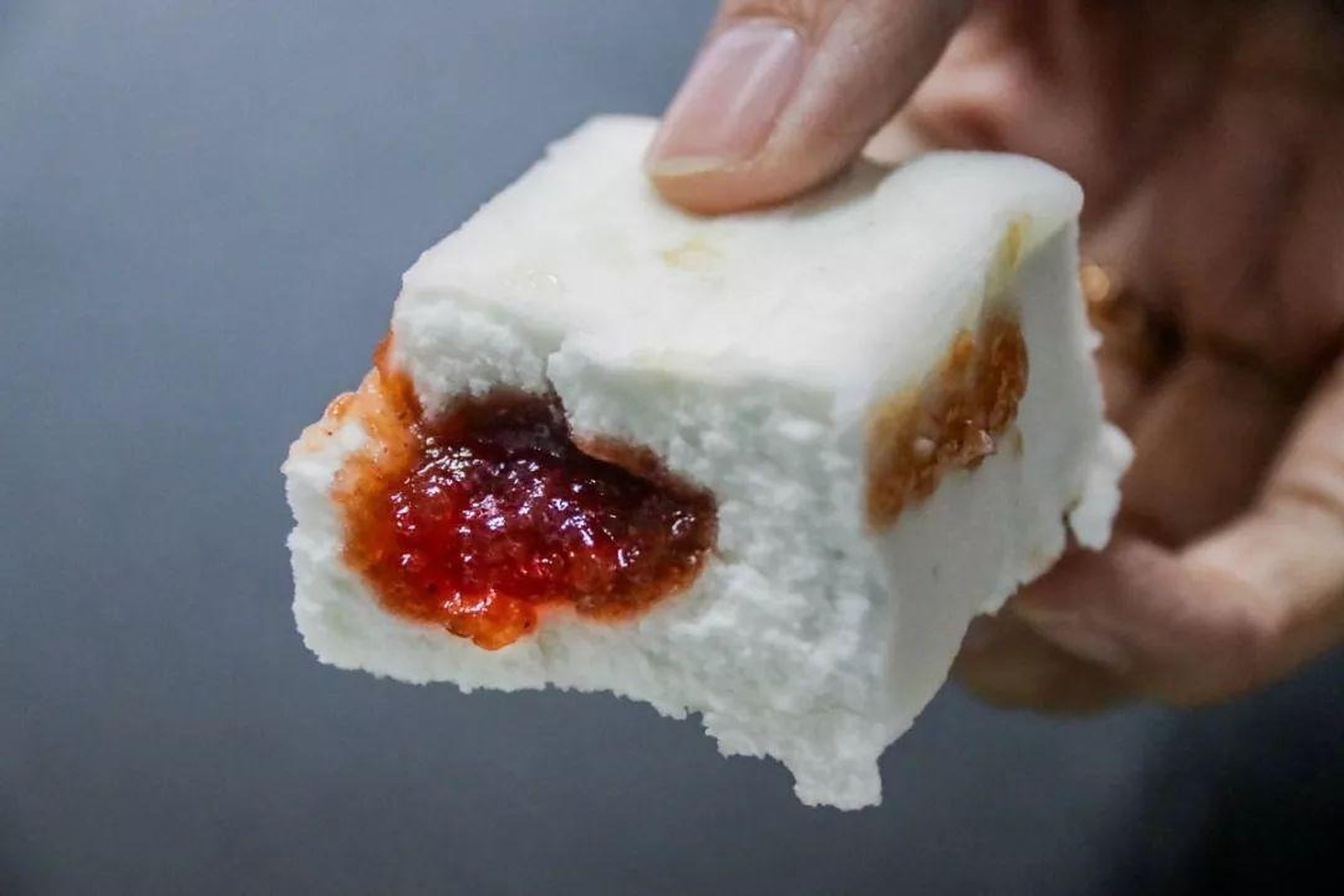
The texture is the cake’s whole argument. A proper gaogan breaks dense but not dry – pressed fine enough to slice, moist enough to melt against the palate when eaten in small bites. Old hands warn against biting straight in: the cake is meant to be let dissolve, the sweetness arriving late and clean, without grease or crumb.
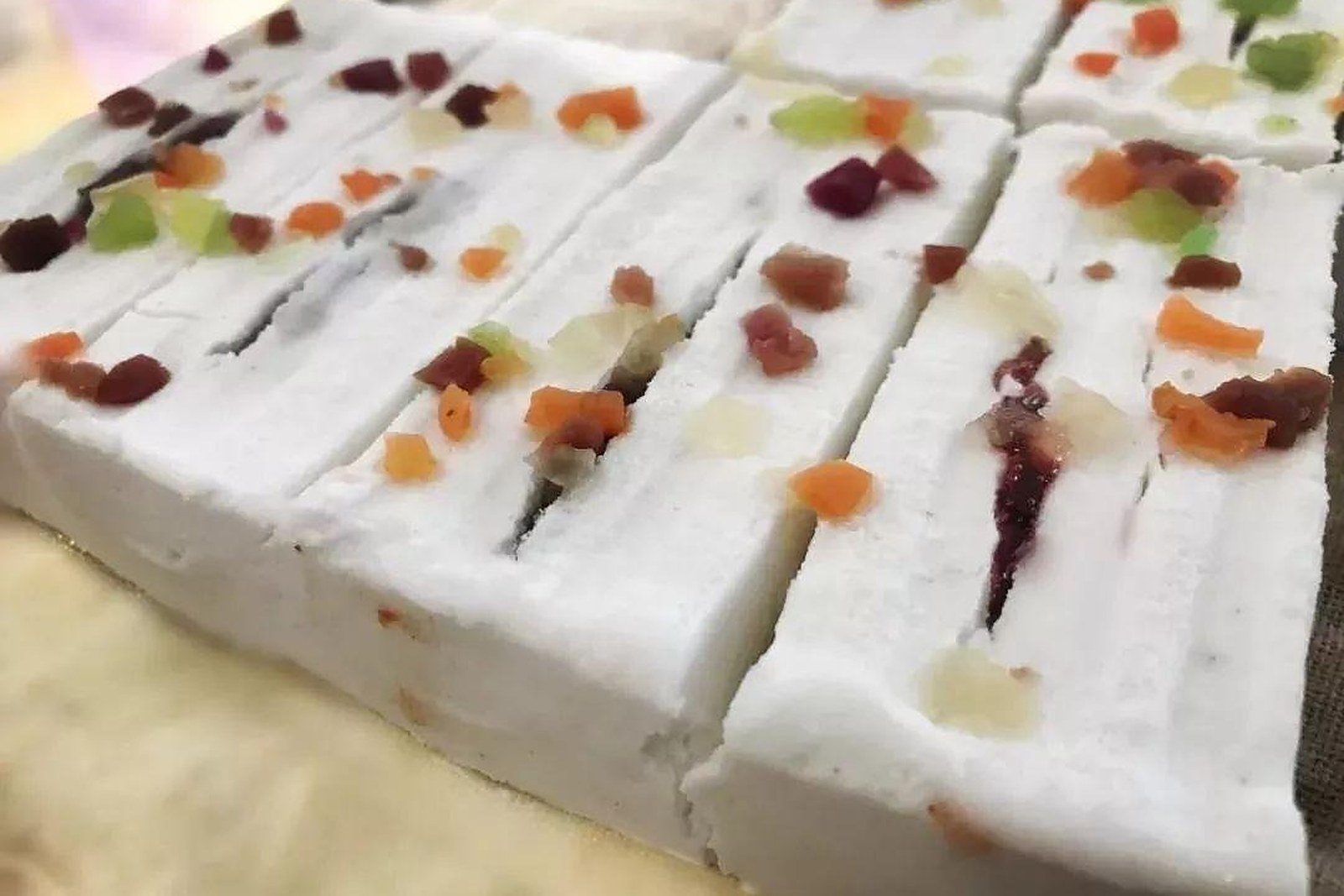
The fillings mark the seasons and the shops. The red-fruit paste version cuts to a striped cross-section, the plain white brick carries only rice and sugar, and festival batches add candied fruit or nut layers. Workshops still stone-grind the rice for the top lines – the flour’s slight grit is the difference a machine cannot fake, and the label names the mill when it can.
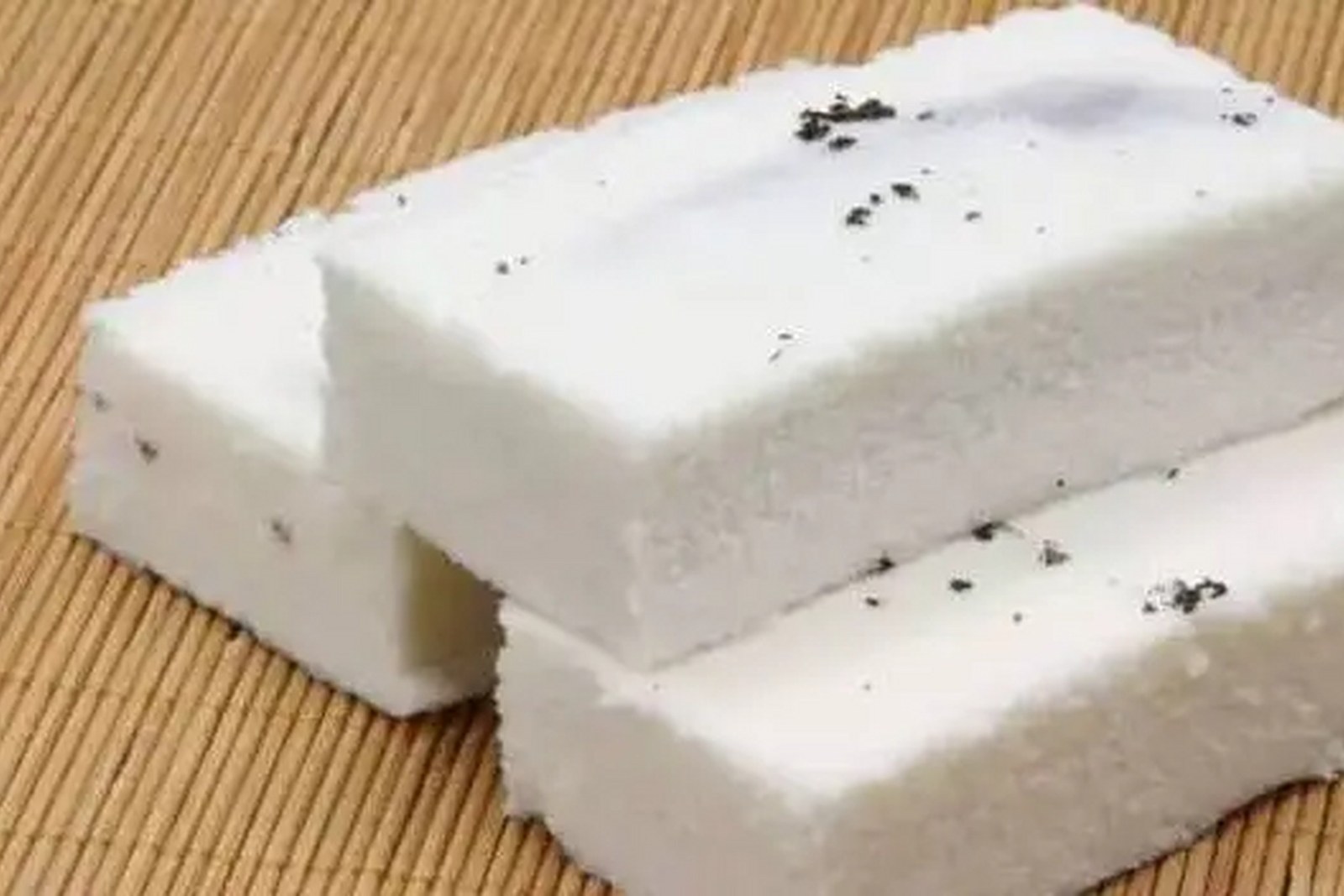
On the tea table the cake plays the steady elder. Cut thin, it travels well, keeps for days, and pairs with plain hot tea the way biscotti pair with coffee – the 1915 Panama Expo medal hangs behind every shop counter’s story. Buy it boxed as the standing gift, or fresh from the steamer when the workshop door is open and the first trays are still warm.
The same district holds more flavors worth chasing: 田水铺青萝卜 Tiánshuǐpù qīng luóbo the sweet green radish, 东马房豆腐丝 Dōngmǎfáng dòusī the spiced tofu shreds, 狗屁果仁 Gǒupì guǒrén the famously named fried peanuts, or 南辛庄小磨香油 Nánxīnzhuāng xiǎomó xiāngyóu the stone-ground sesame oil – four more doors into the same Wuqing District table.
Words and Names
糕干 gāogān the dry cake brick; 杨村 Yángcūn the canal town that named it; 石磨 shímó the stone mill; 云片糕 yúnpiàn gāo the thin-sliced cloud cake it descends from; 茯苓糕干 Fúlíng gāogān the fuling-herb variant of the old pharmacies.
What the Locals Know
The cake’s bad reputation comes from eating it wrong – small bites, tea alongside, and the sweetness lands where it should. Locals buy the stone-milled plain brick for eating and the boxed filled version only for gifts. The old workshops sell out early; the supermarket boxes are the fallback, not the truth. All checked November 2026.
flowcloud would say Yangcun gaogan is canal food at its most patient: rice, stone, steam and six hundred years, all cut into a brick that punishes anyone in a hurry.
Where to find it: The old shops around Yangcun’s canal-side streets sell fresh trays and boxed gifts, Tianjin specialty stores citywide stock the boxes, and the workshop rows near the old town still steam the stone-milled lines. All checked November 2026.