
阳江豆豉 Yángjiāng dòu chǐ is a fermented black bean, and it is the ingredient a whole city built its name on. 豆豉 dòu chǐ are cooked soybeans left to ferment until they turn black, soft and deeply savoury, and they are made all over southern China – in 阳江, in 浏阳, in 四川 – but the version made here has a particular reputation, a fragrant, almost smoky bean with a clean salt-savoury depth rather than the harsh, bitter note a badly fermented one carries. It is sold in small bags and paper packets from shop counters all over the city, and a jar of it belongs in every kitchen in the province.
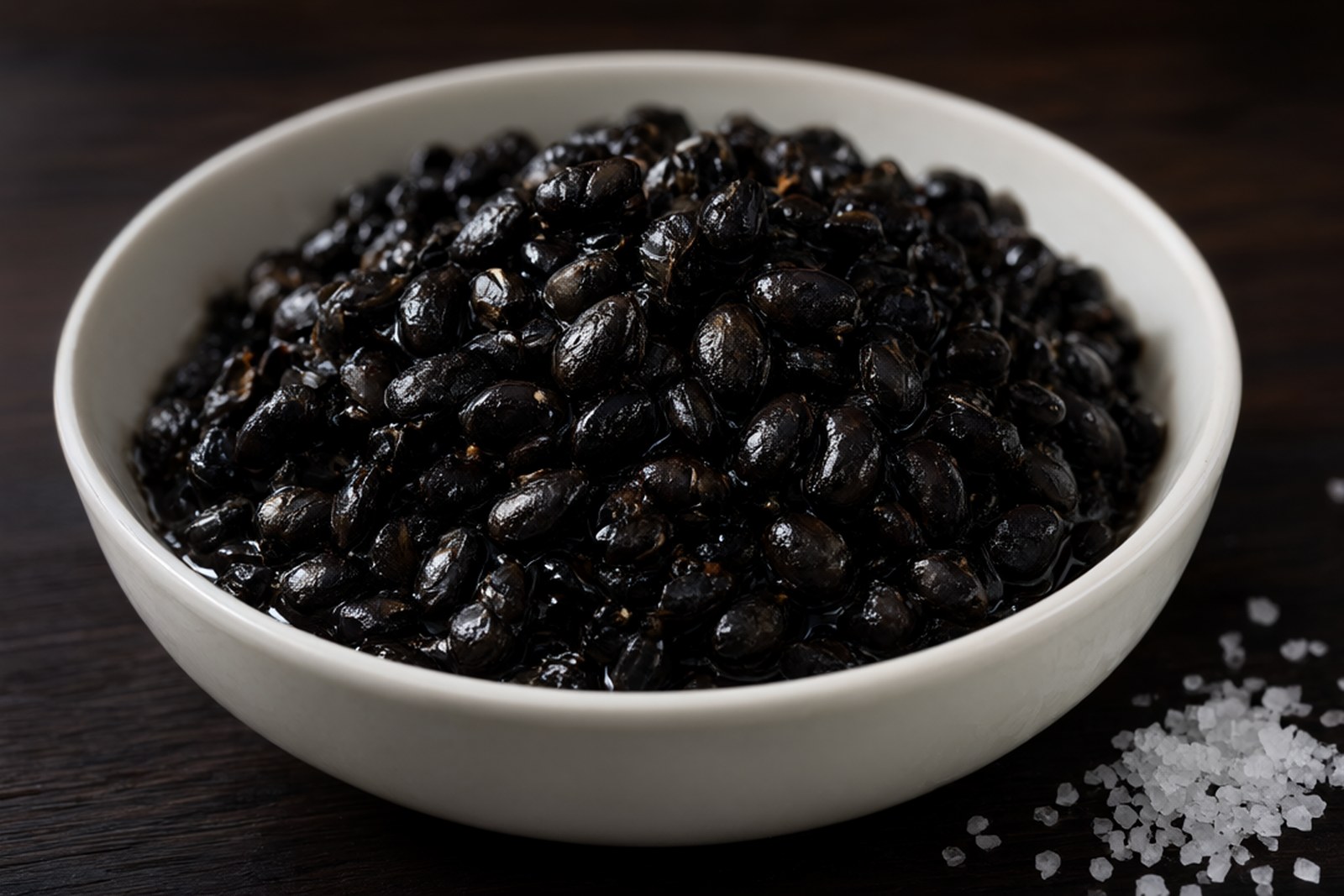
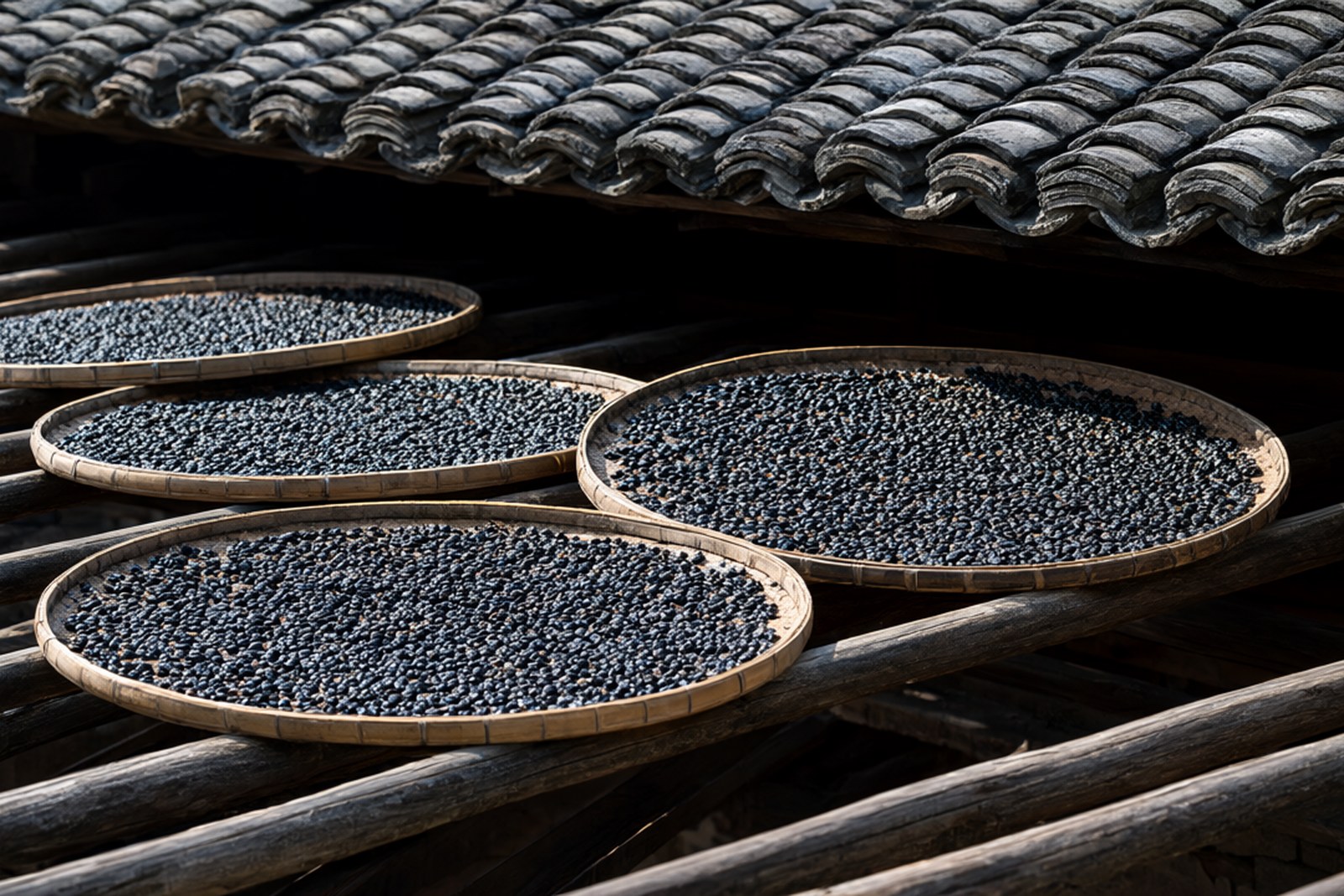
The making of 豆豉 is a slow business, and it is the slowness that makes it. Soybeans are washed and cooked until tender, then drained and spread out to cool; they are inoculated, traditionally by letting the natural moulds of the air take hold, and left to ferment in a warm, humid place until the beans are covered in a fine white bloom and have taken on the flavour that only fermentation gives. They are then washed, salted heavily, and left to mature again, sometimes with a little 姜 jiāng, ginger, and 米酒 mǐ jiǔ, rice wine, until the paste darkens to black and the smell turns from raw to rich. In 阳江 the beans are often sun-dried on wide trays in the courtyards and on the rooftops, turned by hand day after day.
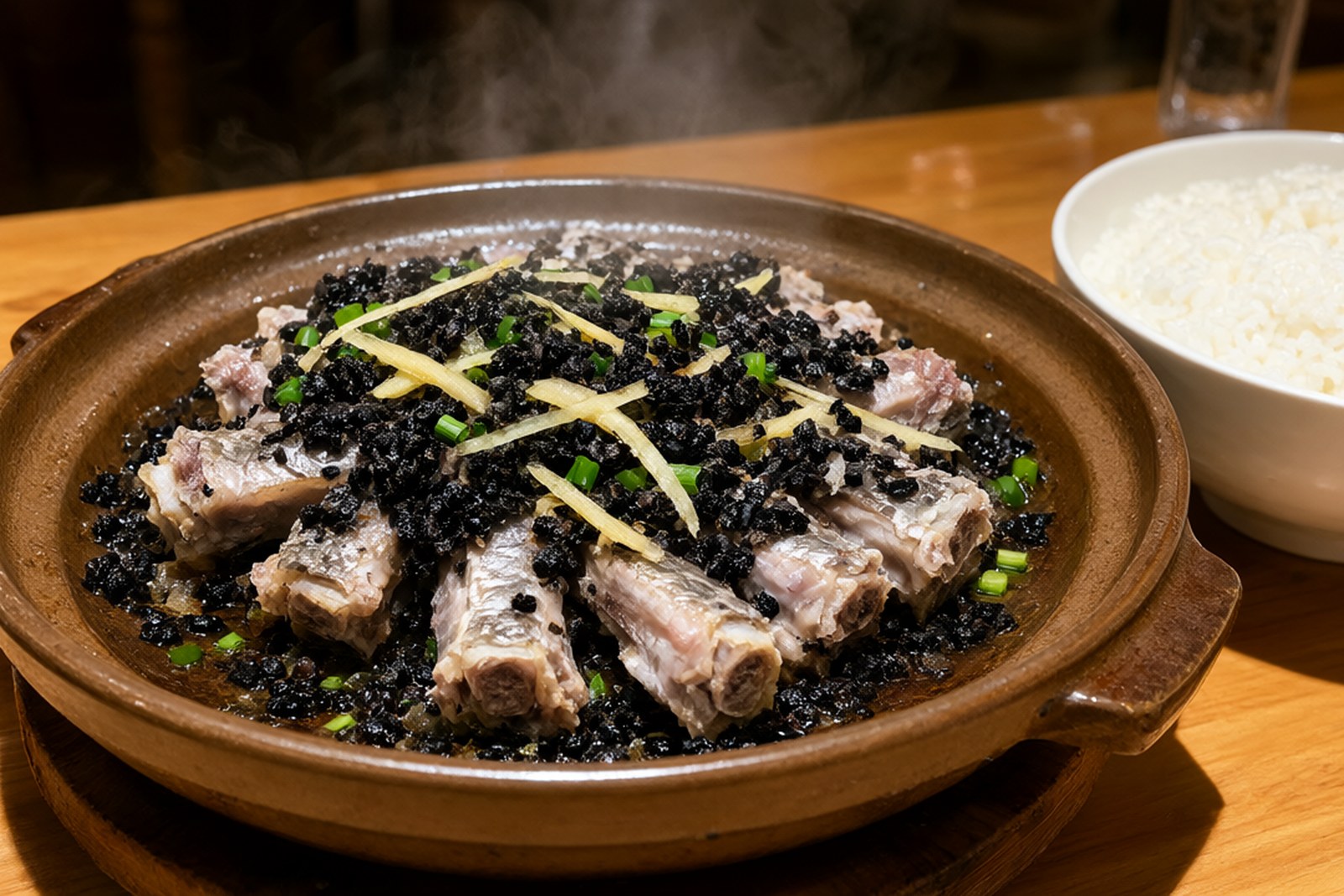
What 豆豉 does in the kitchen is give depth without effort. A spoonful stirred into a braise, a sauce for fish, a steamed dish or a stir-fry adds a ferment-rich, almost meaty background that no amount of salt can imitate. It is the base of 豆豉蒸排骨 dòu chǐ zhēng pái gǔ, pork ribs steamed with black beans and garlic, and of countless 豆豉鱼 dòu chǐ yú, fish braised with the beans; and in Yangjiang it turns up in the simplest weeknight dishes, spooned from the jar straight into the wok. Because it keeps for months and travels light, it is the souvenir of the city that makes the most sense.
The local reputation is real and old. 阳江豆豉 has been made here for centuries, and the city is one of the recognised homes of the craft in Guangdong, with the beans sold across the province and shipped further afield. What sets the local one apart is the balance: it is fermented long enough to be rich and savoury but not so long that it turns harsh or ammoniacal, and it is salted firmly but not to the point of bitterness. Buy a bag and you have the taste of the city in your bag, ready to be stirred into almost anything.
Words and Names
豆豉 dòu chǐ is the fermented black bean; 阳江豆豉 Yángjiāng dòu chǐ is the local one. 大豆 dà dòu or 黄豆 huáng dòu is the soybean it is made from. 发酵 fā jiào is fermentation, 盐 yán is salt and 姜 jiāng is ginger; 米酒 mǐ jiǔ is rice wine. 豆豉蒸排骨 dòu chǐ zhēng pái gǔ is the classic dish of pork ribs steamed with the beans, and 豆豉鱼 dòu chǐ yú is fish braised with them. 阳江 Yángjiāng is the city, and 广东 Guǎngdōng the province the beans are sold across.
What the Locals Know
Buy it in the markets and the older provision shops rather than only at the station, because the best 阳江豆豉 is still packed locally in a plain bag and priced by weight. Check the colour: a good bean is a deep, even black rather than a mottled grey, and it should smell savoury and clean, never sharp. Keep it dry and sealed, or in the fridge in the humid months, and it will last a year. When you cook with it, crush or roughly chop the beans so their flavour opens, and taste before you salt, because they carry plenty of their own. And a jar of it, not a sachet, is the right size to buy.
flowcloud would say that a bean left to the air until it turns black, salted and then waited on again, is a lesson in how much of the best of a kitchen comes not from freshness but from patience, and that a city can build a name on knowing when to stop waiting.
Where to find it: the markets and old provision shops of 阳江, and every food shop counter in the city, where bags and jars of 豆豉 are stacked by the till. A bag is ¥10 to ¥30 and a jar ¥25 to ¥60. 阳江 is reached by high-speed rail from 广州 and 深圳 to 阳江站 Yángjiāng zhàn in about two hours, and the 豆豉 travels home without complaint.