
猪肠碌 zhū cháng lù is the food 阳江 Yángjiāng is proudest of, and it is a name that misleads every visitor the first time they hear it. There is no pig intestine in it. A 猪肠碌 is a rice-noodle roll: a thin, silky sheet of 粉皮 fěn pí, steamed rice-noodle skin, rolled tight around a filling of bean sprouts, shredded white radish and a little dried shrimp, cut into short pieces and dressed with soy sauce, sesame oil and a scatter of toasted sesame. The name comes from the look of the thing, a pale plump roll lying on the plate the way a length of sausage or intestine might, and it is the food a Yangjiang person eats at every hour – breakfast, the mid-morning gap, a late supper – all day long.
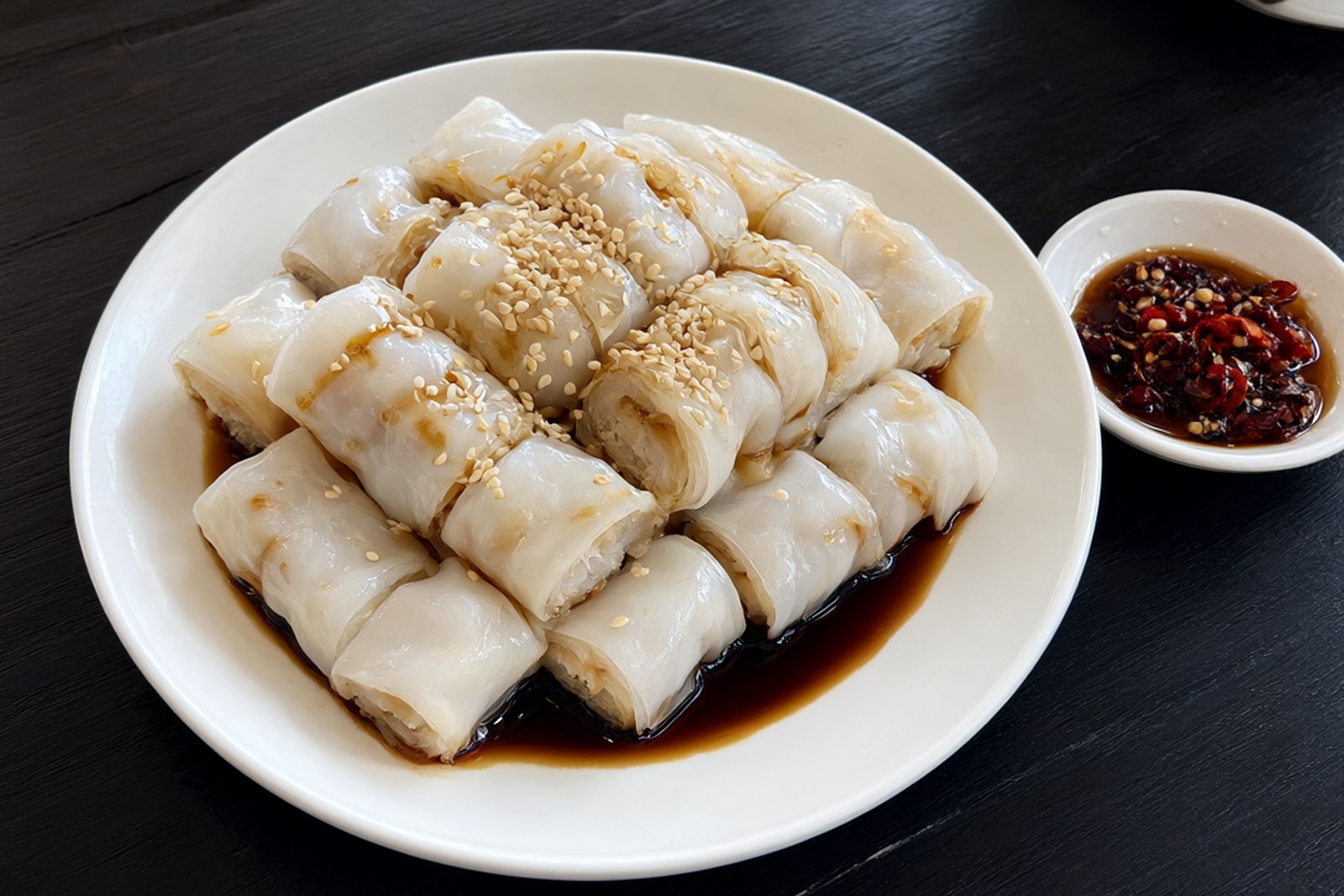
The roll is a piece of quiet skill. 粉皮 fěn pí is made by pouring a thin batter of rice flour and water onto a cloth stretched over a steamer, closing the lid for a minute or so, and then peeling the cooked sheet off while it is still hot and pliable. The sheet is laid flat on a board, a line of filling is set along one edge, and it is rolled up tight, so the finished 猪肠碌 is a neat cylinder with the filling running through the middle of it. The filling is most often 芽菜 yá cài, bean sprouts, and 白萝卜 bái luó bo, white radish, both cut fine and stir-fried with 虾米 xiā mǐ, dried shrimp, for salt and depth; some stalls add a spoonful of 肉末 ròu mò, minced pork, and some a little 五香粉 wǔ xiāng fěn, five-spice.
The dressing is what ties it together, and it is the part most visitors underestimate. The cut rolls are laid in a row and given a ladle of light soy, a slick of 花生油 huā shēng yóu, peanut oil, and a dusting of 芝麻 zhī ma, sesame. Some stalls add a spoonful of the braising liquid from a pot of 牛腩 niú nǎn, beef brisket, that simmers alongside, and that dark, meaty gloss is the mark of a good trolley. You eat it with your fingers or a pair of chopsticks, standing at the counter, and the whole transaction takes two minutes.
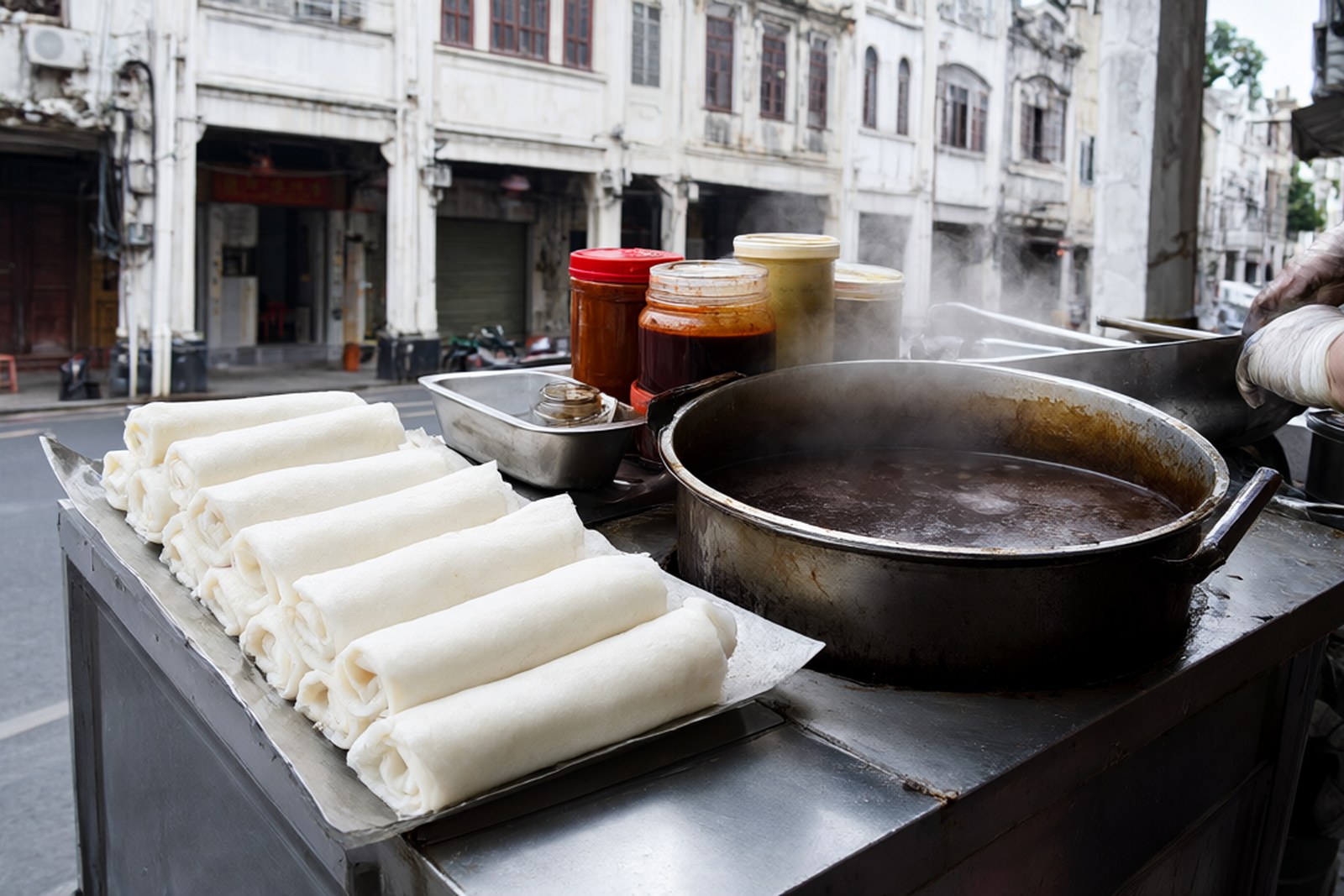
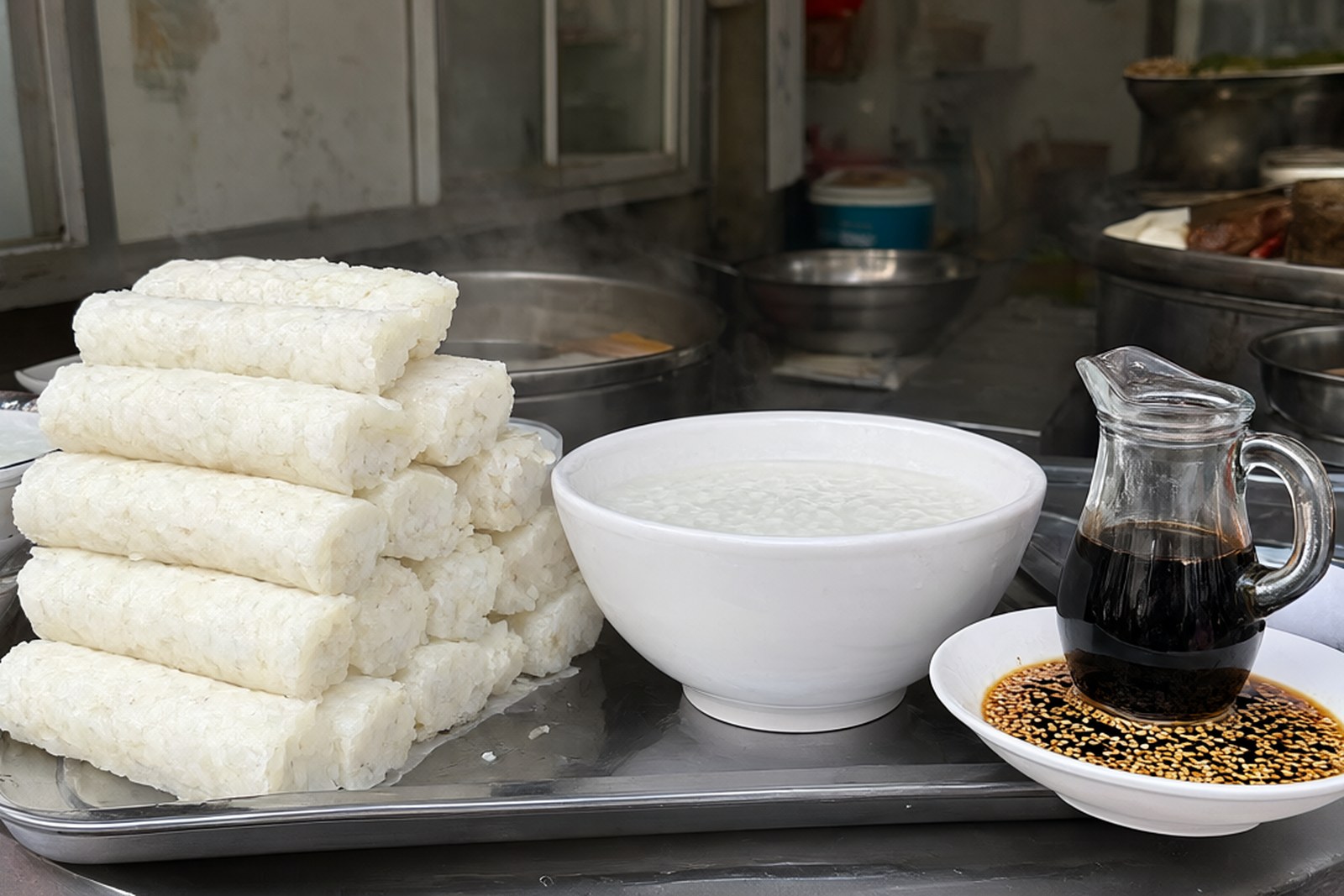
What makes 猪肠碌 particular is that it is unmistakably local. Neighbouring cities in Guangdong have their own 肠粉, the wide, flat, filled sheet served hot with a sweetened soy, but the 猪肠碌 is a Yangjiang habit – rolled instead of folded, bought at a trolley instead of a restaurant, eaten in the hand, and cheap enough that a breakfast of three or four with a bowl of 白粥 bái zhōu, plain congee, costs about the price of a coffee. It is soft and a little chewy, the radish giving a mild sweetness and a slight crunch, the shrimp a salty base, and the soy pulling it all together. It is the thing a Yangjiang person abroad most misses.
Words and Names
猪肠碌 zhū cháng lù is the roll itself, literally pig-intestine roll, named for its shape and containing no intestine. 粉皮 fěn pí is the steamed rice-noodle sheet it is rolled from; 米粉 mǐ fěn is the rice flour. 芽菜 yá cài is bean sprouts, 白萝卜 bái luó bo white radish, 虾米 xiā mǐ dried shrimp and 肉末 ròu mò minced pork. 酱油 jiàng yóu is soy sauce, 花生油 huā shēng yóu peanut oil, 芝麻 zhī ma sesame and 五香粉 wǔ xiāng fěn five-spice. 白粥 bái zhōu is the plain congee that goes beside it, and 阳江 Yángjiāng is the city.
What the Locals Know
Buy from a trolley with a queue, because the rolls are made a few at a time and the good stalls sell out by mid-morning. Ask for the rolls 剪 jiǎn, cut, rather than whole, so the soy reaches the filling. The dark spoonful from the beef-brisket pot is not a garnish to refuse; it is the difference between a plain roll and a good one. Eat them hot, within a couple of minutes of the ladle going on, before the rice skin stiffens – a 猪肠碌 taken away and eaten cold is a different and much lesser thing. And order a bowl of 白粥 alongside, because the plain congee is what cuts the salt and lets you eat three or four.
flowcloud would say that a city which took the humblest thing in the pantry, a rice-flour sheet and a handful of sprouts, and made of it the food it is most proud of, sold from a trolley at the edge of the road for the price of a bus ticket, has understood that the dish a place really loves is never the expensive one.
Where to find it: the 猪肠碌 trolleys of 阳江 old town and the morning markets, especially around 河堤路 Hé dī lù by the river and the lanes near 鸳鸯湖 Yuān yāng hú. A roll is ¥2 to ¥5 and a portion of three or four is ¥8 to ¥15, with a bowl of 白粥 at ¥2 to ¥4. 阳江 is a high-speed rail stop from 广州 and 深圳, about two hours, and 阳江站 Yángjiāng zhàn is the gateway.