
Lamb Pilaf: The Mutton-and-Carrot Rice Steamed Gold in Mutton Fat, the Noon Staple of Urumqi’s Pilaf Houses in Xinjiang
黄萝卜染金一锅饭,羊油焖出丝路香。Huáng luóbo rǎn jīn yī guō fàn, yáng yóu mèn chū Sīlù xiāng – Yellow carrot dyes one pot of rice to gold; mutton fat steams out the scent of the Silk Road.
羊肉抓饭 Yángròu zhuāfàn lamb pilaf is the noon bell of Urumqi’s working tables – long-grain rice steamed in mutton fat with 黄萝卜 huáng luóbo yellow carrots cut like kindling, 皮牙子 píyázi onions melted to sweetness, and pieces of bone-in mutton buried to steam in their own perfume. The dish travels under the name 抓饭 zhuāfàn “grab rice,” a memory of hands before spoons, and in the pilaf houses it waits in vats the size of drums, portioned at a stroke onto plates that glow amber from carrot and fat alike. Raisins or dried fruit turn up in the sweeter houses; the classic keeps three colours – rice gold, carrot orange, meat brown – and a scatter of raw onion for the teeth. The register is the noon rush: trays, tea, and a plate that costs little and carries the afternoon.
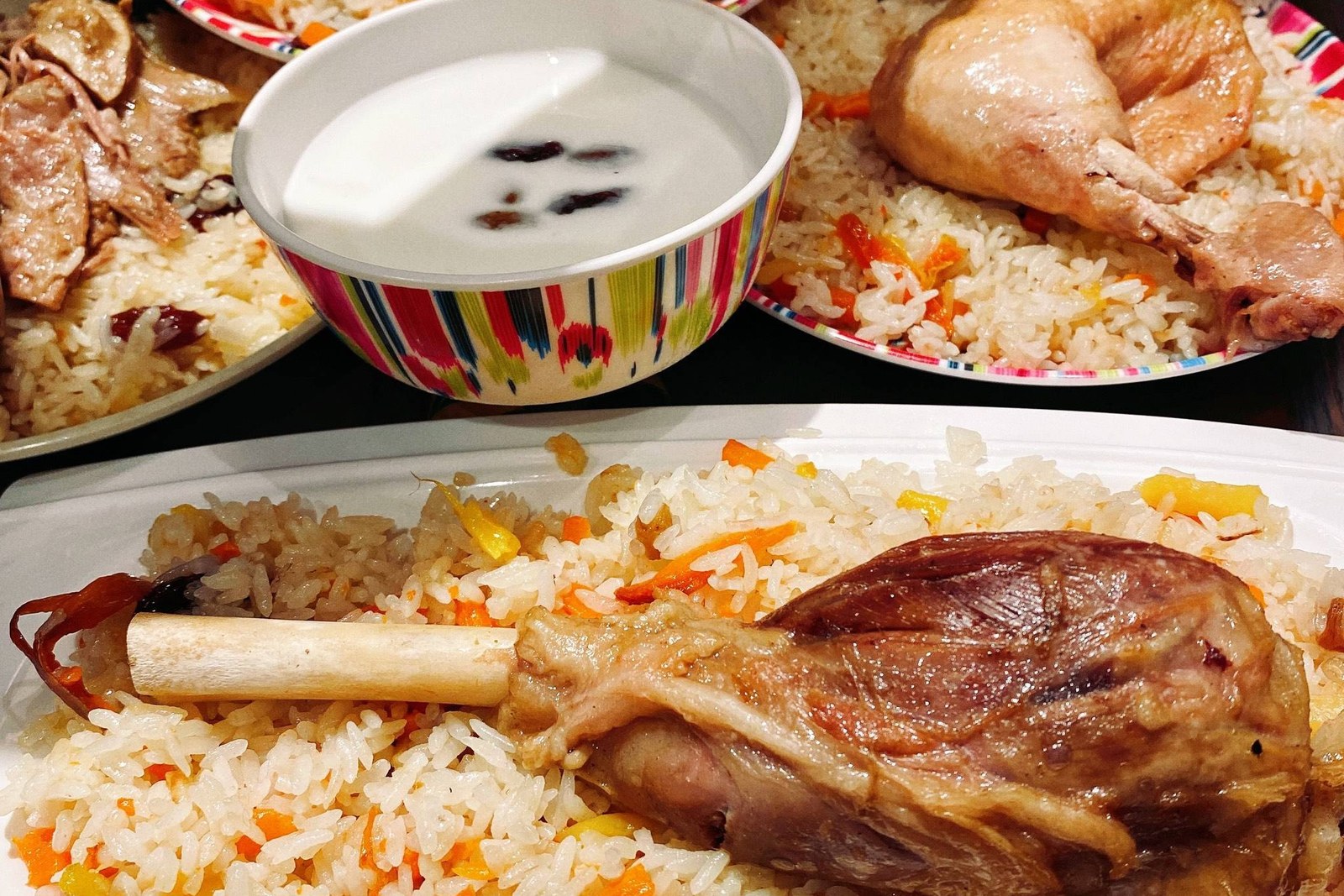
Call it honestly: vat money at lunch prices. Getting there is one door: the dedicated 抓饭 zhuāfàn houses cluster through the older eating streets around the 大十字 Dàshízì crossings and the lanes north of the Grand Bazaar (worth confirming the details for the vat hours, which the noon rush empties by two), and the market canteens and bazaar food floors serve serviceable plates without ceremony. A plate prices at a few tens of yuan money in the ordinary houses, tourist-lane money on the bazaar food street – though exact figures are worth confirming the details on rather than quoting, the vats repricing with the lamb market. The crowds run to the clock: the noon stack empties the best vats, the afternoon serves what remains, and an opening-bell plate – the first carve of the mutton, the rice still steaming under its fat blanket – is the eater’s own hour.
The honest star is the fat itself – 羊油 yángyóu mutton fat doing the work oil never could. What gets oversold is the “hands-on theatre” framing: the name promises eating by hand, but the houses serve spoons and the hands are optional, a memory worn smooth. What repays is the construction: carrot melted rather than fried, onion gone to perfume, rice steamed rather than boiled so every grain carries fat without heaviness, and the mutton steamed apart then returned so it pulls from the bone at a nudge (worth confirming the details for the raisin houses and the plain houses, a divide the tables defend like football).
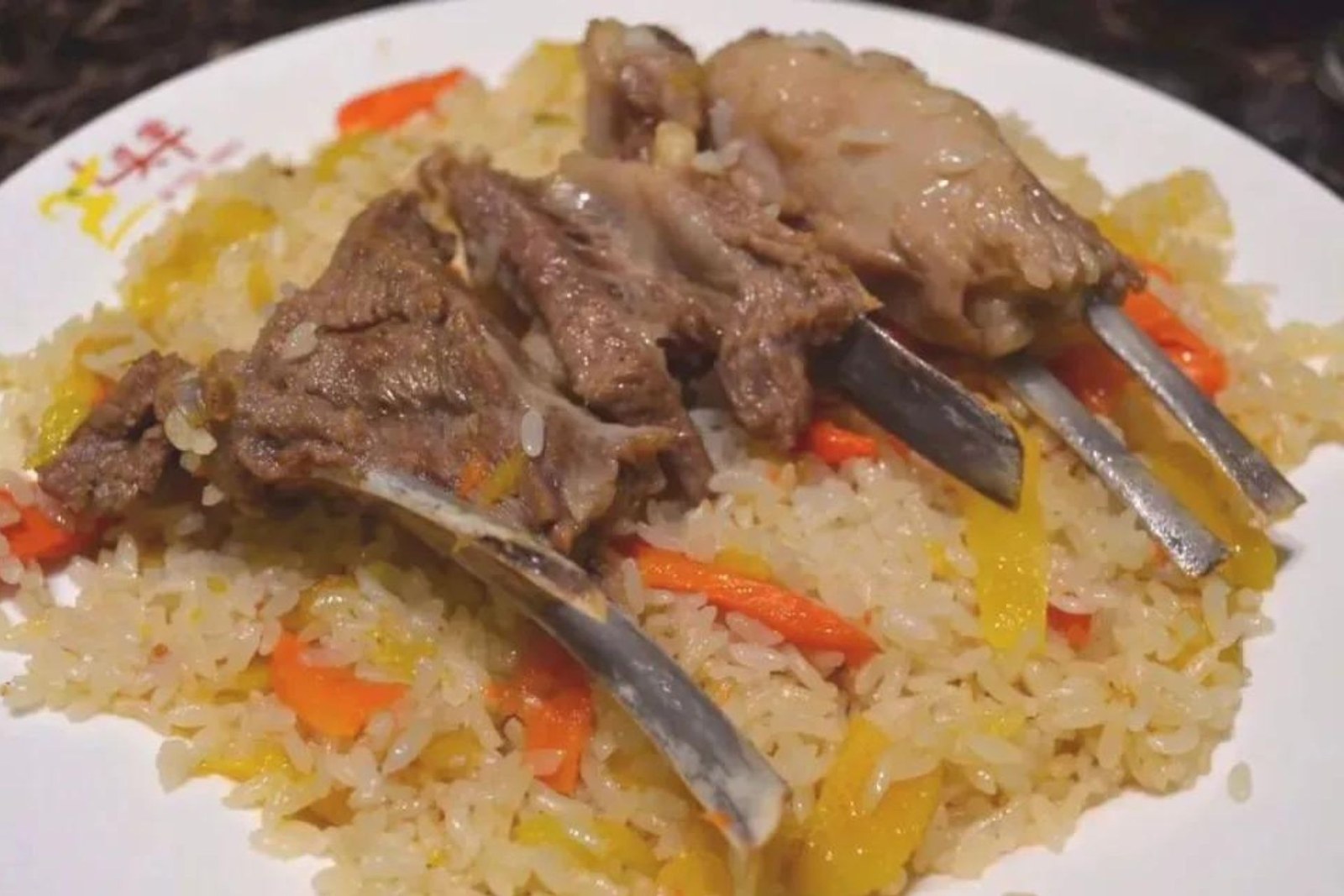
The town’s deepest habit is the vat itself: pilaf eaten at the hour it was made – a discipline of timing that makes noon the dish’s whole meaning, and the reason the afternoon plates, honest as they are, never quite carry the morning’s perfume.
The rest of this Urumqi list keeps other tables: the group platter of 新疆大盘鸡 Xīnjiāng dàpánjī the big plate chicken anchors the evenings, the charcoal perfume of 红柳烤肉 Hóngliǔ kǎoròu the red-willow skewers fills the night lanes, the tandoor crust of 馕 Náng the nang bread rides in every bag and the pulled ribbons of 拉条子 Lātiáozi the latiaozi dress the noodle houses – four more doors into the same 乌鲁木齐市 Wǔlǔmùqí Shì Urumqi City.
Words and Names
What the Locals Know
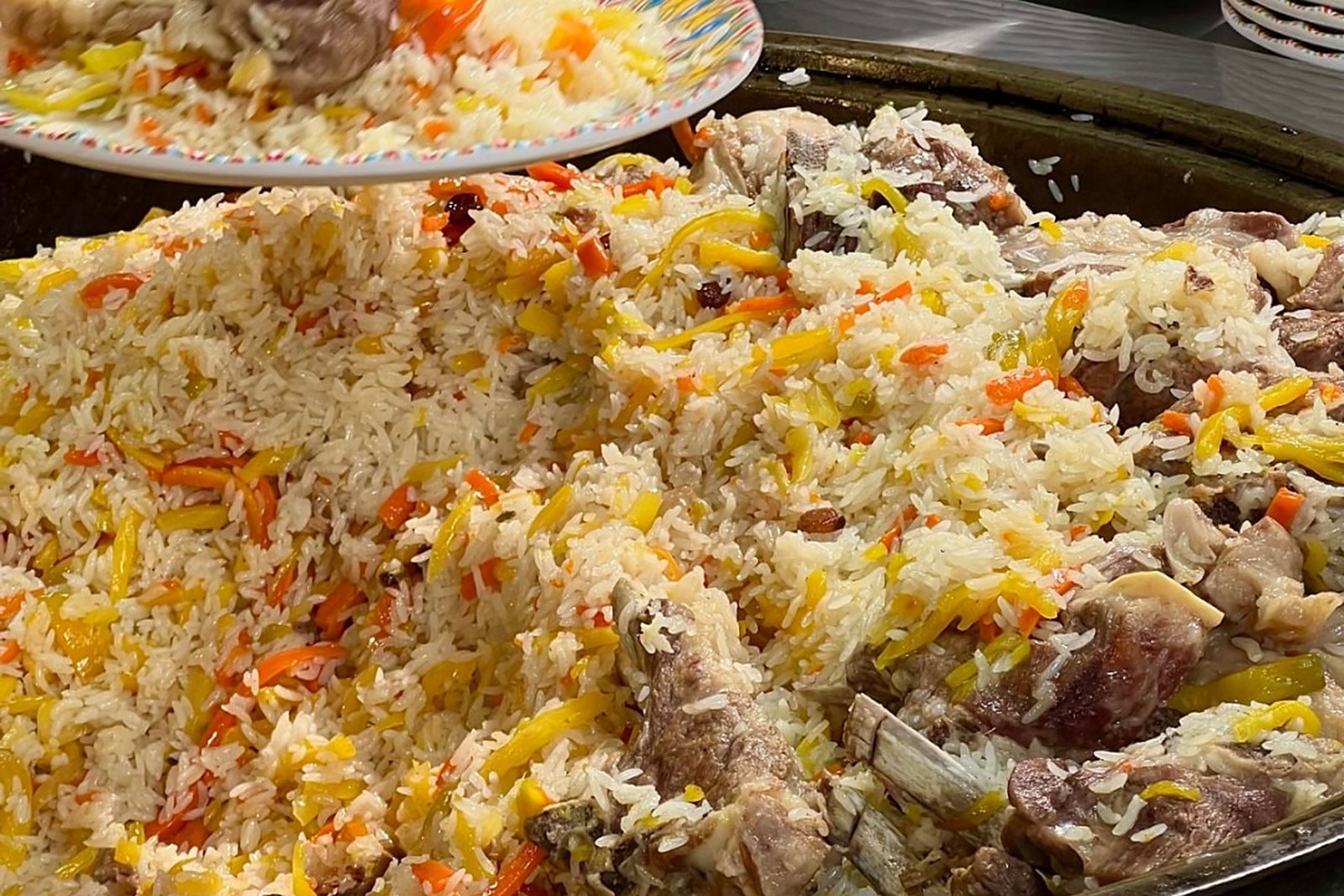
flowcloud would say that the 羊肉抓饭 Yángròu zhuāfàn is the vat’s noon bell and the fat’s own calendar – gold rice, orange carrot, brown mutton, three colours one clock – and that the honest move is to eat the opening plate, watch whether the grains stand separate under the fat, and let the carrot’s sweetness argue the lamb’s case, because the vat raised the rice and the noon keeps the custom. All checked November 2026.
Where to find it: 乌鲁木齐市 Wǔlǔmùqí Shì Urumqi City, Xinjiang – the vat houses of the older eating streets and the bazaar food floors, where the 抓饭 zhuāfàn pilaf keeps the noon register and the 羊油 yángyóu mutton fat does the seasoning, reached on foot from the Grand Bazaar quarter or by bus along the旧城十字 Jiùchéng Shízì crossings (worth confirming the details for which vats bake raisins into the rice and which keep it plain, vat doors turning over as pilaf families do), where the trade keeps the noon clock – opening bell the first carve, two o’clock the vats thin, afternoon the honest remainders; a few tens of yuan to tourist-lane money by the plate, so call it worth confirming the details rather than a fixed number, and let the opening plate cast the vote. Lamb pilaf is the vat’s own noon bell of Urumqi’s working tables, rice steamed gold and eaten at the speed of the fat – the taste of 乌鲁木齐市 Wǔlǔmùqí Shì Urumqi City eaten one carrot-sweet, fat-carried spoonful at a time. All checked November 2026.